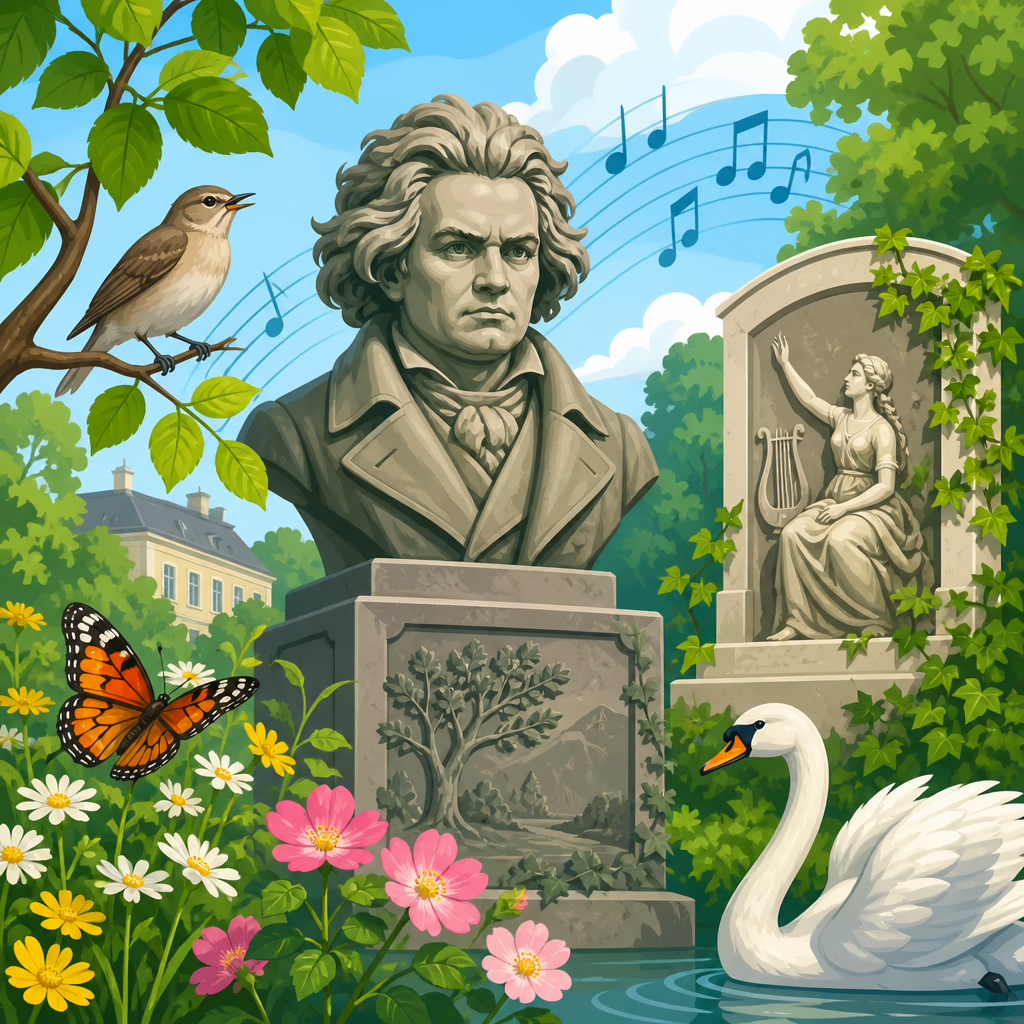
Nature Symbols in Beethoven Monuments and Memorials
Nature symbols in Beethoven monuments and memorials reveal how public memory turns a composer into a landscape of meanings. In stone, bronze, relief carving, and cemetery planting, artists and patrons have repeatedly linked Ludwig van Beethoven with trees, storms, flowing water, laurel, oak, vine, and rugged terrain. These motifs are not decorative extras. They are visual arguments about character, creativity, national identity, and the relationship between human genius and the natural world. When a monument places Beethoven beside an eagle, beneath a wreath of leaves, or against a crag-like pedestal, it tells viewers how to read his life and music before they see a single note.
In this context, a nature symbol means any plant, animal, weather image, landform, or seasonal reference embedded in a memorial’s design. A monument is a public sculptural work, often freestanding in a square or park. A memorial can be broader: a grave marker, commemorative relief, plaque, bust installation, or designed commemorative landscape. I have spent years examining nineteenth- and twentieth-century monument programs, and Beethoven memorials are especially rich because they sit at the intersection of Romantic art, civic commemoration, and the persistent idea that Beethoven heard and transformed nature at an exceptional level. The symbolic language is consistent enough to study, yet varied enough to show changing priorities across time and place.
This matters because monuments shape cultural memory more durably than concert reviews or anniversary speeches. A visitor may know little about Beethoven’s biography, but if the memorial setting frames him with ancient trees, rocky massing, or vegetal ornament, the viewer absorbs a message: Beethoven belongs with elemental force, solitude, growth, and moral seriousness. These choices also clarify how different eras wanted him remembered. Mid-nineteenth-century commissions often emphasized heroic laurel and oak, linking artistic achievement with civic virtue. Later memorials more often favored atmospheric park settings, suggesting introspection, wandering, and the pastoral imagination. Reading these symbols carefully helps explain not just what Beethoven meant to audiences, but how visual culture translated music into public space.
Why nature became central to Beethoven remembrance
Nature entered Beethoven commemoration for biographical and artistic reasons. Biographically, Beethoven’s long walking habits in and around Vienna were widely reported by friends, secretaries, and early biographers. He drafted musical ideas outdoors, sought rural lodgings, and treated walking as a working method rather than casual leisure. Artistically, works such as the Sixth Symphony encouraged audiences to connect him with streams, birdsong, storms, and the restorative experience of country life, even though he resisted simplistic imitation and insisted on “more the expression of feeling than painting.” Monument designers recognized that this association gave them a ready visual vocabulary. Instead of trying to represent abstract sound directly, they represented the natural sphere through which Beethoven’s creativity was popularly understood. For a broader biographical context, the main guide at Beethoven’s love of walking and what it meant for his music usefully frames why later memorial artists returned so often to outdoor imagery.
There was also a wider nineteenth-century commemorative pattern at work. European monuments to poets, composers, and philosophers frequently used botanical symbolism inherited from classical, Christian, and nationalist traditions. Laurel signaled immortal fame. Oak suggested endurance, moral gravity, and in German-speaking contexts, national strength. Ivy implied faithful remembrance. Palm branches could indicate victory over suffering or death. Once Beethoven became a major civic icon after the 1827 funeral and especially after the Bonn monument campaign culminating in 1845, these symbols were readily available. What makes Beethoven distinctive is the way standard commemorative emblems merged with imagery of weathered rock, open-air placement, and a physically strenuous relation to the earth.
Plants, wreaths, and the coded language of leaves
Among all nature symbols in Beethoven monuments, vegetal motifs are the most common and the most legible. Laurel wreaths appear in sculpted crowns, pedestal reliefs, medallions, and grave decoration because they mark artistic immortality. In Beethoven’s case, laurel usually does more than announce success. It positions him in a lineage of classical creators whose authority transcends the concert hall. Oak leaves and acorns often carry a different emphasis. They make Beethoven seem rooted, stern, and enduring, a figure of inner strength tested by struggle. In several memorial contexts, sculptors combined the two, pairing laurel’s fame with oak’s steadfastness to create a composite image of triumph earned through hardship.
These details matter because viewers often register them subconsciously. A bust framed by carved ivy feels different from one framed by plain geometry. Ivy softens, domesticates, and sacralizes remembrance; it suggests attachment over time, the way memory clings. Floral garlands can imply civic festivity, especially in monuments unveiled during centenary celebrations. Vine motifs are less common, but when present they can evoke cultivation and civilizational continuity rather than wild nature. Monument committees and sculptors selected these elements carefully. In archival descriptions of nineteenth-century commemorations, wreaths were not neutral ornament but carriers of meaning, often mentioned explicitly in unveiling speeches and newspaper reports. Beethoven’s memorial language therefore depends as much on leaf type and arrangement as on figure pose.
| Nature symbol | Common meaning in Beethoven memorials | Typical placement |
|---|---|---|
| Laurel | Artistic immortality, classical greatness, earned fame | Wreaths, crowns, pedestal reliefs |
| Oak | Strength, endurance, moral seriousness, rootedness | Leaf borders, garlands, symbolic ornament |
| Ivy | Remembrance, fidelity, mourning, continuity | Grave markers, funerary carving |
| Rock or crag | Elemental force, struggle, solitary genius | Pedestals, sculptural bases |
| Storm imagery | Emotional turbulence, sublimity, creative power | Reliefs, allegorical programs, dramatic setting |
Rock, terrain, and the sculpted idea of elemental genius
Not every nature symbol in Beethoven memorials is literal. One of the most effective is geological: the use of roughened stone, crag-like pedestals, and massing that makes the figure seem to emerge from terrain rather than stand on a polished civic block. This device matters because Beethoven was repeatedly cast as an elemental genius, not merely a skilled professional. Monumental sculpture across Europe often gave military heroes architectural bases and poets softer allegorical settings, but Beethoven frequently receives something harder, denser, and more tectonic. Even where the base is formally cut, sculptors and architects often sought visual weight that suggests bedrock, resistance, or a mountain-like permanence.
That choice reflects Romantic aesthetics of the sublime. Jagged surfaces and heavy vertical masses imply struggle, energy under pressure, and a mind shaped by conflict. In practical viewing terms, a rugged pedestal changes the reading of the body above it. Seated Beethoven figures appear less domestic and more prophetic when they are anchored to rocky forms. Standing figures seem not simply elevated but grounded in the earth. This is especially important because music itself cannot be seen. Sculptors needed analogues for sonority, force, and structural power, and geological imagery supplied them. A massive, stone-bound Beethoven tells the public that his art is foundational, weather-tested, and beyond fashion.
Trees, parks, and commemorative landscape design
The setting of a Beethoven monument is often as symbolic as the sculpture. Many monuments and busts were placed in parks, tree-lined squares, cemetery groves, or garden edges where living vegetation became part of the memorial program. This was never accidental. Trees frame sightlines, cast changing light, and create an atmosphere of reflective distance from traffic and commerce. For Beethoven, whose memory was strongly tied to walking, a shaded path or planted enclosure makes the visitor reenact an aspect of his perceived creative life. The monument becomes a destination reached on foot, not a mere object passed in haste.
Certain trees carry specific connotations. Oaks reinforce grandeur and endurance. Linden trees can suggest Central European cultural memory, intimacy, and lyric inwardness. Evergreens in funerary contexts imply continuity beyond death. Even when no archival document states an exact symbolic intention, the planting palette shapes interpretation. I have seen memorial sites where mature trees now dominate the sculpture so completely that the composer appears absorbed into a living canopy. That fusion strengthens the longstanding image of Beethoven as a figure whose creativity was nourished by repeated contact with the outdoors. It also means conservation decisions matter: removing trees, widening roads, or over-lighting the site can unintentionally strip away part of the memorial’s symbolic vocabulary.
Storms, water, and pastoral echoes without literal illustration
Because Beethoven is so often linked to the “Pastoral” Symphony, viewers sometimes expect monuments to show obvious scenes of brooks, birds, or peasants. In fact, the strongest memorial designs usually avoid direct illustration. Instead, they borrow atmospheric cues from weather and water. Drapery may billow with storm-like force. Relief backgrounds may ripple or swirl. Fountain settings can suggest flow, renewal, and musical continuity without reducing Beethoven to a programmatic anecdote. This restraint is important. Serious memorial art tends to translate musical associations into symbolic mood rather than depict a score as a picture book.
When storm references do appear, they usually point less to meteorology than to sublimity. Beethoven’s public image has long balanced pastoral receptivity with explosive intensity. Monument designers captured that tension by combining calm vegetal ornament with severe modeling, or by placing a stern portrait in an open setting where wind, cloud, and seasonal change become part of the viewing experience. Water works similarly. A basin, reflective surface, or nearby stream can create associations with meditation, passage, and the auditory imagination, all without explicit narrative labels. These devices honor the fact that Beethoven’s relationship to nature was emotional, ethical, and structural, not simply picturesque.
Funerary memorials and the symbolism of mourning landscapes
Beethoven’s grave memorial tradition adds another layer to nature symbolism because funerary art follows conventions distinct from civic monuments. In cemeteries, plant forms often signal mourning, resurrection hope, or enduring remembrance. Ivy, cypress, drooping garlands, and carved wreaths are common visual languages across nineteenth-century European burial culture, and Beethoven’s memorial context participates in that tradition while gaining extra resonance from his life story. A cemetery visitor reads leaves, branches, and shaded enclosure differently than a plaza visitor does. Nature here mediates between grief and permanence.
Landscape design around graves also matters. Paths, low plantings, seasonal flowers, and the proportion of shade to openness affect whether the site feels intimate, solemn, or monumental. Beethoven’s grave became a place of pilgrimage, and pilgrimage sites often rely on controlled natural atmosphere. Visitors pause longer when a memorial offers enclosure and acoustic quiet. In that sense, nature symbolism is not only visual but experiential. The rustle of leaves, filtered daylight, and softened ground all participate in memory-making. This is why restorations that focus only on stone cleaning can miss the full commemorative design. The horticultural frame is part of the memorial text.
How meanings changed from heroic nationalism to personal reflection
The symbolic use of nature in Beethoven monuments has never been static. In the mid-nineteenth century, especially around major public commissions, natural motifs often served heroic and civic narratives. Laurel and oak aligned Beethoven with collective pride, cultural achievement, and the idea of national greatness expressed through art. By the late nineteenth and early twentieth centuries, designers and audiences increasingly favored introspective readings. Park placement, contemplative seating, and softer planting schemes encouraged a more personal encounter with the composer as walker, sufferer, and solitary thinker. After the catastrophes of the twentieth century, some memorial contexts leaned away from triumphal symbolism and toward quieter endurance.
This shift explains why the same oak leaf can feel different across sites. In one monument it may read as public strength; in another, as private resilience. The most successful Beethoven memorials allow such layered interpretation. They do not lock nature into a single meaning. Instead, they use it to connect music, biography, place, and public feeling. For curators, local historians, and visitors, the practical lesson is simple: look beyond the portrait likeness. The trees, leaves, stone textures, and landscape setting are not secondary. They are the grammar through which Beethoven’s memory has been made visible. The next time you visit a Beethoven monument or memorial, read the natural symbols first, and the monument will tell you much more.
Frequently Asked Questions
Why do Beethoven monuments and memorials use so many nature symbols?
Nature symbols appear so often in Beethoven monuments because they help sculptors, architects, and patrons communicate ideas about the composer that are difficult to express through a portrait alone. A likeness can show Beethoven’s face, posture, or clothing, but it cannot easily convey force, struggle, inspiration, inner turbulence, spiritual endurance, or cultural myth. Trees, rocks, storms, rivers, vines, and laurel solve that problem by turning the memorial into a visual language. They suggest that Beethoven was not merely a historical musician, but a figure whose creative power belonged to something elemental and enduring.
These motifs also reflect long-standing traditions in European art. During the nineteenth century especially, artists often used nature to symbolize moral and intellectual character. A strong oak could imply steadfastness, a storm could signify titanic energy, and flowing water could suggest emotional depth or the movement of inspiration. In Beethoven’s case, those associations were especially appealing because his public image had already grown far beyond that of a court musician or urban composer. He had come to represent genius under pressure, heroic individuality, and a near-mythic relationship to the sublime.
In memorial settings, nature symbols also make public memory feel more universal. A laurel wreath identifies artistic achievement, but a rugged cliff, a wind-bent tree, or a cascading relief pattern can imply that Beethoven’s music emerged from forces larger than society, fashion, or politics. That visual strategy encourages viewers to read the monument not just as a biographical marker, but as an argument: Beethoven’s art belongs to the deepest structures of human feeling and the natural world. In that sense, nature imagery is not a decorative backdrop. It is one of the main ways memorials transform Beethoven from a person into a cultural landscape of meanings.
What do symbols like laurel, oak, vine, water, and storms mean in Beethoven memorial art?
Each recurring symbol carries its own history, and in Beethoven memorials those meanings often overlap in powerful ways. Laurel is one of the clearest examples. In classical and post-classical art, laurel signifies honor, artistic victory, and immortal fame. When laurel appears around Beethoven’s head, on a pedestal, or in relief carving, it presents him as a figure already admitted into the canon of cultural greatness. It says that his reputation is not temporary applause, but lasting distinction.
Oak carries a different emphasis. It usually represents strength, endurance, rootedness, and sometimes national identity. In monuments to Beethoven, oak can imply moral seriousness and resilience, especially because his life story is so often framed around hardship, deafness, and creative perseverance. Oak may also connect him to broader German-speaking cultural traditions in which the tree was treated as a symbol of continuity and collective identity. In that context, the oak does more than praise Beethoven’s personality. It places him within a national and historical narrative.
Vine symbolism is more fluid and layered. Vines can suggest growth, vitality, organic creativity, and the interwoven character of artistic legacy. In some settings they soften the severity of stone and bronze, creating the impression that memory itself is living and spreading. Water imagery often suggests inspiration, movement, emotional depth, or transformation. Flowing forms in relief, fountain settings, or landscape design can imply that Beethoven’s music moves like a current—restless, evolving, and impossible to confine.
Storms are among the most dramatic motifs associated with Beethoven. They refer not only to the emotional intensity listeners often hear in his music, but also to a larger Romantic idea of the sublime: overwhelming natural force that evokes awe, terror, and transcendence at once. Storm symbolism can make Beethoven appear as a composer of elemental energies rather than social refinement. When these symbols appear together, they build a complex portrait. Laurel says greatness, oak says endurance, vine says organic life, water says flow, and storm says power. Combined in one monument or memorial landscape, they create a visual interpretation of Beethoven as heroic, fertile, untamed, and enduring.
How do these natural motifs shape the way the public remembers Beethoven?
Natural motifs shape public memory by guiding viewers toward a particular version of Beethoven before they have even read an inscription. Monuments do not simply preserve memory; they organize it. When Beethoven is framed by craggy stone, dark bronze drapery, foliage, or symbolic weather forms, the viewer is encouraged to see him as a figure of depth, struggle, and elemental grandeur. This creates a memory that is emotional as well as historical. People do not just learn that Beethoven was important. They feel that importance through the symbolic environment surrounding his image.
That process matters because Beethoven has long occupied a special place in cultural imagination. He is often remembered not only for compositions, but for a narrative of inward conflict, deafness, artistic independence, and triumph over limitation. Nature symbols reinforce that narrative by making his life and music seem analogous to natural forces: rooted like a tree, surging like water, violent like a storm, or enduring like rock. In public spaces, those associations become especially powerful because they are repeated across generations. Visitors encounter the same symbols in statues, cemetery design, relief sculpture, commemorative plaques, and landscaped memorial grounds, and the imagery slowly solidifies into common understanding.
These motifs also make memory more accessible across cultural backgrounds. Not everyone knows Beethoven’s works in detail, but almost everyone can grasp the meaning of a broken branch, a wreath of laurels, or a monumental oak. Nature symbolism gives public art a broad communicative range. It translates biography and musical achievement into shared visual forms. As a result, Beethoven is remembered less as a distant historical specialist and more as a universally legible emblem of creative power. The monument becomes a place where artistic reputation is naturalized—made to seem as permanent, organic, and inevitable as the landscape itself.
Are nature symbols in Beethoven monuments mainly artistic, or do they also reflect political and national ideas?
They are very much both. On one level, these symbols serve artistic and emotional purposes, helping memorial designers express Beethoven’s character and music through rich visual metaphors. But on another level, they often carry political, civic, and national significance. In the nineteenth and early twentieth centuries, public monuments rarely functioned as neutral artworks. They were also instruments of collective identity, and Beethoven’s image became especially useful for communities seeking to project cultural prestige, continuity, and national inheritance.
Symbols such as oak, laurel, mountain forms, and cultivated memorial planting could be used to align Beethoven with ideals of strength, rooted tradition, and heroic cultural ancestry. In German-speaking contexts especially, the natural world was often tied to concepts of homeland, historical depth, and spiritual authenticity. When Beethoven was placed within such symbolic landscapes, he could be presented not simply as a brilliant composer, but as a representative genius of a people, language, or civilization. That framing elevated the monument from personal tribute to public statement.
At the same time, these political meanings were rarely blunt or simplistic. One reason nature symbolism was so effective is that it allowed ideology to appear elevated, poetic, and timeless. A grove of trees or a carved wreath seems gentler than a slogan, yet it can still imply ownership of cultural memory. It can suggest that Beethoven belongs naturally to a particular tradition or nation. Even cemetery plantings and memorial garden schemes can participate in this process by shaping the visitor’s emotional experience through choices that seem purely aesthetic but are actually historical and symbolic. So while nature imagery certainly enriches the artistic power of Beethoven memorials, it also helps encode broader claims about identity, heritage, and who gets to define the meaning of Beethoven in public space.
How can visitors interpret nature imagery when viewing a Beethoven monument or memorial today?
Today’s visitors can begin by treating every natural element as intentional rather than incidental. If a monument includes laurel, oak leaves, climbing vines, rough-hewn stone, water features, or carefully chosen planting, it is useful to ask what kind of Beethoven the memorial wants you to see. Is he being presented as triumphant, stoic, tormented, fertile in imagination, nationally rooted, spiritually elevated, or somehow fused with sublime natural power? Those questions open up the monument as an argument rather than a mere commemoration.
It also helps to look at how the symbols interact with materials and setting. Bronze can make foliage feel weighty and permanent. Relief carving can turn wind, roots, or waves into compressed signs of movement. Cemetery plantings can soften grief while also suggesting continuity and regeneration. A monument placed among trees functions differently from one in an open urban square, just as a figure emerging from rugged stone communicates something different from a polished neoclassical pedestal surrounded by formal greenery. Context shapes meaning.
Visitors should also remember that symbols are historically layered. A laurel wreath may point to classical fame, but in a later memorial context it can also suggest canonization within concert culture. An oak may praise endurance, yet also hint at national belonging. Water can signify inspiration, but it may equally evoke mourning, passage, or memory. Good interpretation does not force a single meaning. Instead, it recognizes that memorial art often works by assembling several meanings at once.
Most importantly, viewers can use these symbols to think critically about how Beethoven has been remembered over time. Nature imagery tells us as much about the societies that built the monuments as