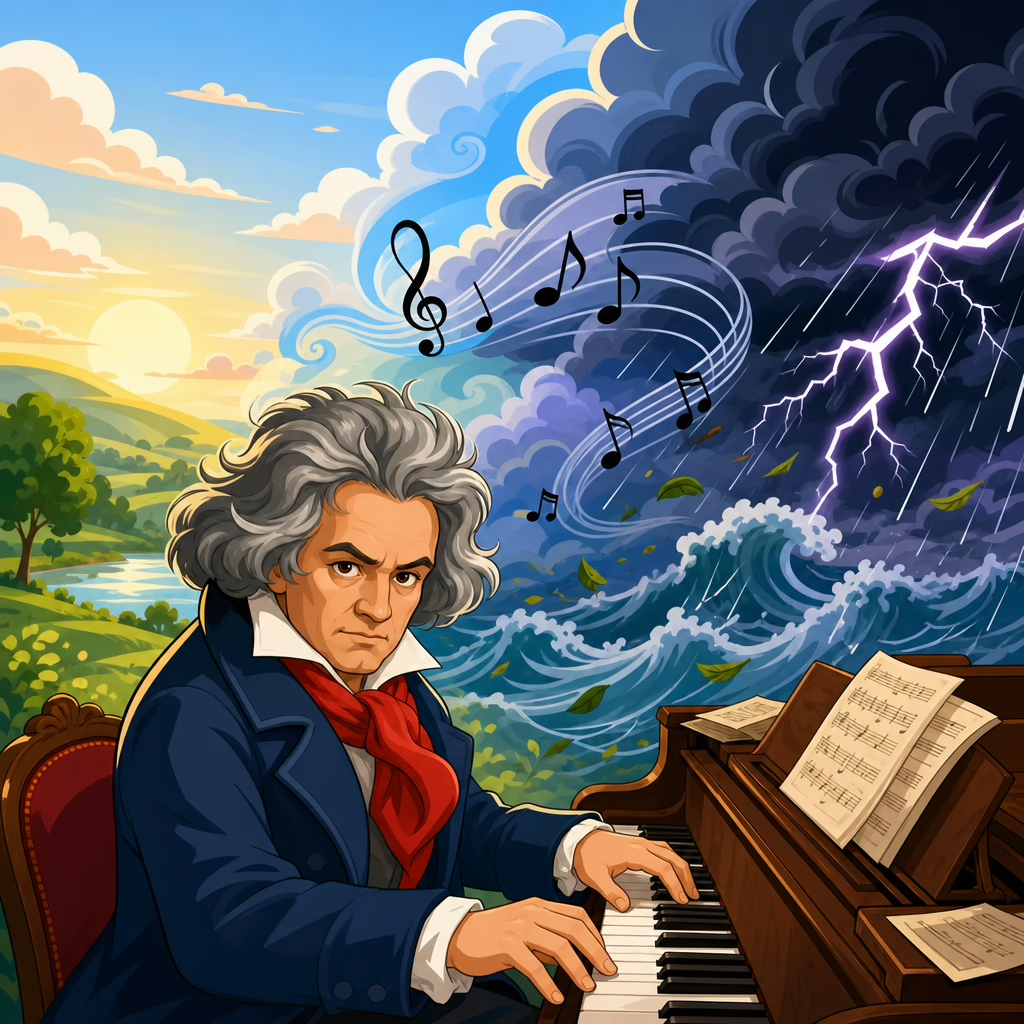
Beethoven’s Weather Music from Calm to Storm
Ludwig van Beethoven’s weather music turns changing skies into sound, and nowhere is that achievement clearer than in the arc from calm to storm that runs through his most nature-centered works. In this context, weather music means composition that evokes atmospheric conditions through rhythm, harmony, texture, orchestration, and pacing rather than through words alone. Beethoven was not merely adding decorative birdcalls or theatrical thunder. He was shaping listeners’ sense of air pressure, stillness, gathering motion, and release. That matters because it reveals how he transformed direct outdoor experience into musical structure, making weather feel inevitable rather than painted on.
I have spent years listening to these passages in score, rehearsal, and performance settings, and the same conclusion returns every time: Beethoven’s weather scenes succeed because they are built from disciplined musical decisions. The effect is vivid, but the craft is exact. He controls register, dynamic range, harmonic tension, pulse, and timbre so carefully that listeners can sense a landscape shifting before any dramatic climax arrives. This is especially true in the Sixth Symphony, the “Pastoral,” but related techniques appear elsewhere in his output whenever natural motion and human feeling meet.
To understand Beethoven’s weather music from calm to storm, it helps to define two key ideas. First, calm in Beethoven is rarely empty silence. It is usually active repose: gently repeated figures, stable tonal centers, moderate tempos, and transparent scoring that suggest equilibrium without stagnation. Second, storm is not just loudness. In Beethoven, storm emerges from accumulating instability: fragmented motives, destabilized harmony, intensified rhythm, darker orchestral color, and compressed phrasing. He composes weather as process. That process is why the listener experiences not a static picture but a changing environment, one that mirrors both the natural world and emotional life.
This focus matters within Beethoven studies because it shows how closely observation and imagination work together in his music. He was a habitual walker who absorbed the countryside around Vienna with unusual concentration, and his weather writing reflects someone who knew the difference between a serene summer scene and a storm front rolling across open land. Yet he also insisted that the “Pastoral” was more an expression of feeling than literal painting. That statement is often quoted, but its importance is practical: Beethoven wanted music to communicate the inner effect of weather, not just imitate external noise. The result is art that sounds concrete and psychologically true at once.
Why the “Pastoral” Symphony Is the Center of Beethoven’s Weather Writing
The Sixth Symphony in F major, Op. 68, is the central case because Beethoven labels its movements with scenes and emotional states, then binds them into a continuous natural sequence. The work moves from cheerful arrival in the countryside to brook scene, rustic gathering, storm, and thanksgiving after the storm. That order matters. The storm does not appear as an isolated spectacle. It is the turning point in a larger meteorological and human narrative. Beethoven makes listeners inhabit changing weather over time, which is why this symphony remains one of the most convincing sonic landscapes in Western music.
In rehearsal, conductors often discover that the opening movement already contains the seeds of later weather writing. Its rocking accompanimental figures and broad, unforced phrasing establish a stable environment. The music breathes. Cadences feel earned rather than abrupt, and the orchestration avoids excessive density. Winds color the texture without piercing it. Strings often carry repeated patterns that create continuity, like steady walking across open ground. This is Beethoven’s calm: not inactivity, but balance among motion, space, and expectation. Because the first movement is so grounded, later disruption has real dramatic force.
The second movement, “Scene by the Brook,” deepens that method. Here Beethoven uses flowing accompaniment to suggest continuous water and gentle atmospheric stillness. The effect depends on regularity. Inner voices move with soft persistence, and the harmonic rhythm remains patient. Woodwinds enter not as soloistic display pieces but as timbral inflections within a larger habitat. The famous bird imitations near the end are often discussed, yet they matter less than the sustained compositional logic around them. The movement teaches the ear how to listen to a natural environment, making the later storm feel as if it grows from the same world rather than interrupting it arbitrarily.
The third movement, the peasants’ merry gathering, is where weather begins to shift indirectly. Rhythmic energy increases, accents become more pointed, and social motion replaces solitary observation. Beethoven introduces rustic dance character with deliberate roughness. Phrases can feel slightly crowded or interrupted, and that subtle loss of poise is important. In practical performance terms, this movement should not sound polished in a courtly way. Its earthy buoyancy prepares the listener for instability. Then, without a clean wall between scenes, Beethoven drives toward the storm through intensifying texture and momentum.
How Beethoven Composes Calm Before the Storm
Beethoven’s calm is persuasive because he writes it with restraint. He favors clear tonal anchoring, moderate dynamic ceilings, repetitive but never mechanical figuration, and orchestral transparency that leaves acoustic space around each line. In the “Pastoral,” F major functions as more than a key signature. It becomes a zone of trust. Repeated patterns in the violins and lower strings create continuity, while woodwind lines enter as natural color rather than argumentative counterpoint. Even when harmony moves, it rarely feels anxious. The ear senses order, and that order is essential for the coming contrast.
One of Beethoven’s strongest tools is rhythmic regularity with slight flexibility at phrase ends. When listeners feel a dependable underlying pulse, they interpret the musical landscape as settled. I hear this especially in the brook movement, where accompaniment figures suggest constant flow without rushing. The texture is active, yet no element fights for dominance. Beethoven also avoids extreme registral spikes during calm passages. Melodic lines sit comfortably within the ensemble, and dynamic growth tends to unfold in long spans. This prevents the music from sounding restless before it needs to.
Another crucial element is instrumental color. Beethoven uses winds in pastoral writing to widen the horizon of the soundstage. Clarinets, oboes, and flutes are not just melodic carriers; they imply distance, air, and changing light. Horns can stabilize the tonal field with a broad outdoor resonance. Strings provide the living ground beneath everything else. In performance, if the strings are too heavy, the scene loses its atmospheric openness. If the winds are too forward, the texture becomes illustrative rather than environmental. Beethoven’s balance is exact, and the serenity depends on that proportion.
Calm also comes from formal patience. Beethoven does not hurry transitions in his weather writing. He allows motives to settle into the ear so that listeners inhabit a condition, not merely identify a cue. This is why the “Pastoral” still feels modern in its environmental imagination. It respects duration. Real weather changes over time, and Beethoven writes temporal immersion into the form itself. That approach connects directly with his habits of walking and observing nature in extended stretches; for broader context, see the main guide on Beethoven’s love of walking and what it meant for his music.
The Mechanics of the Storm Scene
The fourth movement of the Sixth Symphony, “Thunderstorm; Storm,” is short, but it is one of the most concentrated examples of meteorological composition in orchestral literature. Beethoven deploys piccolo, trombones, and timpani for a sharper and more forceful sonority than earlier movements use. The arrival of this expanded color palette signals that the environment has changed fundamentally. This is not a louder version of what came before. It is a transformed acoustic world, with denser texture, unstable rhythm, and stronger vertical impact.
What creates the sense of storm first is not thunder but agitation. String figures become more urgent and fragmented. Harmonic movement grows less settled, and dynamic swells arrive with greater compression. Beethoven uses tremolando textures and surging scales to create gusting motion. The listener does not just hear noise; the listener feels pressure building. Timpani strokes and low-register weight suggest distant thunder before full outbursts strike. When upper winds cut through the texture, they resemble flashes of violent weather rather than decorative brightness.
| Technique | How Beethoven Uses It | Weather Effect |
|---|---|---|
| Dynamic compression | Rapid shifts from tense buildup to sudden outburst | Thunderclaps and shock |
| Fragmented motives | Short, broken figures replace broad melody | Instability and turbulence |
| Expanded orchestration | Piccolo, trombones, and stronger timpani presence | Darkened sky and violent scale |
| Tremolo and rushing scales | Strings and winds drive continuous motion | Wind, rain, and swirling air |
| Harmonic unrest | Less secure cadences and intensified transitions | Loss of shelter and mounting danger |
The storm’s realism comes from layering. Beethoven does not assign one instrument to rain and another to wind in a simplistic way. He combines registral extremes, rhythmic propulsion, and orchestral mass so that multiple weather sensations occur at once. This is closer to actual experience. In a summer storm, a listener perceives darkness, wind, rainfall, thunder, and physical unease simultaneously. Beethoven translates that total sensory field into symphonic terms. The result feels experiential, not gimmicky.
Importantly, the storm is controlled. Conductors who push it into sheer chaos usually weaken the scene. Beethoven’s notation preserves rhythmic intelligibility even at maximum force. The terror works because structure remains audible beneath violence. This is a hallmark of his style across genres: disorder is represented through highly ordered means. In the “Pastoral,” that discipline allows the movement to pivot convincingly into the final thanksgiving. The storm spends itself, and the music can recover without sounding arbitrary or sentimental.
From Storm to Release: Why the Aftermath Matters
The fifth movement, often translated as a shepherds’ song of thankful feelings after the storm, completes Beethoven’s weather design. Without it, the storm would remain a theatrical episode. With it, the entire symphony becomes a cycle of disturbance and restoration. The opening of the finale matters because it does not explode into triumph. It clears. The texture opens, the melodic profile becomes more vocal, and rhythmic tension eases. Beethoven captures the specific sensation of weather passing: air feels washed, perspective returns, and gratitude arises naturally from relief.
This aftermath is one reason Beethoven’s weather music feels emotionally truthful. Real storms are remembered not only for violence but for what follows them. Light changes. Distances seem sharper. Human bodies relax. Beethoven writes that release through a return to stable tonality, more regular phrasing, and warmer wind coloring. The music does not deny what happened. Instead, it absorbs the storm into a larger continuity. That is a sophisticated psychological move, and it prevents the finale from sounding merely pretty after a dramatic centerpiece.
The thanksgiving character also clarifies Beethoven’s famous distinction between emotional expression and literal depiction. He has already depicted weather powerfully. Now he shows its human meaning. In practical terms, this is where many performances either soar or flatten. If the finale is too slow and reverent, the music loses forward life. If it is too brisk, the sense of recovered equilibrium disappears. The best interpretations let gratitude grow from physical release, as though the land itself were breathing evenly again.
Beyond the Sixth: Other Beethoven Works That Hint at Weather
Although the “Pastoral” is the clearest example, Beethoven’s weather imagination is not confined to one symphony. In the “Tempest” Piano Sonata, Op. 31 No. 2, he does not narrate a storm scene in the same direct way, yet the volatile contrasts, recitative-like pauses, and rolling arpeggiations create a charged atmosphere that many listeners hear as meteorological. The title was not Beethoven’s own, so caution is necessary, but the sonata shows his gift for making instability feel elemental. He understood how abrupt silence, tonal ambiguity, and surging motion can suggest forces larger than individual emotion.
Similar traces appear in the overture Coriolan and in parts of the Seventh Symphony, where rhythmic drive can feel like uncontrollable natural momentum. These are not weather paintings, and it is important not to overread them. Still, they share technical DNA with the “Pastoral” storm: accumulative tension, compressed motives, forceful accents, and release through structural resolution. From a composer’s standpoint, Beethoven had a consistent way of representing unleashed energy. In the Sixth Symphony, he directs that language toward weather with unusual explicitness.
This broader perspective sharpens the main point. Beethoven’s weather music is convincing because it grows from his core compositional habits rather than standing apart as novelty. He did not need a special bag of effects reserved only for nature. He adapted the same rigorous control of motive, form, and orchestral function that marks his dramatic and heroic works. That is why the “Pastoral” remains strong under close analysis. Its famous scenes are not superficial illustration. They are Beethovenian argument translated into environmental experience.
How to Listen for Calm, Gathering Pressure, and Storm
If you want to hear Beethoven’s weather music more clearly, listen in stages. First, track pulse. Ask whether the beat feels grounded, flowing, crowded, or destabilized. Second, notice texture density. Calm passages leave room inside the sound, while storm passages pack the register more tightly and push simultaneous motion across the orchestra. Third, follow harmony. Secure cadences and long tonal spans create trust; delayed resolution creates unease. Fourth, attend to color. The entrance of piccolo, trombones, and stronger timpani in the storm is not incidental. It changes the air.
It also helps to compare performances. A conductor such as Nikolaus Harnoncourt may emphasize rustic sharpness and dramatic contrast, while Bernard Haitink tends to preserve architectural breadth and line. Historically informed ensembles often reveal how transparent Beethoven’s textures can be, which makes the storm’s expansion especially striking. Modern symphony orchestras can deliver overwhelming power, but the best ones maintain inner clarity. As a listener, choose recordings where the calm feels genuinely spacious. If the opening movements already sound overdriven, the meteorological journey is diminished.
Beethoven’s weather music from calm to storm endures because it joins close observation to uncompromising craft. He does not treat nature as background decoration, and he does not reduce weather to noise effects. Instead, he composes atmospheric change as a sequence of states that listeners can feel in their bodies: steadiness, flow, gathering energy, rupture, and release. The Sixth Symphony remains the essential example, but its power comes from methods found across his art—precise rhythmic control, purposeful harmony, exact orchestral balance, and a deep sense of time.
The key takeaway is simple. Beethoven makes weather believable by writing process, not postcard imagery. Calm is structured equilibrium. Storm is accumulated instability. The aftermath is renewal earned through contrast. When you listen with those ideas in mind, familiar passages become more vivid, and the “Pastoral” reveals itself as one of the most intelligently constructed natural scenes in music. Return to the symphony, follow the transition from brook to gathering to storm to thanksgiving, and hear how Beethoven turns the sky itself into form.
Frequently Asked Questions
What does “weather music” mean in Beethoven’s work?
In Beethoven’s music, “weather” does not simply mean a literal imitation of rain, wind, or thunder. It refers to the way he uses musical elements such as rhythm, harmony, texture, dynamics, orchestration, and pacing to create the sensation of changing atmospheric conditions. Rather than relying on words to tell listeners what to imagine, Beethoven often lets the sound itself suggest a sky that is clearing, air that is growing heavy, or a storm that is gathering force. This is why his weather music feels so convincing. It is not just descriptive on the surface; it is structural and emotional at the same time.
A calm passage, for example, may feel spacious because of sustained tones, balanced phrasing, and transparent instrumental writing. As tension builds, Beethoven can thicken the texture, increase rhythmic activity, darken the harmony, and narrow the listener’s sense of stability. By the time a storm breaks, the effect is powerful because it has been prepared over time. He does not merely add dramatic noise. He composes a full atmospheric transition, making listeners feel the pressure shift from serenity to unrest.
This is one reason Beethoven’s weather music remains so compelling. He was not just painting a scenic backdrop. He was translating the experience of nature into musical motion, so that weather becomes something heard as a process rather than recognized as a sound effect.
Which Beethoven works best show the movement from calm to storm?
The most famous example is the Symphony No. 6 in F major, the “Pastoral.” It is the central reference point for anyone exploring Beethoven’s weather music because it presents nature not as a decorative theme but as a living environment. The symphony moves through scenes of arrival in the countryside, a brook, rustic celebration, a storm, and the gratitude that follows. The “Thunderstorm” movement is especially important, but its effect depends on everything that comes before it. Beethoven first establishes repose, openness, and warmth, so when the storm arrives, it feels like a genuine disturbance in an already vivid world.
Other works also reveal Beethoven’s gift for atmospheric transformation, even when they are not explicitly programmatic. Many slow introductions, transitional passages, and dramatic surges in his orchestral, piano, and chamber music show a similar command of pressure, release, and elemental contrast. He could suggest gathering tension through repeated figures, unstable harmonies, or low-register rumbling, then release that tension with blazing outbursts or hard-won calm. In that sense, the “Pastoral” is the clearest example, but not the only one.
What makes these works stand out is Beethoven’s ability to shape weather-like experience over time. He creates not only isolated moods but changing conditions. That long arc from stillness to agitation and back again is one of the signatures of his most nature-centered writing.
How does Beethoven musically create the feeling of a storm?
Beethoven creates storms through accumulation and contrast. He often begins by unsettling the musical environment before the storm fully arrives. Rhythms may become more insistent, harmonies more tense, and textures more crowded. The orchestra can move from clarity to turbulence as lines overlap, bass instruments grow more active, and sudden dynamic shifts begin to erode the sense of calm. This makes the storm feel earned rather than abrupt.
Once the storm breaks, Beethoven uses the full expressive power of the ensemble. Trembling strings can suggest agitation in the air, forceful timpani and low-register motion can evoke thunder, and sharp accents can feel like lightning strikes or violent gusts. Just as important is his control of pacing. He knows when to intensify, when to delay, and when to unleash the largest sonorities for maximum impact. The listener experiences not just noise, but direction: a storm gathering, peaking, and moving through.
His storm writing is especially effective because it remains musical first. The passage still functions as part of a larger composition, with thematic logic and formal purpose. That balance between vivid depiction and strong musical architecture is what separates Beethoven’s weather music from mere theatrical imitation.
Why is the contrast between calm and storm so important in Beethoven’s nature-centered music?
The contrast matters because Beethoven’s view of nature is dynamic rather than static. Calm has meaning because it can be disturbed, and storm has meaning because it interrupts an earlier state of balance. He understood that listeners respond deeply to transformation, so he built these oppositions into the emotional and structural core of the music. The result is not simply a peaceful landscape followed by a dramatic episode. It is a complete journey through changing conditions, both external and internal.
In practical musical terms, calm gives Beethoven room to establish tone, space, and expectation. Storm introduces conflict, instability, and energy. When calm returns, it is often heard differently than before because the listener has passed through tension. The aftermath can feel more grateful, more reflective, or more profound. This is especially true in the “Pastoral” Symphony, where the resolution after the storm carries a sense of renewal rather than mere relief.
This contrast also reflects a broader Beethovenian idea: struggle and release are central to expressive truth. In his weather music, nature becomes a medium for that principle. The sky changes, the atmosphere tightens, the storm breaks, and what follows is not a reset but a transformed stillness. That dramatic arc is a major reason these passages continue to resonate so strongly.
Was Beethoven trying to imitate nature literally, or was he expressing something deeper?
Beethoven was certainly capable of vivid natural suggestion, but he was not interested in literal imitation for its own sake. He wanted music to convey the experience and feeling of nature, not merely reproduce external sounds. That distinction is crucial. A literal approach might stop at recognizable effects such as thunder or birdsong. Beethoven goes further by shaping atmosphere, time, and emotional perception. He makes listeners sense calm air, gathering unease, violent disturbance, and renewed clarity through the logic of the music itself.
This deeper approach is one reason his weather music feels so enduring and serious. It is not tied only to visual imagery or theatrical novelty. Instead, it engages fundamental human responses to change, uncertainty, awe, and restoration. The weather in his music can be heard as natural phenomenon, but also as an expressive mirror of inner life. Storms become moments of upheaval; calm becomes reflection, recovery, or gratitude.
So while Beethoven does use recognizable atmospheric cues, his larger aim is more profound. He transforms nature into an expressive language. The listener does not simply identify a storm scene; the listener inhabits a world in which sound itself seems to breathe, darken, erupt, and clear.