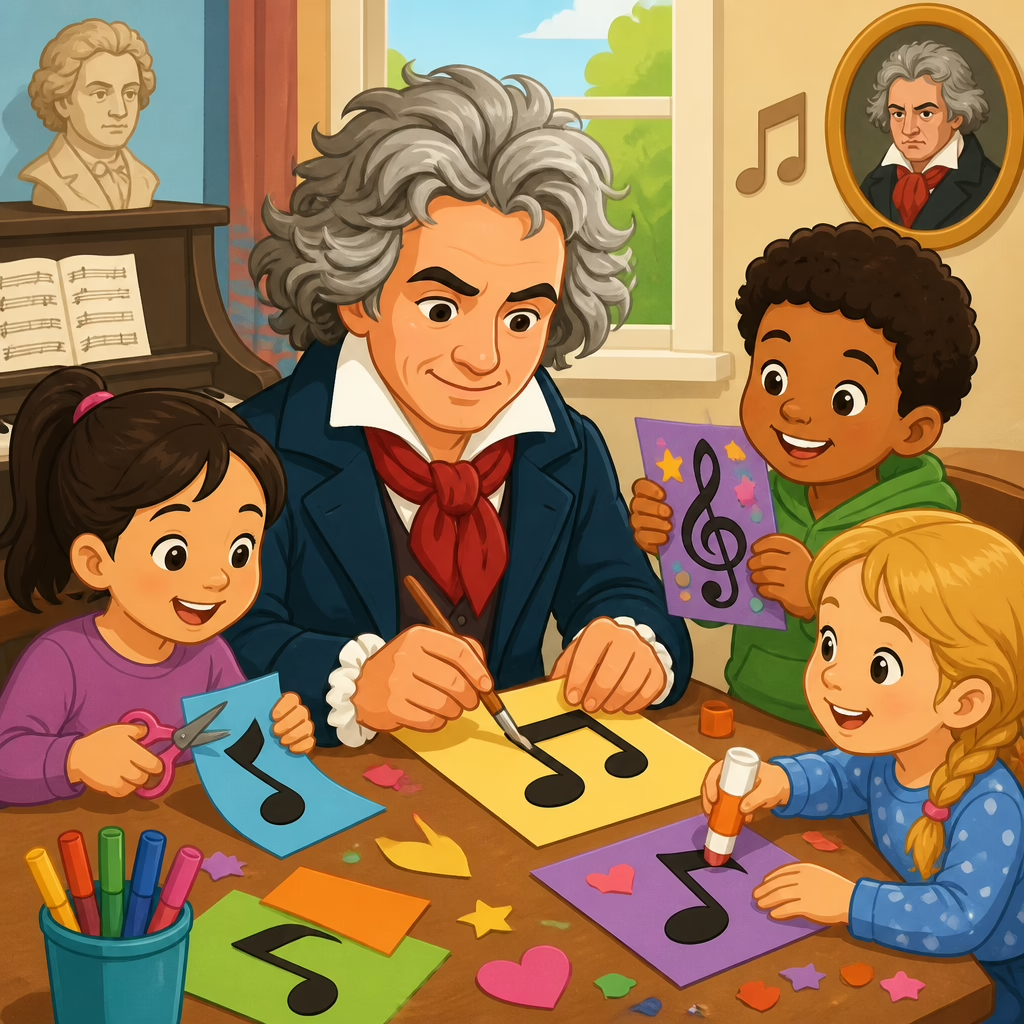
Beethoven Crafts Games and Projects for Kids
Beethoven Crafts Games and Projects for Kids turn a famous composer into something children can touch, hear, move, and remember, which is exactly why these activities work so well in classrooms, libraries, homeschool settings, and community music programs. In elementary music education, “crafts” are hands-on visual builds, “games” are structured play activities with learning goals, and “projects” are longer tasks that combine research, listening, making, and reflection. When I plan Beethoven activities for children, the goal is never to make students memorize dates for a quiz. The goal is to help them connect sound, story, and creativity. Beethoven is especially effective for this because his life offers clear themes children understand: perseverance, big emotions, rhythm, drama, and the idea that music can paint a picture without words.
Used well, Beethoven-themed activities support more than composer study. They reinforce listening skills, beat tracking, vocabulary, historical context, group cooperation, fine motor control, and confidence in self-expression. A second grader who builds a paper piano while hearing “Ode to Joy” is not just crafting. That child is linking visual symbols to musical sound. A fourth grader who plays a rhythm relay with motifs from Beethoven’s Fifth Symphony is not just burning energy. That student is learning how short rhythmic cells create identity in music. In community and education settings, that matters because retention improves when children participate physically and socially rather than passively receiving information.
Beethoven activities also fit mixed-age groups unusually well. Younger children can respond to loud and soft contrasts, steady beat, and familiar melodies. Older children can discuss form, mood, deafness, and the difference between programmatic ideas and abstract music. This flexibility makes Beethoven an excellent anchor for family workshops and rotating classroom centers. The key is to choose activities with a direct musical purpose instead of generic composer coloring pages that teach very little. Good Beethoven crafts, games, and projects should answer a simple question: what musical concept will a child understand better after doing this?
That standard keeps the lesson focused and meaningful. It also helps adults avoid two common mistakes I see often: making the history too heavy or making the activity so cute that the music disappears. Children do not need a graduate seminar on Viennese classicism, but they do need accurate, age-appropriate context. Beethoven was a composer, pianist, and musical innovator. He wrote symphonies, sonatas, quartets, and songs. He gradually lost his hearing, yet continued composing. Those facts, paired with active learning, are enough to create memorable instruction. The strongest Beethoven lesson experiences combine a short story, a short listening example, and one hands-on response that makes the music visible, playable, or discussable.
Choose activities that teach one clear Beethoven concept
The most successful Beethoven crafts and games start by narrowing the focus. Instead of trying to teach his whole biography, choose one musical idea per activity. For kindergarten or first grade, that might be loud versus soft using excerpts from Symphony No. 5 or Symphony No. 6. For grades two through four, it might be steady beat, motif recognition, or instrument families. For grades four through six, it could be theme and variation, mood, or the role of form in building tension. In my experience, children learn more from one sharply defined objective than from a broad “learn about Beethoven” session.
A practical example is a motif game built around the famous four-note opening of Beethoven’s Fifth Symphony. Clap the pattern, have students echo it, then hide the rhythm in different stations: body percussion, rhythm sticks, and movement cards. Children quickly recognize that a tiny idea can organize an entire piece. That direct encounter explains musical structure better than a paragraph in a workbook. Another effective focus is emotional contrast. Use “Ode to Joy” and ask students to draw how the melody changes when different classroom instruments accompany it. They begin hearing texture and character, not just melody.
Sequencing matters too. Start with listening, then move to making, then to sharing. If children craft first without hearing the music, the project often becomes decorative rather than educational. If they listen first and respond after, the craft has a musical anchor. This is why a Beethoven sound map works so well. Students listen to a short excerpt and draw lines, shapes, or colors to match what they hear. Then they explain why they used jagged red lines for a sudden forte or smooth blue curves for a lyrical phrase. The explanation is where the learning becomes visible to the teacher.
Teachers who want a broader planning framework can connect a single Beethoven activity to a longer unit through the main guide on Beethoven lesson plans for elementary music classes. That kind of internal sequencing is useful because children benefit when isolated activities point back to repeated listening pieces, vocabulary, and classroom routines. A craft should not be an add-on. It should reinforce a lesson sequence children can revisit and build upon.
Best Beethoven crafts for elementary learners
The best Beethoven crafts are tactile, fast to explain, and tied to a listening task. Paper keyboard builds are a strong choice because they connect Beethoven’s identity as a pianist to pitch layout. Students label groups of two and three black keys, trace finger numbers, and play simple patterns while hearing a piano sonata excerpt. This works especially well after introducing keyboard geography. A second reliable option is a composer portrait collage. Children build Beethoven’s image from cut paper while adding symbols around him: notes, a piano, storm clouds for the “Pastoral” Symphony, or hearts for “Ode to Joy.” The symbols prompt recall and discussion.
Another useful craft is a listening wheel. On a divided paper plate, students label sections such as tempo, dynamics, mood, instrument family, and favorite moment. While listening, they rotate a clip or arrow to mark what they notice. The final product is simple, but it gives young students a concrete way to organize listening responses. In after-school and library settings, I have also had success with “emotion masks” tied to Beethoven excerpts. One side shows calm or joy, the other tension or surprise. Students lift the side that matches the music, then decorate the masks after the listening round. That sequence keeps the craft grounded in musical decision-making.
Craft materials do not need to be expensive. Cardstock, crayons, rhythm stickers, reusable manipulatives, and printable icons usually outperform complex kits because setup is faster and classroom control improves. The strongest craft sessions also include one speaking prompt. Ask, “What did your project show about Beethoven’s music?” That question pushes children past “I liked it” into evidence-based responses. Even very young learners can say, “I drew zigzags because the music got strong and exciting.” That is genuine musical understanding.
| Activity | Best Ages | Musical Concept | Materials |
|---|---|---|---|
| Paper keyboard | 6–9 | Keyboard layout, pitch direction | Cardstock, markers, labels |
| Sound map drawing | 7–11 | Dynamics, contour, texture | Paper, crayons, audio player |
| Motif rhythm cards | 8–12 | Rhythmic identity, repetition | Cards, sticks, floor space |
| Listening wheel | 6–10 | Tempo, mood, instrument families | Paper plates, brads, pencils |
Games that make Beethoven memorable
Games work because they reward attention. A child who might drift during a lecture will stay alert when listening for a cue, racing to match a pattern, or solving a musical challenge with a team. Beethoven listening bingo is a dependable favorite. Instead of random pictures, use squares tied to actual musical features: strings, brass, fast tempo, repeated rhythm, soft section, sudden accent, and joyful melody. Play short excerpts and have students identify what they hear. The game becomes a listening assessment without feeling like one.
Rhythm relay is another strong option, particularly with Beethoven’s Fifth. Divide students into teams. Place rhythmic cards across the room. The first player runs, selects the correct pattern after hearing it clapped, returns, and the team performs it together. This combines gross motor movement with rhythmic discrimination. For mixed-age groups, adjust complexity by changing notation from ta and ti-ti style syllables to quarter and eighth note language, or by adding rests and syncopation for older students. The musical target stays consistent while the demand level changes.
One game I return to often is “Composer Detective.” Students hear three short excerpts, then sort clues: piano, orchestra, strong contrasts, lyrical theme, stormy mood. They decide which clues fit Beethoven and justify their answer. This develops close listening and simple argumentation. It also prevents the common classroom issue where children remember only the wig and not the music. For community events, a freeze-move game using “Ode to Joy” variations is highly effective. Students move in one style during a legato section, freeze on a cadence, and switch movement when the character changes. Without technical overload, they begin noticing phrase endings and expressive shifts.
The best games end with a brief debrief. Ask what clue helped most, what rhythm returned, or which instrument family was easiest to hear. That reflection cements the concept. In educational settings, fun is not the outcome by itself. Fun is the delivery system for recognition, recall, and transfer.
Longer projects for classrooms, homeschool, and community programs
Projects differ from crafts and games because they extend over several sessions and produce a shareable result. One excellent Beethoven project is a mini museum. Students create display cards for one work, one life event, one instrument, and one listening response. They can include Symphony No. 5, “Für Elise,” the “Moonlight” Sonata, or Symphony No. 6. The final museum walk lets students teach one another, which improves retention because explaining a concept requires organization and understanding. If space is limited, a tri-fold or digital slide version works well.
Another valuable project is a class “Beethoven response book.” Each student contributes one page: a drawing, a sentence about a listening piece, a rhythm pattern, or a fact checked by the teacher. Over time, the book becomes a community artifact that shows learning progression. In homeschool cooperatives, I have seen this adapted into family presentation day, where each child shares one Beethoven piece and one hands-on element, such as a homemade rhythm instrument or mood illustration. This format keeps standards clear while allowing personal choice.
For upper elementary students, a compare-and-respond project adds depth. Students listen to two Beethoven excerpts with contrasting character, then write or record a short explanation of how tempo, dynamics, and instrumentation shape the mood. Pair that with a visual poster or slide. This is especially useful for integrating language arts goals with music learning. Children practice descriptive vocabulary and evidence-based explanation while staying centered on the music. The limitation is time; these projects need modeling, exemplars, and a rubric. But the payoff is higher-quality thinking and stronger student ownership.
How to adapt Beethoven activities for different learners
Inclusive design makes Beethoven activities more effective for everyone. Young learners need short excerpts, clear transitions, and visible modeling. Neurodivergent students often benefit from predictable routines, reduced visual clutter, and options for response such as pointing, moving, drawing, or speaking. English learners benefit from picture supports for terms like loud, soft, fast, slow, happy, and dramatic. Students with limited fine motor control may do better with larger manipulatives, stampers, or partner-based assembly instead of detailed cutting tasks.
Audio choice matters too. Use short, high-contrast excerpts with a strong opening. The first minute of Symphony No. 5 is more accessible for many beginners than a subtler middle movement. Volume should be purposeful, never startling. If you are discussing Beethoven’s hearing loss, present it carefully and respectfully. Children usually respond well to the idea that he kept creating despite a major challenge, but the message should be resilience, not pity. Accuracy matters here because oversimplified stories can distort both disability and artistic process.
Assessment can stay simple. Listen for correct vocabulary, watch whether students can track a beat or identify a repeated pattern, and review whether the craft or project reflects the listening goal. A strong Beethoven lesson does not require a formal test. It requires observable evidence that children heard something specific and expressed it meaningfully.
Making the experience stick beyond one lesson
Beethoven Crafts Games and Projects for Kids are most valuable when they create repeat encounters with the same music. Repetition builds familiarity, and familiarity opens the door to deeper listening. Reuse one excerpt across several formats: first a movement game, then a sound map, then a rhythm challenge, then a short project display. Children begin recognizing details they missed before. That is where lasting musical growth happens.
The central lesson is simple: choose one clear objective, tie every craft or game to active listening, and give children a way to explain what they heard. Beethoven is not too advanced for kids when the material is broken into concrete, purposeful experiences. His music offers bold rhythm, emotional range, and memorable themes that fit elementary and community education beautifully. Start with one strong excerpt, one hands-on activity, and one reflection prompt. Then build a sequence children can revisit. If you want better engagement and stronger musical recall, plan your next Beethoven lesson around doing, hearing, and sharing rather than just telling.
Frequently Asked Questions
What are Beethoven crafts, games, and projects for kids, and why are they effective?
Beethoven crafts, games, and projects for kids are hands-on music learning activities built around the life, music, and historical importance of Ludwig van Beethoven. In practical terms, crafts usually include visual or tactile creations such as composer puppets, listening journals, paper piano keyboards, timeline wheels, portrait collages, or “mood art” inspired by Beethoven’s music. Games are more structured activities with clear learning goals, such as rhythm matching, composer trivia, listening bingo, movement-and-freeze games, memory challenges, or instrument sorting tasks connected to Beethoven’s era and works. Projects are often longer and more integrated, combining listening, basic research, writing, discussion, art, and presentation. A child might listen to a symphony excerpt, learn a few facts about Beethoven’s life, create a response piece of artwork, and then share what they noticed about the music.
These activities work especially well because they make an abstract subject concrete. Young learners may not immediately connect with the idea of a historical composer, but they can connect with dramatic music, strong emotions, storytelling, and creative making. Beethoven’s music often has clear contrasts in volume, tempo, and mood, which gives children something meaningful to hear and respond to. When students clap rhythms, paint what they hear, sequence important events from Beethoven’s life, or move to a listening example, they are processing music through multiple pathways at once. That leads to stronger engagement, better recall, and more genuine curiosity.
They are also effective across many teaching environments. In classrooms, they support music standards related to listening, responding, creating, and connecting. In homeschool settings, they allow for interdisciplinary learning by blending music history with art, literacy, and social studies. In libraries and community programs, they offer accessible, low-pressure entry points into classical music. Most importantly, they help children remember Beethoven not just as a name from a textbook, but as a real composer whose music can be felt, explored, and enjoyed.
What age group is best for Beethoven-themed activities, and how can they be adapted for different learners?
Beethoven-themed activities can work very well for a wide elementary age range, and with thoughtful adjustments they can also be successful for preschoolers, middle school students, and mixed-age groups. For younger children, the key is to keep the focus on listening, movement, simple facts, and sensory engagement. A preschool or early primary activity might involve listening to a short excerpt, moving like the music feels, coloring a portrait, or identifying whether the music sounds calm, stormy, loud, soft, happy, or serious. At this stage, the goal is not deep historical analysis but familiarity, emotional connection, and joyful participation.
For elementary students, especially grades 2 through 5, Beethoven crafts, games, and projects become especially powerful. Children in this age range can handle short biographies, listening comparisons, simple vocabulary such as composer, symphony, rhythm, and tempo, and basic reflection questions. They can complete scavenger hunts, create timeline projects, make “listening maps,” compare musical moods, or explore how Beethoven kept composing even as his hearing declined. This age group benefits from activities that balance information with creativity and movement.
Older students can go further by examining structure, historical context, musical style, and persistence themes in Beethoven’s life. They might research specific works, discuss how music communicates emotion, or compare Beethoven to other composers. For mixed-ability or inclusive settings, adaptations matter. Visual supports, repeated directions, shorter listening excerpts, partner work, choice boards, and tactile materials can make participation easier. Students who struggle with writing may draw or speak responses instead. Students who need enrichment can analyze patterns, lead a game, or build a more advanced presentation. The most effective Beethoven activities are flexible enough to meet students where they are while still preserving the excitement of discovery.
How do you teach kids about Beethoven without making the lesson feel too advanced or overly academic?
The best way to teach kids about Beethoven is to begin with experience first and facts second. Rather than opening with dates, terminology, or long explanations, start by letting children hear the music and react to it. Ask simple but meaningful questions: What does this music make you think of? Does it sound powerful, sneaky, peaceful, or dramatic? Would you walk, march, tiptoe, or dance to it? Once children have made a personal connection, the background information becomes far more meaningful. They are no longer learning about a distant historical figure in the abstract; they are learning about the person who created the music they just heard.
Storytelling is another highly effective approach. Beethoven’s life includes details that children can understand and remember: he was a famous composer, he lived a long time ago, he wrote strong and expressive music, and he continued creating even when hearing became difficult for him. Presented carefully and age-appropriately, this becomes a story of creativity, determination, and expression rather than a dry history lesson. Children tend to respond well when they see Beethoven as a real person with challenges, ideas, and feelings.
Hands-on learning keeps the content from becoming too formal. A portrait craft, rhythm game, listening map, or movement activity naturally lowers the barrier to entry. You can also break lessons into short segments: listen, discuss, create, play, and reflect. This structure keeps energy high and helps students absorb information in manageable pieces. Academic depth can still be present, but it should be embedded inside active learning. Instead of lecturing about musical form, you might ask students to raise a scarf when a musical idea returns. Instead of assigning a long report, you might have them build a mini timeline or choose three facts that help explain who Beethoven was. That balance is what makes the lesson approachable while still educationally rich.
What are some of the best Beethoven activities for classrooms, homeschool, libraries, and community programs?
Some of the best Beethoven activities are the ones that combine listening, creativity, and clear learning goals while staying easy to manage in a group setting. In classrooms, strong options include Beethoven listening journals, rhythm echo games, composer timelines, listening-and-drawing exercises, and movement activities based on musical contrasts. For example, students can listen to a short excerpt and draw lines, shapes, or colors that match what they hear. This helps them focus on mood, energy, and musical change without requiring advanced vocabulary. Another classroom favorite is a “guess the mood” game in which students identify how the music sounds and explain their thinking using simple musical clues.
In homeschool settings, projects can become more integrated and personalized. A family might spend a week on Beethoven by reading a short biography, listening to selected excerpts, making a lapbook or notebook page, creating composer-themed art, and ending with a mini presentation or family listening time. Homeschoolers often have the flexibility to revisit the same piece more than once, which is excellent for deeper listening. Children can also compare Beethoven’s music to their own feelings, weather scenes, stories, or visual images, making the learning more reflective and memorable.
Libraries and community programs benefit from activities that are welcoming, low-cost, and suitable for varied experience levels. Good choices include bingo-style listening games, matching cards with instruments or composer facts, simple paper crafts, guided movement, and collaborative murals inspired by Beethoven’s music. These formats work well because participants can join in even if they have no previous music education. Group projects such as a “Beethoven wall” where children add drawings, words, or reactions after listening can create a shared experience that feels social and creative. Across all settings, the most successful activities are those that let children hear the music, do something with it, and talk about what they noticed.
What should educators and parents include in a strong Beethoven lesson plan for kids?
A strong Beethoven lesson plan should include four essential elements: a clear learning objective, a focused listening experience, an active response, and a simple reflection or sharing component. The objective gives the lesson direction. It might be as straightforward as “Students will identify how music can show different moods,” “Students will learn basic facts about Beethoven,” or “Students will respond to a Beethoven listening example through art, movement, or rhythm.” A good objective keeps the activity purposeful rather than decorative.
The listening portion should be short, intentional, and age-appropriate. Instead of playing a long work straight through, choose a manageable excerpt with noticeable contrast or character. Before listening, give children one job to do: listen for repeated sounds, notice whether the music gets louder or softer, think about what image it suggests, or decide how the music feels. This kind of guided listening helps children stay engaged and builds confidence. It also teaches them that listening is an active skill.
Next, include an active response. This is where crafts, games, and projects do their best work. Students might clap a rhythm, sort emotion cards, create a quick drawing, assemble a timeline piece, act out a musical scene, or build a simple craft tied to the composer. The active response should directly connect to the listening goal, not just decorate the lesson. Finally, end with reflection. Ask what students noticed, what surprised them, what the music reminded them of, or one new fact they learned about Beethoven. In a classroom, this might be a short discussion or exit ticket. At home, it could be a conversation or notebook entry. When these