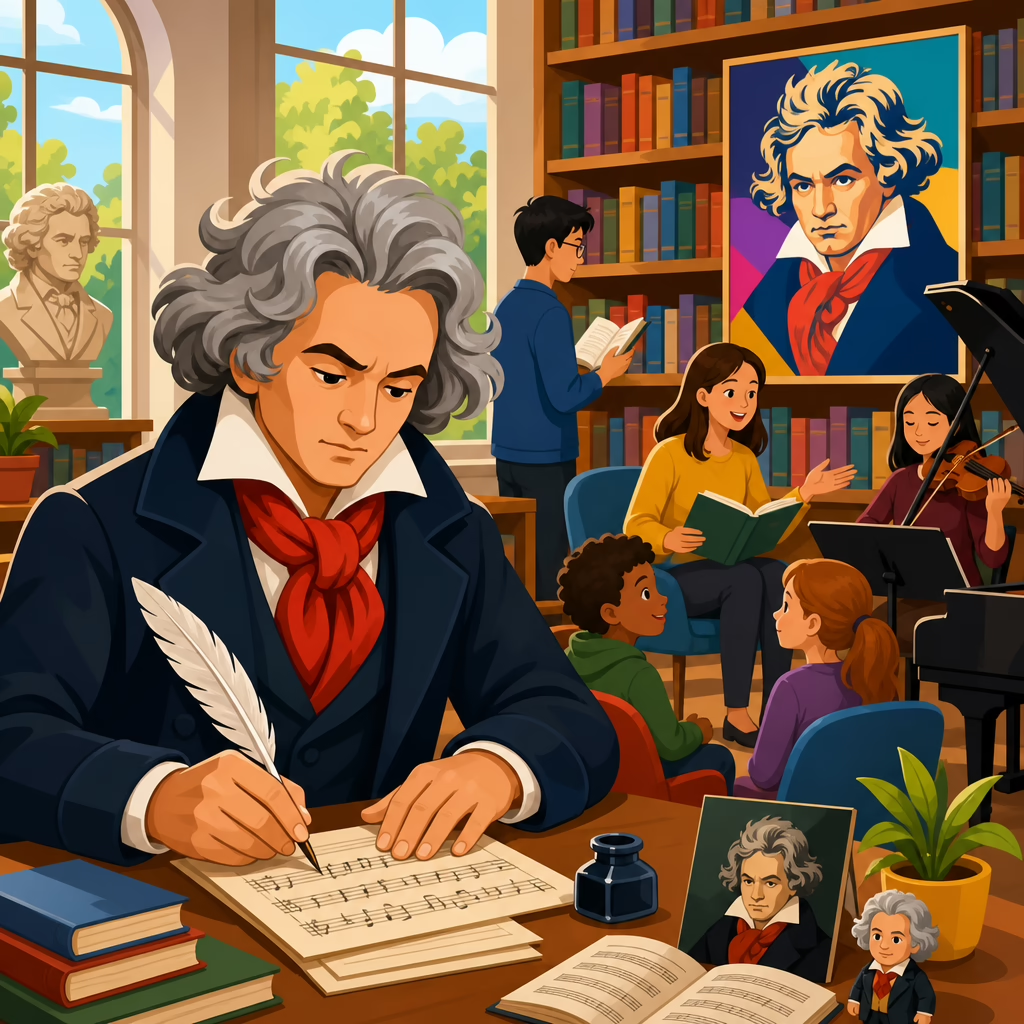
How Libraries Can Host a Beethoven Month
How Libraries Can Host a Beethoven Month starts with one practical idea: turn a familiar composer into a community-wide learning experience that fits the library’s mission. A Beethoven Month is a four-week program series built around the life, music, historical context, and continuing relevance of Ludwig van Beethoven. In libraries, that can include listening sessions, family workshops, book displays, film screenings, school partnerships, and hands-on activities that connect music to literacy, history, and civic culture. I have helped plan composer-centered public programs, and the strongest results came when the library treated the subject not as elite culture, but as an accessible entry point for curiosity. Beethoven works especially well because his music is widely recognized, his biography is dramatic, and his career opens doors to many disciplines at once.
The idea matters because libraries are under constant pressure to demonstrate educational value, community reach, and smart use of limited staff time. A Beethoven Month can meet all three goals. It gives staff a clear programming theme, helps marketing feel cohesive, and creates multiple access points for different age groups. Children can explore rhythm and emotion through short musical excerpts. Teens can examine artistic struggle, disability history, and cultural influence. Adults can engage with biography, concert traditions, and the political world of early nineteenth-century Europe. Seniors often respond strongly to shared listening and memory-centered discussion. Done well, the month becomes more than a celebration of one composer. It becomes a model for cross-generational public humanities programming.
Beethoven is also a smart choice because his story naturally invites questions patrons already ask: Who was he? Why is he famous? What should beginners listen to first? How did he compose after hearing loss? What books, recordings, and online resources are best? A well-designed month answers those questions directly while encouraging deeper exploration. The library does not need an orchestra, a piano series, or advanced music staff to do this successfully. What it needs is a clear structure, realistic scheduling, and careful selection of materials. When planning, think in terms of audience pathways. A patron may first notice a display, attend a thirty-minute lunchtime talk, borrow a biography, return for a family craft, and then join a final listening event. That sequence is what makes the month effective.
Before building the calendar, define the program’s scope. In most public libraries, a Beethoven Month works best when it has one central promise: help patrons understand Beethoven through approachable, repeatable experiences. That means selecting themes that are broad enough to support several formats but narrow enough to stay coherent. Good anchors include “Beethoven the Person,” “How to Listen to Beethoven,” “Beethoven and Hearing Loss,” and “Beethoven for Families.” Academic depth is valuable, but the tone should remain invitational. Libraries serve mixed audiences, including people who have never listened to a full symphony. If the program assumes prior knowledge, attendance drops. If it welcomes beginners without talking down to informed listeners, participation grows across the month.
Build the Month Around Four Weekly Themes
The simplest framework is one theme per week. Week one can introduce Beethoven’s life and times. Week two can focus on listening skills and key works. Week three can explore struggle, innovation, and hearing loss. Week four can connect Beethoven to the modern world through adaptation, film, and community performance. This structure helps staff assign tasks, design displays, and keep publicity clear. It also prevents the common mistake of offering disconnected events under one title. Every item on the calendar should answer a specific patron need: learn the biography, understand the music, discuss the legacy, or participate creatively.
In practice, each week should include one anchor event and one low-barrier support activity. For example, a Saturday lecture-demonstration can be paired with a passive lobby display featuring QR codes to recordings on Naxos Music Library, Freegal, or the library’s streaming platform. A family music-and-story hour can be paired with a take-home activity sheet. A documentary screening can be paired with a curated book cart. This layered format matters because many patrons will not attend formal events but will still engage through browsing. When I have seen themed cultural months succeed, passive programming accounted for a large share of total participation, especially among families and casual visitors.
| Week | Theme | Anchor Event | Support Activity |
|---|---|---|---|
| 1 | Beethoven’s life and Vienna | Introductory talk with listening excerpts | Biography and history display |
| 2 | How to listen to Beethoven | Guided symphony or sonata session | Listening guide bookmarks |
| 3 | Hearing loss and perseverance | Discussion with disability history angle | Quote wall and resource list |
| 4 | Beethoven today | Community performance or film screening | Patron picks and reflection cards |
Choose repertoire with intention. Beginners do not need a survey of everything Beethoven wrote. They need memorable entry points. Strong starting works include Symphony No. 5 for motive and drama, Symphony No. 6 for musical storytelling, “Für Elise” for familiarity, the “Moonlight” Sonata for mood, the “Pathétique” Sonata for contrast, and the “Ode to Joy” finale of Symphony No. 9 for cultural reach. Explain why each piece matters in plain language. For instance, the four-note opening of the Fifth Symphony is a clear example of how a tiny musical idea can drive an entire movement. The Sixth shows how instrumental music can suggest a countryside scene without becoming literal sound effects. These examples help listeners feel oriented rather than overwhelmed.
Design Programs for Distinct Library Audiences
A successful Beethoven Month is not one event repeated for everyone. It is a set of tailored experiences. For children, keep sessions tactile, brief, and expressive. Use movement scarves for phrase shape, rhythm sticks for pulse, and emotion cards to discuss musical character. Read a picture book biography, then play a one-minute excerpt and ask what story the music suggests. For elementary-age groups, connect to classroom learning by introducing terms such as melody, tempo, and motif. Libraries serving teachers and homeschool families can point them to structured classroom resources through the main guide at beethoven lesson plans for elementary music classes, which supports continued learning beyond the event.
For teens, avoid presenting Beethoven only as a museum figure. They respond better when the library frames him as an artist who changed the rules, confronted physical limitation, and influenced modern media. A teen session might compare the use of Beethoven in film, animation, and advertising, then ask why certain pieces signal intensity, genius, or irony. Another strong format is a short workshop on composing with motives using free tools such as Soundtrap, BandLab, or notation apps. The point is not to teach advanced theory. It is to show how Beethoven developed small ideas into large structures, a concept teens can apply in music, writing, and design.
Adult programming works best when it combines context with guided listening. Many adults are interested in classical music but feel they lack the vocabulary to discuss it. A librarian, music teacher, local conductor, or university faculty member can solve that by modeling how to listen. Instead of saying a movement is “important,” explain what to notice: recurring themes, dynamic contrast, sonata form, or the shift from tension to release. Keep examples short. Play ninety seconds, pause, and name the feature. Then replay it. That simple technique consistently increases confidence. Adults leave feeling they can follow the music on their own rather than needing an expert beside them.
Older adults often bring strong cultural memory to Beethoven programs, but assumptions should be avoided. Some know the repertoire well; others know only a few famous melodies. Consider a reminiscence-based listening hour that invites personal reflection. Ask where participants first heard “Ode to Joy,” whether a parent played Beethoven at home, or how concert listening has changed across generations. If your library works with assisted living communities, short outreach versions can travel well. A forty-minute session with live introduction, two recordings, large-print handouts, and time for discussion is usually more effective than a dense lecture. Accessibility is not an add-on here. It is central to participation.
Use Collections, Space, and Partnerships Strategically
The strongest Beethoven Month is built as much from the library’s existing assets as from new events. Start with the collection. Pull biographies for different reading levels, books on Vienna and the Napoleonic era, introductions to classical music, scores if your patrons read music, recordings on CD or streaming platforms, and films related to Beethoven’s life and legacy. Add signage that answers practical questions directly: “New to Beethoven? Start here.” “Best for families.” “Short listening picks.” Face-out presentation matters because patrons rarely browse spine-out music materials deeply. A themed display near the entrance or circulation desk will outperform a hidden music corner every time.
Space planning should support both discovery and comfort. Listening events need reliable speakers, a screen for captions or slides, and seating arranged to encourage attention without feeling formal. If you use a meeting room, test audio levels in advance; poor sound quality undermines music programs faster than almost any other issue. For passive exhibits, include a timeline, portraits, maps of Bonn and Vienna, reproductions of manuscript pages, and concise interpretive labels. Keep labels brief and specific. “Beethoven moved to Vienna in 1792” is useful. “Vienna was a major musical center where he studied, performed, and built his reputation” is better because it explains why the fact matters.
Partnerships expand capacity and credibility. Local music teachers can lead family sessions. University music departments can provide graduate students for talks. Community orchestras, piano teachers’ associations, or early music groups may offer mini-performances. Historical societies can contribute context on Europe during Beethoven’s lifetime. Disability advocates or audiologists can add perspective to conversations about hearing loss, communication, and technology. These partnerships should be specific, not symbolic. Ask each partner for one defined contribution, such as a twenty-minute performance, a curated resource sheet, or a speaker for a single session. Clear roles prevent scheduling drift and keep staff workload manageable.
Budgeting can remain modest if the library focuses on curation rather than expensive production. Public domain scores and many images are available through reputable archives such as IMSLP and major museum or library collections, though staff should confirm usage terms for promotional materials. Streaming access may already come through library subscriptions. Honoraria for speakers are worthwhile if expertise is not available in-house, but even then, a short guided series often costs less than one large concert. If funds are limited, prioritize audio quality, printed handouts, and one strong outside presenter. Those elements deliver more educational value than elaborate décor or novelty giveaways.
Promote the Month and Measure Real Outcomes
Marketing should answer one question immediately: why should someone who is not already a classical music fan come to this? The answer is that Beethoven offers a compelling story, recognizable music, and an easy way to explore history, creativity, and resilience. Use that language in promotional copy. Avoid event titles that assume prior knowledge, such as “Late Style in the Middle Quartets.” A better title is “How to Listen to Beethoven: Five Pieces That Explain His Genius.” Good marketing also uses multiple formats: a calendar listing, email newsletter feature, social posts with short audio hooks, in-building signage, and direct outreach to schools, senior centers, and local arts groups.
Measure results with more than attendance. Track display circulation, streaming clicks from QR codes, repeat attendance across the month, teacher inquiries, and patron comments. A brief post-event card can ask three useful questions: What did you learn? What do you want next? Did this make classical music feel more approachable? Those responses help the library refine future composer or arts months. In my experience, the clearest sign of success is not a full room once. It is when patrons who came for one program borrow materials, return for another event, and bring someone new the following week. That pattern shows the month built momentum instead of delivering a one-off cultural program.
A Beethoven Month works because it lets libraries do what they do best: connect people with ideas, stories, and shared experiences in an inviting public setting. By organizing four clear themes, tailoring activities to distinct audiences, using collections intelligently, and forming practical partnerships, a library can make Beethoven understandable without flattening his complexity. Patrons do not need prior musical training to appreciate the Fifth Symphony, discuss hearing loss and creativity, or recognize why “Ode to Joy” still resonates. They need structure, context, and welcoming presentation. Start with one month, one calendar, and one clear promise to your community: come listen, learn, and discover why Beethoven still matters.
Frequently Asked Questions
What is a Beethoven Month, and why is it a good fit for libraries?
A Beethoven Month is a four-week library program series centered on the life, music, cultural impact, and ongoing relevance of Ludwig van Beethoven. Instead of treating classical music as a niche subject, the idea is to use Beethoven as a gateway to broader learning. Libraries can build events around listening, reading, history, creativity, accessibility, and community discussion, all while staying closely aligned with their educational mission. Because Beethoven’s story connects to biography, perseverance, disability, artistic innovation, and European history, it naturally supports interdisciplinary programming.
For libraries, this format works especially well because it can be adapted to different audience sizes, staffing levels, and budgets. A branch library might offer a small display, one family craft program, and a guided listening session, while a larger system could develop a full month with film screenings, guest speakers, school outreach, and community performances. Beethoven Month also supports literacy goals by pairing music with books, discussion guides, and historical materials. It gives patrons multiple entry points: some may come for the music, others for the biography, and others for hands-on activities or educational partnerships. That flexibility makes it both accessible and mission-driven.
What kinds of programs can libraries include during a Beethoven Month?
Libraries can create a well-rounded Beethoven Month by mixing passive, interactive, and partnership-based programming. Common options include guided listening sessions where staff or guest musicians introduce one piece at a time, book and media displays featuring biographies and recordings, family workshops that connect rhythm and storytelling, and film screenings focused on Beethoven’s life or classical music history. Libraries can also host trivia nights, art activities inspired by symphonic themes, lectures on the historical period, or beginner-friendly talks that explain how to listen to a symphony without prior musical knowledge.
School and community partnerships can make the month even stronger. Local music teachers, college faculty, youth orchestras, choirs, and community musicians may be willing to provide short performances, demonstrations, or co-led discussions. A library could also organize a “Beethoven for Beginners” event, a teen program on composing emotion through sound, or an intergenerational activity where children and older adults respond to the same music through writing or drawing. Hands-on stations can connect music to literacy by encouraging patrons to describe what they hear, compare moods across compositions, or match excerpts to themes from books. A successful program calendar usually includes something for children, teens, adults, and casual visitors so the month feels inclusive rather than specialized.
How can a library make Beethoven Month accessible and welcoming to people who are not familiar with classical music?
The most important step is to remove the assumption that patrons need prior knowledge. Programs should be framed in clear, inviting language rather than technical terms. Instead of advertising a session only by the title of a symphony, a library might describe it as a guided exploration of music that expresses triumph, tension, humor, or change. Staff can introduce short listening excerpts, explain what to notice, and reassure attendees that there is no “correct” way to respond. This makes classical music feel approachable and personal rather than academic or exclusive.
Accessibility should also be built into the design of the month. Because Beethoven’s life is closely tied to hearing loss, libraries have a meaningful opportunity to discuss disability, communication, and inclusion in thoughtful ways. Providing captioned films, printed discussion notes, transcripts when possible, assistive listening support, and visual or tactile activities can broaden participation. Family programs can include movement, drawing, and storytelling so children engage with the music in different ways. Libraries can also highlight books about composers, sound, hearing, and disability representation to deepen the conversation. When Beethoven Month is presented as a community learning experience rather than a formal music education unit, it becomes far more welcoming to a wide range of patrons.
What resources and materials should libraries prepare for a successful Beethoven Month?
At a minimum, libraries should gather a mix of books, recordings, streaming options, display materials, and simple program guides. A strong collection might include Beethoven biographies for adults and children, books on classical music history, introductory listening guides, documentaries, and high-quality audio recordings of major works such as the symphonies, piano sonatas, and string quartets. Libraries should also prepare contextual materials that explain Beethoven’s era, major achievements, and influence in a concise and engaging way. A well-designed display can help patrons browse by theme, such as “Meet Beethoven,” “Music and Emotion,” “History of the Symphony,” or “Composers Who Changed the World.”
For programming, it helps to create reusable tools such as listening handouts, discussion prompts, scavenger hunts for children, and simple timelines. Staff may also want curated playlists for beginner listeners, printable activity sheets, and recommendations for films or related fiction and nonfiction titles. If the library is working with schools or community groups, outreach packets can make collaboration easier by summarizing the month’s goals, event calendar, and possible ways to participate. Marketing materials are equally important: posters, social media graphics, newsletter blurbs, and signage should clearly communicate that the series is designed for all experience levels. Good preparation allows the month to feel cohesive and polished, even if the program budget is modest.
How can libraries measure the success of a Beethoven Month and build on it for future programs?
Success can be measured through both numbers and patron response. Attendance counts, circulation of related materials, program registrations, and engagement with displays or digital content all provide useful data. Libraries can track whether Beethoven-themed books, recordings, and films saw increased use during the month, and whether partnerships with schools or local arts groups led to stronger community participation. Even small indicators matter, such as repeat attendance across multiple events, higher newsletter click-through rates, or positive social media comments from patrons who discovered something new.
Qualitative feedback is just as valuable. Short surveys, comment cards, and informal conversations can reveal which events felt most approachable, which age groups were best served, and what topics patrons want next. Staff should note whether attendees responded more strongly to listening sessions, family crafts, historical talks, or live performances. That information can shape future composer months or broader arts programming. A Beethoven Month may lead naturally into related themes such as women composers, music and literature, disability history, Romantic-era culture, or community music appreciation programs. When libraries document what worked and what sparked curiosity, they can turn a one-month theme into a long-term strategy for arts-based public engagement.