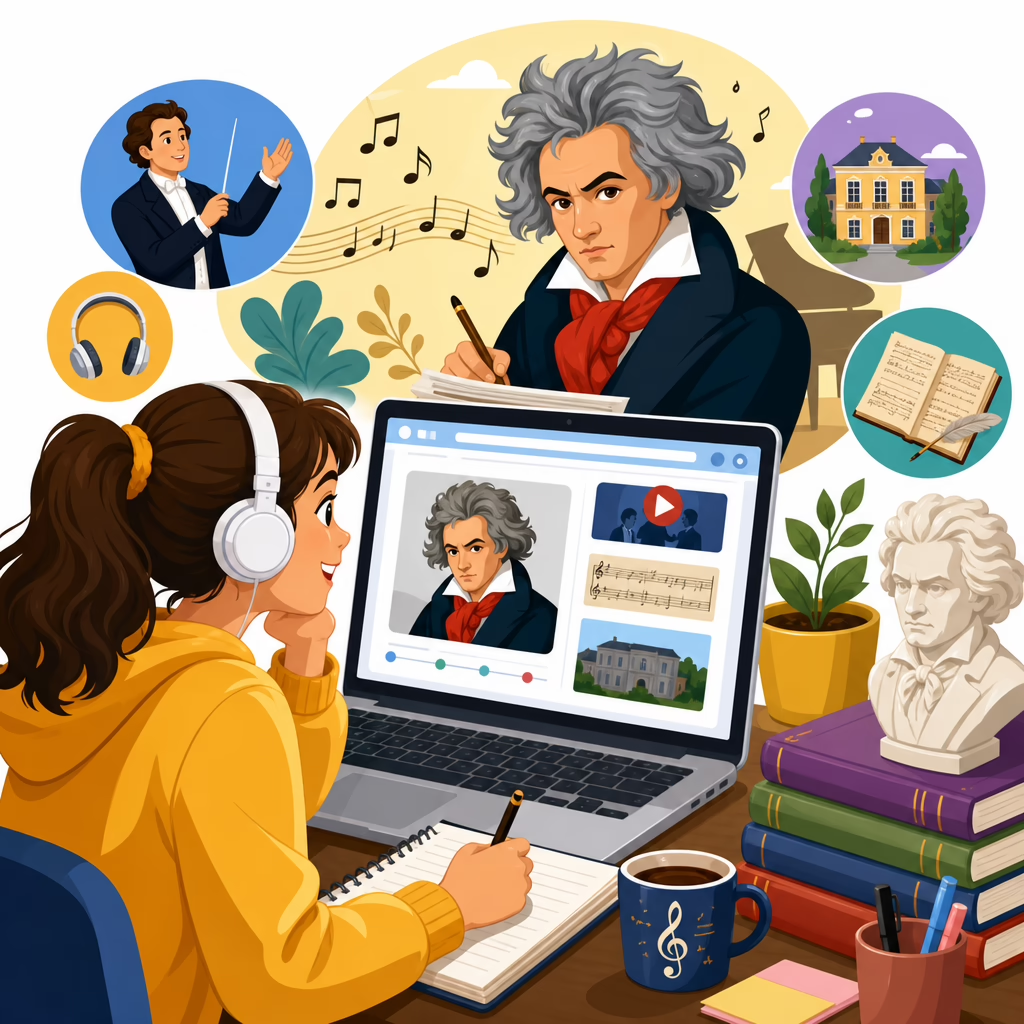
Online Resources for Learning About Beethoven
Online resources for learning about Beethoven have transformed music education, making manuscripts, recordings, scholarly commentary, and guided listening available to anyone with an internet connection. For students, performers, teachers, and curious listeners, the challenge is no longer access alone but knowing which sources are reliable, what each resource does best, and how to combine them into a practical learning path. In this article, “online resources” means digital archives, streaming libraries, educational platforms, museum collections, university materials, and expert-led media that help people understand Ludwig van Beethoven’s life, works, style, and historical significance. “Miscellaneous” matters here because Beethoven study rarely fits into one box: a listener may want biography, score study, piano interpretation, hearing-loss history, or background on Viennese Classicism all in one session. I have built listening guides, compared editions, and used many of these sources in lesson planning, and the strongest results always come from pairing primary materials with clear explanatory content. A well-organized hub saves time, reduces misinformation, and helps readers move from casual interest to informed appreciation of Beethoven’s music.
Start with trustworthy overview resources
If someone asks where to begin learning about Beethoven online, the best answer is to start with institutions that combine editorial review with broad coverage. The Beethoven-Haus Bonn is the single most valuable starting point. As the leading research center and museum devoted to the composer, it offers a digital archive, biography, thematic information, images of manuscripts, letters, and a catalog of works tied to current scholarship. Its material is grounded in documentary evidence, so it is useful for both beginners and advanced readers. For a concise biographical framework, Encyclopaedia Britannica provides a stable summary of Beethoven’s life, major periods, and importance in Western art music. Classical radio organizations such as BBC Radio 3 and WQXR also publish composer guides that explain key works in plain language without sacrificing accuracy.
University and library resources are the next layer. The Library of Congress, Europeana, and national library collections often host digitized scores, correspondence, portraits, and contextual essays that place Beethoven within the political and cultural world of late eighteenth- and early nineteenth-century Europe. When I help readers build a Beethoven study sequence, I usually recommend beginning with a biography, then moving immediately to a timeline. Timelines matter because Beethoven’s “early,” “middle,” and “late” periods are not just labels; they reflect changes in harmony, form, scale, and expressive ambition. A good online overview should explain, for example, why the “Eroica” Symphony marks a dramatic expansion of symphonic scope, why the Fifth Symphony became culturally iconic, and why the late string quartets can sound challenging at first hearing.
Reliable overview pages also answer the most searched questions directly: Who taught Beethoven? Joseph Haydn studied him but did not define him; Beethoven quickly developed an independent voice. Why is he famous? Because he reshaped the symphony, sonata, quartet, and concerto while linking Classical clarity to Romantic intensity. Did he compose while deaf? Yes, progressively so, especially in his later years. Those baseline answers help readers evaluate every deeper resource that follows.
Use digital archives for primary sources and serious study
The strongest way to learn about Beethoven online is to go beyond summaries and examine primary materials. Beethoven-Haus Bonn’s digital collections are central here because they include sketches, autographs, letters, first editions, and documentation connected to individual works. Seeing Beethoven’s handwriting, revisions, and sketch processes changes how learners understand composition. The polished opening of the Fifth Symphony, for example, appears less like sudden inspiration and more like the result of iterative thinking. That insight matters for students who assume masterpieces arrive fully formed.
IMSLP is another indispensable resource, especially for public-domain scores. It is not a critical edition, so users should be careful about editorial markings and source quality, but it is unmatched for convenience. For performers and analysts, the practical method is to use IMSLP for quick access and then compare it with urtext editions from publishers such as Bärenreiter or Henle when interpretive precision matters. Many learners do not realize how much fingering, phrasing, articulation, and pedal suggestions can vary between editions. Online access makes those comparisons possible in minutes.
Digital manuscript projects also support questions that standard biographies cannot answer. Want to know how Beethoven revised the “Hammerklavier” Sonata, how text underlay works in the Missa solemnis, or how publishers handled the Op. 59 quartets? Archival resources allow direct investigation. They also teach an important lesson about Beethoven scholarship: certainty has limits. Some dates, performance practices, and intended tempos remain debated. Trustworthy resources acknowledge those uncertainties instead of pretending every issue is settled.
Choose streaming and listening platforms that support active listening
Many people first encounter Beethoven through recordings, so the right listening platform is essential. For broad access, Spotify, Apple Music, YouTube, and Idagio all provide large catalogs, but they are not equally useful for study. Idagio and Apple Music Classical are especially helpful because they improve metadata, making it easier to distinguish between symphony cycles, historical performances, period-instrument recordings, and chamber versions. Good metadata matters. If a learner searches for the Piano Sonata No. 14, they need to know whether they are hearing a modern concert grand, a fortepiano, or a heavily edited legacy recording.
Active listening means pairing recordings with structure. I often advise learners to choose one work and hear three contrasting interpretations rather than ten random tracks. Compare Carlos Kleiber and Herbert von Karajan in the Fifth Symphony, Alfred Brendel and Igor Levit in the late sonatas, or the Takács Quartet and the Alban Berg Quartet in the late quartets. The goal is not to crown a winner but to hear tempo choices, articulation, balance, and phrasing. YouTube can be unusually valuable when it includes scrolling scores, lecture demonstrations, or side-by-side comparisons, though users should verify channel credibility. Medici.tv and Digital Concert Hall offer higher-curation environments with performances by major orchestras and soloists, often accompanied by program notes.
Listening guides from orchestras and educational nonprofits make these platforms more useful. The New York Philharmonic, San Francisco Symphony, and similar institutions often publish program essays that explain motifs, form, and historical context. Those notes help answer basic but important questions: What is sonata form doing in this movement? Why does the slow introduction matter? What makes the Ninth Symphony’s choral finale historically disruptive? A learner who reads while listening moves faster from passive enjoyment to genuine understanding.
Build a practical study plan by resource type
The most effective online Beethoven learning combines different formats because each solves a different problem. Biographies give narrative, archives provide evidence, scores reveal structure, and recordings show interpretation. The table below is a practical map I use when recommending starting points to new learners.
| Resource type | Best use | Recommended examples | Main caution |
|---|---|---|---|
| Research archives | Primary documents, manuscripts, letters, verified chronology | Beethoven-Haus Bonn, Library of Congress, Europeana | Can be dense for beginners without guidance |
| Score libraries | Following the music, comparing editions, analysis practice | IMSLP, publisher sample pages from Henle or Bärenreiter | Public-domain scans may not reflect the best scholarly text |
| Streaming platforms | Comparing interpretations and building listening familiarity | Idagio, Apple Music Classical, YouTube, Medici.tv | Metadata quality and channel reliability vary widely |
| Educational courses | Structured learning with sequence and explanation | Coursera, edX, Open University materials, Great Courses previews | Some courses cover Beethoven only as part of a larger survey |
| Podcasts and radio | Accessible context, guided listening, historical framing | BBC programs, WQXR features, NPR music segments | Less useful for detailed score-based study |
A practical plan can be simple. In week one, read a concise biography and timeline. In week two, study one symphony with score and recording. In week three, compare two piano sonata performances. In week four, explore a manuscript or letter and connect it to the music. This method prevents the common mistake of consuming isolated facts without hearing the works themselves.
Learn Beethoven through courses, lectures, and expert media
Structured online courses are the best option for readers who want guidance instead of open-ended browsing. Massive open online course platforms, university lecture pages, and continuing education portals often include modules on the Classical period, Viennese musical culture, and Beethoven’s major genres. While complete Beethoven-only courses are less common than broader music history surveys, strong survey courses still provide valuable scaffolding: form, harmony, patronage systems, publishing, and performance conventions. Those topics clarify why Beethoven was radical. He did not invent every form he used, but he stretched inherited forms until they could carry new emotional and architectural weight.
Video lectures on YouTube from conservatories, musicologists, conductors, and pianists can be excellent when the speaker names sources, distinguishes fact from interpretation, and demonstrates concepts at the keyboard or in the score. I look for lectures that explain, for instance, how Beethoven expands codas into major structural events, how rhythmic insistence drives the Seventh Symphony, or why Op. 111 says so much in only two movements. Masterclasses are especially useful for pianists and string players because they connect notation to physical execution: voicing, pedaling, bow distribution, articulation, and tempo flexibility.
Podcasts and radio documentaries serve a different purpose. They are ideal for commuting, review, and broad cultural framing. Programs about the “Heiligenstadt Testament,” Napoleon’s impact on the “Eroica,” or the premiere history of the Ninth Symphony can deepen understanding without requiring score literacy. For younger students or general audiences, this format lowers the barrier to entry while still delivering substance.
Explore specialized topics: deafness, instruments, editions, and context
Some of the best online Beethoven resources focus on specialized questions that general articles only touch briefly. Beethoven’s hearing loss is one example. Medical history articles, museum essays, and document-based discussions of the “Heiligenstadt Testament” help readers avoid simplistic narratives. Deafness did not turn Beethoven into a mythic figure working in total silence overnight; it was a gradual, distressing condition that affected performance, social life, and working methods over time. Good resources explain both the human reality and the limits of retrospective diagnosis.
Historical instrument resources are equally valuable. Hearing Beethoven on fortepiano, natural horn, gut strings, and timpani with harder sticks can radically change a listener’s understanding of balance and articulation. Period-instrument ensembles such as the Orchestre Révolutionnaire et Romantique or Akademie für Alte Musik Berlin demonstrate that familiar works can sound leaner, more transparent, and more rhythmically volatile than in large modern-orchestra performances. That does not make period performance automatically superior, but it broadens perspective.
Edition and text criticism also matter more than many learners expect. Beethoven often left messy source situations, with conflicting manuscripts, copyists’ parts, and early printed editions. Online articles from major music publishers, editorial notes, and scholarly blogs can explain why one slur, accent, or dynamic marking is disputed. For advanced learners, these issues are not minor details; they shape interpretation. Context resources on the French Revolution, Napoleonic Europe, Viennese patronage, salon culture, and sacred music traditions complete the picture by showing that Beethoven’s works were responses to a changing world, not isolated monuments.
How to evaluate quality and avoid weak Beethoven content
Because Beethoven is globally famous, the web is full of shallow summaries, mislabeled recordings, and romanticized anecdotes. The safest filtering method is straightforward. First, check authorship and institution. Museums, universities, major libraries, scholarly editions, and established broadcasters are usually stronger than anonymous content farms. Second, look for evidence: dates, catalog numbers, manuscript references, and named works. Third, compare claims across more than one reliable source. If a page makes a dramatic statement about Beethoven’s intentions but cites nothing, treat it cautiously.
It also helps to watch for recurring problem areas. One is oversimplified periodization. The labels early, middle, and late are useful, but Beethoven did not change style overnight. Another is the “fate motif” mythology around the Fifth Symphony. It is culturally influential, but the famous “fate knocking at the door” claim is not a secure musicological fact. A third is performance advice detached from edition history. If someone declares one tempo or articulation “correct” without discussing source problems, that advice is incomplete.
The best Beethoven learning resources are clear about scope. Some are designed for appreciation, others for scholarly research, and others for practical performance. Matching the resource to the task is the real key. If you want to understand the Ninth Symphony’s reception history, start with essays and archives. If you want to play Op. 27 No. 2, combine urtext score study with masterclasses and recordings. If you want a broad education, build a repeatable routine that includes reading, listening, and source checking.
Online resources for learning about Beethoven are most useful when they are combined intentionally rather than consumed at random. Begin with trusted overview sources to establish the biography, timeline, and major works. Move next to archives and score libraries to see the evidence behind the narrative. Use curated streaming services and listening guides to compare performances actively, not passively. Add courses, lectures, podcasts, and specialized resources on deafness, historical instruments, edition issues, and political context to deepen your understanding. This layered approach works because Beethoven is too large a subject for any single website, video, or playlist.
The main benefit of a well-built Beethoven learning path is confidence. Instead of relying on scattered facts or famous excerpts alone, you gain a clear sense of how the music is constructed, why interpretations differ, and where historical claims come from. That makes listening richer, performance decisions smarter, and teaching more accurate. If you are building out your Community and Education reading list, use this hub as your starting point, then follow the related articles in this subtopic to explore individual resource types, specific works, and practical study methods in greater detail.
Frequently Asked Questions
What are the best types of online resources for learning about Beethoven?
The best online resources for learning about Beethoven usually fall into a few complementary categories: digital archives, streaming libraries, scholarly reference sites, online courses, and guided listening tools. Digital archives are especially valuable because they often provide access to manuscripts, first editions, letters, and historical documents that help you understand Beethoven not just as a composer, but as a working musician within a specific cultural and historical world. These resources are ideal for readers who want to move beyond biography and explore how the music was written, revised, and published.
Streaming platforms and online audio libraries are equally important because Beethoven is ultimately best understood through active listening. A good streaming resource lets you compare multiple interpretations of the same symphony, sonata, quartet, or concerto. This is crucial because Beethoven’s music can sound dramatically different depending on tempo, articulation, phrasing, instrument type, and performance style. For example, comparing historically informed performances with modern orchestral recordings can reveal how interpretation shapes the emotional and structural impact of a work.
Scholarly websites, museum collections, conservatory resources, and university libraries help add context. These sources often include program notes, historical timelines, thematic catalogs, essays on form and style, and explanations of major works such as the symphonies, piano sonatas, and string quartets. For beginners, they can clarify basic questions about Beethoven’s life, periods, and musical language. For advanced learners, they provide more focused commentary on harmony, motivic development, sketch studies, and reception history.
The strongest approach is not to rely on only one kind of source. Instead, combine a trustworthy biography or academic overview with listening access, score access, and some form of expert commentary. That combination gives you a much fuller understanding of Beethoven than any single website or app can provide on its own.
How can I tell whether an online Beethoven resource is reliable?
Reliability starts with authorship and institutional credibility. If a resource is published by a major library, museum, university, conservatory, scholarly society, or established classical music organization, it is usually a strong sign that the information has been reviewed and curated with care. Look for clear attribution: who wrote the material, what their expertise is, whether the site cites primary sources, and whether it distinguishes between established facts and interpretation. Anonymous summaries with no references may be convenient, but they should not be your only source for serious study.
Another useful test is whether the resource provides evidence. High-quality Beethoven materials often reference manuscripts, letters, edition history, thematic catalogs, documented premiere dates, or recognized scholarly publications. If an article makes broad claims about Beethoven’s intentions, health, personality, or politics without showing where that information comes from, treat it cautiously. Reliable resources also tend to be precise. They avoid myths, oversimplifications, and dramatic stories that are popular online but poorly supported by historical research.
Consistency across multiple reputable sources is also important. If a digital archive, an academic encyclopedia, and a conservatory lecture all describe a work or historical event in similar terms, that information is more likely to be dependable. When you find conflicting statements, that does not necessarily mean one source is wrong; it may reflect genuine scholarly debate. In those cases, the best resources usually explain the uncertainty rather than hide it.
Finally, pay attention to purpose. Some online resources are designed for casual listening, some for education, and some for advanced research. A streaming service may be excellent for hearing many recordings but weak on documentation. A digital manuscript archive may be authoritative but difficult for beginners to interpret without guidance. Knowing what each resource is trying to do helps you judge its usefulness and reliability in a more practical way.
What is the most effective way to build a practical online learning path about Beethoven?
A practical learning path works best when it moves in layers: first orientation, then listening, then close study, and finally comparison and reflection. Begin with a trustworthy overview of Beethoven’s life and major works so you can place the music in context. Learn the broad outline of the three stylistic periods often associated with his career, the major genres he transformed, and the historical circumstances surrounding his work. This gives structure to everything that follows.
Next, choose a small group of representative works rather than trying to cover everything at once. A good starting set might include one symphony, one piano sonata, one string quartet, and one concerto or overture. Listen to each piece several times while reading a basic guide or program note. At this stage, focus on large features: mood, shape, recurring themes, dramatic contrasts, and how the work unfolds over time. Do not worry if you cannot analyze every detail immediately. The goal is to build familiarity.
Once the music begins to feel recognizable, add scores, annotated listening guides, or educational videos. Following a score while listening can dramatically improve your understanding, even if you do not read music fluently. You start to notice repetitions, transitions, rhythmic motives, and structural landmarks. If the resource includes expert commentary, pay attention to how specialists describe Beethoven’s use of tension, development, surprise, and formal design. This is often where online learning becomes especially rewarding.
Finally, deepen your study through comparison. Listen to different recordings of the same piece, read a more advanced article, explore a manuscript image, or examine how one movement has been interpreted by different performers and scholars. Keep notes on what you hear and what questions emerge. That simple habit turns passive browsing into active learning. Over time, your understanding of Beethoven becomes not just broader, but more precise, connected, and personal.
Are online recordings and streaming platforms enough to understand Beethoven’s music?
Online recordings and streaming platforms are essential, but they are rarely enough by themselves. Listening is the foundation of Beethoven study because his music must be heard to be understood. Recordings reveal pacing, sonority, emotional intensity, and interpretive choice in a direct and immediate way. They allow you to encounter the famous works repeatedly and discover lesser-known pieces without geographic or financial barriers. For many learners, streaming access is the practical gateway into Beethoven’s world.
That said, recordings alone can leave important gaps. A listener may enjoy a symphony or sonata without fully understanding its form, historical significance, or relationship to Beethoven’s broader output. Without supporting context, it can be hard to tell why one work is considered innovative, what makes a particular performance distinctive, or how the piece fits into the composer’s development. Guided notes, essays, timelines, and score-based resources help answer those questions.
Another limitation is that recordings are interpretive, not neutral. Every performance highlights certain possibilities and downplays others. Tempos may be broader or more urgent, articulations smoother or more pointed, textures more transparent or more monumental. If you hear only one recording, you may unconsciously assume that interpretation is the piece itself. Comparing multiple recordings helps you separate Beethoven’s written music from the performer’s choices, which is one of the most valuable lessons online listening can teach.
In short, streaming platforms are powerful tools, but they work best as part of a broader ecosystem. Pair recordings with reliable background reading, score access when possible, and some exposure to scholarly or pedagogical commentary. That combination turns listening from appreciation alone into genuine musical understanding.
Which online resources are most useful for beginners versus advanced learners studying Beethoven?
Beginners usually benefit most from resources that provide clear structure, plain language, and guided listening. Introductory biographies, museum and orchestra education pages, university overview articles, and well-produced lecture videos are excellent starting points. These resources explain the essentials without assuming deep prior knowledge: who Beethoven was, why he matters, how his style changed over time, and which works are most important to know first. Guided playlists and short program notes are especially helpful because they connect explanation directly to listening.
For intermediate learners, the most useful resources are those that bridge appreciation and analysis. This might include online score libraries, more detailed listening guides, documentary features, conservatory lectures, and articles that discuss form, harmony, and historical context in accessible terms. At this stage, learners often want to move beyond “what happens” in a piece and begin asking “how does Beethoven create this effect?” and “why was this work considered new or challenging?” Resources that combine audio examples with score excerpts are particularly effective here.
Advanced learners, performers, teachers, and researchers usually need access to primary and scholarly materials. Digital manuscript collections, critical edition information, thematic catalogs, academic journals, correspondence archives, and specialized lectures become much more important at this level. These resources support close questions about sources, revision history, notation, editorial decisions, performance practice, and reception. They also make it possible to study Beethoven in depth as a historical figure whose music exists in multiple documentary layers, not just in modern concert performance.
The key point is that “best” depends on your goal. A beginner does not need to start with manuscript studies, and an advanced learner may outgrow simplified summaries quickly. The most effective online study often happens when you choose resources that match your current level while gradually introducing more demanding materials. That way, your understanding of Beethoven develops naturally, with each new type of resource expanding what you can hear, recognize, and interpret.