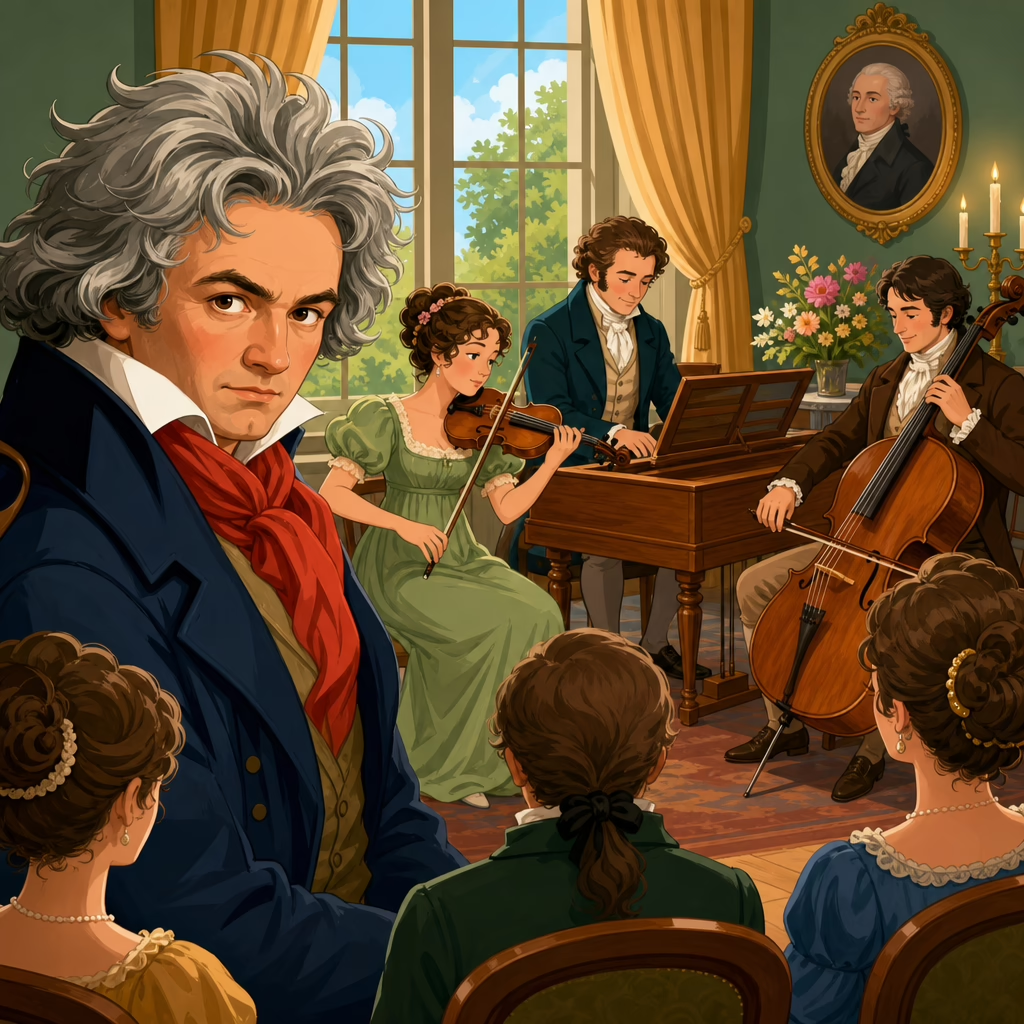
Listening to Beethoven’s Works with Original Instruments
Listening to Beethoven’s works with original instruments changes not only the sound but also the listener’s understanding of the music. In this context, original instruments means period instruments from Beethoven’s lifetime, or accurate modern copies built to eighteenth- and early nineteenth-century specifications. Historically informed performance refers to the broader practice of using those instruments, period technique, period pitch, and contemporary evidence about tempo, articulation, and ensemble balance. I have spent years comparing modern symphony recordings with period-instrument performances, and the differences are too substantial to dismiss as color alone. They affect phrasing, pacing, orchestral hierarchy, and even what counts as dramatic emphasis.
This matters because Beethoven sits at the center of concert life, yet many listeners know him primarily through late-Romantic performance traditions developed long after his death in 1827. Modern strings use metal or synthetic strings, Tourte-style bows, higher tension, and a more continuous vibrato culture. Modern winds are mechanically refined and more homogeneous in tone. Modern pianos project far more power than Viennese fortepianos. Those changes produce magnificent results, but they also smooth over contrasts that Beethoven expected. Hearing his music on original instruments restores sharper edges, lighter textures, and a different relationship between rhythm and rhetoric. For anyone exploring performance and recordings, this hub explains what to listen for, which works reveal the biggest changes, and how period practice reshapes Beethoven across symphonies, concertos, chamber music, piano works, vocal music, and recordings.
What original instruments reveal in Beethoven’s orchestral sound
The first surprise in period Beethoven is transparency. Gut-string violins and violas speak with quicker decay and less sustained sheen than modern sections, so woodwinds and brass emerge with greater independence. Beethoven’s scoring often depends on that independence. In the Eroica Symphony, horns are not just support; they cut through as heroic signals. In the Fifth Symphony, timpani strokes on hard sticks punctuate form with startling force. Natural trumpets and horns, limited to notes of the harmonic series unless hand-stopped, create a brighter, riskier sound world than valved modern brass. The result is not underpowered. It is more profile-driven, with dramatic contrasts built from timbre as much as volume.
Period ensembles also tend to honor Beethoven’s metronome marks more seriously than older traditions did. While scholars still debate some marks, many conductors using original instruments have shown that brisker tempos can clarify structure rather than trivialize it. In the Seventh Symphony, the finale’s propulsion makes immediate sense when articulation stays light and repeated figures do not thicken. In the Pastoral Symphony, rustic dance rhythms gain lift instead of sounding generalized and comfortable. Conductors such as John Eliot Gardiner, Roger Norrington, Frans Brüggen, and Nikolaus Harnoncourt demonstrated that Beethoven’s orchestral writing often sounds less monumental and more kinetic when period forces are used.
The size of the orchestra matters as well. Beethoven did not write for a permanently inflated modern string body. Using proportions closer to early nineteenth-century practice allows winds to balance naturally without forcing. That balance changes how listeners perceive harmony. Inner lines become audible. Bassoons comment more actively. Oboes can sound pungent rather than blended away. In practical listening terms, original instruments reveal that Beethoven’s orchestration is leaner, more interventionist, and often more theatrical than many twentieth-century performances suggested.
How period pianos transform the sonatas and concertos
If there is one area where original instruments alter Beethoven most dramatically, it is keyboard music. The fortepianos of makers such as Anton Walter, Conrad Graf, and Broadwood differ fundamentally from a modern concert grand. They have lighter action, faster response, less sustaining power, and more differentiated registers. Treble can glitter and snap. Bass can growl without overwhelming the middle. Because the instrument decays more quickly, articulation becomes structural. Repeated notes, accents, sforzandi, and sudden dynamic changes read as speech-like gestures instead of simply louder sound.
In the piano sonatas, that matters immediately. The “Pathétique” opens with a rhetoric of interruption that sounds more volatile on a fortepiano. The “Waldstein” gains brilliance without excessive pedal blur. The “Hammerklavier,” often treated as proto-Liszt on modern instruments, becomes more angular and conversational, with fugue textures easier to separate. Performers such as Ronald Brautigam, Malcolm Bilson, and Andreas Staier have shown that the sonatas do not become smaller on period keyboards; they become more varied in character and more explicit in their contrasts.
The piano concertos benefit for a related reason. Beethoven’s orchestras and keyboard instruments were conceived together, and period balance lets the soloist converse rather than overpower. In the Fourth Concerto, the piano’s opening statement sounds inward and improvisatory. In the Emperor Concerto, brilliance emerges through attack and rhythm, not through sheer decibel output. Cadenzas can feel integrated into the musical argument because the instrument’s sound sits inside the ensemble rather than on top of it. For listeners used to modern Steinway sonority, the first encounter may seem lean, but repeated listening often reveals more of Beethoven’s syntax and less inherited romantic haze.
String quartets, chamber music, and the scale of Beethoven’s language
Chamber music is where many skeptical listeners become convinced. Original instruments in Beethoven quartets and mixed ensembles expose the importance of attack, bow stroke, and dynamic micro-contrast. Classical bows produce a natural taper, making phrase endings and rhetorical punctuation feel built into the instrument. Gut strings create grain, especially in fast passagework and off-the-string articulation. That grain is crucial in works such as the Op. 59 “Razumovsky” quartets, where muscularity and refinement coexist bar by bar.
The late quartets are especially illuminating. Modern performances can achieve transcendence through sustained legato and weight, but period performances often clarify Beethoven’s volatility. In Op. 131, fugue lines remain distinct without becoming academic. In Op. 132, the “Heiliger Dankgesang” can sound more fragile, almost private, because the sonority does not cushion every dissonance. Ensembles such as Quatuor Mosaïques and the Eroica Quartet have shown that historical setup is not a museum exercise. It is a practical way to hear Beethoven’s textures as arguments among individual voices.
The same principle applies to violin sonatas, cello sonatas, piano trios, and works for winds. A period violin with a classical bow phrases differently from a modern setup; slurs and accents take on real grammatical force. In the “Kreutzer” Sonata, that creates dangerous momentum rather than generalized virtuoso sheen. In the Septet, often underestimated, period winds supply vivid personality, reminding listeners why the work became one of Beethoven’s most popular during his lifetime.
Key listening differences at a glance
For listeners building a Beethoven listening plan, the most useful approach is to compare the same work on modern and original instruments while focusing on one variable at a time. Listen first for tempo and articulation, then for balance, then for instrumental color. Doing this across genres turns vague impressions into audible evidence.
| Area | Modern-instrument tendency | Original-instrument tendency | What to listen for |
|---|---|---|---|
| Symphonies | Heavier string blend, broader tempos | Clearer winds and brass, more rhythmic urgency | Timpani attack, horn color, inner lines |
| Piano sonatas | Long sustain, large dynamic range | Faster decay, sharper register contrast | Accents, pedaling, rhetorical pauses |
| Concertos | Soloist dominates orchestral texture | Greater dialogue between soloist and ensemble | Orchestral detail under the piano line |
| Quartets | Sustained legato, homogeneous tone | Grainier texture, stronger articulation profile | Bow attack, contrapuntal separation |
| Masses and vocal works | Expanded chorus and symphonic weight | Text clarity and sharper orchestral rhetoric | Word intelligibility, brass brightness |
Beethoven’s vocal music, sacred works, and stage writing on period forces
Beethoven’s vocal music is discussed less often in this context, but original instruments can be revelatory here as well. In Fidelio, natural brass and leaner strings sharpen the opera’s rescue drama. The prison atmosphere gains tension because orchestral detail remains exposed rather than saturated. Recitative accompaniment feels more urgent, and ensembles benefit from a cleaner relationship between voices and orchestra. Conductors working with period forces often choose more speech-conscious German declamation, which helps the score sound like theater instead of an honorary symphony with singing.
The Mass in C and the Missa solemnis also change significantly. Large modern choirs can be thrilling, yet they frequently obscure Beethoven’s complex text setting and accentuation. With period instruments and more agile choral forces, the words project more distinctly, and the sometimes abrasive brilliance of trumpets and drums makes formal climaxes more credible. In the Missa solemnis, the “Et vitam venturi” fugue can sound less massive but more intelligible, while the “Agnus Dei” reveals Beethoven’s extraordinary juxtaposition of prayer and military disturbance. Original instruments do not solve every challenge in these works, but they align sonority more closely with the music’s rhetorical design.
Recordings, listening strategies, and how this hub connects the subtopic
For recordings, start with conductors and players who treat historical evidence as a means to expressive clarity, not ideology. Gardiner’s symphony cycle remains a strong entry point for rhythmic definition and dramatic profile. Brüggen offers a broader, often warmer alternative without sacrificing period color. Norrington’s Beethoven can be provocative in tempo and vibrato choices, but it is historically consequential. For piano concertos and sonatas, Brautigam’s fortepiano recordings are essential because they combine technical control with a clear grasp of Beethoven’s architecture. Bilson remains invaluable for concerto style, especially when paired with period orchestras. In chamber music, Quatuor Mosaïques set a benchmark for the late quartets by balancing austerity and intimacy.
As a hub within performance and recordings, this page points toward every major miscellaneous angle a listener may want to pursue next: comparing complete symphony cycles; choosing among fortepiano sonata editions; understanding period pitch, including A=430 versus modern A=440 or higher; evaluating vibrato use in strings and winds; studying Beethoven’s metronome controversy; and tracing how instrument technology changed between his early, middle, and late periods. It also supports practical listening habits. Use good headphones or speakers, keep volume moderate, and compare one movement at a time. The point is not to declare period performances superior in every case. The point is to hear more of what Beethoven wrote and what performers must decide.
Listening to Beethoven’s works with original instruments restores choices that later traditions often standardized away. It clarifies orchestral balance, sharpens rhythm, redefines the piano’s role, and gives chamber and vocal music a more pointed expressive language. After enough direct comparisons, many details stop sounding unconventional and start sounding persuasive. You hear why natural horns matter in the Eroica, why a fortepiano changes the “Waldstein,” and why smaller forces can make the Missa solemnis more intense rather than less grand.
The central benefit is not historical novelty. It is interpretive precision. Original instruments reveal Beethoven as a composer of attack, contrast, propulsion, and color as much as monumentality. That broader picture helps every listener, including those who ultimately prefer modern-instrument recordings, because it makes the repertoire more legible. Use this hub as your starting point: compare landmark recordings, follow the subtopics linked from performance and recordings, and build your own Beethoven library with both modern and period perspectives in view.
Frequently Asked Questions
What does it mean to hear Beethoven on original instruments?
Hearing Beethoven on original instruments means listening to his music on the kinds of instruments he actually knew, or on highly accurate reproductions built to the same eighteenth- and early nineteenth-century designs. That includes gut-strung violins and violas, classical-era bows, wooden flutes, natural horns and trumpets without modern valves, timpani built and played according to period practice, and fortepianos rather than the later nineteenth-century concert grand. In practical terms, this approach is part of historically informed performance, which goes beyond the instruments themselves. It also draws on period pitch standards, historical treatises, early editions, contemporary descriptions, and evidence about tempo, articulation, phrasing, balance, and orchestral layout.
The result is not simply a novelty or a museum exercise. It changes how Beethoven’s music speaks. Textures can become clearer, inner lines more audible, rhythms more spring-loaded, and contrasts more immediate. Because period instruments respond differently from modern ones, musicians phrase and articulate differently as well. What a listener often notices first is that the sound world feels lighter, more transparent, and sometimes more volatile. Instead of the broad, saturated orchestral blend associated with later Romantic performance, you often hear sharper edges, quicker attacks, and a stronger sense of instrumental individuality. That can reveal Beethoven not only as a monumental symphonist, but also as a composer deeply rooted in the sound, rhetoric, and expressive possibilities of his own era.
How do period instruments change the sound of Beethoven’s music?
Period instruments can transform Beethoven’s sound in several important ways. String instruments fitted with gut strings usually produce a warmer but less uniformly glossy sound than modern metal-strung instruments. They can speak with remarkable nuance, but they do not sustain in quite the same way, so articulation and bow stroke matter enormously. Classical and early Romantic bows also encourage a different kind of phrasing, often with more lift, bite, and variation inside each line. Woodwinds tend to stand out more distinctly because they were built differently and have more individual tone colors from note to note. A classical oboe, bassoon, or wooden flute does not blend into a generalized orchestral wash as easily; instead, it contributes a very specific voice.
Brass and timpani often make the biggest immediate impression. Natural horns and trumpets, which lack valves, have a more overtly brilliant, raw, and sometimes risky quality. Their notes are shaped by the instrument’s natural harmonic series, so Beethoven’s brass writing can sound more urgent and exposed. Timpani played with harder sticks on period drums can cut through with startling clarity, adding rhythmic drive rather than just low-end weight. Then there is the fortepiano. Compared with the modern concert grand, it offers less sustaining power and mass but much greater differentiation of color across registers. In Beethoven’s keyboard music, that can make sudden dynamic contrasts, accents, and conversational textures feel especially vivid. Altogether, these changes can make the music sound leaner, more dramatic, and often closer to chamber music in its transparency, even in large orchestral works.
Why does historically informed performance affect how listeners understand Beethoven?
Historically informed performance affects understanding because sound shapes interpretation. When Beethoven’s music is played on instruments similar to those he expected, many details that can seem dense or monumental in modern performance become easier to hear in relation to one another. Counterpoint, rhythmic tension, registral contrast, and timbral contrast all emerge with a different balance. A listener may suddenly grasp why a particular sforzando matters, why a bass line drives the harmony so forcefully, or why winds are used not just for color but as essential structural voices. In other words, the music’s architecture can become more legible.
It also changes emotional understanding. Beethoven is often framed through the lens of later nineteenth-century grandeur, which can emphasize weight, heroism, and continuous power. Period performance can reveal another side: volatility, wit, abruptness, fragility, and even dance impulse. Faster tempos may feel more plausible, repeated rhythmic figures may sound more propulsive than heavy, and silences may register more dramatically. This does not make one approach “correct” and all others wrong. Rather, it expands what listeners can perceive. Historically informed performance reminds us that Beethoven’s music was once new, risky, and tied to a very particular sonic environment. By entering that environment, even approximately, listeners often gain a more historically grounded and musically detailed understanding of the works.
Are original instrument performances more authentic than modern performances of Beethoven?
The word “authentic” needs care. Original instrument and historically informed performances can be more historically grounded in certain respects because they attempt to recreate key elements of Beethoven’s musical world: instrument design, pitch, playing techniques, ensemble size, and interpretive habits documented in sources from the time. That can bring listeners closer to the kinds of sounds Beethoven may have imagined or heard. In that sense, these performances offer valuable evidence and insight. They help answer practical questions about balance, articulation, sonority, and tempo in ways that modern instruments sometimes obscure.
At the same time, no modern performance can fully reproduce Beethoven’s original conditions. Concert halls are different, audiences are different, musician training is different, and even surviving period instruments or copies exist in a contemporary context. So it is usually more accurate to say that historically informed performance is an informed interpretive method rather than a final or perfect recovery of the past. Modern instrument performances can also be profoundly insightful and musically compelling. The strongest reason to hear Beethoven on period instruments is not to police authenticity, but to broaden perspective. It allows listeners to encounter familiar works through a different acoustic and expressive lens, often revealing possibilities that coexist alongside modern traditions rather than replacing them.
What should first-time listeners pay attention to when hearing Beethoven on period instruments?
First-time listeners should listen for clarity of texture and contrast of character before anything else. Notice how often individual instrumental lines emerge from the ensemble, especially in the winds and lower strings. Pay attention to articulation: short notes may sound more pointed, accents more explosive, and repeated figures more alive. In Beethoven, these details are not decorative. They generate momentum and shape the argument of the music. You may also hear more dramatic dynamic terracing, with sudden shifts from soft to loud feeling less smoothed out than in many modern performances. This can make Beethoven’s rhetoric feel more confrontational and immediate.
It is also worth focusing on instrumental color. The brass may sound less polished but more thrillingly direct; the timpani may seem more assertive; the strings may carry less continuous sheen but more speech-like flexibility. If a fortepiano is involved, listen to how different registers speak almost like different characters, and how Beethoven’s accents and rapid changes of mood become especially vivid. Finally, pay attention to pacing. Historically informed performances often favor tempos and rhythmic profiles that highlight the music’s dance roots, pulse, and forward motion. Rather than expecting the broad, blended sonority of a modern symphony orchestra, try listening for conversation, friction, and contrast. That shift in listening habits often unlocks the full fascination of Beethoven on original instruments.