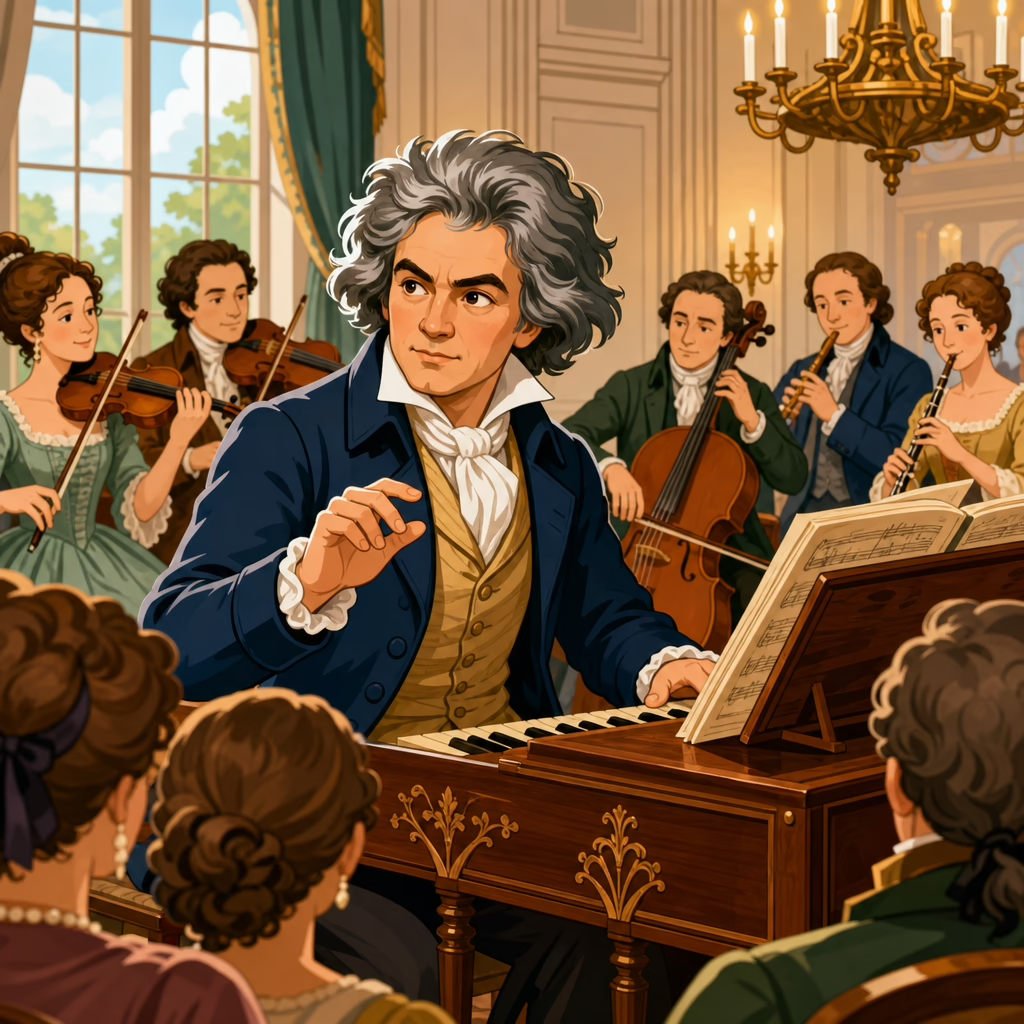
Guide to Historically Informed Performances of Beethoven’s Works
Historically informed performances of Beethoven’s works aim to recreate, as closely as practical, the sound world, style, and performance habits Beethoven knew. In practice, that means choices about instruments, pitch, tempo, articulation, vibrato, phrasing, seating plans, and even the size of the orchestra. For listeners exploring performance and recordings, this approach matters because Beethoven sits at a turning point: late Classical discipline meets early Romantic intensity. If performers treat him as fully nineteenth-century, they can smooth away his sharp edges; if they treat him only as a Classical inheritor, they can underplay his radical force.
I have worked with period-instrument players and modern orchestras on Beethoven programs, and the difference begins before the first note. A natural horn changes balance. Hard-stick timpani alter rhythmic profile. Gut strings speak with more grain and less continuous sustain. Classical bows encourage spring and separation. Fortepianos reveal details often buried on a modern concert grand. These are not cosmetic differences. They shape how Beethoven’s harmony lands, how his accents bite, and how his sudden dynamic contrasts register in a hall.
The term historically informed performance, often shortened to HIP, does not mean museum reconstruction. It means using surviving evidence to make musically persuasive decisions. Sources include Beethoven’s scores, his metronome markings, early printed parts, treatises by Leopold Mozart, Quantz, Türk, Czerny, and Spohr, reports from early nineteenth-century concerts, and the construction of period instruments themselves. Scholars and performers also study venues such as the Theater an der Wien and the acoustic realities of smaller orchestras. The goal is not rigid authenticity, which is impossible, but informed judgment grounded in history.
For Beethoven, this approach matters especially because his notation is unusually demanding. Sforzandi, hairpins, accents, rests, and tempo relationships are structural instructions, not decoration. A historically informed reading often clarifies form by restoring contrast. Fast movements can feel more dangerous, slow movements more vocal, and finales less heavy-footed. It also helps listeners make sense of debates around famous issues: whether Beethoven’s metronome marks are playable, how much vibrato is appropriate, or why a symphony can sound lean yet still overwhelming. As a hub for miscellaneous performance and recording questions, this guide maps the core ideas, practical choices, major recordings, and controversies that shape historically informed Beethoven today.
What Historically Informed Beethoven Performance Actually Means
Historically informed Beethoven performance starts with the premise that instruments and style influence musical meaning. Beethoven wrote for transitional forces: Viennese pianos with lighter action than a Steinway, woodwinds with fewer keys, brass without valves, timpani with calfskin heads, and strings using gut. These instruments do not simply sound older. They redistribute prominence across the ensemble. Winds emerge with clearer individuality, brass entries feel more elemental, and string textures become less homogenized. In the symphonies, that changes the listener’s perception of orchestration; in the piano works, it changes pedaling, articulation, and dynamic range.
Style is just as important as equipment. Beethoven inherited rhetorical phrasing from the eighteenth century, where articulation and accent often function like speech. Slurs can imply hierarchy within a figure. Dots and wedges are not interchangeable. Appoggiaturas have expressive weight. Cadences often require shape rather than generalized legato. Conductors and players informed by this language typically favor more active bass lines, clearer rhythmic profile, and more literal observance of rests. That can make familiar works sound startlingly direct. The opening of the Fifth Symphony, for example, becomes less monumental block and more urgent, volatile gesture when rests are fully articulated and tempos move.
One misconception is that historically informed means small, dry, and emotionally restrained. The best Beethoven HIP is none of those things. It can be fiercely dramatic. Listen to the Eroica funeral march on period instruments when the bass line is allowed to speak and the winds cut through without heavy string vibrato; the result is often more tragic, not less. Another misconception is that modern instruments cannot produce informed results. They can. Many modern orchestras borrow HIP principles such as reduced vibrato, antiphonal violins, lighter timpani strokes, and more transparent textures. The issue is not ideological purity. The issue is whether choices illuminate Beethoven’s notation and sound world.
Instruments, Setup, and Ensemble Size
Beethoven’s orchestral sound depends heavily on period setup. Strings generally use gut, or at least gut-core, producing quicker decay and richer transient attack than modern steel strings. Classical and early Romantic bows encourage articulated stroke and lighter sustained pressure. Woodwinds, especially oboes, clarinets, bassoons, and flutes, have more distinct timbral shifts across registers because key systems were less standardized. Natural horns and trumpets rely on crooks and hand-stopping, giving harmonic color and occasional rawness modern valved instruments smooth out. Timpani, often played with hard sticks, provide definition that can reorganize an entire orchestra’s rhythm.
Ensemble size is equally important. Beethoven did not always hear tiny groups, but many first performances used forces smaller than those common in twentieth-century symphonic tradition. A leaner string body lets inner voices register and reduces the need for overprojected winds. Seating also matters. Antiphonal first and second violins, a common historical arrangement, clarify imitative writing in the symphonies and quartets adapted for orchestra. Double bass placement behind cellos or at the back affects rhythmic grounding. These details influence not only texture but interpretation: a conductor who can hear contrapuntal lines clearly is less likely to inflate tempo transitions or smear accents.
| Performance choice | Typical period-informed practice | Musical effect in Beethoven |
|---|---|---|
| Strings | Gut or gut-core strings, lighter bow pressure | Cleaner articulation, less blanket sustain, clearer harmony |
| Brass | Natural horns and trumpets | Sharper attacks, more overtone color, less blended sheen |
| Timpani | Calfskin heads, hard sticks | Stronger rhythmic edge and more audible pitch center |
| Seating | Antiphonal violins | Clearer dialogue in symphonies such as Nos. 5, 7, and 9 |
| Orchestra size | Moderate forces matched to venue | Better balance, less heaviness, more agile transitions |
For piano music, the fortepiano is central. Instruments modeled on makers such as Walter, Graf, Broadwood, and Conrad Graf vary significantly, but in general they offer lighter action, faster decay, and more differentiated registers than a modern grand. That makes Beethoven’s accents, trills, and pedaling indications easier to understand. The Hammerklavier on a fortepiano does not become easier, but its texture becomes more transparent. In the Op. 110 and Op. 111 sonatas, recitative-like passages speak with a vocal quality often blurred by sustained resonance on modern pianos. That said, fortepianos can also expose weaknesses mercilessly; they reward precision and punish generalized sonority.
Tempo, Metronome Marks, and Beethoven’s Notation
No topic generates more debate than Beethoven’s tempos. After Johann Nepomuk Maelzel’s metronome became available, Beethoven supplied markings for many works, and some are famously fast. Scholars have proposed faulty metronomes, copying errors, or misreadings, but no single explanation solves every case. In rehearsal, I have found the most productive approach is to treat the markings as serious evidence of character and proportion, even when an exact number proves impractical. They tell us Beethoven generally wanted more motion, more buoyancy, and less rhetorical broadening than the later German tradition often imposed.
Historically informed conductors handle this in different ways. Roger Norrington and Christopher Hogwood tended toward strong literalism. John Eliot Gardiner combines rhythmic discipline with theatrical flexibility. Frans Brüggen often balances urgency against line, avoiding both drag and haste. The important point is that tempo in Beethoven is relational. The transition from one section to another, the pulse underlying subdivisions, and the energy of repeated notes all matter as much as the headline speed. A HIP reading of the Seventh Symphony, for example, often makes the Allegretto move enough to preserve its tread while keeping the surrounding movements proportionate.
Notation beyond tempo also deserves literal attention. Beethoven’s sf, fp, crescendos, diminuendos, and rests create architecture. Slurs indicate motive shape, not just bowing convenience. Accents often work against meter to generate propulsion. Dynamic terracing can be abrupt by design. In the Piano Sonata Op. 31 No. 2, often called the Tempest, the contrast between recitative fragments and continuous motion depends on precise observance of rests and pedal restraint. In the Ninth Symphony, the scherzo’s impact relies on sharply profiled timpani, exact articulation, and clear differentiation between accented and unaccented repetitions. Historically informed practice is strongest when it respects these details without becoming mechanical.
Vocal Works, Chamber Music, and Recording Landmarks
Beethoven’s historically informed performance practice is not limited to the symphonies. In chamber music, period strings and fortepiano can radically alter conversational balance. The violin sonatas gain more give-and-take when the keyboard does not dominate by sheer decibel power. The Razumovsky Quartets can sound less saturated but more argumentative, with viola and cello lines carrying sharper identity. Ensembles such as Quatuor Mosaïques demonstrated that late Beethoven does not need modern heaviness to sound profound. Instead, transparent voicing can intensify the sense of formal daring, especially in fugues and sudden harmonic pivots.
The vocal works raise additional issues of diction, chorus size, and orchestral weight. In the Missa solemnis, historically informed conductors often favor smaller choirs with more textual clarity and tighter rhythmic response. That helps with Beethoven’s dense fugues and difficult high writing. In Fidelio, period instruments can heighten dramatic contrast between spoken dialogue, lyrical intimacy, and public ceremonial scenes. The prison chorus benefits from directness rather than blanket grandeur. Good German diction and sharply defined consonants matter as much as orchestral style because Beethoven’s vocal rhetoric is inseparable from the words.
Several recordings remain essential reference points. Gardiner’s symphony cycle with the Orchestre Révolutionnaire et Romantique is foundational for its combination of kinetic drive, color, and structural grip. Norrington’s London Classical Players cycle was earlier and more polemical, but it changed the conversation about vibrato, tempi, and articulation. Brüggen’s Beethoven with the Orchestra of the Eighteenth Century offers warmth and flexibility without losing historical profile. For piano sonatas, Ronald Brautigam’s fortepiano cycle is indispensable because it unites technical command with deep stylistic imagination. For concertos, recordings with fortepiano and period orchestra, including Brautigam and others, reveal orchestral detail that modern grand-centered readings often obscure. These are not the only valid options, but they form a reliable starting map for further listening across the performance and recordings landscape.
Common Misunderstandings and How to Listen Critically
Historically informed Beethoven can fail when it becomes doctrinaire. Fast tempos without rhythmic unanimity sound merely rushed. Minimal vibrato without tonal support sounds undernourished. Period brass played cautiously defeats the point of using them. The best performances treat evidence as a means to expressive truth, not as a compliance checklist. When evaluating a recording, listen first for whether the setup clarifies Beethoven’s argument. Can you hear inner lines in the Eroica? Do transitions in the Fifth feel inevitable rather than manufactured? Does the finale of the Ninth gain cumulative energy without turning opaque?
It also helps to compare parallel recordings. Hear the same movement on modern and period instruments, then note specific differences: bass articulation, wind presence, decay after accents, audibility of timpani, and the rhetorical use of silence. Ask whether the performance preserves dance impulse in scherzos and variation movements. Notice whether lyrical passages still sing when vibrato is used selectively. Strong HIP recordings do not deny warmth; they redistribute it through phrasing and harmony rather than continuous surface richness.
As a hub page for miscellaneous questions in performance and recordings, the central lesson is simple: historically informed performance gives listeners and musicians a better set of tools for understanding Beethoven. It sharpens rhythm, restores orchestral color, clarifies formal design, and reconnects notation with sound. You do not need to reject modern instruments to benefit from it, but you do need to hear Beethoven on his own terms at least some of the time. Start with a historically informed Eroica, a fortepiano sonata recording, and a period-instrument Fidelio excerpt, then compare them with familiar modern versions. That single exercise can transform how you hear Beethoven’s energy, wit, violence, and lyricism across the entire performance and recordings repertory.
Frequently Asked Questions
What does “historically informed performance” mean in Beethoven, and why does it matter?
Historically informed performance, often shortened to HIP, is an approach that tries to bring Beethoven’s music closer to the sound, technique, balance, and expressive habits of his own era. Rather than treating Beethoven as if he belongs entirely to the later nineteenth-century symphonic tradition, HIP musicians ask practical questions: What instruments were available to Beethoven? How large were the orchestras he likely heard? How did players articulate phrases, use vibrato, tune, balance sections, and shape tempo? The goal is not museum-style reconstruction for its own sake, but a more historically grounded reading of the music.
This matters especially in Beethoven because he stands at a crucial stylistic crossroads. His music grows out of Haydn and Mozart, yet it points toward the emotional force and expanded rhetoric of the Romantic period. If performers approach him only through later traditions, the music can become heavier, smoother, and more generalized than the score may actually suggest. Historically informed performances often reveal sharper rhythmic definition, clearer inner voices, more transparent textures, and stronger contrasts between lyrical and dramatic moments. Many listeners are surprised by how urgent, agile, and even radical Beethoven can sound when the music is stripped of habits that accumulated long after his lifetime.
It is also important to understand that HIP is not one rigid formula. There is no single “correct” Beethoven sound. Instead, it is a research-based performance philosophy that combines evidence from treatises, surviving instruments, early editions, concert reports, and broader knowledge of period style. Some ensembles use period instruments exclusively; others perform on modern instruments while adopting historically informed ideas about articulation, tempo, phrasing, and orchestral layout. In both cases, the central purpose is the same: to hear Beethoven less through inherited convention and more through the aesthetic world in which his music was conceived.
How do period instruments change the sound of Beethoven’s music?
Period instruments can transform the color, balance, and impact of Beethoven’s works in ways that are immediately audible. Strings fitted with gut rather than modern metal strings tend to produce a lighter, more varied, and often more speech-like tone. Their sound can be warm and expressive, but usually with less sustained weight than modern strings, which makes articulation and rhythmic attack especially important. Woodwinds from Beethoven’s time often have more distinctive individual timbres, so oboes, clarinets, bassoons, and flutes emerge with vivid personality instead of blending into a generalized orchestral wash.
Natural brass also makes a major difference. Beethoven wrote for natural horns and trumpets, which lack the valve systems of modern instruments. As a result, the tone can be brighter, more raw, and more uneven across different notes, but that very unevenness is part of the period sound. It gives fanfares and harmonic punctuation a striking brilliance and edge. Timpani, often played with harder sticks in historically informed settings, can sound more incisive and rhythmically propulsive, helping drive Beethoven’s dramatic climaxes without simply adding mass.
The keyboard world matters too. Beethoven composed for fortepianos, not the modern concert grand. A fortepiano has quicker decay, lighter action, and clearer differentiation between registers. That means passagework can sound more transparent, accents can be more biting, and dynamic contrasts can feel less about sheer volume and more about color and character. In piano concertos and solo sonatas, this can illuminate Beethoven’s textures and rhetoric in a way that differs substantially from modern-piano interpretations.
Overall, period instruments often produce less homogenous blend but more contrast, more grain, and more sharply etched detail. For many listeners, that makes Beethoven feel more theatrical, more volatile, and closer to the dramatic language implied by the scores themselves. The change is not merely cosmetic; it can alter how themes project, how accompaniment supports melody, how climaxes accumulate, and how the architecture of a movement is perceived.
Are Beethoven’s famously fast metronome markings meant to be taken literally?
Beethoven’s metronome markings are among the most debated issues in performance practice, and the short answer is that they should be taken seriously, though not always simplistically. Beethoven was one of the first major composers to embrace the metronome as a tool for specifying tempo with unusual precision. Because he provided markings for a significant number of works, they cannot be dismissed casually. They show that he cared deeply about motion, proportion, and the underlying pulse of a piece. Historically informed performers often treat these indications as valuable evidence that Beethoven wanted a greater sense of energy and forward momentum than later traditions sometimes allow.
At the same time, there are legitimate reasons for caution. Questions remain about whether some markings were transmitted accurately, whether the metronome itself functioned perfectly, and whether modern performers interpret the indicated beat unit exactly as Beethoven intended in every case. In addition, tempo in Beethoven is never just a matter of mechanical speed. Character, articulation, acoustics, hall size, orchestral forces, and the capabilities of instruments all influence how a tempo actually feels. A brisk Beethoven tempo on period instruments, with lighter articulation and clearer texture, may sound more natural than the same number realized by a large modern orchestra in a reverberant hall.
The best historically informed performances usually avoid two extremes: ignoring Beethoven’s markings because they seem uncomfortable, or obeying them so rigidly that the music loses breadth, gravity, or expressive shape. Instead, they use the markings as a crucial starting point and then build a convincing musical result around them. This often leads to performances that are noticeably faster, more tensile, and more rhythmically alive than traditional readings, while still making space for grandeur and expression. In other words, Beethoven’s tempos are best understood not as a trap, but as a clue to the intensity, propulsion, and structural coherence he expected.
Besides instruments and tempo, what performance choices define a historically informed Beethoven interpretation?
A historically informed Beethoven interpretation involves far more than choosing old instruments or faster speeds. Articulation is one of the most important factors. HIP performers tend to pay close attention to accents, sforzandos, slurs, staccatos, and phrase markings, treating them as central expressive instructions rather than decorative details. This often produces playing that feels more rhetorical and speech-like, with a sharper distinction between connected and detached notes. In Beethoven, where rhythm and accent carry enormous structural and emotional weight, that precision can dramatically alter the listener’s experience.
Vibrato is another major area. In many historically informed approaches, vibrato is used more selectively as an ornament or expressive color rather than as a constant default. That can make string textures more transparent and allow dissonances, wind timbres, and harmonic changes to register more clearly. Similarly, phrasing may be shaped less around long, continuously sustained lines and more around gestures, motives, and dynamic inflection. This can be especially revealing in Beethoven, whose music often grows from small rhythmic cells and sharply characterized ideas.
Orchestral layout and size also matter. Many HIP conductors experiment with antiphonal violin seating, placing first and second violins on opposite sides, which can make Beethoven’s dialogic writing much easier to hear. The size of the orchestra is often scaled to forces more consistent with early nineteenth-century practice, producing greater clarity and balance. With fewer strings, woodwinds and brass can speak with more independence, and the dramatic interplay among sections becomes more vivid. Pitch standards may differ as well, with some ensembles tuning lower than the modern norm, subtly affecting sonority and tension.
Finally, historically informed musicians often think carefully about repeats, ornamentation, portamento, bowing style, and the relationship between text and expression in vocal works. Even practical details like the acoustical environment and ensemble placement can shape the result. Taken together, these decisions create a performance style that emphasizes contrast, transparency, rhythmic profile, and fidelity to the score’s expressive markings. The cumulative effect is often profound: Beethoven emerges not as a monument wrapped in tradition, but as a daring, unpredictable, and deeply physical composer.
How should listeners compare historically informed Beethoven recordings with traditional modern performances?
The most useful way to compare them is not to ask which approach is universally “right,” but to listen for what each one reveals. Historically informed recordings often foreground clarity, rhythmic spring, textual detail, and instrumental color. Traditional modern performances may offer broader sonority, sustained legato, and a larger-scale symphonic sweep. Rather than treating these as mutually exclusive camps, it helps to hear them as different interpretive lenses. Beethoven’s music is rich enough to sustain both, and hearing contrasting approaches can deepen understanding of the scores.
When comparing recordings, focus on specific musical elements. Notice the speed of the opening movement and whether the tempo feels driven, monumental, or flexible. Listen to articulation in the strings: are motives sharply etched or broadly smoothed? Pay attention to wind and brass presence: do they blend into the orchestral mass, or do they stand out as independent voices? Observe the use of vibrato, the transparency of inner lines, the force of timpani accents, and the relationship between drama and architecture. In Beethoven, these details shape not only the sound but also the emotional narrative.
It can also be helpful to compare the same work across different categories. For example, a period-instrument symphony cycle may reveal propulsion and raw energy, while a modern