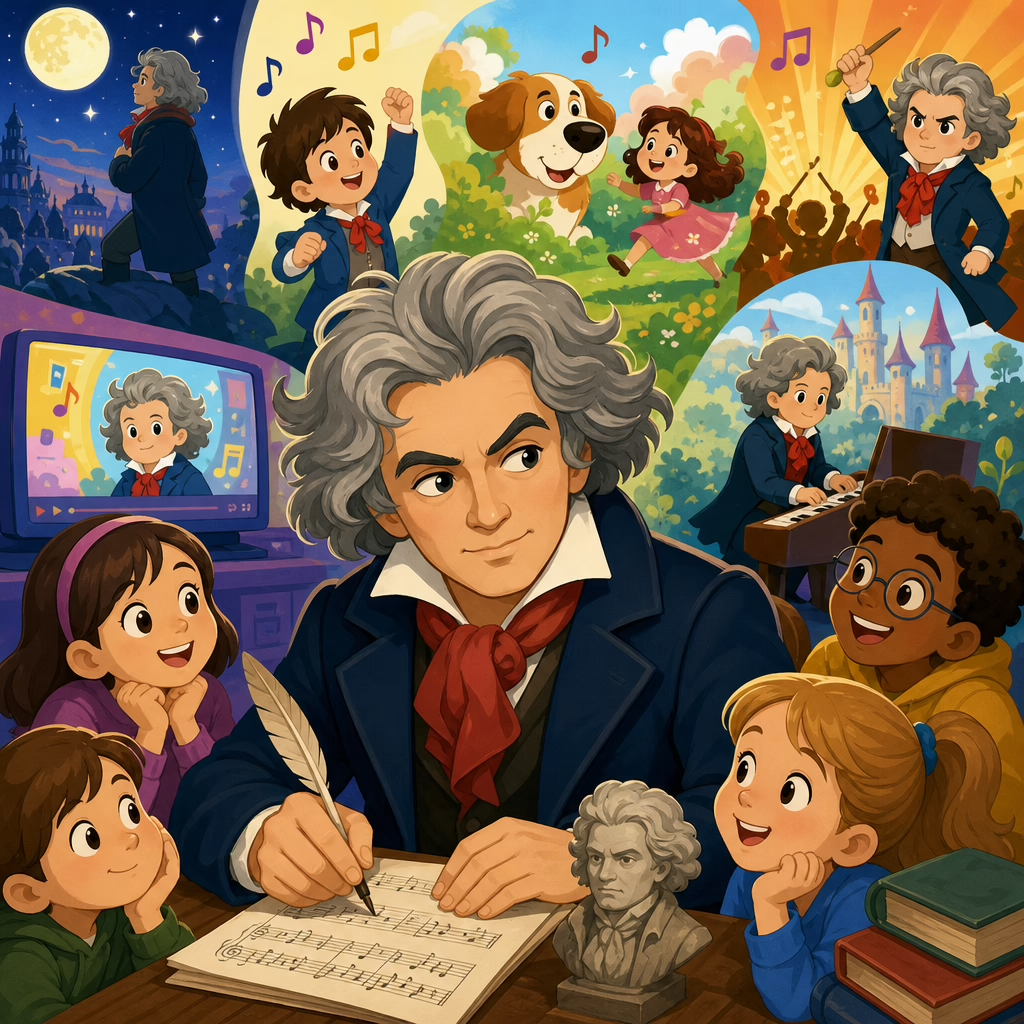
Beethoven in Children’s Media and Storytelling
Beethoven in children’s media and storytelling reveals how a demanding, often intimidating composer becomes understandable, memorable, and emotionally useful for young audiences. In this context, children’s media includes picture books, middle-grade biographies, classroom videos, cartoons, family films, and animated shorts that adapt Ludwig van Beethoven’s life, music, and public image into age-appropriate narratives. Storytelling matters because children rarely meet Beethoven first through a concert hall or a scholarly biography. They meet him through characters, plots, visual symbols, and repeated musical cues that explain who he was before they know what a symphony or sonata is.
Across schools, libraries, museum programs, and family entertainment, I have seen the same pattern: when creators present Beethoven only as a stone-faced genius, children disengage quickly. When they present a stubborn child learning piano, a deaf composer refusing defeat, or a melody that changes a scene’s mood, attention rises immediately. That difference is not trivial. Early encounters shape whether classical music feels closed and elite or alive and human. Beethoven appears often because he offers simple dramatic hooks that children grasp: unusual talent, strong emotions, recognizable music, struggle, perseverance, and triumph.
His presence in children’s storytelling also carries cultural weight. Beethoven stands for more than historical biography; he functions as a shorthand for creativity, seriousness, rebellion, and excellence. The opening of Symphony No. 5 can signal danger, effort, or destiny within seconds. “Ode to Joy” can suggest cooperation, celebration, or shared humanity. Even children who cannot name the pieces often recognize the emotional pattern. That makes Beethoven especially useful in educational storytelling, where creators need content that is artistically rich yet instantly legible.
Still, adaptation creates tension. The real Beethoven was complex, politically aware, difficult in personal relationships, and artistically radical. Children’s media simplifies him, sometimes too much. The best works do not flatten that complexity into a cartoon of wild hair and anger. They translate essential truths: his disciplined work habits, his hearing loss, his independent spirit, and his capacity to turn private struggle into public art. Understanding how that translation works helps parents, teachers, and creators choose better materials and explain Beethoven with both accuracy and imagination.
Why Beethoven fits children’s storytelling so well
Beethoven fits children’s storytelling because his life contains clear narrative structure. A child can follow the arc: a gifted boy studies music, works hard, faces obstacles, loses hearing, and keeps composing. That arc supports biography, fiction, and classroom storytelling without requiring advanced musical training from the audience. In practice, I have found that children respond especially well to stories built around one obstacle and one emotional payoff. Beethoven’s deafness provides the obstacle; the completed music provides the payoff. Few composers offer that structure so cleanly.
His music also translates effectively into scenes. Beethoven often wrote with sharp contrasts, memorable motifs, and strong rhythmic drive. Those features are ideal for children’s media, where music must communicate quickly. The first movement of Symphony No. 5 uses a compact rhythmic idea that young listeners can imitate by clapping. The “Moonlight” Sonata creates an immediate night mood. “Für Elise,” though not one of his major public works, is familiar, playable for learners, and frequently used to signal “classical piano” in an accessible way. Storytellers use these pieces because they work fast and leave a trace in memory.
Another reason is visual branding. Beethoven’s image is one of the most recognizable in Western music: intense eyes, unruly hair, formal coat, dramatic pose. In children’s books and animation, that look communicates identity before any text does. Visual shorthand matters when creators have limited time or page space. Yet the strongest portrayals move beyond the wig and scowl. They show notebooks, pianos, ear trumpets, concert manuscripts, city streets in Vienna, or the physical vibrations of sound. Those details help children understand that music comes from labor, environment, and tools, not magical inspiration alone.
Common story patterns and what they teach
Most children’s portrayals of Beethoven use one of four patterns: the prodigy story, the perseverance story, the listening story, or the comic-icon story. The prodigy story emphasizes early discipline, family pressure, and unusual musical memory. This can motivate practice, but it risks implying that greatness comes only from inborn genius. Responsible books correct that by showing revision, study, and relentless effort. The perseverance story centers on hearing loss and persistence. It is powerful because children immediately recognize the unfairness of losing an essential sense, and they admire his refusal to stop creating.
The listening story is especially effective in classrooms. Instead of narrating every historical detail, it invites children to hear what Beethoven does in the music: build tension, repeat patterns, surprise the listener, and shift from darkness to brightness. This method teaches attentive listening rather than hero worship. I have used it with elementary groups by asking them to identify footsteps, storms, whispers, or celebrations in a piece. Even when the associations are subjective, the exercise gives children permission to engage actively with classical music rather than passively receive it.
The comic-icon story appears in cartoons, humorous books, and short educational media that exaggerate Beethoven’s temper, hair, or intensity for laughs. This approach can open the door for reluctant viewers, but it can also reduce him to a stereotype of the “mad genius.” Good storytelling balances humor with concrete facts. A child can laugh at a dramatic portrait while still learning that Beethoven studied counterpoint, revised obsessively, and expanded the scale of the symphony. Humor works best when it lowers intimidation without replacing substance.
| Story pattern | Main focus | What children learn | Common risk |
|---|---|---|---|
| Prodigy | Early talent and training | Skill begins with practice and guidance | Overemphasis on natural genius |
| Perseverance | Hearing loss and resilience | Obstacles do not end creativity | Simplifying disability into inspiration only |
| Listening | Musical structure and emotion | How sound tells a story | Ignoring historical context |
| Comic-icon | Recognizable image and humor | Classical music can feel approachable | Turning a composer into a caricature |
Beethoven in picture books, biographies, and classroom materials
Picture books usually present Beethoven through a narrowed emotional lens. They focus on childhood, one famous composition, or the experience of hearing loss. This is a smart structural choice. Young readers need a manageable frame, not a full chronology from Bonn to Vienna. The strongest picture books use concrete sensory details: the feel of piano keys, candlelight on manuscript paper, carriage noise in city streets, or the shock of muffled hearing. Those details make history tangible. They also align with how children process biographical information: through scenes rather than abstract dates.
Middle-grade biographies can go further by introducing social and political context. Beethoven lived during the age of revolution, admired ideals of liberty, and navigated patronage while asserting unusual artistic independence. Those facts matter even for children because they explain why he became a cultural symbol rather than merely a successful composer. Strong biographies distinguish documented events from anecdotal legend. For example, many children hear embellished stories about Beethoven’s personality or domestic habits. Careful materials note uncertainty where the record is mixed. That builds trust and models historical thinking.
Classroom resources often succeed when they integrate biography with guided listening. Teachers may pair a short life summary with excerpts from Symphonies Nos. 5, 6, and 9, asking students to match sound with image or emotion. The Pastoral Symphony is particularly effective because it already invites scene-based interpretation: brook, storm, shepherds’ song. These listening tasks help children understand that instrumental music can suggest narrative without words. For families wanting broader context, one useful starting point is the pillar guide at https://lvbeethoven.com/why-beethoven-became-a-global-cultural-icon/, which explains why Beethoven’s image travels so widely across media.
How film, television, and animation use Beethoven
In film and television for children, Beethoven often appears less as a fully drawn historical figure and more as a musical signal. Directors use his compositions because they are public domain, instantly recognizable, and emotionally legible. That practical fact matters. A short scene can gain urgency, grandeur, or comic contrast by inserting a Beethoven cue. “Ode to Joy” may accompany teamwork or triumphant discovery. Symphony No. 5 can frame suspense or exaggerated seriousness. Because young viewers encounter these cues repeatedly, they begin learning Beethoven through association before formal instruction begins.
Animation uses exaggeration to turn abstract music into visual action. Fast passages can animate chase sequences; strong chords can punctuate slapstick; repeated motifs can synchronize with movement. This is not trivialization by default. It is one of the oldest ways audiences learn how classical music shapes narrative. I have watched children who could not sit through a lecture on Beethoven become curious after hearing a familiar motif in a cartoon and asking where it came from. The key educational opportunity is the follow-up. Adults can connect the media moment to the original piece and let the child hear more.
Family entertainment also borrows Beethoven’s reputation to signal intelligence, refinement, or comic over-seriousness. Sometimes a character plays “Für Elise” badly to show beginner effort. Sometimes a villainous or pompous figure is framed by stern classical music. These uses are effective but imperfect. They can create unhelpful binaries in which classical music means old, strict, or elite. Better children’s media expands the range by pairing Beethoven with play, curiosity, and collaborative discovery. When a story shows children moving, drawing, or imagining along with the music, Beethoven stops being a museum relic and becomes a living participant in the scene.
Accuracy, simplification, and the ethics of adaptation
Any story for children simplifies, but the question is what gets simplified and what gets distorted. With Beethoven, the biggest distortion is treating suffering as the sole source of greatness. His hearing loss is central, yet it should not erase his technical training, working methods, friendships, business decisions, or artistic ambition. Another distortion is portraying him as permanently angry and isolated. Contemporary evidence shows volatility, certainly, but also humor, loyalty, and a complex social network. Children deserve a version that is honest about difficulty without turning personality into myth.
There is also an accessibility issue in how creators represent deafness. Beethoven’s hearing decline is sometimes framed only as tragedy overcome by heroic will. That narrative can be inspiring, but it may also flatten the lived reality of disability. Better materials explain what changed in his daily work, how he used conversation books later in life, and why composing remained possible even as public performance became harder. This approach is more respectful and more educational. It shows adaptation, not just endurance. It also teaches children that artistic work depends on many forms of perception, memory, and internal hearing.
Historical accuracy matters in small details too. “Für Elise” is often treated as Beethoven’s defining work for children because it is famous and approachable, yet it was not published in his lifetime and does not represent the scale of his achievement. That does not mean it should be avoided. It means adults should place it in context alongside the piano sonatas, the symphonies, chamber music, and the Missa solemnis. The best children’s storytelling opens a door with the familiar piece, then leads farther in. It does not leave the child standing in the doorway.
What effective Beethoven storytelling looks like today
Effective Beethoven storytelling today combines emotional clarity, musical specificity, and historical restraint. It gives children a human entry point, names the music they are hearing, and avoids claims the evidence cannot support. In practice, the strongest materials do three things well. First, they anchor abstract reputation in lived scenes: lessons, rehearsals, walks, drafts, revisions. Second, they let the music do explanatory work instead of relying only on narration. Third, they invite participation through clapping rhythms, drawing responses, or comparing different performances. These methods respect children’s intelligence and keep attention grounded in experience.
Creators should also acknowledge that not every child will respond to Beethoven the same way. Some connect through biography, others through rhythm, others through visual storytelling. That is normal. A good adaptation offers multiple access points instead of insisting on reverence. In my experience, children engage most deeply when adults ask precise questions: What changed in the music? Why do these four notes feel important? How would you draw this storm? Questions like these turn Beethoven from a cultural monument into a creative partner. That is the real success of children’s media and storytelling around his legacy.
Beethoven remains powerful in children’s media because he offers something rare: a true story dramatic enough for narrative adaptation and music vivid enough to carry emotion on its own. When storytellers handle him carefully, children learn more than a famous name. They learn that art comes from effort, that limitations do not erase imagination, and that listening is an active skill. Those are durable lessons, far beyond one composer or one era. If you choose books, videos, or lessons about Beethoven for young audiences, look for works that balance accuracy with wonder, then listen together and keep the conversation going.
Frequently Asked Questions
Why does Beethoven appear so often in children’s media and storytelling?
Beethoven appears so often in children’s media because he is one of the few classical composers whose life and music can be translated into strong, memorable stories for young audiences. His image is instantly recognizable, his music is dramatic and emotionally direct, and his biography contains clear themes that children can understand: hard work, frustration, imagination, perseverance, and overcoming obstacles. In picture books, biographies, cartoons, classroom videos, and family-oriented adaptations, creators often use Beethoven as a way to introduce classical music through character rather than through technical instruction. Children may not understand sonata form or the historical details of early nineteenth-century Vienna, but they can understand a person who has big feelings, faces challenges, and keeps creating anyway.
Another reason Beethoven works so well in children’s storytelling is that his music often feels cinematic even outside of film. Short excerpts from his symphonies, sonatas, and piano pieces can quickly communicate excitement, suspense, triumph, gentleness, or determination. That makes him ideal for educational media and narrative scenes where music helps support character development or emotional learning. For many children, Beethoven becomes a first bridge between “classical music” as an intimidating category and music as something expressive, human, and useful. Instead of meeting him first as a stern historical genius, they meet him as a story figure whose music helps explain feelings and whose life suggests that difficulty and creativity can exist together.
How do children’s books and films make Beethoven’s life understandable for young audiences?
Children’s media usually makes Beethoven understandable by simplifying his life into a few central themes without stripping away what makes him important. Most adaptations focus on selected moments rather than attempting a full adult-style biography. They may highlight his childhood interest in music, his determination as a composer, his powerful personality, and his experience of hearing loss. These elements are then framed in language and scenes children can relate to. For example, hearing loss may be presented not only as a historical fact but as a challenge connected to frustration, loneliness, and resilience. That approach helps children move from memorizing information to forming emotional understanding.
Storytelling techniques also play a major role. Picture books may use expressive illustrations to visually represent sound, mood, and imagination. Middle-grade biographies often include dialogue-like narration, short chapters, and vivid anecdotes that make Beethoven feel active rather than distant. Animated shorts and classroom videos may use humor, recurring visual motifs, or a narrator who guides children through the story in simple steps. Family films and cartoons sometimes exaggerate Beethoven’s temper, intensity, or eccentricity, but they usually balance those qualities with warmth, curiosity, and creativity so he does not remain merely intimidating. The overall goal is not perfect historical completeness. It is to create a first encounter that is emotionally clear, age-appropriate, and engaging enough to invite deeper learning later on.
What parts of Beethoven’s story are most commonly emphasized in media for children?
The most commonly emphasized parts of Beethoven’s story are his musical genius, his strong personality, and his perseverance in the face of deafness. These themes are repeated because they are easy to structure into meaningful lessons for children. His musical talent offers a reason to listen. His personality gives storytellers a memorable character. His hearing loss provides a serious but accessible challenge that can be framed around resilience, adaptation, and determination. Together, these elements form a narrative that feels both dramatic and inspiring, which is why they appear so consistently across children’s books, educational programming, and animated portrayals.
Media for children also often emphasizes the emotional power of Beethoven’s music itself. Rather than discussing his work in purely academic terms, storytellers tend to show what the music feels like: bold, stormy, joyful, triumphant, or deeply reflective. This helps children connect music to lived emotion. Some adaptations also highlight his role as a cultural icon, presenting him as the composer with wild hair, intense concentration, and unforgettable melodies. While this can simplify the complexity of the real historical figure, it serves an important educational purpose. It creates a mental entry point. Once children recognize Beethoven as a person associated with expressive music and persistence through hardship, educators and parents can gradually add nuance, including his historical context, artistic development, and the more complicated dimensions of his life.
Can storytelling about Beethoven help children connect emotionally with classical music?
Yes, storytelling about Beethoven can be one of the most effective ways to help children form an emotional connection with classical music. Many young audiences do not respond first to historical facts, genre labels, or formal analysis. They respond to stories, characters, and feelings. When Beethoven’s music is attached to a narrative about imagination, struggle, courage, or celebration, children begin to hear the music as part of a human experience rather than as something distant or overly formal. This is especially important in early music education, where emotional accessibility often determines whether children remain curious or disengage.
Storytelling also gives children a framework for listening. A child who hears a Beethoven excerpt after learning about his determination may notice energy, tension, or triumph in a more meaningful way. A classroom video or picture book can make an orchestral passage feel like a voice in the story rather than background sound. This kind of framing supports both emotional literacy and musical literacy. It teaches children that music can express feelings words do not always capture. Over time, that understanding can expand beyond Beethoven himself. Once children discover that one classical composer’s music connects to real emotions and compelling stories, they are often more open to exploring other composers, instruments, and styles. In that sense, Beethoven becomes not just a subject in children’s media but a gateway to broader listening habits and deeper artistic engagement.
What should parents, teachers, and writers keep in mind when introducing Beethoven to children?
Parents, teachers, and writers should aim for a balance between inspiration, accuracy, and age-appropriate storytelling. Beethoven does not need to be reduced to a flawless hero in order to be meaningful to children. In fact, young audiences often respond better when historical figures are presented as real people with emotions, limitations, and determination. It is helpful to focus on the most relatable parts of his story, such as his commitment to music, his strong reactions to the world around him, and the challenge of continuing to create while losing his hearing. At the same time, adults should avoid turning his life into a simplistic motivational slogan. Children benefit most when the story acknowledges that artistic achievement can grow out of difficulty, discipline, and imagination together.
It is also important to let the music remain central. Good storytelling about Beethoven should not only describe him but should create opportunities for children to hear his work in context. Even brief, carefully chosen excerpts can reinforce the story and help children form lasting memories. Writers and educators should use clear language, vivid examples, and emotional cues without talking down to their audience. If humor is used, it should support engagement rather than distort the composer beyond recognition. If historical facts are simplified, they should still point children toward truth rather than myth. The most effective introductions to Beethoven are those that welcome curiosity: they make him less frightening, more human, and musically alive, while leaving room for children to ask questions, listen closely, and continue exploring as they grow.