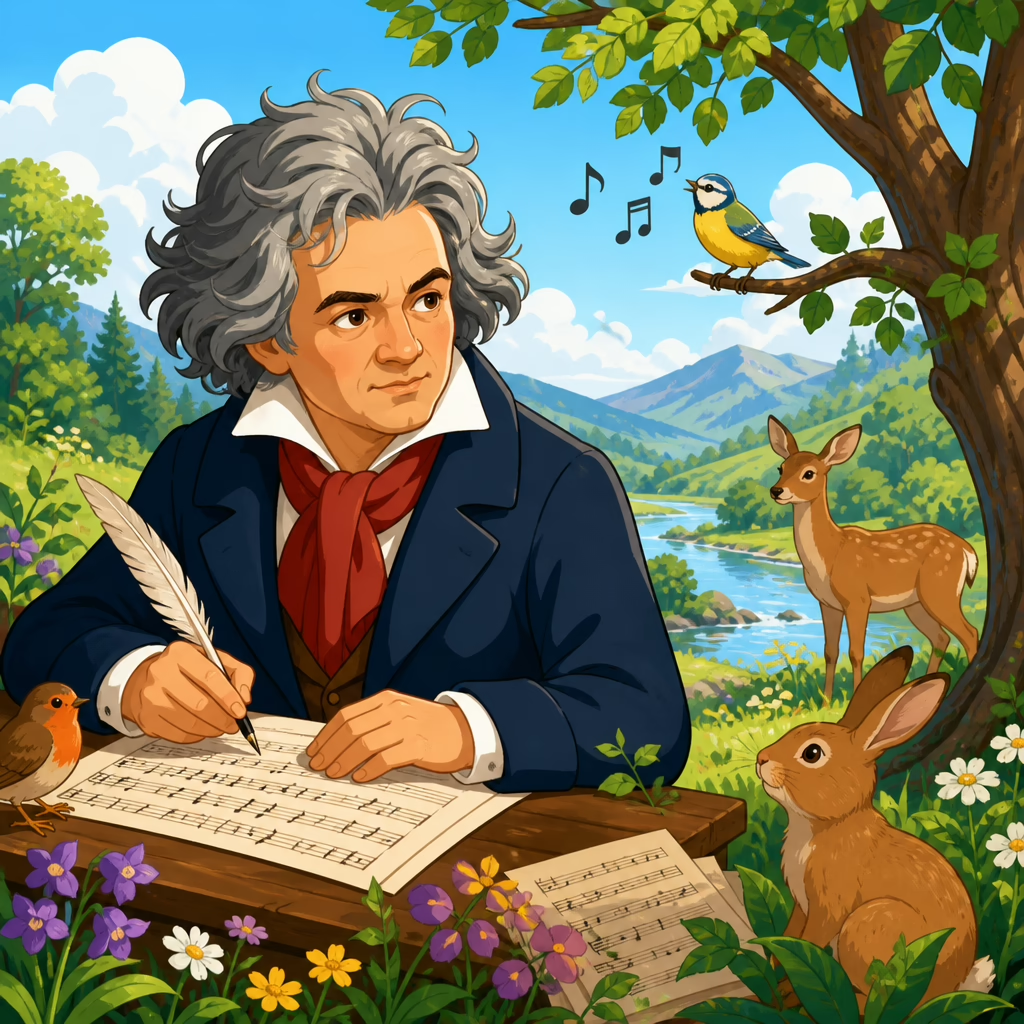
Beethoven and the Natural World in Children’s Lessons
Beethoven and the natural world in children’s lessons offers an unusually rich way to teach music, observation, and emotional understanding at the same time. In classrooms and private studios, I have found that children respond more deeply to Beethoven when his music is connected to birdsong, storms, streams, trees, changing weather, and the experience of walking outdoors. This approach does not reduce Beethoven to a simple “nature composer.” Instead, it helps children grasp how he listened to the world around him and transformed those impressions into musical ideas. For young learners, that connection makes a major composer feel immediate rather than remote.
The phrase “natural world” in music education usually means landscapes, seasons, animals, weather, and the sensory details children can notice directly. In Beethoven’s case, it also includes habits of attention: walking, listening, remembering sound patterns, and reflecting on human feeling in outdoor settings. Children’s lessons can use those elements to teach pulse, dynamics, melody shape, tone color, and musical storytelling. The best-known example is the Sixth Symphony, the “Pastoral,” but effective teaching on this topic should not stop with one work. Letters, reported habits, piano miniatures, and broader listening activities all help build a fuller picture.
This matters because children learn best when abstract concepts are tied to concrete experience. A crescendo becomes clearer when it resembles an approaching storm. A sustained drone makes sense when compared to distant wind or bagpipes across a field. Repeated rhythmic patterns feel meaningful when linked to footsteps on a path. When Beethoven is taught through these living analogies, lessons become more memorable and more accurate. Children begin to hear that music can represent nature, respond to nature, or simply grow from attentive time outdoors. That distinction is essential, and it leads to more thoughtful listening from the start.
Why Beethoven fits nature-based teaching so well
Beethoven is especially effective in nature-based children’s lessons because his music combines clear gestures with emotional depth. Young students can identify strong contrasts in loud and soft passages, sudden accents, repeated motives, and vividly shaped themes. Those features make it easier to connect sound with images from the natural world. At the same time, Beethoven’s work resists shallow picture-book interpretation. He did not merely imitate birds or thunderstorms for novelty. He used natural reference points to explore calm, gratitude, tension, release, and human presence within a larger environment.
That balance is stated directly in connection with the “Pastoral” Symphony, where Beethoven indicated that the work was “more an expression of feeling than painting.” For teaching, this sentence is invaluable. It tells children that nature in music is not always literal. A brook scene may include flowing figures, yet the deeper lesson is how moving water feels to the listener. A storm movement may depict thunder, but it also teaches anticipation, fear, and relief. I have seen this distinction help children move beyond guessing games toward real musical interpretation, even at primary-school level.
There is also a practical reason Beethoven works well here: he is central to many music curricula. Teachers can connect nature lessons to repertoire students are already expected to encounter. A simple piano student might study a short Beethoven dance or bagatelle while discussing walking rhythm and outdoor listening. An orchestral listening class can compare excerpts from the Sixth Symphony with field sounds children know from parks, rain, and country visits. This keeps lessons focused and academically credible while still feeling imaginative and hands-on.
Using the “Pastoral” Symphony without oversimplifying it
The Sixth Symphony remains the cornerstone of this topic because it gives children explicit titles and audible natural references. The movements are associated with cheerful feelings on arriving in the countryside, a scene by the brook, a merry gathering of country folk, a thunderstorm, and a shepherds’ song after the storm. These labels are accessible to children, but the teaching goal should be guided listening, not passive storytelling. Ask what the violins suggest about flowing movement, how tempo shapes the sense of walking, or why the storm feels chaotic without losing structural control.
One of the strongest classroom moments comes in the brook scene, where children hear how repeating figures can create continuity. Rather than saying “this is water” and moving on, a teacher can ask what makes it sound continuous: the undulating accompaniment, the smooth phrasing, and the lack of abrupt accents. At the close of the movement, Beethoven famously identifies bird calls associated with the nightingale, quail, and cuckoo. This is useful because it offers direct imitation, but it also opens discussion about selective representation. Beethoven does not recreate every sound in a meadow. He chooses specific details and frames them musically.
The storm movement is equally useful for lessons on orchestral color and dynamic design. Children can track the buildup from distant unease to full disruption, then notice how resolution arrives afterward. This makes terms like tremolo, crescendo, rhythmic instability, and brass emphasis teachable in plain language. If students are old enough, compare the storm to actual weather patterns they know: gathering wind, first drops, heavy rain, thunder, then clearing light. The point is not scientific exactness. The point is that Beethoven organizes natural experience into a coherent emotional arc children can hear.
Lesson structures that connect music and direct observation
The most successful children’s lessons on Beethoven and nature combine listening with firsthand sensory work. Before playing any excerpt, ask children to remember the last time they heard rain on leaves, birds at dawn, or footsteps on gravel. If possible, begin with a short outdoor walk around school grounds. Have them notice steady and irregular rhythms, near and far sounds, and moments of silence. When they return to the lesson, those observations become reference points for Beethoven’s textures. This method is effective because children are not inventing abstract answers; they are comparing music with lived experience.
In my own teaching, I use a simple sequence: notice, describe, listen, compare, and create. First, children notice sounds outdoors or in a sound recording. Next, they describe them using musical vocabulary such as fast, slow, smooth, sharp, repeated, layered, or fading. Then they listen to a short Beethoven excerpt. After that, they compare the excerpt with the observed sounds. Finally, they create a response by clapping a pattern, drawing a contour line, or improvising a few notes. This sequence keeps the lesson rooted in both perception and musicianship.
| Lesson goal | Beethoven example | Nature link | Child activity |
|---|---|---|---|
| Steady pulse | Opening of Symphony No. 6 | Walking on a path | Step the beat and mark phrase changes |
| Flowing texture | Brook scene from Symphony No. 6 | Stream or river movement | Draw the melodic contour while listening |
| Dynamic contrast | Storm movement from Symphony No. 6 | Approaching thunderstorm | Map soft-to-loud changes with hand motions |
| Emotional resolution | Shepherds’ song after the storm | Calm after rain | Describe how the mood changes and why |
These structures work in group classes, homeschool settings, and one-to-one instrumental lessons. They also scale by age. Younger children can move and draw. Older children can label motifs, identify instrumental families, or discuss why Beethoven balances imitation with expression. For background on the broader role of walking in Beethoven’s creative life, teachers can point older readers to this guide on Beethoven’s love of walking and what it meant for his music, then return to the narrower question of how those habits can shape children’s learning.
What children can learn beyond musical facts
A focused unit on Beethoven and the natural world can teach much more than composer trivia. First, it strengthens careful listening. Children learn that not all sound is background noise and that details matter. Second, it improves language. When students describe the difference between a smooth brook texture and a jagged storm texture, they practice precise vocabulary with a real purpose. Third, it encourages emotional literacy. Beethoven’s nature-related music often moves from tension to calm, excitement to reflection, or isolation to belonging. Children can name those shifts and connect them to their own experience.
This topic also supports interdisciplinary learning. In elementary settings, music teachers can coordinate with science teachers studying weather, habitats, or sound. A storm lesson can include both orchestral listening and discussion of how storms build. A birdsong lesson can compare species calls with Beethoven’s selective musical imitation. In literacy work, students can write short observational sentences after listening: “The music sounded like water that never stopped moving” is a stronger educational outcome than merely recalling a title. Because Beethoven’s music is structurally clear, it supports this kind of cross-curricular work without becoming vague or decorative.
Another significant benefit is that children begin to understand art as a response to attention. Beethoven’s example shows that creativity is not only spontaneous inspiration; it often comes from repeated observation, memory, and craft. That is a powerful message for students who think music is only for the naturally gifted. When they hear that outdoor walks, listening habits, and emotional reflection can feed composition, they see a practical path into musical thinking. In lesson terms, that means asking not just “What did Beethoven write?” but “What did he notice, and how did he turn that into sound?”
Common teaching mistakes and how to avoid them
The biggest mistake in this topic is treating Beethoven’s nature references as childish sound effects. If every lesson becomes “guess the bird” or “find the thunder,” children miss the deeper purpose of the music. The correction is simple: always connect representation to musical structure and feeling. If students identify a cuckoo call, follow up by asking why Beethoven places it where he does and how the surrounding texture changes their experience of it. This moves the lesson from novelty to understanding.
Another common mistake is relying only on programmatic titles. Titles can help, but they should not replace listening evidence. A teacher should ask, “What do you hear that suggests calm?” before confirming that a movement depicts a brook or a countryside arrival. This protects against passive learning and helps children build interpretive confidence. It also reflects good musicianship. Beethoven’s scores communicate through rhythm, harmony, instrumentation, articulation, and form, not through labels alone.
A final problem is making the lesson too broad. “Beethoven and nature” can easily expand into biography, Romanticism, environmental studies, and general composer history. For children, tighter framing works better. Choose one question per lesson: How does Beethoven suggest walking? How does he create a storm? How does music feel different after the storm passes? With this focused approach, students retain more and listen better. Depth, not coverage, is what makes these lessons memorable and educationally sound.
Beethoven and the natural world in children’s lessons succeeds when teachers treat nature as a doorway into serious listening rather than a decorative theme. Children can hear movement, weather, birds, and landscape in his music, but the larger gain is learning how sound communicates feeling, pattern, and attention. Beethoven gives teachers unusually strong material for that work because his gestures are vivid, his structures are clear, and his responses to the outdoors are emotionally convincing.
The most effective lessons stay focused, concrete, and experience-based. Start with direct observation or remembered sound, connect it to a carefully chosen excerpt, and ask children to describe what they hear in musical terms. Use the “Pastoral” Symphony as the central example, but teach it with nuance: it expresses human feeling in relation to nature, not just literal scene painting. When handled this way, the topic strengthens listening skills, vocabulary, interpretation, and creative confidence at the same time.
For teachers, parents, and private instructors, the practical takeaway is simple: build one lesson around walking, one around the brook, and one around the storm and its aftermath, then let children’s own observations guide discussion. That structure is manageable, musically rigorous, and engaging for a wide age range. Try it in your next lesson, and Beethoven will feel less like a distant monument and more like a living guide to hearing the world.
Frequently Asked Questions
How can Beethoven and the natural world be taught together in children’s lessons?
Beethoven and the natural world can be taught together by helping children connect what they hear in music with what they already notice outdoors. Instead of presenting Beethoven as an abstract historical figure, teachers can invite students to listen for movement, atmosphere, contrast, and emotional change in his music, then relate those qualities to streams, wind, birdsong, thunderstorms, trees, or the feeling of walking in open air. This gives children an entry point that feels immediate and concrete.
In practice, this might mean pairing a short listening activity with observation. A child might hear a musical passage and describe whether it feels calm like a still pond, energetic like a rainstorm, or light like birds calling in the morning. From there, the teacher can guide discussion toward musical elements such as tempo, dynamics, rhythm, phrasing, and articulation. Children begin to understand that Beethoven was not simply “copying nature,” but shaping sound in ways that can suggest natural experiences and emotional responses to the world around him.
This approach works especially well in both classrooms and private lessons because it combines listening, imagination, language, and emotional awareness. It also encourages children to slow down and pay attention. When students learn that music can reflect observation as well as feeling, Beethoven becomes more vivid, more human, and much easier for them to remember and appreciate.
Why is nature such an effective way to introduce children to Beethoven’s music?
Nature is effective because children naturally respond to sensory experiences. They understand rain, wind, birds, changing seasons, and outdoor walks long before they understand sonata form or historical style. By starting with experiences they already know, teachers can build a bridge to Beethoven’s music without oversimplifying it. Children often listen more carefully when they are invited to imagine what a sound feels like in the world rather than being asked to identify technical concepts too soon.
Another reason this approach is powerful is that it supports emotional understanding. Beethoven’s music often contains strong contrasts, dramatic energy, tenderness, stillness, and a sense of unfolding motion. These qualities become easier for children to recognize when they are compared to familiar natural experiences, such as a storm building gradually, sunlight returning after clouds, or the steady flow of water. Nature gives students a vocabulary for feeling as well as hearing.
Just as importantly, teaching through nature helps prevent children from seeing classical music as distant or overly formal. Beethoven’s music can feel alive and relevant when it is connected to observation and imagination. Rather than memorizing facts about a composer, children begin to sense how listening deeply to the world can influence artistic expression. That kind of connection often leads to stronger engagement, better retention, and a more genuine love of music.
Does connecting Beethoven to nature oversimplify his music for children?
No, not if it is done thoughtfully. Connecting Beethoven to nature should not mean reducing him to a composer who merely imitated birds or wrote background music for landscapes. A stronger teaching approach is to show children that nature can be a doorway into deeper listening. The goal is not to flatten the music into a set of simple images, but to help students perceive shape, mood, motion, tension, and release through experiences they can understand.
In fact, this method can make Beethoven’s music more complex and meaningful for children. When students explore how a passage can suggest wind, distance, sunlight, unrest, or quiet reflection, they are already practicing interpretation. They are learning that music communicates through nuance. A teacher can then extend that insight by explaining that Beethoven responded not only to outer landscapes, but also to inner emotional landscapes. Nature becomes part of a larger conversation about perception, expression, and artistic imagination.
The key is balance. Teachers should welcome imaginative associations while also pointing students toward the actual musical features that create those impressions. For example, a child may say a phrase sounds like flowing water, and the teacher can respond by drawing attention to smooth rhythm, repeated patterns, and gentle dynamic shaping. In this way, nature-based teaching remains rich, accurate, and musically serious while still being accessible to young learners.
What are some practical lesson activities for teaching Beethoven and the natural world to children?
There are many effective activities, and the best ones combine listening, movement, discussion, and creative response. One simple option is a guided listening exercise in which children hear a short Beethoven excerpt and draw what they imagine: a storm, a forest path, birds in conversation, or changing weather. Afterward, the teacher can ask what in the music led them to those ideas. This helps students connect imagination to specific musical details rather than treating listening as guesswork.
Another strong activity is an outdoor observation lesson. Children can take a short walk, sit quietly in a garden, or listen at an open window and list what they hear: rustling leaves, distant traffic, birds, footsteps, wind, or dripping water. Back in the lesson space, they can compare those sound patterns with Beethoven’s use of rhythm, repetition, contrast, and energy. This reinforces the idea that careful listening is a shared skill in both music and nature study.
Movement activities also work extremely well. Children can move like weather systems, streams, or swaying branches in response to musical excerpts. This is particularly useful for younger students who understand music physically before they can explain it verbally. For older children, journaling and discussion can add another layer. They might describe how a passage feels emotionally, then link that feeling to an outdoor experience they remember. These activities make lessons more memorable while developing listening, expression, and interpretive confidence.
What skills do children develop when learning about Beethoven through nature-based lessons?
Children develop a wide range of musical and non-musical skills through this approach. Musically, they become better listeners. They learn to notice dynamics, pacing, melodic contour, texture, and mood with greater precision. Because they are asked to connect sound to real experiences, they also become more articulate in describing what they hear. This strengthens music vocabulary in a natural way and gives technical concepts a meaningful context.
Beyond music, nature-based Beethoven lessons support observation, imagination, and emotional literacy. When children compare a musical change to gathering clouds or a quiet passage to still water, they are practicing nuanced perception. They are also learning that emotions can shift gradually, coexist, and be expressed without words. This can be especially valuable for children who are still developing the ability to name and understand their feelings.
These lessons can also foster patience and attentiveness, qualities that are increasingly important in modern learning environments. Listening carefully to music and to the natural world encourages focus, reflection, and curiosity. In the long term, children gain a more connected understanding of art, environment, and human experience. They begin to see that Beethoven’s music is not isolated from life, but deeply related to the ways people observe, feel, and make meaning from the world around them.