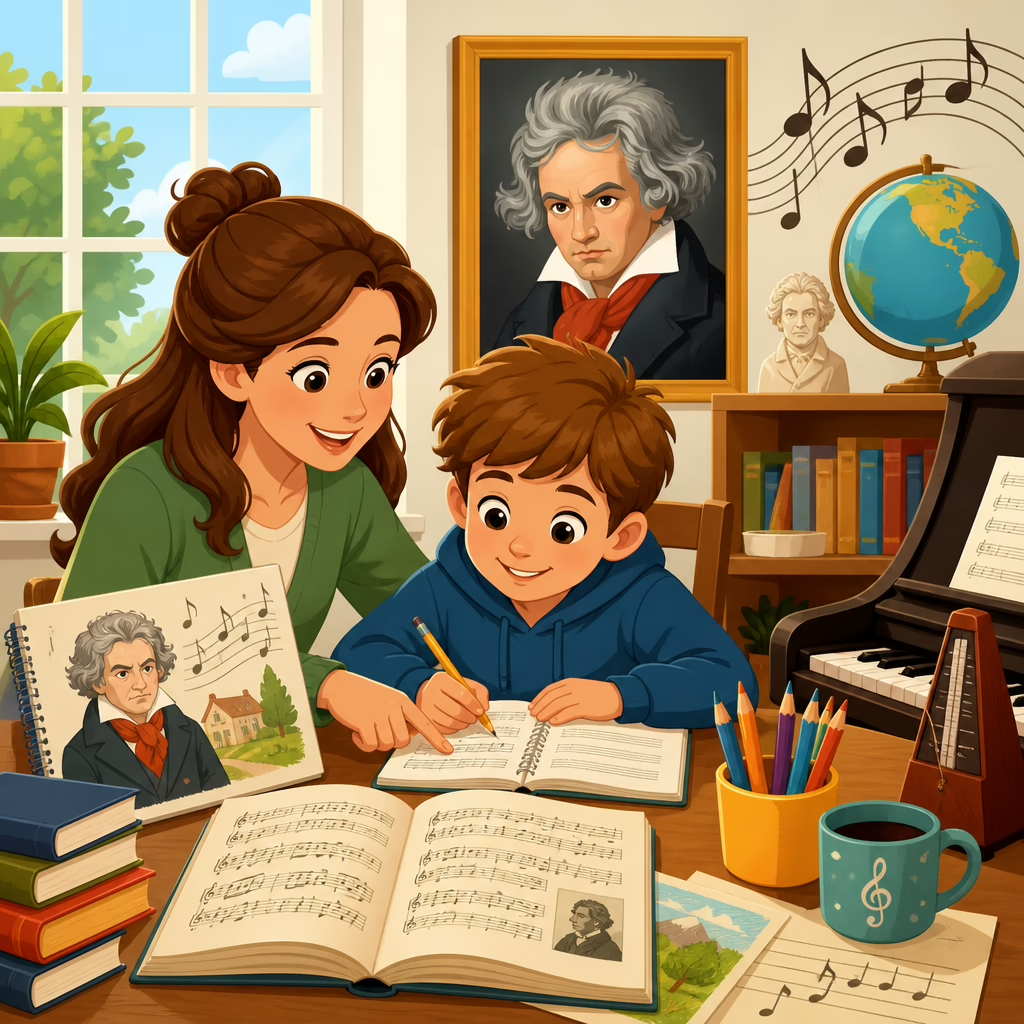
A Homeschool Guide to Teaching Beethoven
Teaching Beethoven at home gives families a rare chance to combine music appreciation, history, listening skills, and creative practice around one compelling figure. For homeschool parents, Beethoven is more than a famous composer; he is a practical anchor for interdisciplinary study because his life connects directly to the Classical and Romantic eras, the development of the symphony and sonata, and the idea that art can express struggle, joy, discipline, and independence. In plain terms, teaching Beethoven means helping children listen actively, understand who he was, recognize several important works, and connect those works to broader learning goals without turning music into a dry timeline lesson.
Ludwig van Beethoven was born in Bonn in 1770 and died in Vienna in 1827. He studied in the traditions shaped by Haydn and Mozart, then expanded them with bold harmony, dramatic contrasts, rhythmic drive, and larger emotional scope. He also continued composing after significant hearing loss, which is one reason his story remains meaningful to children and adults. In homeschool settings, I have found that Beethoven works especially well because students can approach him at several levels at once: young children can identify moods and instruments, middle grade learners can follow themes and form, and older students can discuss patronage, political upheaval, disability, and artistic legacy.
This topic matters because music education often becomes either overly technical or overly superficial. Families may play a recording of Fur Elise and feel they have “done Beethoven,” or they may avoid the subject because they lack formal training. Neither problem is necessary. A strong homeschool guide to teaching Beethoven gives structure, manageable listening goals, and age-appropriate activities that build real understanding. It also supports memory, attention, and cultural literacy. When children learn to hear the opening motive of Symphony No. 5, compare the calm clarity of early piano sonatas with the scale of the Eroica Symphony, or reflect on the Ode to Joy from Symphony No. 9, they are not just learning facts. They are learning how to listen with intention and how artistic choices carry meaning.
The most effective approach is to teach Beethoven through short focused lessons over several weeks. That keeps the composer from becoming a single biography worksheet and instead turns him into a living subject. Start with key terms your student will hear repeatedly: composer, symphony, sonata, motif, variation, quartet, conductor, and premiere. Define each term simply, then use it in context during listening sessions. This method gives children a framework they can reuse across future music study.
Build a simple homeschool Beethoven unit
A useful Beethoven unit begins with four anchors: biography, historical context, signature works, and response activities. In practice, I recommend planning six to ten lessons of twenty to forty minutes each, depending on age. Keep each lesson centered on one question. Examples include: Who was Beethoven? What does a symphony do? Why is Symphony No. 5 so recognizable? How did hearing loss affect Beethoven’s career? Why does Ode to Joy still appear in concerts, films, and public ceremonies?
Begin with a concise life overview. Children do not need every date, but they should know that Beethoven trained seriously as a pianist and composer, moved from Bonn to Vienna, built his reputation in public performance and publishing, and lived through the Napoleonic era. Explain that Vienna was a major center for composers and patrons. If your learner studies European history, connect Beethoven’s career to political change, the decline of older aristocratic systems, and the rise of the public concert tradition. These links make the lessons stick.
One body of support that many parents find helpful is a structured lesson sequence that connects listening and activities. For families wanting a broader framework to adapt at home, this Beethoven lesson plans for elementary music classes resource offers useful starting points that can be simplified or expanded for homeschool use.
Set expectations clearly. A Beethoven unit is not about memorizing every opus number. It is about recognizing a handful of works, hearing contrasts in tempo and dynamics, and understanding why this composer changed music. Keep a notebook or binder for vocabulary, portraits, maps, short narrations, and listening logs. I have seen even reluctant learners engage more when they can track what they heard and describe it in their own words.
Choose the right Beethoven pieces for different ages
Selecting the right repertoire is the difference between curiosity and fatigue. For early elementary students, choose short works or excerpts with clear character. Good starting points include Fur Elise, the first movement opening of Symphony No. 5, the second movement of Symphony No. 7, the Moonlight Sonata first movement, and Ode to Joy from Symphony No. 9. These pieces provide immediate hooks: a memorable melody, a repeated rhythm, a solemn mood, or a triumphant choral theme.
For upper elementary and middle school learners, add works that illustrate form and development. Symphony No. 3 Eroica is ideal for discussing scale and ambition. Symphony No. 6 Pastoral works well for nature imagery and orchestral color. The Pathetique Sonata lets students hear contrast between grave introduction and driving allegro. String Quartet No. 14 in C-sharp minor can be introduced to older students as an example of Beethoven’s late style, though it usually requires guidance and shorter listening sections.
| Age group | Best starting works | What to notice |
|---|---|---|
| Ages 5–8 | Fur Elise, Ode to Joy, Symphony No. 5 opening | Repeated patterns, loud and soft, happy versus serious mood |
| Ages 9–12 | Moonlight Sonata, Pastoral Symphony, Pathetique Sonata | Form, imagery, tempo shifts, instrumental families |
| Ages 13+ | Eroica Symphony, Symphony No. 9, late quartets | Historical context, innovation, emotional range, structure |
Use complete performances selectively. Young children often learn better from one to three minute excerpts replayed several times. Older students can handle full movements, especially if you provide a listening guide. Avoid presenting too many famous pieces at once. Three or four works studied well will produce stronger recall than a quick survey of ten.
Teach active listening instead of passive exposure
Playing Beethoven in the background is not the same as teaching Beethoven. Active listening asks students to attend to a specific element and describe what they hear. Before pressing play, give one task only. Ask: Can you hear the short-short-short-long rhythm? Does the music stay calm or become tense? Which instrument begins the melody? What changes when the full orchestra enters?
For Symphony No. 5, teach the opening four-note motive and explain that a motif is a short musical idea used again and again. Then let the student raise a hand every time they hear it return. For Fur Elise, ask them to identify the recurring opening phrase after contrasting middle sections. For the Pastoral Symphony, compare two excerpts and ask which sounds more like a storm and which sounds more peaceful. These are simple questions, but they train the ear effectively.
Listening journals are one of the best homeschool tools because they work across ages. A younger child can draw lines, colors, or scenes that match the music. An older child can write three sentences using vocabulary such as tempo, dynamics, melody, and motif. Over time, these entries reveal growth. I have used this approach repeatedly, and it consistently moves students from “I liked it” to more useful observations such as “the melody returned softer after a louder middle section.” That shift matters.
When possible, use reputable recordings by established orchestras and pianists. Performances from the Berlin Philharmonic, Vienna Philharmonic, Cleveland Orchestra, or pianists such as Alfred Brendel and Daniel Barenboim offer reliable musical standards. Video performances also help students connect sound to instruments, ensemble leadership, and performer technique.
Connect Beethoven to history, character, and daily learning
Beethoven becomes far more memorable when children see him in context. Place Bonn and Vienna on a map. Mark 1770 and 1827 on a timeline. Add major events such as the French Revolution and the Napoleonic Wars. Discuss how aristocratic patronage supported composers but also limited them, and how Beethoven increasingly represented the independent artist. This does not require a college-level lecture. One clear explanation is enough: he lived during a period when old political structures were shifting, and that energy appears in his music.
His hearing loss should be taught carefully and accurately. Do not reduce Beethoven to an inspirational slogan. Explain that his hearing problems developed gradually, caused deep frustration, and affected his performing career. Yet he continued composing major works, including late piano sonatas, string quartets, and Symphony No. 9. This shows persistence, but it also opens a serious conversation about disability, adaptation, identity, and mental strain. Older students can read excerpts from the Heiligenstadt Testament and discuss his emotional conflict in his own words.
Daily integration strengthens retention. In language arts, assign a short narration after listening. In art, sketch a concert hall, an orchestra layout, or an imagined scene for the Pastoral Symphony. In copywork, use a sentence about Beethoven’s move to Vienna or his commitment to composition. In memory work, learn the names of major instruments used in a classical orchestra. None of these activities distract from the topic; they deepen it while keeping the unit focused.
Use practical activities that make the music concrete
Hands-on work helps children understand abstract sound. Clap the opening rhythm of Symphony No. 5. March to a steady beat during a lively excerpt. Use blocks or paper strips to map musical form: A section, contrasting B section, then return to A. For piano pieces, show students a keyboard and locate high versus low notes. Even if nobody in the home plays piano, a printed keyboard chart or digital keyboard app can make the music less mysterious.
Composition imitation is especially effective. After hearing Beethoven use a small motive repeatedly, challenge students to invent their own four-note pattern and repeat it in different ways: louder, softer, faster, slower. This teaches development in the most accessible terms possible. If the child plays an instrument, ask them to perform Ode to Joy from beginner sheet music and then discuss why the tune remains so durable. If they do not play, singing the melody still builds ownership.
Another reliable activity is compare and contrast. Play a Mozart excerpt and a Beethoven excerpt, then ask which sounds more dramatic, heavier, or more forceful. The goal is not to make children judge one as better, but to hear differences in style. Beethoven often expands tension through sudden accents, strong dynamic contrasts, and rhythmic insistence. Once students hear those traits, they begin to identify his musical voice with confidence.
Common mistakes homeschool parents should avoid
The most common mistake is teaching only the biography. Children should know Beethoven’s life, but music must remain central. Another mistake is choosing pieces that are too long, too dense, or too numerous for the student’s age. It is better to know three works well than to half-recognize twelve. A third mistake is turning every lesson into a test of names and dates. Music study should develop attention and response, not just recall.
Parents also sometimes narrate over the recording, which prevents focused listening. Introduce the task first, then let the music do its work. Finally, avoid false certainty where scholars disagree. For example, some familiar stories about Beethoven’s temperament or exact intentions behind specific works are simplified in popular retellings. When evidence is limited, say so. Accuracy builds trust and models intellectual honesty for students.
A homeschool guide to teaching Beethoven works best when it stays concrete, repeatable, and musical. Use a short timeline, a few major works, direct vocabulary, and active listening prompts. Revisit pieces over several weeks so children hear more on each pass. By the end of the unit, your student should be able to identify Beethoven as a major composer, recognize several hallmark works, explain a few musical terms, and describe how his life and music fit together.
The lasting benefit is bigger than one composer study. Children who learn Beethoven carefully develop habits that transfer to all future arts education: patience, close attention, descriptive language, historical thinking, and confidence in discussing what they hear. They also gain a real connection to a composer whose work still shapes concert life, film scoring, music education, and public culture around the world.
If you are planning your next homeschool music unit, start simply. Pick three Beethoven pieces, schedule six short lessons, keep a listening journal, and let the music return often enough to become familiar. That steady approach will teach Beethoven well, and it will make your homeschool richer in the process.
Frequently Asked Questions
1. Why is Beethoven such a strong subject for homeschool study?
Beethoven is an excellent homeschool topic because he naturally brings together music, history, literature, character education, and creative expression in one meaningful study. When families learn about Beethoven, they are not only memorizing facts about a composer. They are exploring a person whose life sits at the crossroads of major cultural change in Europe, especially between the Classical and Romantic eras. That makes him especially useful for parents who want a unit study that feels rich without being overly complicated.
In practical homeschool terms, Beethoven helps children connect big ideas. His music introduces them to important forms such as the symphony, sonata, concerto, and string quartet. His biography opens the door to discussions about perseverance, discipline, emotion, and independence. His place in history allows students to examine the late 1700s and early 1800s, including the social and political atmosphere of Vienna and the wider changes happening in Europe. Because of this, one composer can serve as the anchor for several subjects at once.
He is also especially approachable for students because many children have already heard some of his music without realizing it. The opening of Symphony No. 5, “Ode to Joy” from Symphony No. 9, and “Für Elise” are familiar entry points. That familiarity helps students feel confident, which matters in home education. From there, parents can gradually deepen the study by introducing listening exercises, timelines, notebooking, composer biographies, and simple music theory. In short, Beethoven is a strong homeschool subject because he offers depth, flexibility, and memorable material that can grow with the student.
2. What should children learn about Beethoven first?
A strong beginning is to focus on the essentials of Beethoven’s life, his historical setting, and a few well-chosen pieces of music. Start with the broad outline: Ludwig van Beethoven was born in Bonn in 1770, later moved to Vienna, studied and worked as a composer and pianist, and became one of the most influential figures in Western music. Children should understand that he lived during a time of transition, when the orderly balance associated with the Classical period was beginning to expand into the more personal, dramatic, and emotionally expressive style of the Romantic period.
Next, introduce the basic themes of his life in simple but meaningful language. He worked hard, had a difficult family background, became known for his talent, and eventually faced hearing loss, which is one of the most important and moving parts of his story. For homeschool students, this is a powerful opportunity to discuss how people respond to limitations and hardship. Beethoven’s life should not be reduced to a single challenge, but his perseverance does help children understand why his music carries such emotional force.
It is also wise to begin with listening before heavy analysis. Choose three to five pieces that show different sides of his work. Good starting options include “Für Elise,” Symphony No. 5, Symphony No. 6 “Pastoral,” Symphony No. 9, and the “Moonlight Sonata.” Ask children what they hear: Is the music calm, stormy, bold, joyful, mysterious, or energetic? This makes music appreciation active rather than passive. Once they can recognize a few signature works and understand the broad shape of his life, they are ready to move into deeper lessons on musical form, historical context, and artistic influence.
3. How can homeschool parents teach Beethoven in a way that is interdisciplinary and age-appropriate?
The most effective approach is to build lessons around short, connected activities rather than treating Beethoven as a narrow music-only topic. For younger children, this may mean reading a picture-book biography, listening to a short musical excerpt, locating Bonn and Vienna on a map, and drawing a response to the music. For middle-grade students, parents can add notebook pages, timeline work, composer narrations, and simple definitions of terms such as symphony, sonata, motif, and tempo. Older students can go further by comparing musical periods, analyzing selected passages, researching patrons and performance culture, or writing essays on Beethoven’s influence.
History is one of the easiest subjects to connect. Place Beethoven on a timeline alongside major events in Europe and America. Help students see that composers are not isolated geniuses floating outside real life; they live in a world shaped by politics, technology, cities, social class, and changing ideas. Geography also fits naturally. Students can map where Beethoven was born, where he studied, and where he worked. Literature can be included through biography, primary source excerpts, or reflective writing in response to his music.
Creative practice is another important piece. Children do not need formal musical training to engage meaningfully. They can keep a listening journal, move to rhythm, sketch what they imagine during a symphony, compose a short melody, or compare two performances of the same piece. If a child studies piano or another instrument, Beethoven can also become part of practical music study through beginner-friendly arrangements or performance listening. The key is to match depth to age. Younger learners need concrete experiences and short lessons. Older students can handle abstract ideas like musical structure, artistic legacy, and the shift from Classical restraint to Romantic expression. With that balance, Beethoven becomes accessible to almost any homeschool setting.
4. How do you explain Beethoven’s hearing loss to children without oversimplifying his life?
Beethoven’s hearing loss should be taught truthfully, respectfully, and in proportion. It is one of the most significant facts about his life, but it should not become the only thing students remember. A helpful way to explain it is to say that Beethoven gradually lost his hearing as an adult, which was especially painful because music was at the center of his work and identity. Even so, he continued to compose and create important music. This gives children an honest picture of real difficulty combined with remarkable perseverance.
For younger children, keep the explanation straightforward and gentle. You might say, “Beethoven began to lose his hearing, which made life and music very hard for him, but he did not stop working.” For older students, you can add more nuance. Discuss how hearing loss affected his emotional life, social life, and career, and how historians and musicians view this part of his biography. You can also explain that while he could not hear in the usual way later in life, he still had a deep inner understanding of musical sound, structure, and imagination.
What matters most educationally is avoiding two extremes: making his hearing loss the whole story, or barely mentioning it at all. His struggle can lead to valuable family discussions about resilience, frustration, purpose, and disability, but it should remain connected to his actual achievements as a composer. Students should leave with a balanced understanding that Beethoven was not important simply because he overcame hardship; he was important because he wrote music of lasting power, and his perseverance is part of what makes that accomplishment so compelling.
5. What are the best homeschool activities for helping children appreciate Beethoven’s music?
The best activities are the ones that train attention, encourage response, and make listening an active habit. One of the most effective methods is focused listening. Choose a short excerpt and ask children to listen for specific elements such as repetition, mood, loud and soft dynamics, sudden contrasts, or instrument groups. Even young students can notice whether a piece sounds like a march, a storm, a dance, or a peaceful walk. This kind of guided listening builds real musical awareness over time.
Listening journals are especially useful in homeschool settings. After each selection, children can write or draw what they heard, how the music made them feel, and what images came to mind. Parents can also introduce simple comparison activities, such as listening to two Beethoven works side by side and discussing how they differ in energy, structure, or emotion. Another excellent option is to pair music with movement or art. Students can paint while listening to the “Pastoral” Symphony, act out dramatic changes in Symphony No. 5, or create visual symbols for recurring musical ideas. These methods are not distractions from appreciation; they are often the bridge that helps children truly engage.
For older students, move toward more formal habits of study. They can identify major genres Beethoven wrote in, research the background of a piece, learn the difference between a sonata and a symphony, or follow a simple listening map while the music plays. Families can also attend live concerts, watch quality performances online, or compare how different conductors interpret the same work. If your homeschool includes instrument study, students can try playing simplified themes or examining the score of a familiar piece. The goal is not to turn every child into a musician. The goal is to help children listen with curiosity, recognize Beethoven’s distinctive voice, and understand why his music continues to matter across generations.