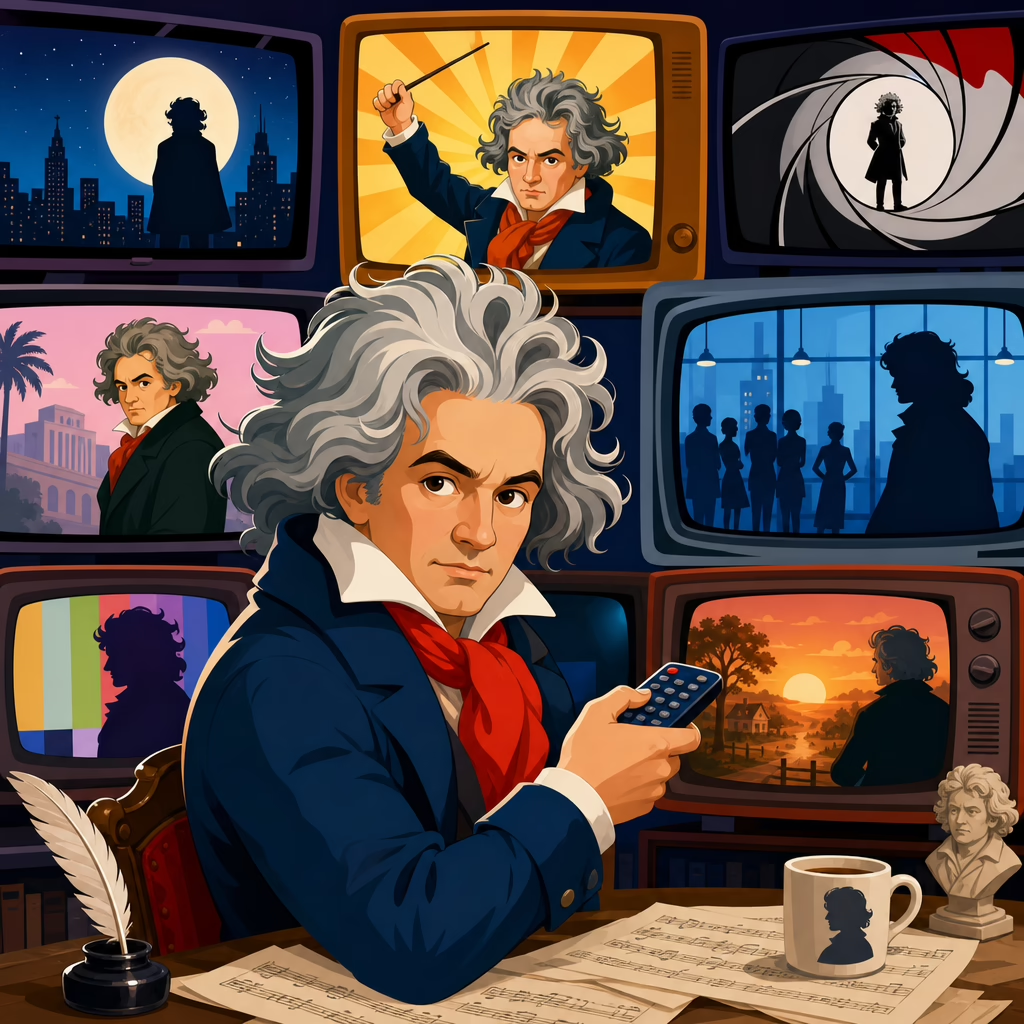
Beethoven in Television Openings and Closing Scenes
Beethoven’s music appears in television openings and closing scenes because it delivers instant meaning: authority, irony, struggle, triumph, refinement, and emotional scale within seconds. In practical editorial terms, Ludwig van Beethoven functions as a shorthand for “important music,” but that shorthand is not generic. Specific works carry distinct associations, and television producers use those associations strategically when shaping a viewer’s first impression in an opening sequence or the emotional residue left by a final scene. Understanding how Beethoven in television openings and closing scenes works requires attention to music supervision, narrative timing, licensing realities, and the long cultural memory attached to pieces such as the Fifth Symphony, the Ninth Symphony, “Für Elise,” the “Moonlight” Sonata, and the “Ode to Joy” theme.
I have worked with cue sheets, temp tracks, and edit revisions closely enough to know that classical music is almost never dropped into a television scene by accident. When Beethoven turns up at the beginning or end of an episode, the choice usually solves multiple problems at once. It can create grandeur without explanatory dialogue, signal a character’s aspiration or pretension, sharpen black comedy through contrast, or tie a private moment to a civilization-scale feeling. That efficiency matters in television, where openings must establish world and tone quickly, and closings must crystallize theme while the credits approach. Beethoven remains especially useful because his music is both deeply familiar and structurally forceful, giving editors clear shapes to cut against.
Another reason this subject matters is that television has helped define how modern audiences hear Beethoven. Many viewers first encounter major works not in concert halls but in compressed media contexts: a crime drama’s closing montage, a prestige series title sequence, a sitcom parody, or an animated episode that uses a famous motif for comic tension. Those uses influence reception. A piece once associated primarily with nineteenth-century concert culture can become, through television repetition, linked to satire, apocalypse, domestic absurdity, elite ambition, or historical memory. If you want the broader context for that transformation, the main cultural overview at this guide on why Beethoven became a global cultural icon is the logical companion. Here, the focus stays narrow: what Beethoven specifically does at the start and end of television storytelling.
Why Beethoven works so well in television’s first and last minutes
Openings and closing scenes ask music to perform concentrated narrative labor. In an opening, the score or licensed cue must establish pace, genre, social setting, and emotional altitude before the audience has enough plot to orient itself. In a closing scene, music must do almost the opposite. It gathers what happened, organizes the emotional aftermath, and often projects the episode’s meaning beyond the final line of dialogue. Beethoven excels in both positions because his compositions are built on memorable motifs, dynamic contrasts, and strong harmonic direction. Editors can enter on a recognizable phrase and trust that the music will carry momentum even when the image track becomes sparse.
The opening four-note motive of Symphony No. 5 is the clearest example of this utility. It communicates urgency immediately, and because so many viewers know it, the cue arrives with inherited cultural weight. Television uses that weight in different ways. In a serious context, it can suggest fate, conflict, or inexorable pressure. In a comic opening, the same notes can exaggerate trivial problems into mock-epic crises. The point is not simply recognition. It is recognition plus narrative overstatement, a combination television thrives on.
At the other end of an episode, the slow movement language found in Beethoven’s piano sonatas or string quartets can deepen ambiguity. Producers often need closing music that feels resolved but not closed, especially in serialized drama. Beethoven’s slower textures offer reflective gravity without sounding emotionally blank. Even short excerpts imply interiority. When a camera lingers on a character processing guilt, loss, or revelation, Beethoven can make that pause feel earned rather than empty.
Which Beethoven pieces television chooses most often, and what they signal
Television does not use “Beethoven” as a single mood. It uses particular pieces with highly stable meanings. “Für Elise” is commonly selected when a show wants instant recognizability tied to lessons, bourgeois aspiration, childhood piano culture, or a knowingly overfamiliar version of “classical.” Because so many viewers encountered it as beginner repertoire, it can imply domesticity, amateur performance, or a character trying to appear cultivated. In an opening scene, that is efficient characterization. In a closing scene, it can suggest fragility or unresolved memory, especially when arranged thinly or played on a detuned instrument.
The first movement of the “Moonlight” Sonata signals something different: introspection, nocturnal isolation, morbidity, or romantic melancholy. Television leans on that association heavily because the triplet accompaniment leaves room for dialogue and visual tension. The cue can support a closing image of a city at night, a betrayal sinking in, or a character sitting alone after a public failure. It is one of the safest Beethoven choices when a director wants seriousness without bombast.
“Ode to Joy,” from the Ninth Symphony, is more volatile. On paper it signifies unity, humanism, and collective exaltation. In practice, television uses it both sincerely and ironically. In earnest closing scenes, it can elevate communal victory or reconciliation. In satire, it often underscores the gap between idealism and reality: a disastrous event scored as though humanity has achieved moral perfection. That dual use is why the Ninth remains so potent. The audience already knows the theme carries civilizational ambition, so any mismatch between image and music becomes legible instantly.
| Beethoven work | Typical television use | Opening effect | Closing effect |
|---|---|---|---|
| Symphony No. 5, first movement | Crisis, comic exaggeration, fate | Immediate urgency and scale | Threat lingers beyond the cut |
| “Für Elise” | Domestic refinement, cliché, memory | Fast character shorthand | Tenderness or irony |
| “Moonlight” Sonata, first movement | Isolation, night, inwardness | Brooding atmosphere | Melancholic reflection |
| Symphony No. 9, “Ode to Joy” | Unity, triumph, satire | Grand thematic framing | Communal release or sharp irony |
How openings use Beethoven to define genre, class, and tone
Television opening sequences are not merely decorative. They are contracts with the viewer, and Beethoven helps write that contract quickly. In dramas about institutions, wealth, or ambition, a Beethoven cue can imply cultural capital before a word is spoken. A stately piano sonata or symphonic excerpt tells the audience this world is educated, status-conscious, disciplined, or eager to appear so. I have seen editors choose Beethoven over less familiar classical composers for one simple reason: the audience reads the signal faster. You do not need subtitles for prestige.
That speed is useful in satire too. If a title sequence introduces vain elites, squabbling heirs, or self-serious professionals, Beethoven can sharpen the joke by giving petty behavior an absurdly monumental frame. The contrast works because television depends on compressed inference. A lesser-known late quartet might impress musicians, but it would not land as clearly with a broad audience. “Für Elise” or the Fifth Symphony will.
Animation has long understood this better than many live-action series. Cartoon openings often borrow famous Beethoven gestures to inflate chases, tantrums, or miniature disasters into opera-sized events. The result is not random classical wallpaper. It is precise musical rhetoric. Fast rhythmic motives let timing hit harder, and the cultural familiarity of Beethoven makes the gag readable across age groups. Adults recognize the reference; children feel the scale even if they do not know the composer’s name.
How closing scenes use Beethoven to intensify memory and aftermath
Closing scenes are where Beethoven often does his strongest television work. The best endings do not just stop the story; they lock it into memory. Beethoven helps because his cadences, repetitions, and developmental drive can create a feeling that the scene extends beyond the screen. When an episode ends on moral uncertainty, music from the sonatas can preserve ambiguity while still giving formal shape. When it ends on collective victory or revelation, orchestral Beethoven can enlarge the consequences.
A common editorial strategy is to begin the cue late, after a key line has landed, then let Beethoven take over as dialogue falls away. This handoff works especially well with music that has a clear emotional horizon. The “Moonlight” Sonata can turn a sparse final image into a meditation. The Ninth can transform a crowd scene into a statement about belonging, aspiration, or the danger of empty idealism. The Fifth can imply that conflict is not over even when the plot point is complete.
There is also a practical memory effect. Viewers carry out the final music more vividly than they remember mid-episode underscoring. Because Beethoven is already embedded in cultural memory, a closing cue can fuse an episode with a preexisting emotional archive. That is why even brief uses feel larger than their screen time. The scene borrows not just the notes, but two centuries of accumulated listening habits.
Real production factors behind Beethoven placements
Creative meaning is only part of the story. Television uses Beethoven frequently because the underlying compositions are in the public domain, though particular recordings are not. That distinction matters. A production can commission a new recording of a Beethoven work and control costs more easily than it could with a major contemporary song carrying both publishing and master-use fees. For openings, where recurring rights can become expensive across seasons, classical repertoire is financially attractive. For closings, where a single famous pop track might consume a disproportionate share of the music budget, Beethoven is often the smarter choice.
Still, cost does not guarantee use. Editors choose cues that cut well, and Beethoven cuts exceptionally well. The phrase architecture is strong, the dynamic shifts are distinct, and the emotional direction is legible even in short excerpts. Modern tools such as Avid, Adobe Premiere Pro, Pro Tools, and music-search platforms let teams test multiple classical recordings against the same scene rapidly. In that environment, Beethoven often survives temp-track competition because the scenes simply play better with him.
There are limitations. A famous Beethoven cue can feel obvious, overdetermined, or comically grand when a scene needs subtlety. It can also carry inherited meanings a show may not want. “Ode to Joy,” for example, is difficult to use neutrally because it evokes political ceremony, public celebration, and years of ironic reuse. Strong supervision means knowing when not to choose Beethoven.
Why these television uses continue to matter
Beethoven in television openings and closing scenes matters because these are the places where popular culture teaches audiences how to hear classical music now. Repeated television usage has turned certain Beethoven works into narrative tools recognized far beyond concert audiences. Openings use him to establish scale, class, conflict, or satire in seconds. Closings use him to leave resonance, sharpen irony, or elevate a private ending into a collective statement. The reason these choices endure is simple: Beethoven offers unmatched compression of meaning, and television prizes compression.
The key takeaway is not that any Beethoven cue automatically improves a scene. The effective uses are precise. Producers match a specific work to a specific dramatic task, taking account of familiarity, tonal risk, pacing, and the cultural associations viewers already bring with them. When that match is right, the opening feels instantly legible and the closing feels unforgettable. If you are studying music on screen, revisit your favorite series with special attention to first and last minutes. Notice not just that Beethoven appears, but what exact problem his music is solving. That is where the real craft becomes visible.
Frequently Asked Questions
Why is Beethoven’s music used so often in television openings and closing scenes?
Beethoven appears so frequently in television openings and closing scenes because his music communicates complex ideas almost instantly. In a medium where a few seconds must establish tone, status, conflict, or emotional scale, his work gives producers a highly efficient storytelling tool. Viewers do not need a long explanation to understand what a Beethoven cue suggests. The sound alone can imply seriousness, ambition, cultural prestige, danger, destiny, inner struggle, or hard-won triumph.
That usefulness comes from a combination of familiarity and expressive specificity. Beethoven is broadly recognized, even by audiences with no formal classical background, so his music functions as a cultural signal of importance. At the same time, it is not merely “fancy classical music.” Different pieces by Beethoven carry different dramatic implications. One work may feel ceremonial and noble, while another feels driven, restless, intimate, or even ironic depending on the way it is edited and framed on screen.
Television creators also rely on Beethoven because openings and closings are structurally special moments. An opening has to define the world of the show and shape first impressions quickly. A closing scene has to leave a final emotional afterimage, reinforce meaning, or complicate what the audience has just seen. Beethoven’s music is especially effective in both positions because it can elevate a scene, sharpen contrast, or make a visual moment feel larger than everyday life. In short, producers use Beethoven not just because he is famous, but because his music delivers immediate narrative clarity with unusual emotional force.
Do specific Beethoven works create different meanings in TV openings and endings?
Yes, and that distinction is one of the main reasons Beethoven remains so valuable to television editors and music supervisors. His catalog does not operate as a single generic mood. Specific compositions carry their own histories, emotional profiles, and cultural associations, and those differences matter greatly when placing music in an opening sequence or a closing beat.
For example, the beginning of the Fifth Symphony is often associated with fate, pressure, confrontation, and unstoppable momentum. Used in an opening, it can signal conflict, urgency, or dramatic seriousness right away. Used at the end of an episode, it might underscore the sense that events are accelerating beyond a character’s control. By contrast, the “Ode to Joy” theme from the Ninth Symphony can suggest triumph, collective feeling, idealism, or grandeur. Depending on context, it may be sincere and uplifting, or it may be used ironically if the images on screen contradict its noble tone.
Other Beethoven works offer more refined shades of meaning. The “Moonlight” Sonata can imply introspection, melancholy, elegance, or emotional distance. The Seventh Symphony, especially its more driving rhythmic passages, can project motion, tension, exhilaration, or ritual intensity. A piano sonata might bring intimacy and psychological depth, while a full symphonic excerpt can make a scene feel public, monumental, and socially elevated. Producers choose among these works strategically because each piece helps define what the audience is supposed to feel before dialogue even begins or after it ends.
How does Beethoven help television openings establish a show’s identity so quickly?
Television openings have very little time to do a great deal of work. They may need to introduce genre, emotional temperature, class environment, thematic ambition, and even the degree of irony in the show’s point of view. Beethoven is particularly useful in this compressed format because his music arrives with built-in dramatic authority. A single phrase can tell audiences that the series is aiming for significance, sophistication, or intense emotional stakes.
In practical editorial terms, Beethoven acts as a form of narrative compression. Rather than spending an entire title sequence explaining that a story concerns power, aspiration, social performance, tragedy, or moral conflict, the right Beethoven cue can imply those ideas almost immediately. A polished, formal visual sequence paired with Beethoven may frame the show as cultivated and intelligent. A chaotic or comic sequence paired with the same kind of music may instead create irony, signaling that the show is commenting on ambition, pretension, or the gap between appearance and reality.
His music also helps unify image rhythm and viewer expectation. Beethoven often contains strong structural momentum, clear dynamic shifts, and memorable thematic gestures, all of which are useful in editing title sequences. Cuts, camera movements, credits, and visual reveals can be shaped around those musical events. The result is that the opening does not merely include Beethoven as decoration; it uses his musical architecture to organize the viewer’s experience. That is why his presence in an opening often feels decisive rather than ornamental.
Why is Beethoven especially effective in television closing scenes?
Closing scenes need to accomplish something slightly different from openings. Instead of introducing the world, they need to crystallize what just happened, deepen the emotional meaning of the episode, or leave the audience in a state of suspense, grief, satisfaction, or reflection. Beethoven is effective here because his music can expand the emotional scale of a moment without requiring extra dialogue. It can make a private gesture feel epic, a victory feel costly, or a quiet realization feel historically or morally significant.
One of Beethoven’s greatest strengths in endings is his ability to support ambiguity. A closing scene is not always straightforwardly happy or sad. It may involve triumph mixed with dread, love mixed with loss, or achievement shadowed by moral compromise. Beethoven’s music often contains that kind of emotional complexity. A cue can feel noble yet troubled, beautiful yet tense, resolved yet haunted. That layered quality helps television endings resonate after the screen cuts to black.
He is also highly effective when producers want to create contrast. A majestic Beethoven passage placed over unsettling images can generate irony, discomfort, or satire. Conversely, a restrained Beethoven excerpt after a chaotic episode can create emotional clarity and dignity. Because closing scenes are the last thing viewers carry forward into the break between episodes, the music choice matters enormously. Beethoven works so well in that position because he can leave behind a sense of consequence, memory, and emotional weight.
Is Beethoven’s use in TV mainly about prestige, or is there a deeper storytelling purpose?
It is partly about prestige, but reducing it to prestige alone misses why his music continues to be so effective on television. Beethoven does indeed signal cultural authority. His name suggests seriousness, artistic legitimacy, and historical importance, and those associations can be useful for a show that wants to present itself as elevated or intellectually confident. However, producers generally return to Beethoven because his music does much more than decorate a scene with prestige.
The deeper storytelling value lies in precision. Beethoven provides emotional and symbolic shorthand, but that shorthand is not empty. His music helps define how viewers interpret character behavior, social setting, and dramatic stakes. A scene accompanied by Beethoven may feel more ceremonial, more conflicted, more tragic, more aspirational, or more self-aware depending on the exact excerpt and the surrounding imagery. In that sense, his work is not just a status marker; it is an active narrative instrument.
There is also a historical dimension to how modern audiences hear Beethoven. Over time, film, television, advertising, and popular culture have layered new meanings onto pieces that already carried strong expressive identities. Producers understand that viewers bring those accumulated associations with them. As a result, using Beethoven in an opening or closing scene allows a show to tap into both the original emotional power of the music and the broader cultural memory attached to it. That combination is what makes his music so durable on television: it sounds important, but more importantly, it means something specific very quickly.