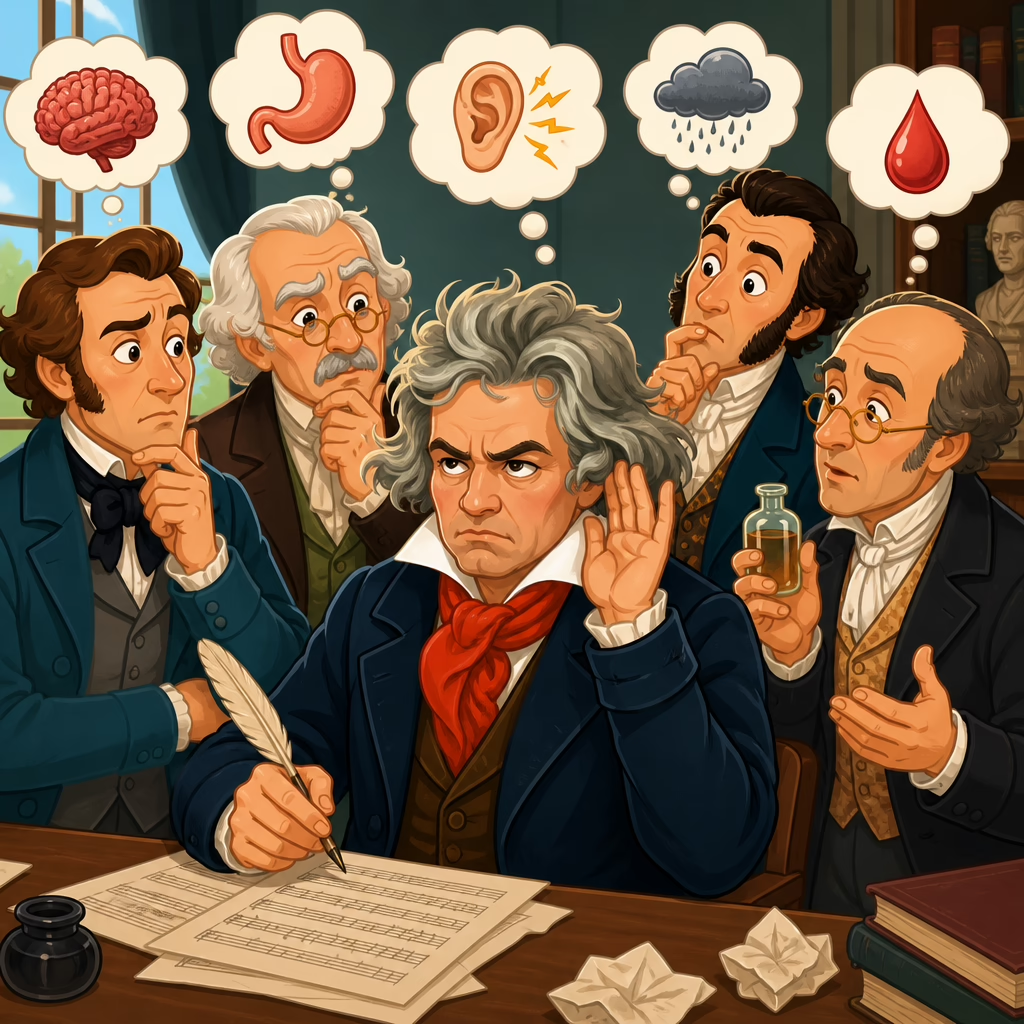
What Beethoven’s Doctors Thought Was Wrong
What Beethoven’s doctors thought was wrong can be reconstructed from conversation books, autopsy notes, physicians’ letters, and the medical habits of Vienna in the early nineteenth century. The question matters because Beethoven did not experience one illness but a sequence of puzzling symptoms: progressive deafness, violent abdominal complaints, eye inflammation, episodic fevers, jaundice, edema, and finally liver failure. His doctors lacked bacteriology, modern toxicology, and imaging, so they interpreted those signs through humoral medicine, bedside observation, percussion, and postmortem anatomy. To understand their thinking, key terms need clear definition. “Catarrh” meant inflammation with discharge, often used broadly for ear and respiratory problems. “Dropsy” referred to fluid retention and swelling rather than one disease. “Cirrhosis” was not yet the routine label physicians use today, though hardened or shrunken liver tissue was recognized anatomically. “Lead poisoning” is a modern retrospective diagnosis, not one Beethoven’s doctors could have confirmed. I have worked through many historical case narratives, and Beethoven’s stands out because the physicians were observant even when their framework was incomplete. They did not simply guess; they built explanations from recurring symptoms and the tools available to them.
Several doctors treated him over time, including Johann Adam Schmidt, later Andreas Wawruch, and other Viennese physicians consulted during crises. Each inherited an incomplete picture and interpreted it differently. Their views changed as Beethoven aged, because his symptoms changed. Early on, the central problem seemed to be the ears and the digestive tract. By the 1820s, the focus shifted toward chronic abdominal disease and a failing liver. Looking at what these doctors believed is more useful than asking which single diagnosis they missed. Their judgments reveal how medicine in Beethoven’s world translated symptoms into named disorders, why treatments such as bathing, purging, and puncturing abdominal fluid seemed rational, and where bedside medicine came surprisingly close to modern conclusions.
How Beethoven’s doctors understood his deafness
When Beethoven first sought sustained medical help for hearing loss around the turn of the nineteenth century, doctors did not think in terms of cochlear hair cells, autoimmune inner ear disease, or otosclerosis genetics. They thought in anatomical and constitutional categories. Beethoven described buzzing, roaring, and difficulty hearing speech, especially at a distance. That combination suggested a chronic ear disorder rather than sudden apoplexy or simple wax blockage. Schmidt and others reportedly treated the problem as a form of nervous or catarrhal ear disease, meaning the auditory apparatus was irritated, obstructed, or weakened by inflammation and bodily imbalance.
This interpretation fit standard practice. Ear complaints were commonly tied to digestive upset, chill, congestion, or suppression of perspiration. Physicians often believed that disordered abdominal organs could affect the nerves, and that head symptoms reflected systemic imbalance. Beethoven’s hearing loss was also uneven and progressive, which made doctors less likely to expect a quick cure. They prescribed poultices, oils, baths, regulated diet, and rest, all aimed at reducing irritation and restoring general health. Even if these measures did not halt the damage, the doctors were not irrational. Tinnitus plus gradual bilateral hearing decline often still triggers broad differential diagnosis today because many causes produce the same outward pattern.
Importantly, Beethoven’s doctors do not appear to have thought deafness alone was killing him or fully explained his general condition. It was a devastating disability, but medically it became one component of a larger constitutional problem. That shift in emphasis helps explain why later records discuss his abdomen and liver more than his ears. For readers tracing Beethoven’s life chronology, the main pillar guide offers useful context on documentation and dates: what Beethoven’s birth record actually tells us.
Why his stomach and bowels seemed central to the case
Long before his final illness, Beethoven suffered recurrent abdominal pain, diarrhea, cramping, and episodes that physicians would have recognized as severe gastrointestinal disturbance. In his doctors’ eyes, this was not a minor side note. Chronic bowel complaints were often treated as the engine of systemic disease. Viennese medicine inherited humoral assumptions but increasingly valued pathological anatomy, so a patient with repeated colic, altered stool, weakness, and wasting could be understood as having persistent inflammation or derangement of the digestive organs.
Doctors likely considered several overlapping explanations. One was chronic enteritis or colitis, terms that were not always used with modern precision but captured ongoing intestinal inflammation. Another was “abdominal plethora” or congestion, the idea that blood and irritation pooled in the abdominal organs. A third was dyspepsia linked to lifestyle. Beethoven’s irregular eating, stress, work habits, and alcohol consumption made gastrointestinal explanations seem plausible to every physician who saw him. When nineteenth-century doctors observed that attacks worsened after dietary excess or emotional strain, they treated the pattern as evidence.
Modern writers sometimes jump straight to inflammatory bowel disease, pancreatitis, or irritable bowel syndrome. Beethoven’s doctors could not sort these categories cleanly, yet they did notice chronicity, recurrence, and the way digestive episodes sapped his strength. That matters because many historical accounts focus so intensely on deafness that the abdominal record gets flattened. In practice, his physicians often regarded the belly as the center of the mystery. They were following the symptoms that repeatedly threatened his day-to-day function, and later those abdominal signs merged into unmistakable liver disease.
What his eye and inflammatory symptoms suggested
Beethoven also experienced inflammatory eye problems, including painful redness consistent with recurrent eye irritation. In early nineteenth-century medicine, this kind of symptom reinforced the impression of a body prone to inflammation. Doctors commonly grouped eye, ear, skin, and digestive disturbances into a constitutional narrative rather than isolating them as unrelated events. If a patient had bowel attacks, headaches, irritability, and inflamed eyes, physicians might suspect a chronic internal disorder producing outward inflammatory crises.
That does not mean they named one unifying disease in the modern sense. They often moved between local and systemic explanations. An eye flare could be discussed as ophthalmia, a local inflammation, while also being linked to gastric disorder or suppressed secretions. This was standard bedside logic. Even now, recurrent uveitis or scleritis can point clinicians toward systemic disease, but the path from symptom to cause remains complex. Beethoven’s doctors lacked laboratory markers, yet they were right to see recurring inflammation as meaningful.
These inflammatory episodes also helped shape treatment. Bloodletting, purgatives, blistering, and strict regimen aimed to calm bodily excitement. From a modern perspective these methods could weaken a patient, but within the period’s framework they targeted a recognizable problem: excess irritation and congestion. In Beethoven’s case the treatments failed to resolve the deeper disease, yet they reflect a coherent medical interpretation rather than random intervention.
How physicians recognized advanced liver disease near the end
By Beethoven’s final years, doctors increasingly believed the major problem lay in the liver and abdominal cavity. This was not speculative hindsight. He developed jaundice, ascites, weakness, and signs of severe chronic illness. Ascites, the build-up of fluid in the abdomen, was especially decisive because it was visible, palpable, and progressive. Physicians called such fluid accumulation dropsy of the belly. They knew it often accompanied serious disease of the abdominal organs, especially the liver.
Andreas Wawruch, who attended Beethoven during his terminal illness in 1826 and 1827, documented fever, jaundice, tense abdominal distention, breathing difficulty from pressure, and the need to remove fluid by paracentesis. Four separate abdominal taps reportedly drained large volumes. No nineteenth-century doctor seeing that progression would have mistaken it for a simple digestive upset. The working diagnosis was effectively severe chronic liver disease with dropsy and inflammatory complications.
| Observed symptom | What Beethoven’s doctors likely thought | Modern reading |
|---|---|---|
| Progressive deafness with tinnitus | Chronic nervous or catarrhal ear disease | Inner ear or auditory nerve disorder, cause uncertain |
| Repeated abdominal pain and diarrhea | Chronic intestinal or gastric derangement | Longstanding gastrointestinal disease, several possibilities |
| Jaundice | Biliary or hepatic disorder | Advanced liver dysfunction |
| Massive abdominal swelling | Abdominal dropsy | Ascites, commonly from cirrhosis and portal hypertension |
| Leg and generalized swelling | Dropsical state from failing organs | Fluid retention from liver failure and low albumin |
The autopsy, performed by Johann Wagner and Karl von Rokitansky’s senior milieu of Viennese pathological observation, described a shrunken, hard, nodular liver consistent with cirrhosis. The report also noted fluid in the abdomen and abnormalities in other organs. In plain terms, Beethoven’s final doctors thought he was dying from a grave abdominal and hepatic disease, and the autopsy largely confirmed that bedside conclusion.
Did they suspect alcohol, infection, or poisoning?
Beethoven’s doctors likely considered alcohol a contributing factor, though not necessarily in the narrowly modern way of diagnosing alcoholic cirrhosis. They knew heavy drinking could damage health, aggravate digestion, and weaken organs. Beethoven was known to drink wine regularly, and in Vienna wine quality varied considerably. Physicians might therefore fold alcohol into a broader constitutional explanation: a body worn down by habits, stress, and chronic internal inflammation. They did not need a single-cause model to treat alcohol as medically relevant.
Infection was harder for them to define. Before germ theory, physicians recognized inflammatory fevers and tissue damage without identifying microbes. If Beethoven had episodes related to hepatitis, spontaneous bacterial peritonitis, or pancreatitis, his doctors would have described the resulting fever, tenderness, and decline, not the pathogen. That limitation matters when evaluating whether they “missed” infection. They observed it clinically but lacked microbiological language.
Poisoning, especially lead poisoning, belongs mostly to modern retrospective debate. Lead was present in medicine, household objects, and sometimes wine sweetening practices, although the extent of Beethoven’s exposure remains contested. His doctors had no practical laboratory method to prove chronic lead intoxication. They may have recognized colic from toxic exposure in some patients, but Beethoven’s broad symptom pattern would still have pointed them toward chronic abdominal and hepatic disease. Modern hair and bone analyses have fueled debate, yet even if lead contributed, it would not erase what his physicians plainly saw at the bedside: longstanding systemic illness culminating in liver failure.
Where historical doctors were right, and where they were limited
The fairest assessment is that Beethoven’s doctors were substantially right about the final stage and partially right about the earlier course. They correctly identified severe dropsy, major liver involvement, and a chronic abdominal disorder serious enough to end his life. The autopsy vindicated that. They were less able to define the root cause of his deafness or connect all his symptoms under one precise mechanism. That is not surprising. Even modern specialists still debate whether his hearing loss arose from otosclerosis, Paget-like bone change, autoimmune disease, lead toxicity, syphilis, or another condition.
They were also limited by treatment options. Repeated paracentesis could temporarily relieve pressure from ascites, but it could not reverse cirrhosis. Bleeding and purging often weakened patients already malnourished or volume depleted. Dietary regulation and bathing offered comfort more than cure. Yet historical medicine should not be caricatured. Observation was often excellent, and postmortem examination increasingly tied symptoms to organ pathology. Beethoven’s case sits at that transition: doctors still used older therapeutic logic, but they were moving toward modern clinicopathological reasoning.
The enduring lesson is that what Beethoven’s doctors thought was wrong changed over time because the disease picture changed over time. Early physicians focused on chronic ear disease and constitutional digestive disturbance. Later physicians centered on abdominal dropsy and catastrophic liver failure. In the broadest sense, they believed he suffered from a long systemic illness that damaged multiple organs and finally overwhelmed the liver. That conclusion remains remarkably durable, even after two centuries of medical hindsight.
Beethoven’s doctors did not leave behind one neat diagnosis, but they did leave a coherent medical story. They thought his deafness arose from chronic ear or nervous disease, his recurring gastrointestinal misery reflected a serious internal disorder, and his final decline came from advanced abdominal dropsy driven by severe liver damage. Modern medicine refines those categories, adds possibilities such as cirrhosis, pancreatitis, inflammatory bowel disease, autoimmune disease, and toxic exposure, and debates the exact chain of causation. Still, the physicians at his bedside recognized the essentials with impressive accuracy: this was a chronic, multisystem illness ending in liver failure.
That perspective matters because it replaces romantic myth with clinical reality. Beethoven was not simply a deaf genius struck by one tragic condition. He was a patient whose symptoms forced doctors to revise their thinking over decades, from catarrhal and nervous explanations to unmistakable hepatic disease. Their conclusions were shaped by the medicine of their age, but they were grounded in direct observation, repeated crises, and an autopsy that confirmed much of what they suspected.
If you want to understand Beethoven more clearly, follow the medical trail as carefully as the musical one. It shows how illness shaped his final years, how nineteenth-century physicians reasoned under uncertainty, and why their judgments still deserve serious attention. Continue exploring the documentary record, compare bedside notes with autopsy findings, and you will see that the question is not whether his doctors had every answer. It is how much they understood before modern medicine existed.
Frequently Asked Questions
What did Beethoven’s doctors actually think was wrong with him during his lifetime?
Beethoven’s doctors did not settle on one single diagnosis, because from their perspective he did not present one tidy disease. Instead, they saw a patient with a long chain of troubling complaints that seemed to affect different parts of the body over many years. His progressive hearing loss drew the most attention, but it was only part of the picture. He also suffered recurring abdominal pain, bowel disturbances, bouts of fever, eye inflammation, weakness, jaundice, swelling of the limbs and abdomen, and in the end the unmistakable signs of severe liver disease. Early nineteenth-century physicians in Vienna interpreted illness through a medical framework very different from modern medicine, so they often described conditions by symptoms, bodily constitutions, and visible organ changes rather than by a precise underlying cause.
In practice, that meant Beethoven’s doctors likely thought in layers. At times they seem to have regarded his deafness as a disorder of the nerves or of the auditory apparatus itself. His abdominal complaints may have been viewed as chronic intestinal irritation, inflammatory digestive disease, or a constitutional weakness of digestion. When jaundice and swelling appeared later, physicians would have recognized serious disease of the liver and abdominal organs, even if they could not explain why it had developed. The important point is that his doctors probably did not think, “This is one disease doing everything.” They were instead trying to interpret a series of connected but mysterious problems with the limited categories available to them.
How did Beethoven’s doctors explain his deafness?
Beethoven’s deafness was one of the great medical puzzles of his life, and his doctors likely understood it as a chronic and worsening disorder of the ears or auditory nerves. In the medical language of the time, physicians often described such problems as nervous, catarrhal, inflammatory, or structural. Because his hearing loss developed gradually and was accompanied by tinnitus and sound distortion, doctors may have suspected irritation or damage somewhere within the hearing mechanism rather than a sudden external blockage alone. Some physicians of the era also connected hearing problems to digestive imbalance, circulatory issues, or constitutional weakness, so it would not have been unusual for them to interpret the deafness as part of a broader bodily disorder.
What they could not do was identify a modern cause with confidence. They had no audiology, no laboratory testing, and no imaging of the inner ear. Treatment therefore tended to follow prevailing habits: baths, poultices, dietary regulation, ear drops, attempts to stimulate circulation, and general therapies meant to calm inflammation or restore balance. Beethoven’s own frustration suggests that these measures brought little lasting relief. Later observations, including autopsy findings describing abnormalities of the auditory nerves and nearby structures, reinforced the idea that his doctors had been dealing with a real organic condition, even if they could not define it accurately. To them, the deafness was serious, progressive, and stubbornly resistant to treatment, but not fully intelligible.
Did Beethoven’s doctors believe his stomach and abdominal problems were connected to his other symptoms?
Very likely, yes, though not in the modern sense of tracing everything back to one clearly defined pathology. Beethoven’s recurrent abdominal suffering was too prominent to ignore. Physicians would have noticed the pattern of cramping, diarrhea or altered bowel habits, weakness, and periodic worsening over time. In the medical culture of the period, digestive troubles were often seen as deeply connected to overall health, mood, nerves, and even diseases elsewhere in the body. So while his doctors may not have known exactly what linked his symptoms, they probably did not treat the abdomen as an unrelated side issue.
This matters because early nineteenth-century medicine often viewed chronic disease as a disturbance of the whole system rather than an isolated organ problem. A physician might have thought that intestinal irritation, bilious disorder, inflammation, or congestion was undermining Beethoven’s strength and perhaps aggravating his nervous complaints. As his illness advanced and jaundice and edema appeared, the abdominal symptoms would have looked even more significant, since they pointed toward serious internal disease. Today historians and physicians debate whether those longstanding gut problems reflected inflammatory bowel disease, pancreatic issues, alcohol-related complications, lead exposure, or something else. His doctors, however, were working from symptoms and bedside observation. From that viewpoint, the abdomen was central to the case, not incidental.
What role did jaundice, swelling, and the autopsy play in what doctors thought was wrong?
Jaundice, fluid buildup, and swelling would have been among the clearest signs to Beethoven’s doctors that his condition had entered a grave final stage. Even without modern laboratory medicine, physicians of the period understood that yellowing of the skin and eyes, abdominal enlargement, and edema often pointed to major disease of the liver or related abdominal organs. These symptoms were visible, dramatic, and difficult to dismiss. By the end of Beethoven’s life, his doctors almost certainly recognized that he was suffering from advanced internal illness rather than a merely functional or passing complaint.
The autopsy then gave a postmortem structure to what clinicians had suspected at the bedside. Reports described a severely diseased liver along with other abnormalities, and that would have confirmed that the terminal illness involved major organic damage. For historians, the autopsy is crucial because it moves the discussion from speculation based only on symptoms to direct anatomical evidence, even though that evidence still does not answer every question. It tells us that the doctors were not imagining the seriousness of his decline: there really was profound disease inside the body. At the same time, the autopsy could identify damaged organs more easily than root causes. It clarified that liver failure and systemic deterioration were real and advanced, but it did not provide the kind of microbial, toxicological, or genetic explanation that modern medicine would seek.
Why is it so difficult today to say exactly what Beethoven’s doctors thought was wrong?
It is difficult because we are reconstructing medical thinking across two centuries, from fragmentary evidence, in a different diagnostic language. Beethoven’s surviving conversation books, letters, treatment records, and autopsy notes are invaluable, but they do not function like a modern chart with standardized tests and final diagnoses. Different doctors saw him at different stages, and their impressions may have changed as his symptoms changed. Some would have focused on deafness, others on intestinal disease, and later physicians on liver failure and fluid retention. That means there was probably no single stable medical opinion even in his own lifetime.
There is also the deeper problem of translation between medical worlds. Beethoven’s doctors practiced before bacteriology, before modern pathology had fully matured, and long before clinicians could test blood chemistry, identify toxic metals precisely, or image internal organs. Their terms often referred to patterns such as inflammation, congestion, nervous weakness, or bilious disorder rather than to sharply defined diseases as we use the term now. When modern readers ask what they “thought was wrong,” the honest answer is that they recognized several serious disorders but lacked the tools to unify them convincingly. That is why Beethoven remains medically fascinating: his doctors were observant and often perceptive, yet they were confronting a complicated patient with methods that could describe suffering better than they could explain it.