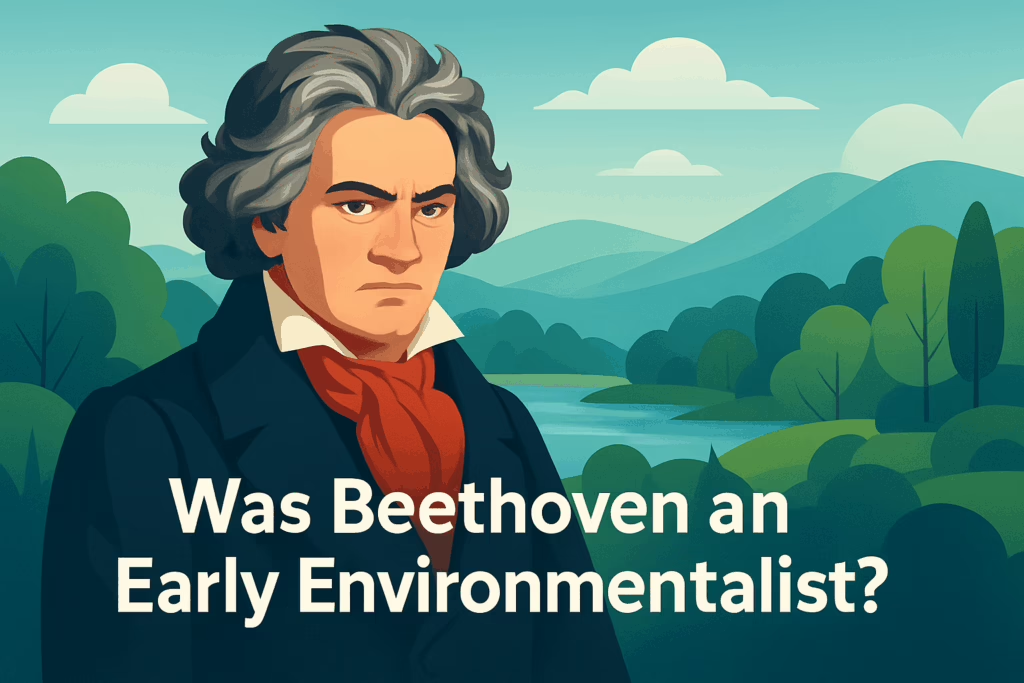
Was Beethoven an Early Environmentalist?
In the context of contemporary discussions on environmentalism, Beethoven, a towering figure in classical music, emerges as an intriguing subject. One may find intrigue in correlating the humanistic tendencies in Beethoven’s compositions with early notions of environmental concern. Although the term “environmentalist” did not exist during Beethoven’s era, examining his life and work may yield insights into his potential attitudes and awareness of nature’s significance. Scrutinizing Beethoven’s personal reflections, musical inspirations drawn from nature, and his sometimes radical ideas, we delve into whether he can be regarded as an early environmentalist. Understanding this connection offers a fresher perspective on how artists and thinkers of the past may have influenced or prefigured modern environmental thought.
Beethoven’s Relationship with Nature
Ludwig van Beethoven, born in Bonn in 1770, was known for his profound connection with nature. He saw the natural world as a retreat and a source of inspiration, away from the tumultuous urban life of Vienna. Often, he would escape to the countryside, seeking solace and creativity amongst the fields, meadows, and streams. This deep interpersonal relationship with nature was not only a source of personal rejuvenation but also deeply influenced his compositions, with some of his most famous works directly inspired by the natural settings he cherished.
A prime example of this connection is Beethoven’s Sixth Symphony, the “Pastoral Symphony.” Evidently, this piece captures the essence of nature through music. It is celebrated for its ability to depict an idyllic countryside, thunderstorm, and peasant dance, each movement dripping with Beethoven’s reverence for the natural world. Notably, Beethoven remarked that his Sixth Symphony was more an expression of feelings rather than mere tone painting—demonstrating that it was nature’s emotional impact on him that he sought to convey.
Artistic Influence and Environmental Awareness
The concept of environmentalism, as understood today, encompasses the protection and preservation of ecosystems, biodiversity, and the mitigation of human impact on the environment. While it would be anachronistic to label Beethoven as an environmentalist in a modern sense, his deep appreciation for nature suggests an early awareness of its intrinsic value. This appreciation was likely not unique to Beethoven but was part of a broader cultural movement of the time that appreciated the natural world for more than its utility.
During Beethoven’s era, Romanticism was gaining momentum in Europe, emphasizing emotion, individualism, and the veneration of nature. This cultural milieu likely influenced Beethoven’s compositions. Romantic artists and writers such as William Wordsworth and Samuel Taylor Coleridge, contemporaries of Beethoven, emphasized the healing and restorative power of nature, which paralleled Beethoven’s perspectives. Beethoven’s work can be seen as part of this larger Romantic movement, which laid early groundwork for the environmental consciousness we recognize today.
Beethoven’s Personal Beliefs and Philosophies
Beethoven’s personal beliefs and philosophies also provide a window into his environmental sensibilities. Despite facing significant personal challenges—such as his deteriorating hearing—Beethoven carried a sense of duty towards humanity and nature. His connection to Enlightenment thinkers like Goethe and Schiller, who promoted ideas of freedom, progress, and harmony with nature, further illustrates his intellectual and ideological alignment.
Moreover, Beethoven’s “immortal beloved” letters reveal his profound connection with natural surroundings and how they mirrored his emotional state. He described the natural environment as a refuge and often mentioned walking in the countryside to find peace and resolution. His personal reflections often alluded to a harmonious coexistence with nature, showcasing an intuitive understanding of nature’s sanctity, aligning with elements of today’s environmental ethics.
Environmental Echoes in Beethoven’s Legacy
Exploring whether Beethoven was an early environmentalist involves dissecting his legacy and how aspects of his work have continued to resonate. Beethoven’s music has encouraged many to reflect more deeply on the natural world, acting as a bridge to environmental themes within the broader cultural consciousness.
To understand this, it is helpful to consider the instances where Beethoven’s music has been employed to further environmental causes over the years. Modern environmental movements have frequently drawn on themes from Beethoven’s compositions to advocate for conservation, highlighting his lasting impact on how music can amplify a message of environmental stewardship. For example, concerts featuring “Pastoral Symphony” have often been paired with environmental activism, underscoring a timeless connection between Beethoven’s tribute to nature and efforts to protect it.
- “Pastoral Symphony”: Regularly performed in conjunction with Earth Day celebrations to promote environmental awareness.
- Piano Sonata No. 15: Often interpreted as a narrative of nature’s rejuvenating power.
- Fidelio: Considered by some as an allegory for hope and liberation, paralleling the freedom of nature.
This lasting influence is indicative not only of Beethoven’s genius but also of his role as a cultural icon whose work transcends time and speaks to the collective memory regarding nature’s beauty and its preservation.
Does the Past Serve the Present?
Today, as we confront pressing environmental challenges, the reflections of past figures like Beethoven could be more relevant than ever. While technology and scientific understanding have drastically evolved since Beethoven’s time, the fundamental relationship between nature and humanity remains intrinsically the same. By examining figures such as Beethoven, we gain new insights into the timeless values that underlie environmental conservation.
Moreover, Beethoven serves as an exemplar of how human creativity can intersect with a genuine appreciation of the natural world. In recognizing this intersection, modern advocates can craft narratives that merge historical reverence for nature with current scientific imperatives. Beethoven’s work demonstrates how the arts can play a significant role in shaping environmental dialogue, nurturing an enduring connection with the planet.
Conclusion: Beethoven’s Legacy and Its Modern Resonance
In summary, while Beethoven did not set out to be an environmentalist as understood in today’s terms, evidence of his deep-seated appreciation for nature is abundantly clear. His compositions reflected the natural beauty he revered, aligning with an ethos that we can recognize as environmentally conscious today. The romanticization of nature in his work and life offers a valuable lens through which we can examine our own relationships with the environment.
For readers, Beethoven’s legacy offers inspiration to find and honor the natural world in personal and collective ways. As we face environmental changes, learning from historical figures who valued nature’s intrinsic power can spur positive action and advocacy. As a call to action, consider Beethoven’s perspective when engaging with nature—whether through music, art, or simply a walk outdoors. Doing so may not only enrich personal experiences but also bolster the broader commitment to preserving our shared environment for future generations.
Reflecting on Beethoven’s life and legacy reminds us that the nurturing bond between humanity and nature has always been—and remains—a key tenet of our collective wellbeing and survival.
Frequently Asked Questions
1. Did Beethoven demonstrate environmental concerns through his music?
While the concept of environmentalism as we understand it today wasn’t articulated in Beethoven’s time, there’s a strong argument to be made that Beethoven’s music reflects a deep appreciation for nature. His Symphony No. 6, known as the “Pastoral Symphony,” is perhaps the most overt example. It paints vivid musical pictures of the countryside, reflecting serene natural scenes and the peacefulness of rural life. Beethoven himself said he loved spending time outdoors and often took long strolls in Vienna’s rural areas. These experiences undoubtedly inspired his music. Through the “Pastoral Symphony,” Beethoven seems to communicate a profound respect for nature, which aligns with the spirit of environmentalism.
2. How did Beethoven’s lifestyle reflect any early environmentalist values?
Beethoven’s lifestyle may offer some clues regarding his environmental awareness. Beethoven was known for his love of nature and spent considerable time walking the landscapes near Vienna. He would even carry a pencil and paper to jot down musical ideas inspired by the natural world around him. While he lived in a rapidly industrializing society, Beethoven frequently sought refuge in nature, valuing it as a source of creativity and solace. Although Beethoven didn’t advocate for environmental causes in the way we might expect today, his personal habits suggest a life very much in tune with the natural world, embodying principles that parallel modern environmental awareness.
3. Are there any written documents or letters where Beethoven explicitly mentions nature?
Beethoven’s personal correspondence does indeed contain several references to his love of nature. For example, in a letter to his friend Therese Malfatti, Beethoven wrote about how he preferred being in the woods to spending time in Vienna’s urban areas. His Heiligenstadt Testament, a letter written to his brothers at a low point in his life, also reflects on how walking among trees and natural settings soothed his troubled mind. While nature was a recurrent theme in his letters, it’s important to remember that Beethoven focused on his own philosophical and musical ideas more than writing about nature in an activist or conservationist context. Nonetheless, these snippets of correspondence provide glimpses into his personal affinity toward the natural environment.
4. Did Beethoven’s music influence any environmental movements or figures?
It would be anachronistic to claim that Beethoven directly influenced environmental movements during his lifetime, as such movements simply did not exist in the 18th and early 19th centuries. However, Beethoven’s music, particularly pieces like the “Pastoral Symphony,” has inspired countless individuals and movements in subsequent centuries. Many people cite the symphony as evoking feelings of peace, a connection with nature, and an appreciation for the natural world. In a modern context, various environmental campaigns have used classical music, including Beethoven’s, to invoke an emotive connection to nature. His music teaches listeners to appreciate the serenity and beauty of nature, principles that are central to environmentalism today.
5. Can Beethoven be considered a precursor to today’s environmental consciousness?
While Beethoven didn’t explicitly concern himself with environmental issues as we define them today, his profound relationship with nature and frequent expressions of this in his music do invite comparisons with modern environmental consciousness. The themes of harmony between humans and nature, the need to withdraw from the complexities of urban life into the tranquility of the countryside, and the personal value derived from natural surroundings are all sentiments that echo the principles of contemporary environmentalism. So, while it’s a stretch to call him an “environmentalist” in the modern sense, Beethoven undoubtedly possessed an awareness and appreciation of the natural world that resonates with today’s environmental ethos. His celebration of nature through music can serve as a reminder of the timeless value and beauty of the environment, encouraging us to protect it.