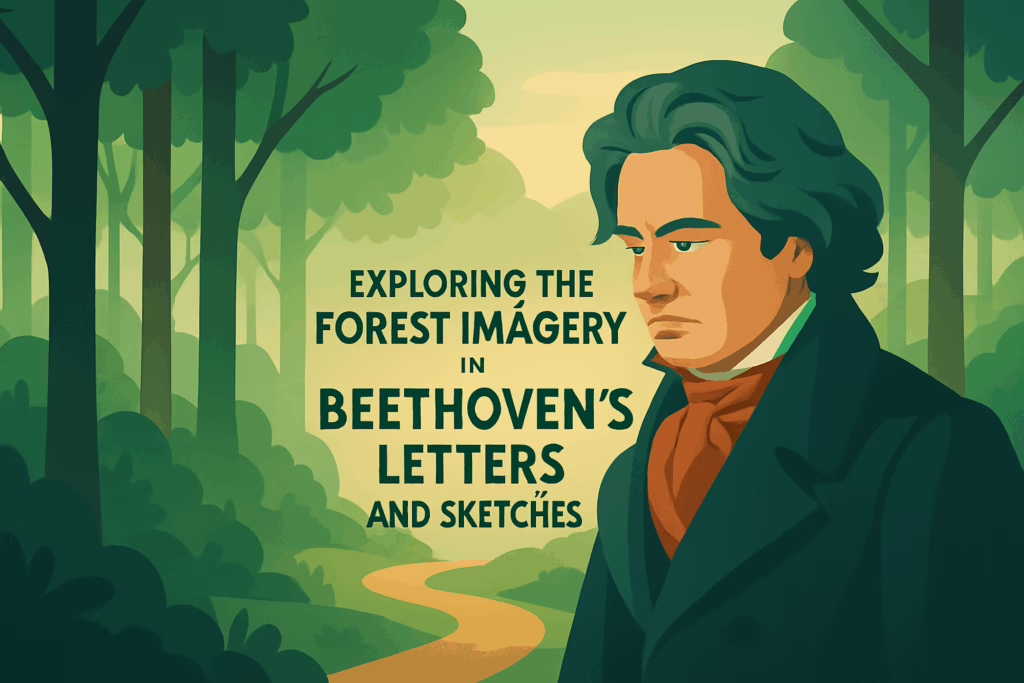
Exploring the Forest Imagery in Beethoven’s Letters and Sketches
The evocative power of nature’s imagery has long inspired artists and composers, none more so than Ludwig van Beethoven. Among the many themes permeating his artistic journey, one that stands out is his fascination with forest imagery. This rich tapestry of natural elements surfaces poignantly in the intimate expressions found in Beethoven’s letters and sketches. Defining and understanding the presence of forest imagery within Beethoven’s work not only deepens our appreciation of his genius but also illuminates the intertwining of nature with creativity. This article explores how Beethoven’s references to forests reveal not only his personal artistic process but also broader themes pertinent to Romanticism, a movement that took solace and inspiration from nature’s majesty. By diving into Beethoven’s correspondence and creative musings, we uncover a nuanced narrative that vividly captures the essence of forests in his compositions and personal contemplation. The study of such imagery offers us more than an academic pursuit; it provides insight into the perceptual worlds that shape his musical masterpieces.
The Forest as a Creative Sanctuary
Beethoven’s letters often depict the forest as an indispensable sanctuary for his creativity. In the throes of composing, the composer often retreated from the bustling life of Vienna into the serene embrace of woodlands. These escapes were more than mere sojourns; they were integral to his creative process. For instance, in various correspondences, Beethoven describes the forest as a “home for my thoughts,” suggesting that the natural world was not merely a backdrop but a fundamental element in his artistic journey.
Such vivid depictions highlight a crucial aspect of Beethoven’s musical philosophy and are exemplified in pivotal works like the Pastoral Symphony. The symphony itself acts as a musical translation of Beethoven’s forest experiences, capturing the bird calls, the rustling leaves, and the serene yet dynamic vibrancy of nature. Beyond his music, Beethoven’s sketches frequently include notes about the atmosphere surrounding him during his forest retreats, reinforcing the symbiotic relationship between his environment and his creativity.
Symbolism of Renewal and Reflection
An enduring theme in Beethoven’s explorations of forest imagery is the symbolism of renewal and reflection. Forests, with their cyclical changes and vibrant ecosystems, provided Beethoven with a template for both personal and artistic regeneration. This theme is often evidenced in his reflective writing where the resonance of the forest is intertwined with personal introspection and innovation in his musical style. He viewed the cycles of nature as a metaphor for life’s inevitable ebb and flow—an idea he skillfully wove into compositions that danced between emotional paradigms.
One powerful example is seen in his correspondence about the Symphony No. 3 in E-flat major, Eroica, where nature’s forces are mirrored in the symphony’s dynamic and transformative themes. Beethoven’s engagement with the forest implied a deeper philosophical meditation on the human condition, mirroring the idealism that underscored much of the Romantic movement. Moreover, letters penned during personal trials often reveal Beethoven’s own search for solace and inner strength within nature’s bosom, underscoring an intrinsic connection to renewal.
- Beethoven’s resonance with the cycle of life in the forest.
- Interpretation of cyclical themes in the Symphony No. 3.
- Textures of renewal reflected in his compositions.
- Beethoven’s philosophical meditation on the human condition through nature.
Communing with Nature: An Emotional Journey
Another facet of Beethoven’s interaction with forests is the emotional journey it embarks upon. For Beethoven, equally proficient in conveying complex ideas was his ability to communicate profound emotional states. The forest imagery in his sketches often captures a gamut of emotions from exhilarating optimism to deep solitude. These sketches reveal his inclination to perceive forests as emotional landscapes where he could map his innermost feelings through music and prose.
In practical terms, such emotional connectivity is manifested in his much-loved Piano Sonata No. 14, more commonly known as the Moonlight Sonata. Though not directly quoting forests, the mood and depth of the sonata reflect the meditative and mysterious ambiance that forests induce. In letters he inscribed during this period, Beethoven spoke of the solace he found in solitude amidst the trees, illustrating an emotional communion that would become a cornerstone of his artistic identity.
The Forest as a Metaphor for Freedom
Equally profound is the role of forests as a metaphor for freedom in Beethoven’s work and musings. The natural world, in its boundless expanse and unyielding presence, came to symbolize an idealized freedom that resonated with Beethoven’s personal and political ideals. The imagery of vast, untamed landscapes offered Beethoven a symbolic counterpart to the political turbulence he observed and often lamented in his letters.
| Aspect | Example in Beethoven’s Life or Work |
|---|---|
| Freedom in Nature | Beethoven’s retreat to the natural world as an escape from Viennese society. |
| Musical Freedom | Innovative structures in compositions like Symphony No. 5. |
| Personal Expression | Letters expressing a longing for unfettered exploration and autonomy. |
This motif is powerfully encapsulated in his Symphony No. 5, with its bold thematic structure and assertive nature, which musicologists often interpret as a testament to individual resilience and the human spirit’s quest for freedom. Beethoven’s letters reveal his affection for such ideas, blurring the lines between his creative output and the philosophical underpinnings of freedom epitomized by the forests’ vastness and all-encompassing presence.
Conclusion: A Call to Embrace Nature’s Influence
In delving into the forest imagery prevalent in Beethoven’s letters and sketches, it becomes evident that nature’s essence was more than a source of consolation; it was a dynamic participant in his creative tapestry. Through our exploration, we see how Beethoven’s engagement with the forest extended beyond mere depiction, offering insight into a life and work driven by introspection, imagination, and an impassioned search for authenticity. The forests offered Beethoven a language through which he could articulate the ineffable qualities of his emotional and intellectual interior world.
For readers and admirers of Beethoven, embracing this intersection of nature and artistic creativity invites us to reconnect with the elemental forces that shape not only art but the human experience itself. By honoring the natural world and its imagery as Beethoven did, we can rekindle our own journeys of reflection, inspiration, and artistic freedom. Let this exploration serve as a reminder to seek the restorative and enlightening qualities of nature in our personal and creative endeavors. As Beethoven found his muse within the forest depths, so too can we draw upon nature’s wisdom to enrich our lives.
We encourage you to dive deeper into Beethoven’s works, with an ear attuned to the whispers of the forests and the movements of nature that continue to inspire and challenge generations. As you listen, let the symphony of the natural world inform your perceptions, fostering a meaningful connection between artistry, creativity, and the boundless beauty of nature.
Frequently Asked Questions
1. How does Beethoven incorporate forest imagery into his letters?
Beethoven’s letters often contain vivid depictions of nature, particularly the forest. He uses detailed descriptions to convey his emotional responses to the natural world. In his correspondence, he expresses an appreciation for the tranquility and inspiration that the forest environment provides. For example, he might write about the rustling of leaves, the play of light through the trees, and the sense of shelter and peace he feels when surrounded by nature. This imagery serves as a window into his inner world, showing how deeply connected he felt to the natural world and how it influenced his creative process.
2. What role does forest imagery play in Beethoven’s sketches and compositions?
In Beethoven’s sketches and compositions, forest imagery plays a crucial role in setting mood and conveying themes. The natural elements he admired—such as the flowing of streams, chirping of birds, and the whisper of the wind through leaves—are mirrored in the musical elements of his works. For instance, the dynamic contrasts and flowing motifs found in pieces like the “Pastoral Symphony” are directly inspired by his experiences in nature. Beethoven often used themes of the forest as a metaphor for freedom, exploration, and the exploration of human emotions. The forest provides a backdrop for his musical narratives, imbuing them with life and depth.
3. Why is Beethoven’s connection to nature, particularly forests, significant in understanding his work?
Beethoven’s connection to nature, and especially forests, is pivotal because it reflects a central aspect of his personality and artistic philosophy. He believed that nature was the ultimate source of beauty and spirituality, and this belief permeated his life and work. Understanding this connection helps us appreciate the depth of his compositions and the personal experiences that shaped them. The forest was a place of refuge and creativity for Beethoven, offering him solace and inspiration away from the constraints of society. This deep bond with nature is reflected not just in his music, but also in his worldview, underscoring themes of liberation and connection to something greater than oneself.
4. How does studying Beethoven’s forest imagery enhance our appreciation of his genius?
Studying the forest imagery in Beethoven’s letters and sketches enhances our appreciation of his genius by providing insight into his unique creative process and the sources of his inspiration. It reveals how he translated personal experiences into universal musical language, capturing the essence of the natural world with remarkable sensitivity and emotional depth. By recognizing these elements, we gain a deeper understanding of his compositions’ thematic richness and emotional impact. Appreciating the meticulous detail and intentionality with which Beethoven imbued his works with forest imagery allows us to see the profound connection between his inner life and artistic output.
5. Can you give an example of how forest imagery in Beethoven’s work has influenced modern interpretations of his music?
Forest imagery in Beethoven’s work has significantly influenced modern interpretations of his music, particularly in the way orchestras and performers bring his compositions to life. For example, conductors often draw on this imagery to emphasize the layers of sound and texture in pieces like the “Pastoral Symphony.” They might highlight sections that evoke the sound of a bustling brook or the peacefulness of a quiet glen, using instrumentation and dynamics to simulate natural surroundings. Furthermore, visual artists and stage designers may incorporate elements of forest scenery in performances to enhance the audience’s immersive experience. This holistic approach, inspired by Beethoven’s original musings, helps modern audiences connect more deeply with the timeless, natural beauty of his work.