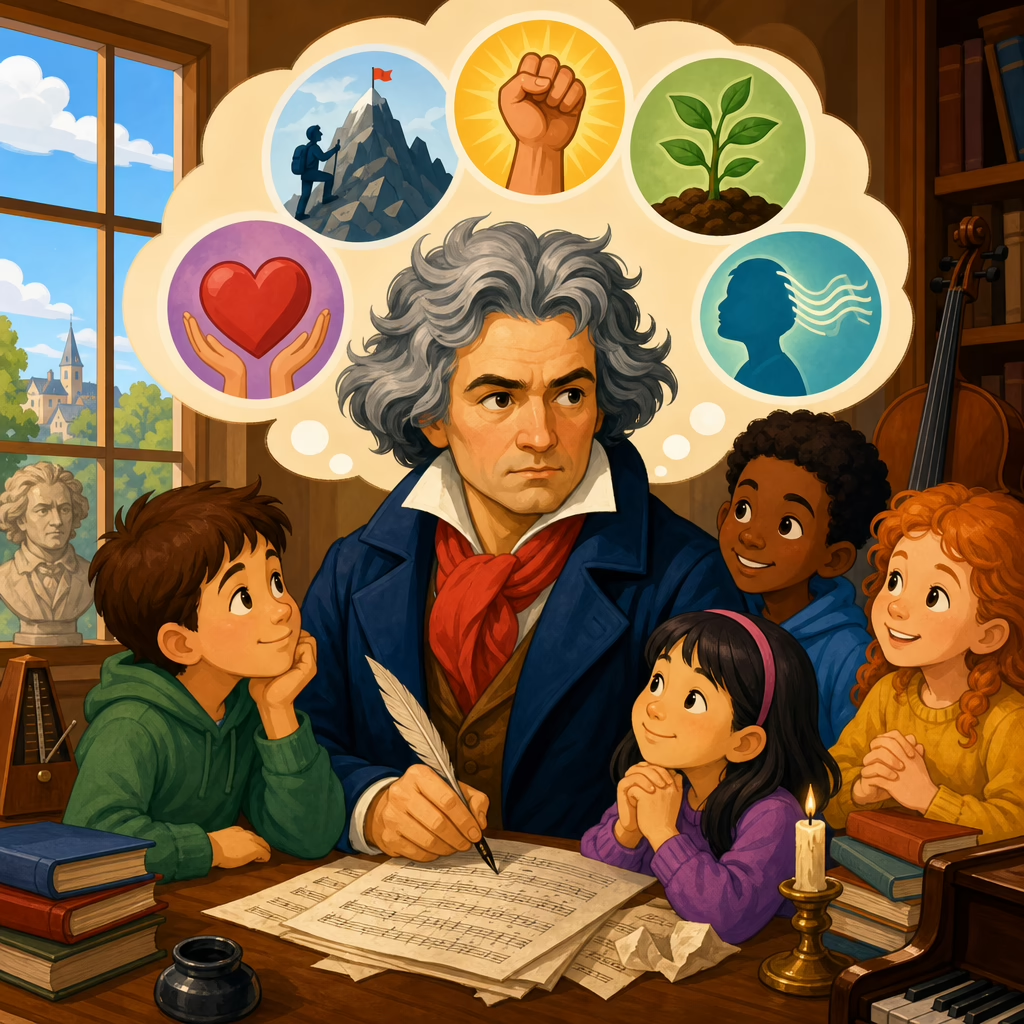
Using Beethoven’s Struggles as Character Education Tools
Using Beethoven’s struggles as character education tools helps educators turn biography into practical moral learning. Ludwig van Beethoven is often introduced as a genius composer, but his real educational value lies in the obstacles he faced and the habits he built while facing them. Character education refers to teaching students durable qualities such as perseverance, self-control, empathy, responsibility, courage, and integrity through reflection, discussion, and action. When I have used historical figures in lessons, students respond best when the person is neither flawless nor distant. Beethoven fits that need. He dealt with family instability, financial pressure, professional rejection, worsening hearing loss, loneliness, illness, and a difficult temperament. Yet he kept producing work of astonishing depth, including the late string quartets and the Ninth Symphony. That combination of hardship and contribution makes his life unusually useful for classrooms, youth programs, homeschool settings, museums, libraries, and community arts initiatives. It also supports interdisciplinary teaching across music, history, literature, social-emotional learning, and civic discussion. Instead of presenting struggle as romantic suffering, educators can use Beethoven to show that discipline, support systems, and purposeful effort matter. His story gives students a concrete way to examine how people respond to adversity, how talent requires training, and how flawed individuals can still contribute meaningfully to the world around them.
Why Beethoven’s Life Works for Character Education
Beethoven’s biography is rich because it contains clear turning points that map onto teachable character themes. Born in Bonn in 1770, he grew up in a family marked by instability. His father, Johann van Beethoven, was a musician but also struggled with alcohol and pushed the young Beethoven hard. That early environment allows a careful discussion about resilience without glorifying harmful parenting. Students can examine how difficult homes affect children and how mentors, routines, and opportunities can still create pathways forward. Later, in Vienna, Beethoven studied with major figures linked to the Classical tradition, including Haydn, and built a reputation as a pianist, improviser, and composer. This stage supports lessons about apprenticeship, feedback, and practice.
His hearing loss is the best-known hardship, but it should not be the only one discussed. By his late twenties he noticed symptoms that threatened his musical identity. In the 1802 Heiligenstadt Testament, a private document written to his brothers, he described despair, isolation, and the temptation to withdraw from life. This text is powerful in education because it gives students his own words about suffering, dignity, and purpose. At the same time, teachers should frame it responsibly. Beethoven did not simply “overcome” adversity through willpower. He adapted unevenly, relied on patrons, used conversation books later in life, and experienced real limitations. That nuance is exactly what strong character education needs.
His life also resists simplistic hero worship. Beethoven could be generous, principled, and deeply committed to artistic truth, yet he could also be abrasive, suspicious, and controlling. When students study him honestly, they learn that character is not a fixed label. It is a pattern of choices, habits, failures, corrections, and responsibilities. That is more realistic than presenting exemplary figures as perfect models.
Core Character Traits Teachers Can Draw From His Story
Several character traits emerge naturally from Beethoven’s experiences. Perseverance is the most obvious, but it should be defined precisely. Perseverance is sustained effort toward a worthwhile goal despite difficulty, not blind refusal to change course. Beethoven revised extensively, changed compositional plans, and experimented with form. His sketchbooks show persistence joined to craftsmanship. Students need to see that perseverance often looks like revision, not dramatic inspiration. That insight applies directly to writing, athletics, science projects, and community service.
Self-discipline is another central trait. Beethoven’s development did not happen because he was talented alone. He trained intensely, studied counterpoint, absorbed existing models from Mozart and Haydn, and built technical command over years. In a classroom, this helps counter the damaging myth that excellence is automatic for gifted people. It supports a growth-oriented message backed by evidence from the arts: mastery is cumulative.
Courage also appears in his willingness to keep publishing and premiering ambitious works after hearing loss reshaped his life. Courage here does not mean absence of fear. It means acting in alignment with purpose despite fear, uncertainty, or embarrassment. Students often understand this immediately when connected to public speaking, auditions, exams, or social pressure.
Empathy can be taught through his music and letters, even though his personal relationships were often strained. Listening to works such as the slow movement of the “Pathétique” Sonata or the “Ode to Joy” finale opens discussion about emotional expression and shared humanity. Responsibility enters through his role in caring for family members and, later, through the complicated and often troubling custody battle over his nephew Karl. This episode is especially useful because it shows mixed motives. He believed he was acting in Karl’s best interest, but his controlling behavior caused harm. Students can explore how good intentions do not remove the need for humility and accountability.
How to Turn Biography Into Practical Lessons
The most effective approach is to move from story to reflection to action. Begin with a specific episode, then identify the character issue, and finally connect it to a student decision. For example, present the Heiligenstadt Testament and ask: What does a person do when a core part of identity is threatened? Students can discuss coping strategies, sources of support, and the difference between private despair and public contribution. A follow-up activity might ask them to write a plan for handling one current challenge with help from routines, mentors, and realistic goals.
Another practical method is close reading paired with listening. Use a short biographical excerpt, a letter, and a musical work. Ask students what emotions, pressures, and values appear in each source. This improves historical literacy and encourages evidence-based interpretation rather than vague emotional reaction. I have found that students engage more deeply when they are asked to support claims with details from both text and sound.
Role-based discussion also works well. Assign one group to analyze Beethoven as an artist, another as a family member, another as a citizen shaped by revolutionary-era Europe, and another as a person managing disability. This prevents the lesson from collapsing into a single theme and helps students see character in context. For younger learners, simplify the task into questions about choices, consequences, and support.
| Beethoven episode | Character theme | Plain-language classroom question | Practical activity |
|---|---|---|---|
| Strict, unstable childhood in Bonn | Resilience | How can someone grow even when life at home is hard? | Map supportive adults, routines, and opportunities in a community |
| Years of study and revision | Self-discipline | What does practice really look like? | Track revisions on a writing or art assignment |
| Hearing loss and Heiligenstadt Testament | Courage | What helps people continue when they feel discouraged? | Create a personal coping and support plan |
| Custody conflict involving Karl | Responsibility | Can good intentions still cause damage? | Debate choices, consequences, and better alternatives |
| Ninth Symphony premiere | Purpose | Why contribute something larger than yourself? | Connect a class project to community benefit |
Age-Appropriate Uses in Schools and Community Programs
Elementary students benefit from a narrowed focus. Instead of presenting the full complexity of Beethoven’s adult life, teachers can highlight effort, practice, and expressing feelings through music. A simple lesson might compare an early draft and a final draft of student work, then connect that process to Beethoven’s sketchbooks. The goal is not to create miniature music historians; it is to give children a concrete image of persistence.
Middle school students can handle contradiction. This is the ideal age to discuss hearing loss, frustration, and identity. They are often sensitive to embarrassment and social comparison, so Beethoven’s withdrawal from performance and continued commitment to composition becomes relatable. Advisory programs, after-school arts clubs, and library workshops can use these themes to address coping skills and respectful discussion of disability.
High school and college settings should go further into evidence and nuance. Students can read excerpts from letters, compare scholarly interpretations, and analyze the political ideals surrounding works such as the “Eroica” Symphony. Originally associated with Napoleon before Beethoven famously rejected that dedication when Napoleon crowned himself emperor, the piece creates a strong entry point for discussions about ideals, disillusionment, and moral consistency. Community education programs for adults can also use Beethoven as a case study in lifelong learning, creativity under limitation, and public legacy.
Outside schools, museums, youth orchestras, churches, neighborhood cultural centers, and senior programs can all use this material. A community concert with guided narration can frame Beethoven not only as a master composer but also as a source for discussion about perseverance, care, and contribution. That broad usefulness is why this topic functions well as a hub within community and education content.
Important Cautions: Avoiding Myths and Harmful Simplifications
There are several common mistakes educators should avoid. First, do not romanticize suffering. Hardship can deepen insight, but it also causes damage. Students should never leave with the impression that pain is necessary for creativity or that asking for help is weakness. Beethoven’s story is more responsible when framed around adaptation, support, and sustained work.
Second, avoid the “genius excuses everything” myth. Extraordinary talent does not erase harmful behavior. If a lesson ignores his harshness in relationships or his treatment of Karl, it teaches the wrong moral lesson. Strong character education requires moral complexity. Students should be encouraged to admire achievement while still evaluating conduct.
Third, present disability with care. Beethoven was not “inspirational” simply because he was deaf. His hearing loss was devastating, progressive, and professionally consequential. The educational value lies in how he responded through altered methods, continued craft, and purpose, not in turning disability into a sentimental symbol. Where possible, pair Beethoven lessons with broader disability awareness and contemporary perspectives on accommodation and access.
Finally, be accurate about the historical record. Use reliable sources such as major biographies, museum materials, scholarly editions of letters, and performances informed by established musicology. Named resources like the Beethoven-Haus Bonn, Bärenreiter editions, and respected biographies by authors such as Jan Swafford or Lewis Lockwood provide a more trustworthy base than recycled anecdotes. Accuracy matters because character lessons built on false stories are fragile.
Building a Hub Around Beethoven and Miscellaneous Character Themes
As a sub-pillar hub in community and education, this topic can connect many related articles and programs. One cluster can focus on perseverance through the arts, linking Beethoven with writers, athletes, or scientists who revised repeatedly before succeeding. Another can address disability and inclusion, using Beethoven alongside modern examples of accessible design, assistive technology, and inclusive teaching practice. A third can explore mentor relationships, comparing Beethoven’s studies in Vienna with current apprenticeship models in music, trades, and community organizations.
Miscellaneous coverage matters because not every educator wants a narrowly musical article. Some readers need discussion guides, some need homeschool applications, some need youth group material, and others need cross-curricular community event ideas. A strong hub page should therefore address biography, teaching methods, cautionary framing, age adaptation, and project ideas in one place. From there, readers can branch into deeper articles on the Heiligenstadt Testament, the Ninth Symphony and civic unity, teaching resilience through composers, or discussing disability respectfully in arts education.
The practical benefit is clear: Beethoven gives communities a shared cultural reference point that can carry serious conversation without becoming abstract. His life opens questions students already ask in different forms. What do I do when something important becomes harder? How do I keep going without pretending I am fine? Can a person be admirable and difficult at the same time? Those are character education questions, and Beethoven’s struggles make them concrete.
Using Beethoven’s struggles as character education tools works because his life combines recognizable hardship, documented reflection, disciplined effort, and meaningful contribution. He offers far more than a familiar name from classical music. He provides educators and community leaders with a realistic case study in perseverance, courage, responsibility, and moral complexity. His childhood in Bonn, demanding training, hearing loss, personal conflicts, and late creative achievements all create teachable moments when handled with accuracy and care. The best lessons do not portray him as a saint or as a tragic symbol. They present him as a gifted, flawed human being whose choices illuminate how character is formed under pressure.
That approach benefits more than music classes. It strengthens advisory programs, homeschool planning, library programming, youth arts education, intergenerational discussion groups, and community cultural events. It also supports practical action. Students can reflect on setbacks, analyze evidence, identify support systems, revise their work, and connect personal effort to service beyond themselves. If you are building curriculum or community content in this miscellaneous education space, start with one Beethoven episode, one character theme, and one action students can practice this week. Then expand the hub with linked lessons that turn admiration into growth.
Frequently Asked Questions
How can Beethoven’s life be used to teach character education instead of just music history?
Beethoven’s life works especially well for character education because it gives students a concrete human story rather than an abstract list of virtues. Many students first meet him as a famous composer, but the more meaningful lesson is that he repeatedly faced frustration, limitation, criticism, personal loss, and worsening deafness while continuing to work with discipline and purpose. That makes his biography a strong entry point for teaching perseverance, responsibility, self-control, courage, and integrity in ways students can actually discuss and apply.
In practice, educators can move beyond dates and compositions by asking students to examine specific moments in Beethoven’s life: What challenge was he facing? What choices did he make? Which habits helped him continue? Where did he struggle emotionally or socially? These questions help students see character not as perfection, but as the ability to respond constructively under pressure. Beethoven becomes less of a distant genius and more of a case study in effort, resilience, and disciplined growth.
This approach is also effective because it naturally connects reflection to action. After learning about Beethoven’s obstacles, students can identify a challenge in their own lives and create a plan for meeting it with one specific virtue. For example, a class discussion on Beethoven’s persistence despite hearing loss can lead into goal-setting around sticking with difficult schoolwork, practicing self-control during frustration, or showing courage when progress feels slow. In that way, biography becomes a practical character education tool rather than a simple historical narrative.
Which character traits are most effectively taught through Beethoven’s struggles?
Several character traits stand out clearly in Beethoven’s story, but perseverance is usually the most obvious and powerful. He continued composing through significant hardship, including progressive hearing loss that would have ended many careers. Students can see that perseverance does not mean things become easy; it means a person keeps acting with purpose even when circumstances become painful, discouraging, or unfair. That lesson is especially useful in classrooms, where students often assume difficulty is a sign they should stop.
Self-control is another important trait that can be explored through Beethoven’s life, though this one should be taught honestly. He was not a flawless model of emotional balance, and that actually strengthens the lesson. Educators can show students that strong character is not the absence of struggle but the ongoing effort to govern one’s choices, habits, and reactions. Beethoven’s life invites discussion about what happens when emotion is intense, why discipline matters, and how routines and commitments can help a person stay focused on meaningful work.
His biography also supports teaching courage, responsibility, and integrity. Courage appears in his willingness to keep creating and presenting serious work despite personal suffering and public pressure. Responsibility can be discussed through his commitment to his craft and his persistent labor, reminding students that talent alone is not enough without effort and follow-through. Integrity enters the conversation when students consider how Beethoven remained committed to artistic depth rather than simply pleasing others. Finally, empathy can be developed by helping students understand that outward success often hides inward struggle. That perspective encourages them to be less dismissive of classmates, historical figures, and even themselves.
Why is Beethoven a better character education example when his weaknesses are included too?
Beethoven is more valuable as a character education figure when students see the whole person rather than an idealized hero. If he is presented only as a triumphant genius who overcame adversity, students may admire him, but they may not relate to him. When his frustrations, relational difficulties, mood struggles, and imperfections are included, students begin to understand a much more realistic truth: character is formed in the middle of weakness, not after weakness disappears. That makes the lesson far more credible and far more useful.
Including his shortcomings also protects character education from becoming shallow moral storytelling. Students quickly recognize when an adult turns a historical figure into a flawless symbol. A more honest portrayal invites richer thinking. Students can ask, “What did Beethoven do well under pressure?” and also, “Where did he fail to handle difficulty wisely?” Those paired questions develop moral discernment. Instead of simply praising persistence, students learn to distinguish between productive determination and harmful behavior, between passion and lack of self-control, and between talent and maturity.
This fuller approach also helps educators teach growth rather than hero worship. The goal is not for students to conclude that greatness belongs only to rare geniuses. The goal is for them to see that meaningful achievement often coexists with struggle, limitation, and unfinished character development. That insight is deeply encouraging. Students who are impatient, discouraged, or inconsistent do not need examples of perfect people; they need examples of real people whose lives show both the cost of hardship and the possibility of growth through it.
What are practical classroom strategies for turning Beethoven’s biography into moral learning?
One of the strongest strategies is structured reflection built around key episodes from Beethoven’s life. An educator can present a short narrative about a challenge he faced, then guide students through questions such as: What virtue was needed here? What emotions might he have felt? What choices were available to him? What would strong character look like in a similar situation today? This format helps students move from historical information to moral reasoning without reducing the lesson to a simplistic slogan.
Discussion-based learning is also highly effective. Small-group conversations, think-pair-share activities, and journal responses allow students to process Beethoven’s experience in relation to their own lives. For example, after learning about his persistence despite hearing loss, students might write about a time they wanted to quit something difficult and identify which character trait they needed most. Educators can then extend the activity by asking students to create a concrete action step, such as practicing longer before giving up, responding more calmly to setbacks, or asking for help instead of withdrawing.
Another useful strategy is habit-building. Since character education is most effective when it leads to repeated action, teachers can link Beethoven’s example to routines students can practice over time. A lesson on perseverance might lead to weekly goal tracking. A lesson on self-control might lead to reflection before reacting during conflict. A lesson on responsibility might lead to students monitoring their preparation and follow-through. Role-play, short case studies, classroom norms, and personal commitment statements can all reinforce these virtues. In this way, Beethoven’s biography becomes not just something students learn about, but something that shapes how they work, respond, and grow.
How can educators keep lessons about Beethoven inspiring without becoming unrealistic or preachy?
The best way is to teach Beethoven with honesty, specificity, and clear relevance to students’ real lives. Inspiration becomes unrealistic when a historical figure is presented as superhuman, and it becomes preachy when every detail is forced into a moral command. Educators can avoid both problems by staying grounded in actual events and asking open, thoughtful questions. Instead of saying, “Be like Beethoven,” it is more effective to ask, “What helped him endure difficulty?” “What can we learn from the way he worked?” and “Which part of this struggle feels familiar today?” That tone invites reflection rather than resistance.
It also helps to focus on process more than greatness. Students do not need to become master composers to benefit from Beethoven’s example. They need to see the value of daily effort, disciplined habits, meaningful purpose, and resilience under pressure. When the lesson centers on those transferable patterns, it becomes much more accessible. A student who struggles in math, athletics, friendships, or practice routines can still understand what it means to persist, regulate emotion, take responsibility, and continue growing when progress feels slow.
Finally, educators should connect the lesson to realistic action. Inspiration lasts longer when it results in a specific practice rather than a temporary feeling. After discussing Beethoven’s struggles, students might identify one obstacle they are facing, choose one virtue they want to strengthen, and set one measurable action for the week. That could be finishing a difficult assignment without procrastinating, responding respectfully during frustration, or practicing a skill consistently despite imperfection. This keeps the lesson grounded, practical, and genuinely formative. Beethoven’s life then serves not as a distant legend, but as a meaningful tool for helping students build durable character in everyday life.