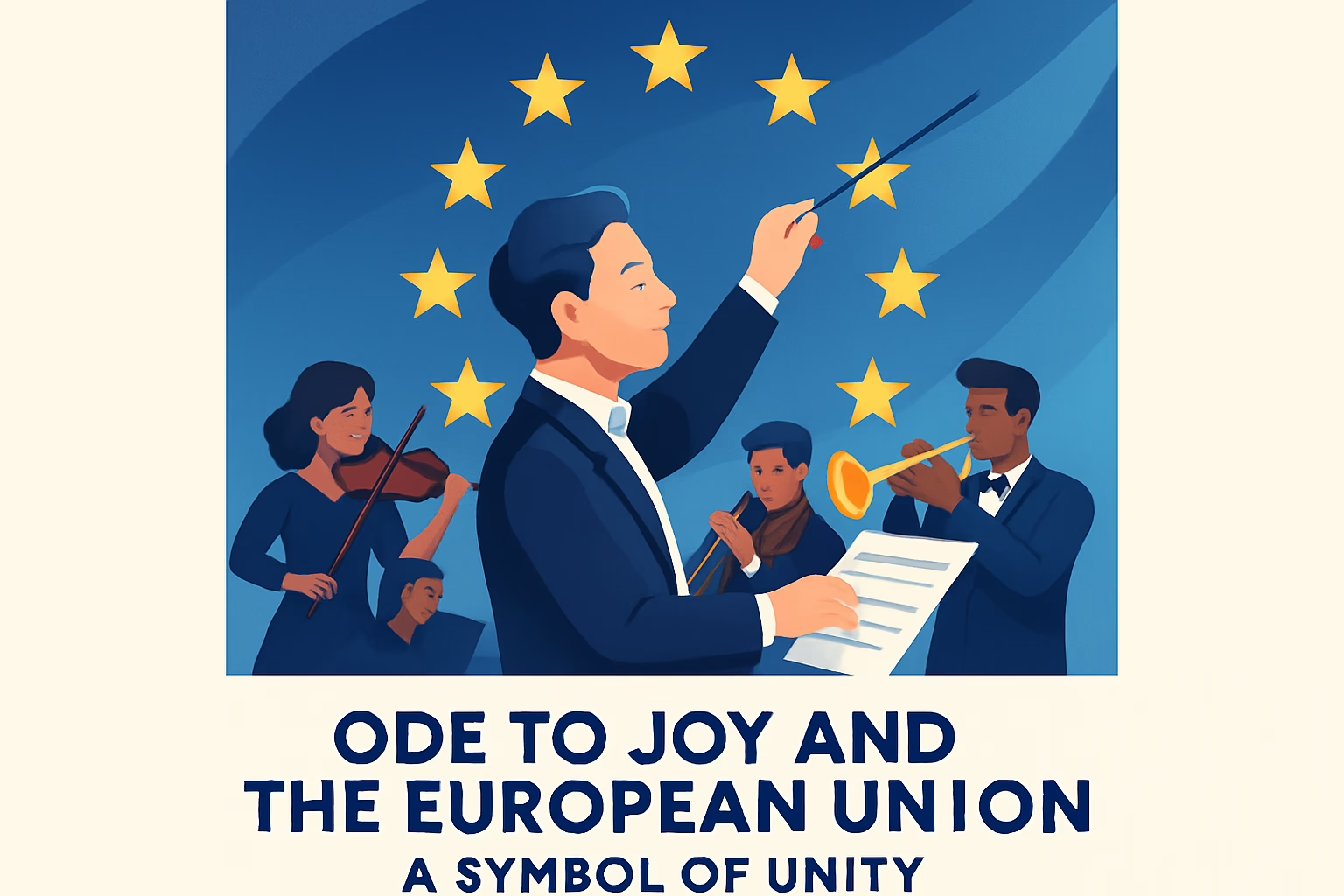
Ode to Joy and the European Union: A Symbol of Unity
Introduction to “Ode to Joy” and its Significance in the European Union
“Ode to Joy,” originally composed by Ludwig van Beethoven as the final movement of his Ninth Symphony, is more than just a classical masterpiece; it embodies the ideals of unity, peace, and harmony that transcend time and geographical boundaries. Adopted as the anthem of the European Union (EU), it symbolizes the shared values and collective aspirations of the member states. This piece of music holds a distinctive place in European culture and politics, serving as a poignant reminder of the power of unity in diversity.
The choice of “Ode to Joy” as the EU anthem is particularly significant because it represents the vision of a continent united by common principles despite its diversity in languages, cultures, and histories. Unlike national anthems, which often emphasize individual national pride and identity, “Ode to Joy” seeks to foster a sense of togetherness and solidarity among the citizens of Europe. Understanding the role of this anthem within the EU framework allows us to explore how art and culture can influence political ideologies and contribute to social cohesion.
By analyzing the role of “Ode to Joy” in the context of the European Union, we can gain valuable insights into how symbolism in art can be mobilized to encourage collaboration among diverse groups. This investigation helps highlight the importance of cultural symbols in shaping collective identities and influencing political landscapes. Additionally, it demonstrates how music and politics are intertwined, affecting not only how societies envision themselves but also how they interact on both personal and international levels.
The Historical Context of “Ode to Joy”
Composed in 1824 by Ludwig van Beethoven, the “Ode to Joy” was set to the words of the German poet Friedrich Schiller. Schiller’s poem, written in 1785, reverberates with a theme of universal brotherhood—a visionary concept amidst a turbulent period in European history. At a time of political upheaval, the poem’s message was both revolutionary and optimistic, calling for joy and unity among all human beings. Beethoven’s decision to set this poem to music was inspired by his fervent belief in humanism and the potential for music to unite people across divisions.
Throughout its history, “Ode to Joy” has been employed in various cultural and political settings, often being invoked at moments that call for hope and solidarity. For instance, during the fall of the Berlin Wall in 1989, Leonard Bernstein famously conducted a performance of Beethoven’s Ninth Symphony in Berlin, with the word “freedom” replacing “joy” in Schiller’s poem. This performance highlighted the anthem’s power to symbolize triumph over division and the joyous reunion of separated peoples.
As the anthem of the European Union, “Ode to Joy” continues to reflect values of unity and peace. The anthem, devoid of lyrics in its EU rendition, transcends language barriers and communicates through the universal language of music. It is a symbol not only of Europe’s shared history but also of its aspirations for the future. It epitomizes an ideal of unity that is not about homogenization, but rather about embracing and celebrating diversity in a way that strengthens communal bonds.
Understanding the European Union: An Overview
The European Union is a unique economic and political union between 27 European countries that together cover much of the continent. It was created in the aftermath of World War II, driven by the desire to ensure peace and stability through economic cooperation and integration. Over the decades, the EU has evolved to become much more than a trade alliance, incorporating policies that span environment, health, external relations, justice, and migration.
The EU operates through a system of supranational institutions and intergovernmental negotiated decisions among the member states. Key bodies include the European Commission, the European Parliament, and the European Council, each playing essential roles in the governance of the Union. A crucial aspect of the EU is its single market, which allows for the free movement of goods, services, people, and capital. This single market enables member nations to work cohesively while maintaining their sovereignty and cultural identities.
At its core, the EU embodies the principle of unity in diversity. Its creation was predicated on the notion that collaboration can lead to positive outcomes for all member nations, transcending historical animosities and cultural differences. The European Union exemplifies how diverse countries can collectively address common issues and challenges, establish shared rules, and work toward mutual goals. “Ode to Joy,” as the anthem, echoes this central theme, reinforcing the EU’s dedication to a harmonious and cooperative future.
“Ode to Joy” as a Cultural Symbol in the EU
The cultural significance of “Ode to Joy” within the EU cannot be overstated. It is more than just a piece of music; it represents the ethos of the entire European project. As a cultural symbol, it embodies unity, peace, and the collective identity of Europe. This cultural symbolism is particularly crucial in an entity as diverse as the EU, where multiple languages, traditions, and historical backgrounds intersect.
One pertinent example of “Ode to Joy” functioning as a symbol of cultural unity is its use during the accession of new member states into the EU. For instance, when Eastern European countries joined the EU in 2004—a major expansion that included cultural and historical integration—”Ode to Joy” was performed at key ceremonies. The anthem served as a unifying force, celebrating new partnerships and the bridging of East and West Europe. It underscored the essence of the EU—a union not only of economies and laws but also of peoples and cultures.
| Member State | Year of Accession | Primary Language |
|---|---|---|
| Poland | 2004 | Polish |
| Hungary | 2004 | Hungarian |
| Czech Republic | 2004 | Czech |
Furthermore, the cultural resonance of “Ode to Joy” extends beyond official ceremonies. It is a staple in public concerts and celebrations, often evoking an emotional response that highlights a sense of shared heritage across Europe. This anthem has the power to bring individuals together and strengthen the European identity by celebrating a sense of belonging to a community larger than one’s immediate nation or region.
The Political and Social Impact of “Ode to Joy” in the EU
“Ode to Joy” serves as a political emblem within the European Union, illustrating the aspiration towards cohesion amidst diversity. Politically, it reflects the EU’s commitment to fostering a union that transcends national boundaries in pursuit of collective prosperity, peace, and democracy. It serves as a reminder of the ambitious goals laid out by the founding fathers of the EU—figures like Robert Schuman and Jean Monnet—who envisioned a continent where past rivalries are replaced by reconciliation and cooperation.
An example that vividly showcases the political impact of “Ode to Joy” is its performance during pivotal moments of European integration. Notably, when the Maastricht Treaty was signed in 1992, forming the basis for the modern EU, “Ode to Joy” was prominently featured, symbolizing the monumental step towards deeper integration and cohesion among European countries. This treaty laid the groundwork for policies that solidified economic and political ties, further enshrining unity as a core principle of the EU.
In addition to its political symbolism, “Ode to Joy” has social implications. It stands as a unifying force in times of crisis or celebration. For example, the anthem has been performed at events that highlight the EU’s resilience, such as gatherings after significant regional challenges or at ceremonies celebrating cultural achievements. These performances serve to remind citizens of the shared values and common destiny that bind them together, fostering a sense of solidarity and mutual support across national borders.
The Future of “Ode to Joy” as an EU Anthem
Looking forward, “Ode to Joy” will likely continue to play a significant role as an emblem of unity within the EU. As the Union faces unprecedented challenges such as political fragmentation, economic inequality, and sociocultural shifts, the anthem will remain a vital symbol of hope and resilience. It encourages member states to navigate difficulties together, reinforcing the notion that collective action and mutual understanding are key to overcoming contemporary issues.
The anthem’s enduring appeal lies in its adaptability and timeless message. As new generations of Europeans grow up in an increasingly interconnected world, “Ode to Joy” may inspire renewed commitment to the EU’s founding principles and aspirations. Its influence can extend beyond official political settings, resonating with individuals who identify with the broader European project and its core values of peace, equality, and justice.
Moreover, as Europe expands its cultural and global influence, the prominence of “Ode to Joy” as a symbol will likely strengthen, drawing connections between diverse European narratives while encouraging dialogue and collaboration both within the continent and internationally. The anthem will continue to act as a beacon for those striving to understand and implement the European spirit of harmony amidst diversity.
Conclusion: The Enduring Legacy of “Ode to Joy” in the EU
“Ode to Joy” symbolizes the essence of the European Union—a commitment to unity, peace, and collaboration among diverse nations. This powerful anthem encapsulates the EU’s ideals while also resonating on personal, cultural, social, and political levels. As such, it continues to stand as an emblem of hope and resilience amid ongoing global complexities.
The music of “Ode to Joy” serves as a reminder of the inherent beauty in diversity and the strength that can be found in solidarity. For the citizens of the European Union, it offers a shared heritage and a vision for the future, encouraging continued efforts toward strengthening bonds within and beyond Europe.
The lasting message of “Ode to Joy” is a call to embrace and celebrate our connections with one another, both within the EU and in the broader international community. As we move forward, each of us can contribute to its legacy by promoting unity and understanding in our daily lives. May this anthem continue to inspire us all to work together towards a more cooperative and harmonious world.
Frequently Asked Questions
1. What is the historical context of “Ode to Joy” in relation to the European Union?
“Ode to Joy” has a profound historical significance that predates its adoption by the European Union. Originally composed by Ludwig van Beethoven in the early 19th century, it forms the choral finale of his Ninth Symphony, completed in 1824. The text of “Ode to Joy” is based on a poem by Friedrich Schiller, written in 1785, which extols the brotherhood of humanity and the transcendence of joy that unites all people. Beethoven’s setting of this poem into music captures the essence of unity and a shared sense of community, characteristics highly valued by the European Union. It wasn’t until 1985 that the EU officially adopted “Ode to Joy” as its anthem during the Milan Summit, reasserting its commitment to harmony, cooperation, and unity among European nations. By choosing Beethoven’s work, the EU symbolically embraced these timeless ideals as the cornerstone of its collective identity.
2. Why did the European Union choose “Ode to Joy” as its anthem instead of adopting a new composition?
The selection of “Ode to Joy” as the anthem of the European Union was a strategic decision grounded in both symbolic and practical considerations. First and foremost, the piece already held deep resonance with the ideals of unity and peace, which are foundational to the EU’s mission. By choosing a composition with such a prevalent and universally acknowledged message, the EU was able to tap into an existing cultural and emotional connection shared across its member states. Moreover, “Ode to Joy” transcends linguistic barriers; because it is instrumental when performed as an anthem, it avoids privileging any one of the EU’s numerous official languages, thus promoting inclusivity. The anthem as a non-lyrical piece complements the union’s diversity by aligning with its multifaceted cultural heritage without the need for translation or risking misinterpretation. Finally, Beethoven’s music is deeply rooted in European cultural history, symbolizing a shared cultural legacy and offering a sense of familiarity and continuity throughout the continent.
3. In what ways does “Ode to Joy” symbolize the values of the European Union today?
“Ode to Joy” symbolizes the European Union’s values through its embodiment of unity, peace, and harmony. The EU, founded as a post-war project to foster cooperation and prevent further conflicts on the continent, holds the principle of unity at its core. The music of “Ode to Joy,” through its uplifting and inclusive themes, resonates deeply with this objective by representing the aspiration for a united Europe where diverse nations come together as one. Beyond political and economic union, the EU also aims to cultivate a sense of cultural and social cohesion—a mission mirrored in the joyous and triumphant tones of Beethoven’s composition. The anthem serves as a reminder of the power of collaboration and shared purpose, reinforcing the belief that through mutual respect and solidarity, Europe can overcome challenges and thrive as a collective entity. Furthermore, using “Ode to Joy” aligns with promoting human dignity, democracy, and human rights, reaffirming the EU’s commitment to these values on a global stage.
4. How is “Ode to Joy” officially used within the European Union’s institutions and events?
“Ode to Joy” plays a significant official role within the European Union’s institutions and ceremonies. It is performed at various significant European events, such as official inaugurations, state ceremonies, and high-profile gatherings where showcasing the values and unity of the EU is paramount. The piece is also a staple during Europe Day on May 9, the EU’s annual celebration of peace and unity across the continent. For example, it is played during the ceremonial end of a European Council meeting, at the conclusion of an EU Parliament session, and during European summits. When performed, “Ode to Joy” often serves as a musical representation of European identity, an auditory expression of the EU’s belief in progress through harmony. Additionally, the anthem is used in cross-national cultural exchanges and festivals, facilitating dialogue and cooperation among member states through shared musical traditions. While the anthem is performed instrumentally, choir renditions are also prevalent, underscoring the themes of harmony and collective voice that define the EU’s mission and aspirations.
5. Can “Ode to Joy” be interpreted differently by the member states of the EU or does it carry a singular meaning?
While “Ode to Joy” carries a unified message of peace and camaraderie, it is open to interpretation, allowing each member state within the European Union to derive individual significance from it based on their cultural and historical contexts. This flexibility is part of the anthem’s enduring appeal and effectiveness. For some nations, the triumphant notes of “Ode to Joy” may evoke a sense of national pride, reflecting their contribution to European unity. For others, it might symbolize hope, renewal, and the promise of a peaceful future—a stark contrast to previous turbulent pasts. The diversity in interpretation mirrors the EU’s diversity: multiple nations and cultures, each with its unique story and perspective, coalescing into a single, harmonious entity. By accommodating these various interpretations, “Ode to Joy” helps foster inclusivity and reinforces the idea that unity does not mean uniformity. Instead, it celebrates the union’s multiplicity, where differences are not erased but harmonized to create a stronger, more resilient Europe.