How Libraries Promote Beethoven Through Community Programming
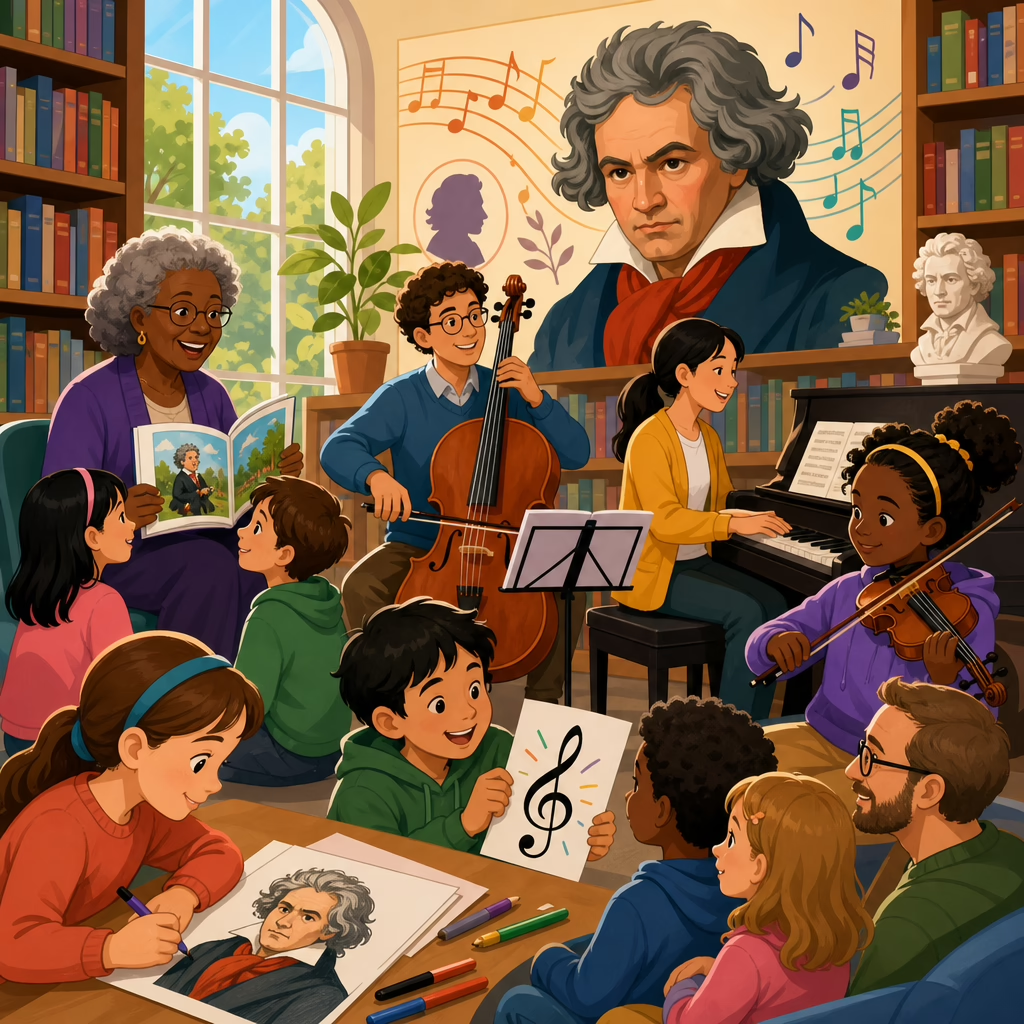
Libraries promote Beethoven through community programming by turning a composer often treated as distant and academic into a shared local experience. In public libraries, school libraries, university systems, and special collections, Beethoven programming includes concerts, listening clubs, family workshops, film screenings, lecture series, digital exhibits, and partnerships with orchestras, choirs, and music teachers. The goal is not only to celebrate Ludwig van Beethoven as a canonical figure, but also to make his music understandable, relevant, and usable for modern communities. When done well, this work supports arts access, lifelong learning, local cultural identity, and music appreciation across age groups.
In practice, community programming means organized public-facing activities designed around audience needs rather than around the collection alone. That distinction matters. A library may own biographies, scores, recordings, and databases related to Beethoven, but programming activates those resources. It gives patrons an entry point: a beginner-friendly session on the Fifth Symphony, a teen remix workshop connecting classical motifs to digital composition, or a neighborhood performance tied to a literacy initiative. I have seen the strongest results when libraries stop assuming prior knowledge and instead build pathways from curiosity to confidence. People attend for different reasons: school assignments, piano study, family enrichment, or simply a desire to hear great music in a welcoming space.
Beethoven remains a powerful focus for this kind of outreach because his work sits at the crossroads of music history, disability history, European cultural heritage, political change, and public memory. His life raises questions patrons already ask: Why is Beethoven important? What should a beginner listen to first? How did hearing loss affect his composing? Why do libraries keep returning to the Ninth Symphony, the piano sonatas, and the string quartets? Community programming can answer those questions directly while also opening wider conversations about creativity, struggle, patronage, copyright status, archival preservation, and interpretation.
For a hub article under Community and Education, the miscellaneous category matters because much of the most effective Beethoven outreach does not fit neatly into one box. A single program may blend performance, discussion, exhibit design, media literacy, local history, and hands-on learning. Libraries are uniquely equipped for that blend. They already manage public trust, free access, event logistics, educational framing, and discoverability through catalogs, guides, and calendars. In short, libraries promote Beethoven best when they move beyond passive display and create community-centered experiences that connect collections, expertise, and participation.
Why Beethoven programming works in libraries
Beethoven programming works in libraries because libraries lower the barriers that often keep classical music audiences narrow. Cost is reduced or removed. Staff can frame unfamiliar material in plain language. Spaces are neutral and civic rather than elite. A person who would never buy a symphony ticket may attend a free lunchtime lecture with listening excerpts or stop at an exhibit after checking out children’s books. That accessibility is not incidental; it is the core advantage.
Another reason is that Beethoven offers multiple entry points. Beginners can recognize iconic motifs from Symphony No. 5 or “Ode to Joy.” Intermediate listeners can compare recordings of the “Moonlight” Sonata or the “Eroica” Symphony. Advanced patrons may engage with sketchbooks, urtext editions, period instruments, or debates about tempo, ornamentation, and editorial practice. A library can serve all three groups in the same season by sequencing events carefully. For example, an introductory listening session can lead into a chamber performance, then into a score-reading workshop using IMSLP, Naxos Music Library, Oxford Music Online, and local print holdings.
Libraries also help place Beethoven in context. Instead of presenting him as a lone genius, effective programming situates his work among publishers, patrons, performers, copyists, instrument makers, and later interpreters. This makes the topic more accurate and more interesting. It also supports curriculum alignment for teachers covering the Classical and early Romantic periods, the Congress of Vienna, Enlightenment ideals, or the social history of disability. In community settings, context prevents reverence from becoming intimidation.
Core program formats that engage different audiences
The most successful Beethoven library programs are built around audience behavior, not staff assumptions. Families respond well to short, interactive formats: rhythm games based on famous themes, instrument petting zoos, movement activities inspired by symphonic contrast, and storytimes that pair picture books about composers with recorded excerpts. Teens engage better when programming includes creation and comparison, such as beat-making sessions using Beethoven motifs, podcast clubs, or film discussions about how his music is used in popular media. Adults often prefer lectures with guided listening, documentary screenings, reading groups, and live performances with moderated discussion.
Older adults and lifelong learners are often a strong audience for Beethoven programming, especially when sessions combine historical explanation with high-quality playback and clear handouts. In my experience, patrons value hearing what to listen for before a movement begins: sonata form, motivic development, dynamic contrast, and the difference between theme and variation. That small amount of scaffolding changes the room. Instead of feeling excluded, listeners feel equipped.
Libraries can also create cross-audience formats. A community sing of the “Ode to Joy,” for instance, can involve a local choir, language learners discussing Friedrich Schiller’s text, and a children’s craft station focused on musical symbols. A silent film night with live or recorded Beethoven accompaniment can connect movie fans and music fans. Makerspaces can host waveform visualization projects based on Beethoven recordings, linking music to technology education.
| Program type | Primary audience | Library resources used | Example outcome |
|---|---|---|---|
| Guided listening lecture | Adults, students | Streaming audio, projector, score excerpts | Improved understanding of major works |
| Family music workshop | Children, caregivers | Picture books, craft supplies, speakers | Early positive exposure to classical music |
| Community concert | General public | Meeting room, local performers, promotion channels | Stronger local arts participation |
| Digital exhibit | Remote users, researchers | Archives platform, images, metadata | Extended reach beyond in-person attendance |
| School partnership session | Teachers, classes | Curriculum guides, databases, librarians | Classroom integration and repeat visits |
Using collections, technology, and interpretation together
Library collections are the foundation of Beethoven outreach, but the collection alone is not the program. Staff need to interpret materials for public use. A display of biographies, scores, CDs, and DVDs becomes much more effective when paired with shelf talkers answering simple questions: Where should I start? Which recording is best for beginners? What is a string quartet? Why are there so many editions of the piano sonatas? This explanatory layer is where programming value is created.
Digital tools greatly expand what libraries can offer. Streaming databases such as Naxos Music Library let patrons compare conductors, ensembles, and historical recordings. Kanopy or similar services can support documentaries and concert films. LibGuides can organize playlists, timelines, recommended reading, and local event calendars. Special collections departments can digitize letters, nineteenth-century editions, or concert programs if rights and preservation conditions allow. Even a small public library can assemble a robust Beethoven portal using catalog lists, trusted external links, and recorded staff introductions.
Interpretation matters because Beethoven can be oversimplified. Libraries should avoid reducing him to a few clichés about genius and deafness. Better programming explains that his hearing loss developed over time, that he continued to work through profound communication challenges, and that his legacy has been shaped by changing performance practice and political symbolism. The Ninth Symphony alone has been used in celebrations, protests, state ceremonies, and educational settings around the world. A good library program names those uses and asks what they mean in context.
Partnerships that strengthen community impact
No library has to do Beethoven programming alone. The strongest initiatives usually rely on partnerships that extend expertise, audience reach, and credibility. Public libraries can work with local symphonies, chamber ensembles, opera companies, conservatories, school districts, senior centers, disability advocacy groups, and historical societies. University libraries can partner with music departments, archives, public humanities centers, and student ensembles. School libraries can coordinate with band, choir, orchestra, and classroom teachers to connect performances with reading and research.
These partnerships should be practical, not ceremonial. A local pianist can perform selected sonata movements and explain interpretation choices. A hearing specialist or disability scholar can lead a discussion on hearing loss and public misconceptions about deafness. A community choir can rehearse excerpts in the library atrium. A museum educator can help build a timeline exhibit on Vienna in Beethoven’s lifetime. Each partner should add a concrete capability the library does not already have.
Partnerships also help with promotion. Arts organizations often have mailing lists, donor networks, and social channels that reach people libraries may miss. Schools bring family audiences. Universities bring subject expertise. Community radio can amplify special events. When I have planned successful composer programming, the promotional calendar was always built early, with shared graphics, unified descriptions, and clear registration language. Attendance improves when the public understands whether an event is beginner-friendly, scholarly, participatory, or performance-based.
Planning, accessibility, and evaluation
Effective Beethoven programming requires the same disciplined planning as any other library service. Start with audience definition, outcomes, budget, staffing, and rights review. Then select formats that fit room acoustics, equipment, and local demand. A chamber concert in a reverberant open atrium may look appealing on paper but fail acoustically. A lecture without musical excerpts will frustrate beginners. A family event scheduled during school pickup hours may underperform regardless of content. Good programming decisions are operational decisions as much as artistic ones.
Accessibility should be designed in from the beginning. Provide captions for video, microphones for speakers, readable handouts, and seating that accommodates mobility needs. Use plain-language promotional copy. Offer content warnings where relevant for film or biographical material. Consider sensory needs and event length. Because Beethoven is frequently discussed in relation to hearing, libraries should be especially thoughtful in how they frame disability, avoiding inspirational stereotypes and emphasizing historical complexity and respect.
Evaluation should go beyond headcounts. Track registration, attendance, repeat participation, circulation lift for related materials, database usage, audience questions, and partner feedback. Short post-event surveys can reveal whether patrons learned specific concepts, discovered new resources, or intend to attend future arts programs. The best evidence of success is often behavioral: a teacher requesting a repeat session, a patron borrowing quartets after a listening club, or a local ensemble proposing an annual Beethoven series. Those signals show that programming has moved from one-off event to sustained community value.
How this miscellaneous hub supports broader community and education goals
As a miscellaneous hub within Community and Education, this page brings together the broad strategies libraries use to promote Beethoven when the work spans multiple formats and audiences. Some related pages may focus tightly on concerts, classroom support, digital humanities, archives, or children’s programming. This hub connects them by emphasizing the shared principles behind successful outreach: accessibility, interpretation, partnership, and evaluation. In other words, the category is miscellaneous only in format; strategically, it is coherent.
That coherence matters for librarians, educators, and arts partners looking for practical direction. If your library wants to build a Beethoven initiative, begin with your audience and your assets. Identify the works most appropriate for your community, choose formats that remove intimidation, and connect every event to discoverable resources in the catalog or online guide. Use trusted tools, clear learning outcomes, and partner expertise. Then document results so the next program starts from evidence rather than guesswork.
Libraries promote Beethoven most effectively when they treat community programming as active cultural mediation. They do more than store music history; they translate it into public experience. That benefit extends beyond one composer. A strong Beethoven program teaches patrons how to listen carefully, ask better questions, use library resources with confidence, and see the arts as part of civic life. If you are planning this work, start small, design for inclusion, and build a program sequence your community will want to revisit.
Frequently Asked Questions
How do libraries use community programming to make Beethoven more accessible to the public?
Libraries make Beethoven more accessible by presenting his music and legacy in formats that feel welcoming, local, and relevant rather than distant or purely academic. Instead of limiting engagement to bookshelves or formal lectures, libraries build programming around shared experiences such as live concerts, guided listening sessions, family workshops, film screenings, and community discussions. These events help people encounter Beethoven in ways that match different levels of familiarity, from lifelong classical music listeners to first-time attendees who may know only a few famous melodies.
One of the most effective strategies is context-building. Libraries often introduce Beethoven’s work alongside stories about his life, his creative struggles, his hearing loss, and the historical world in which he composed. That background makes the music easier to connect with emotionally and intellectually. A patron who might feel intimidated by a string quartet performance can feel much more included when a librarian, guest speaker, or music educator explains what to listen for, why a particular symphony mattered, or how Beethoven reshaped musical conventions.
Libraries also lower barriers through free or low-cost access, familiar public spaces, and flexible program design. A public library can host an informal lunchtime concert, a school library can support classroom tie-ins, and a university library can create exhibitions that combine scores, recordings, and archival materials. By meeting people where they already gather, libraries transform Beethoven from a name associated with elite culture into a living part of community life. In that sense, community programming does more than celebrate a canonical composer; it invites the public to experience Beethoven as something shared, participatory, and meaningful in everyday cultural life.
What types of Beethoven programs do libraries typically offer?
Libraries offer a wide range of Beethoven programs because different audiences engage with music in different ways. Common examples include chamber concerts, piano recitals, choir performances, and orchestra partnerships that bring Beethoven’s compositions into library spaces or connect patrons with local performing arts organizations. These live events are often paired with pre-concert talks or post-performance discussions so attendees can better understand the music they heard.
Listening clubs are another popular format. In these sessions, participants hear selected Beethoven works together and discuss themes, instrumentation, historical significance, and emotional response. This model works especially well in public and university libraries because it encourages active participation rather than passive consumption. Film screenings also play an important role, especially when they feature documentaries, biographical dramas, or performances that show Beethoven’s influence across media and generations.
For children and families, libraries frequently design hands-on workshops that introduce rhythm, melody, instruments, and storytelling through Beethoven-themed activities. These may include craft projects, movement-based learning, read-aloud pairings, or simplified listening exercises that help younger audiences connect music with imagination and play. School libraries may integrate Beethoven into broader lessons on history, literature, or the arts, while special collections and academic libraries may develop digital exhibits, manuscript displays, and lecture series focused on original scores, reception history, and scholarly interpretation.
What makes these programs especially effective is their variety. Libraries can reach newcomers, students, researchers, parents, educators, and dedicated music lovers by offering multiple entry points. A single Beethoven initiative might include a children’s music morning, an evening lecture by a faculty musicologist, an online exhibit of rare materials, and a weekend performance by local musicians. That range allows libraries to serve both educational and cultural goals while building stronger community engagement around classical music.
Why are partnerships important in Beethoven-focused library programming?
Partnerships are essential because they allow libraries to expand both the quality and reach of Beethoven programming. Libraries are often expert in public access, curation, education, and community engagement, while partner organizations bring specialized musical, scholarly, or instructional expertise. When libraries collaborate with orchestras, chamber ensembles, choirs, conservatories, school music departments, and private music teachers, they can create richer and more dynamic programs than they could produce alone.
These partnerships also help libraries connect different segments of the community. A public library working with a local symphony can attract regular concertgoers as well as patrons who have never attended a formal performance. A school library partnering with classroom teachers and youth musicians can make Beethoven part of a broader educational experience. A university library can work with faculty, archivists, and performers to connect research collections with public-facing events. In each case, collaboration turns Beethoven programming into a shared civic project rather than an isolated institutional effort.
Another major advantage is credibility and depth. Guest artists and music educators can offer live demonstrations, interpretive commentary, and performance insights that make Beethoven’s music more vivid and understandable. Scholars can explain historical context, disability studies perspectives, manuscript traditions, and changing interpretations of Beethoven over time. Community arts partners can also help with promotion, audience development, and cross-institutional visibility, bringing in people who might not otherwise think of the library as a place to experience music.
Most importantly, partnerships reinforce the idea that libraries are cultural conveners. By bringing together performers, teachers, historians, students, and residents, libraries create spaces where Beethoven becomes part of an active local conversation. That collaborative model strengthens attendance, broadens access, and ensures that Beethoven programming reflects the interests and talents of the community itself.
How do Beethoven programs in libraries support education and lifelong learning?
Beethoven programs support education and lifelong learning by combining information, interpretation, and experience in one accessible setting. Libraries are uniquely positioned to help people move beyond simply recognizing Beethoven’s name and toward understanding why his work continues to matter. Through lectures, curated reading lists, annotated playlists, digital exhibits, and discussion-based programs, libraries provide the tools patrons need to explore music history, composition, performance practice, biography, and cultural influence at their own pace.
For students, Beethoven-themed programming can strengthen interdisciplinary learning. His life and work connect naturally to European history, literature, philosophy, disability studies, and the development of modern artistic identity. School and academic libraries can use Beethoven as a bridge between music and classroom subjects, helping learners see how artistic works emerge from broader social and historical conditions. When students hear a performance, view a score, and discuss the era in which it was written, they gain a more complete understanding than they would from a textbook summary alone.
For adult learners, libraries provide opportunities to revisit classical music without pressure or gatekeeping. A patron who never studied music formally can attend a listening club, borrow recordings and biographies, and gradually build confidence in understanding symphonies, sonatas, and quartets. Retirees, hobbyists, and community members with long-standing interest in the arts can deepen their knowledge through lecture series, archival displays, and conversations with performers or scholars. Because libraries encourage self-directed exploration, they are ideal settings for sustained learning over time.
These programs also model an important principle of lifelong learning: cultural literacy is not reserved for specialists. Libraries show that anyone can engage seriously and joyfully with Beethoven, whether through research, listening, family activities, or community discussion. That educational mission is one of the strongest reasons Beethoven programming fits so naturally within library work.
What impact can Beethoven community programming have on a library and its local community?
Beethoven community programming can have a significant impact on both the library and the wider community because it expands the library’s role as a center for cultural connection, public learning, and shared experience. For the library, these programs demonstrate that collections and services are not limited to lending materials. They show that the library can animate history, music, and scholarship through public events that bring people into the building, strengthen relationships with patrons, and highlight the institution’s relevance in community life.
For the community, the impact is often both cultural and social. Beethoven programming creates opportunities for people of different ages, backgrounds, and experience levels to gather around a common artistic subject. A family workshop can introduce children to classical music in a playful setting. A lecture or digital exhibit can engage adults interested in history and the humanities. A concert or film screening can attract audiences who may not usually participate in library events. These layered experiences help build a more inclusive cultural environment in which classical music feels open rather than exclusive.
There is also a lasting impact on perception. When libraries present Beethoven through welcoming, community-centered programming, they reshape the public image of both the composer and the institution. Beethoven becomes less of a remote symbol of “high culture” and more of a human artist whose music still sparks curiosity, emotion, and discussion. At the same time, the library becomes more visible as a place where serious art and public access can coexist. That shift can encourage future attendance, deepen community trust, and inspire broader interest in music, local arts partnerships, and lifelong learning.
In practical terms, successful Beethoven programming can lead to stronger partnerships, better audience engagement, increased use of related collections, and more ambitious future cultural offerings. In broader terms, it helps communities experience art not as something imported from afar, but as something they can encounter together, interpret together, and make part of their own local identity.