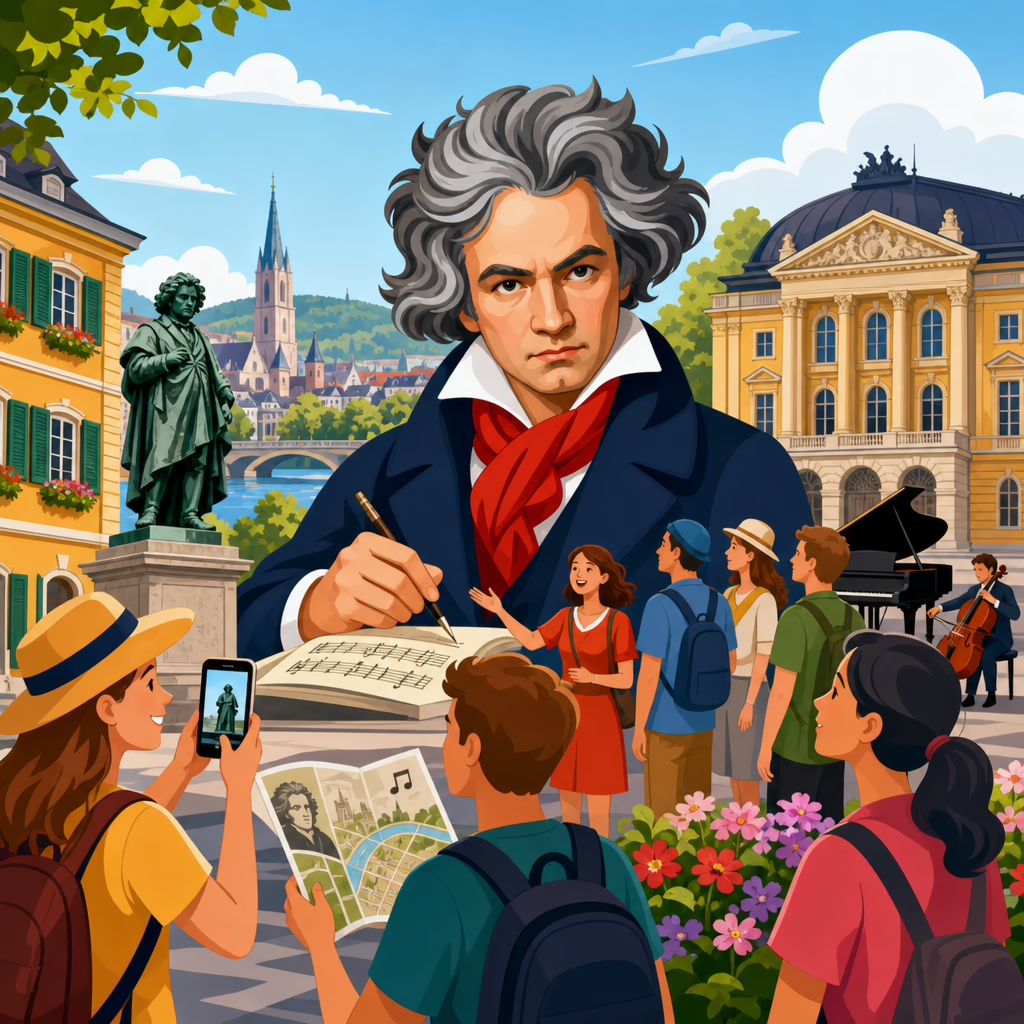
How Cities Use Beethoven for Cultural Tourism
Cities use Beethoven for cultural tourism by turning his music, biography, and symbolic power into year-round visitor experiences that combine heritage, performance, education, and place branding. In practice, that means restoring houses linked to his life, programming festivals around familiar works, building walking routes, commissioning exhibitions, and partnering with hotels, transport agencies, and local businesses so Beethoven becomes not just a historical figure but an economic driver. I have worked on cultural destination content and museum interpretation projects, and Beethoven stands out because he offers something many heritage brands do not: immediate name recognition across continents, a dramatic life story, a repertoire that appeals to specialists and casual listeners, and a reputation that signals seriousness without feeling obscure.
For tourism planners, cultural tourism means travel motivated partly or primarily by heritage, arts, identity, and learning. It differs from simple sightseeing because visitors want context, authenticity, and a reason to stay longer. Beethoven fits this model unusually well. He is tied to specific places, especially Bonn and Vienna, yet his influence reaches concert halls, schools, film soundtracks, and public ceremonies worldwide. That gives cities a flexible asset. They can market birthplace authenticity, creative development, political symbolism, or musical excellence depending on their audience. The result is a tourism strategy that works across leisure travel, educational travel, event tourism, and prestige marketing.
Why does this matter? Cultural tourists typically spend more than day trippers, book earlier, attend paid events, and visit museums, restaurants, and retail districts in one trip. They also travel in shoulder seasons when cities need demand. Beethoven helps destinations convert abstract cultural capital into measurable activity: ticket sales, overnight stays, guided tour revenue, media coverage, and international partnerships. Yet success depends on careful design. A bust in a square is not enough. Cities that use Beethoven well connect story, space, and programming so visitors feel they have encountered a living cultural legacy rather than a static monument.
Why Beethoven Works as a City Brand
Beethoven is a powerful tourism brand because he carries multiple meanings at once. He represents genius, struggle, European high culture, artistic freedom, and civic pride. Those meanings matter because visitors do not buy only admission tickets; they buy narratives about place. Bonn can say, with complete credibility, that it offers origins: the city of Beethoven’s birth, early education, and family context. Vienna can market maturity and mastery: the city where he studied, worked, premiered major compositions, and became central to musical history. Other cities use Beethoven indirectly through touring exhibitions, festival programming, and institutional collaborations, borrowing his prestige to elevate their own cultural profile.
There is also a practical marketing advantage. Unlike lesser-known composers, Beethoven has instant public recognition. Even travelers who cannot name a full sonata know the opening of the Fifth Symphony or the “Ode to Joy” theme from the Ninth. Familiarity lowers the barrier to engagement. A family may skip an obscure archival exhibition, but it will consider a Beethoven light installation, open-air concert, or interactive museum because the name promises significance. That broad appeal lets cultural institutions layer experiences from introductory to expert level without losing coherence.
Another reason Beethoven works is that his story translates well across formats. Museums can focus on manuscripts, instruments, and domestic life. Walking tours can map patronage networks, theaters, and residences. Festivals can center complete symphony cycles, chamber music, or historically informed performance. Schools can build workshops around hearing loss, creativity, and Enlightenment ideas. Tourism boards can connect all of this through a shared visual identity and calendar. When done well, the city feels curated rather than fragmented.
How Birthplace Cities Build Authenticity
Birthplace authenticity is one of the strongest assets in cultural tourism, and Bonn demonstrates how cities use it. Beethoven-Haus, the museum at his birthplace, is not simply a preserved building. It functions as an anchor institution with collections, scholarship, concerts, and interpretation that translate archival material into public experience. Visitors can see objects tied to Beethoven’s life, learn about his family and early training, and understand the social world of the late eighteenth century. That level of specificity matters because authenticity in tourism is not just about original walls; it is about credible interpretation supported by evidence, collections management, and curatorial expertise.
Bonn extends the experience beyond one museum door. Public statues, themed routes, event programming, and retail tie-ins help turn a single-site visit into a city stay. This is where many destinations either succeed or fail. If the Beethoven offer is confined to one attraction, dwell time stays short. If the city creates a network of touchpoints, visitors circulate through cafés, bookshops, riverfront areas, and secondary museums. During anniversary years, Bonn has shown how a major cultural figure can support destination-wide programming, attracting international media and encouraging repeat visits from music enthusiasts who want more than a standard museum stop.
Authenticity also requires restraint. The best cities avoid reducing Beethoven to souvenir kitsch. Commercial activity is important, but over-branding can weaken credibility, especially with culturally motivated travelers. Strong destinations balance accessibility with seriousness: quality exhibitions, informed guides, multilingual interpretation, and concerts that respect artistic standards. That balance builds trust and encourages recommendations from educators, critics, and travel writers.
How Music Capitals Turn Legacy Into Ongoing Demand
Vienna offers a different model. It cannot claim Beethoven’s birth, but it can credibly claim the environment in which his career flourished. For tourism, that is just as valuable. Visitors come not only to see where he lived, but to experience the broader ecosystem of imperial theaters, salons, churches, archives, and orchestral traditions that shaped his work. A city like Vienna uses Beethoven as part of a larger cultural cluster, linking him with Mozart, Haydn, Schubert, and the history of the concert institution itself.
This matters because cities rarely market one figure in isolation. They build itineraries. A visitor who books a Beethoven-themed trip may also attend an opera, tour a palace, visit the House of Music, and dine in a historic district. In destination management terms, Beethoven becomes a gateway product that increases basket size. He attracts one audience segment, but that segment consumes across the urban cultural economy. Cities with strong transport, evening programming, and premium ticketing benefit most because they can convert cultural intention into multi-day spending.
Programming is the engine of ongoing demand. Permanent heritage sites create baseline interest, but concerts and festivals create urgency. A complete piano sonata cycle, a period-instrument symphony series, or a New Year program featuring Beethoven can justify travel dates and higher hotel occupancy. Smart cities coordinate calendars so major performances align with exhibitions, lectures, and guided tours. They also package experiences for different budgets, from standing-room concert tickets to donor-level gala events. That segmentation is essential for sustainable tourism revenue.
| City strategy | Main Beethoven asset | Tourism effect |
|---|---|---|
| Birthplace model | Original house, family history, early life interpretation | High authenticity, strong educational appeal, museum-led stays |
| Career-city model | Residences, premieres, performance tradition | Repeat visitation through concerts and themed itineraries |
| Festival model | Time-limited programming and media attention | Seasonal demand spikes, international cultural travelers |
| Networked model | Regional routes linking multiple sites | Longer stays and dispersal of visitors beyond one district |
Programming That Converts Interest Into Visits
The most effective Beethoven tourism strategies answer a simple question: why should someone come now? The answer is programming. In my experience, static heritage gets attention, but scheduled experiences create bookings. Cities use Beethoven through annual festivals, chamber series, scholarly conferences, youth competitions, outdoor screenings, and interdisciplinary events that connect music with politics, literature, or visual art. These formats broaden the audience. A conservatory student may travel for masterclasses, while a general tourist may choose an illuminated public concert because it feels festive and approachable.
Anniversary years are especially important. The 250th anniversary of Beethoven’s birth in 2020 prompted cities and institutions to invest in exhibitions, digital archives, international partnerships, and promotional campaigns. Even where pandemic disruptions affected attendance, the anniversary expanded digital reach and refreshed institutional content that continues to support tourism. Well-managed commemorations leave lasting assets: improved signage, updated museum interpretation, new recordings, stronger sponsor relationships, and fresh reasons for travel media to revisit the destination.
Programming also benefits from direct answers to visitor needs. Travelers ask: Where should I start? How much time do I need? Is this suitable for children? Do I need prior musical knowledge? Strong Beethoven destinations answer those questions on-site and online. They provide half-day and full-day itineraries, beginner-friendly listening guides, multilingual audio tours, and combined tickets. For readers seeking the wider context of Beethoven’s symbolic reach, the main guide at why Beethoven became a global cultural icon helps explain why cities can successfully build tourism around him.
Economic Impact, Partnerships, and the Limits of the Model
Beethoven tourism works best when cultural institutions and city agencies act together. Museums provide credibility, orchestras provide artistic quality, tourism boards provide distribution, universities provide research, and businesses provide hospitality infrastructure. Hotels can build concert packages. Transit agencies can brand routes that connect key sites. Restaurants can offer themed menus during festivals without trivializing the subject. Retailers can stock quality books, recordings, and design-led merchandise instead of generic novelty goods. This coordinated approach increases average spend while keeping the visitor journey coherent.
Economic impact comes from both direct and indirect spending. Direct spending includes tickets, tours, lodging, transport, dining, and retail. Indirect value includes global media exposure, destination differentiation, sponsorship, and civic identity. Beethoven is especially useful for cities competing in the premium cultural travel market because his name signals heritage with international legitimacy. Yet there are limits. Not every city with a Beethoven plaque can build a destination strategy around it. Tourism succeeds only where the connection is documented, the visitor experience is well produced, and the broader city offer is strong enough to support overnight stays.
There are also strategic risks. Overreliance on one historical figure can narrow a city’s image and crowd out lesser-known local culture. High-profile events may raise costs for residents or create programming that serves tourists more than communities. Serious music tourism can also skew older and higher income unless cities invest in inclusive interpretation, public programming, and affordable access. The best Beethoven strategies therefore combine conservation with innovation: they preserve manuscripts and monuments, but also commission contemporary responses, youth performances, and digital interpretation that keep the legacy relevant.
Cities use Beethoven for cultural tourism most successfully when they treat him as a framework for place-making rather than a logo. His value lies in the combination of authenticity, recognizable repertoire, emotional biography, and institutional depth. Birthplace cities use him to anchor heritage. Music capitals use him to animate performance calendars. Festival cities use him to create urgency and international visibility. In each case, the objective is the same: transform admiration for a composer into a meaningful visitor journey that supports museums, local businesses, and civic identity at the same time.
The practical lesson is straightforward. A successful Beethoven tourism strategy needs credible sites, strong interpretation, coordinated programming, and partnerships that extend the experience across the city. Visitors should be able to understand why Beethoven matters there, what to see, when to go, and how to deepen the experience beyond one attraction. When those pieces align, Beethoven stops being only a historical subject and becomes a durable cultural asset with measurable tourism value.
If you are evaluating a destination, cultural institution, or travel plan, look for that alignment. Start with the most authentic site, add a live performance, and follow the story through the surrounding streets, collections, and local businesses. That is where Beethoven tourism delivers its real benefit: not in symbolic prestige alone, but in turning culture into a memorable reason to visit, stay longer, and return.
Frequently Asked Questions
How do cities turn Beethoven into a cultural tourism strategy rather than just a museum topic?
Cities turn Beethoven into a cultural tourism strategy by treating him as a living cultural asset instead of a figure confined to a single historic site. That usually begins with preservation, such as restoring homes, archives, memorials, rehearsal spaces, or neighborhoods connected to his life and legacy. But the real tourism strategy develops when those heritage assets are linked to regular programming. Cities build annual festivals, concert seasons, lectures, family workshops, school outreach, guided tours, and temporary exhibitions around Beethoven so visitors have reasons to come throughout the year rather than only during one commemorative event.
Successful destinations also package Beethoven across multiple parts of the visitor economy. A traveler may visit a birthplace museum in the morning, attend a chamber performance in the afternoon, follow a themed walking route through the city center, and finish with a restaurant or hotel experience tied to a Beethoven package. This connects culture with hospitality, transport, retail, and local services. In effect, Beethoven becomes a framework for place branding: he helps communicate that the city stands for creativity, musical excellence, European heritage, and intellectual prestige. When managed well, that combination transforms biography and music into a broad, year-round tourism engine.
What kinds of attractions and experiences do cities build around Beethoven?
Cities typically develop a mix of permanent and temporary experiences so that Beethoven appeals to both first-time tourists and repeat visitors. Permanent attractions often include restored houses or museums, interpretive exhibitions, archives, monument sites, and marked walking routes that connect meaningful locations. These places usually go beyond displaying old objects. They use storytelling, multimedia installations, manuscripts, listening stations, and contextual history to explain Beethoven’s work, personality, struggles, and cultural importance in a way that feels accessible to modern audiences.
Temporary and recurring experiences are equally important. Festivals centered on well-known works such as the symphonies, piano sonatas, or string quartets attract music enthusiasts, while open-air performances, public screenings, and family events broaden the appeal. Some cities commission contemporary artists, digital installations, or cross-genre performances to show how Beethoven still inspires new creation. Others create themed hotel packages, dining partnerships, museum passes, concert bundles, or rail-and-ticket offers that make the entire visit feel coordinated. The strongest tourism model is usually not based on one landmark but on a full itinerary, where heritage, performance, education, and local commerce all reinforce each other.
Why is Beethoven especially effective for place branding and international tourism marketing?
Beethoven is especially effective because he is globally recognizable, culturally prestigious, and emotionally accessible. Even people who know little about classical music often recognize his name or can identify major works such as the Fifth Symphony or the “Ode to Joy.” That instant recognition gives tourism marketers a major advantage. Cities do not have to spend as much time explaining why he matters; instead, they can focus on why their particular place offers an authentic connection to his life, music, or enduring influence.
He also carries symbolic value that aligns well with city branding. Beethoven represents artistic genius, perseverance, innovation, and the idea of music as a universal language. For a city, that creates a strong narrative platform. Marketing can emphasize heritage and authenticity for cultural travelers, prestige and excellence for international audiences, and inspiration and accessibility for broader public appeal. Because Beethoven’s reputation crosses national and linguistic boundaries, he is also highly adaptable in global campaigns, anniversary programming, educational tourism, and diplomatic cultural promotion. In practical terms, that means cities can use him to attract concertgoers, school groups, history enthusiasts, luxury cultural travelers, and casual visitors all at once.
How do partnerships with hotels, transport providers, and local businesses strengthen Beethoven tourism?
Partnerships are what turn cultural interest into measurable economic impact. A museum or concert hall can attract attention, but coordinated local partnerships help extend visitor stays, increase spending, and distribute benefits across the city. Hotels may offer Beethoven-themed packages that include concert tickets, museum admission, dining vouchers, or guided tours. Transport providers can promote discounted rail or transit access to festival venues and heritage districts. Restaurants, bookstores, gift shops, and local makers can create related products and experiences that encourage visitors to engage with the theme beyond the formal cultural institutions.
These collaborations also improve convenience, which is critical in tourism. Visitors are more likely to book and stay longer when planning is simple and bundled. A city that offers one integrated experience, rather than a collection of unrelated attractions, feels more attractive and professional. From an economic perspective, this approach helps cultural tourism move beyond ticket revenue alone. Beethoven then supports hotel occupancy, restaurant traffic, local retail, transportation use, and off-season visitation. That is why many cities treat him not only as a heritage figure but as an anchor for wider destination development and urban economic strategy.
Can Beethoven tourism stay relevant year-round, or does it mainly depend on festivals and anniversaries?
Beethoven tourism can absolutely remain relevant year-round, but it requires thoughtful programming. Major anniversaries and flagship festivals often generate headlines and strong visitor spikes, yet long-term success depends on continuity. Cities that rely only on a single annual event may get publicity without building sustainable tourism habits. By contrast, cities that maintain museums, guided routes, educational programs, chamber series, public art, rotating exhibitions, and digital experiences create ongoing reasons to visit in every season.
Year-round relevance also comes from diversification. Not every visitor is seeking the same experience. Some want high-level concert culture, while others prefer general heritage tourism, academic programming, family-friendly activities, or urban exploration. A strong Beethoven tourism model can serve all of those audiences through layered interpretation and flexible programming. For example, a city might pair winter indoor exhibitions with spring walking tours, summer outdoor performances, and autumn lecture series. It can also use Beethoven as a gateway into broader local identity, linking him with architecture, riverfronts, cafés, regional history, and other nearby attractions. In that way, Beethoven remains a constant cultural thread rather than a one-time celebration, helping the city sustain both visibility and visitor demand across the entire year.