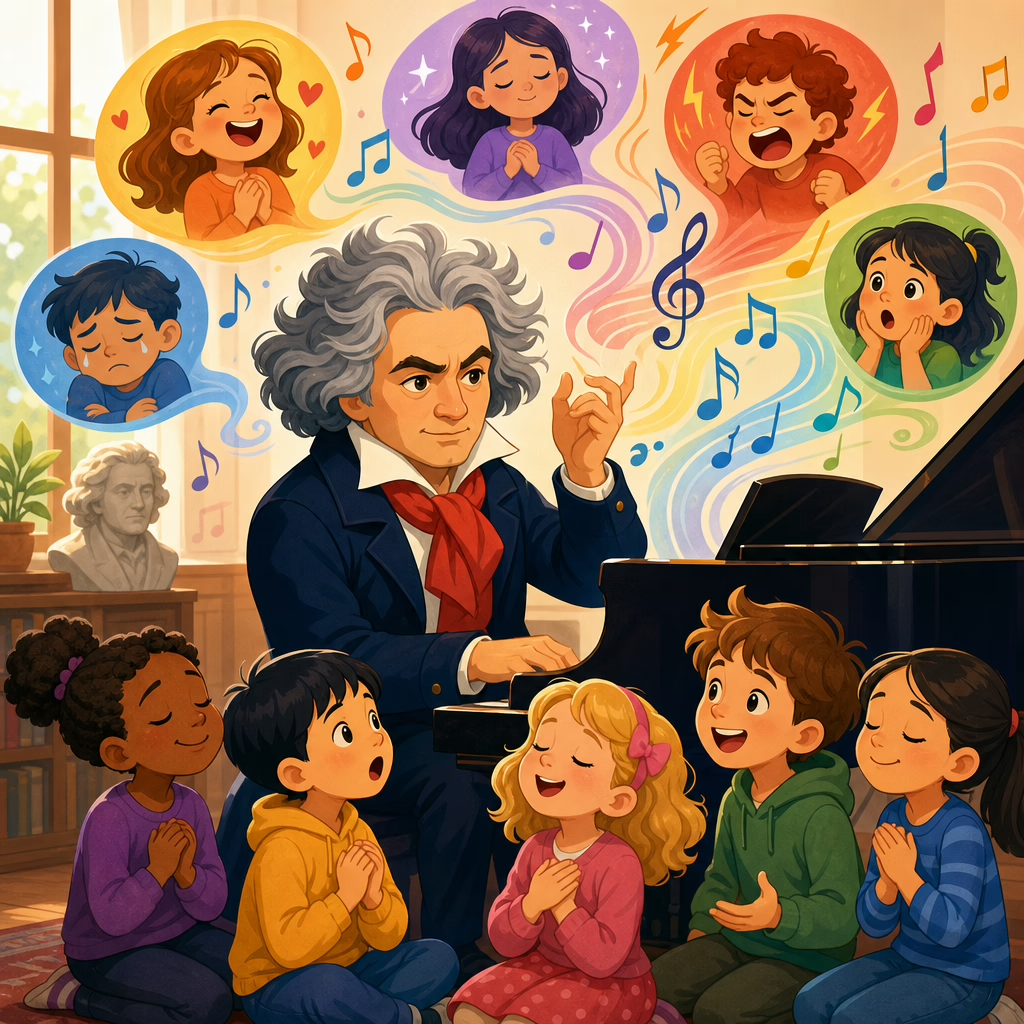
How Beethoven’s Music Helps Children Learn Emotional Expression
How Beethoven’s music helps children learn emotional expression becomes clear the moment a classroom shifts from noise to focused listening. Children who struggle to name feelings often respond first to sound, not language, and Ludwig van Beethoven’s work offers unusually rich material for that process. His music moves through tension, release, surprise, calm, conflict, and joy with a clarity children can sense even before they can explain it. Emotional expression, in this context, means recognizing an inner feeling, interpreting it, and communicating it through words, movement, art, or social behavior. For teachers, parents, therapists, and community arts leaders, Beethoven is not simply a historical composer. He is a practical resource for helping children notice emotional changes, connect them to experience, and express them safely.
I have seen this happen in school workshops where children who were reluctant to speak about sadness or frustration became willing to point to a musical passage and say, “That part sounds like when I am upset.” That bridge matters. Emotional literacy is strongly associated with classroom behavior, peer relationships, and long-term self-regulation. Organizations such as CASEL emphasize self-awareness and relationship skills as core developmental competencies, while arts education research consistently shows that guided listening and music-making support empathy, attention, and reflection. Beethoven’s music is especially useful because it contains strong contrasts in dynamics, tempo, harmony, and rhythm. Those contrasts make feelings audible. A child may not know what modulation or syncopation means, but that child can hear when the music turns uncertain, triumphant, playful, or heavy, and that perception becomes the starting point for genuine emotional expression.
Why Beethoven Works So Well for Emotional Learning
Beethoven’s music helps children learn emotional expression because it presents emotion in structured, recognizable patterns. Unlike background music designed to stay unobtrusive, his symphonies, sonatas, and shorter piano pieces often foreground conflict and resolution. The famous opening motif of Symphony No. 5 in C minor is a simple example. Four notes create urgency, insistence, and pressure. Children typically describe it as “knocking,” “chasing,” or “something serious is happening.” Those instinctive descriptions are exactly what educators want: evidence that a child is perceiving emotional character and translating it into language. By contrast, the “Ode to Joy” theme from Symphony No. 9 is broad, balanced, and communal, making it easier for children to identify feelings such as happiness, togetherness, or hope.
Another reason Beethoven works is that his music makes change easy to hear. Emotional growth depends on recognizing that feelings shift rather than remain fixed. Beethoven constantly models that movement. A passage may begin with agitation, soften into reflection, then return with greater force. This helps children understand that emotions are dynamic. In practice, I have used excerpts from the “Moonlight” Sonata, the “Pathétique” Sonata, and Symphony No. 6, the “Pastoral,” because each presents a different emotional landscape. The first movement of “Moonlight” can invite discussion of quiet sadness, loneliness, or deep thought. The “Pathétique” introduces drama and volatility. The “Pastoral” offers sonic images of nature, calm, and gratitude. When children compare these works, they begin to differentiate emotions with more precision, moving beyond broad terms like good, bad, happy, and mad.
What Children Actually Learn from Guided Listening
Guided listening turns Beethoven from a passive cultural reference into an active educational tool. Children learn first to detect emotional cues in music: loud versus soft, fast versus slow, stable versus unstable, smooth versus accented. Then they learn to connect those cues to internal states. This process supports vocabulary development, perspective taking, and self-regulation. For example, after hearing a loud, forceful orchestral section, a teacher might ask, “Does this sound more like excitement or anger? What makes you think that?” The child must listen closely, justify an interpretation, and consider alternatives. That is emotional reasoning, not guesswork.
Children also learn that different people can hear the same music differently. That matters in social settings. If one student says a passage sounds scary and another says it sounds exciting, the discussion teaches that emotional responses are valid, contextual, and influenced by personal experience. This is especially helpful for children who assume their feelings are wrong if others react differently. Beethoven’s music opens a low-risk space for talking about emotional ambiguity. A storm scene in the “Pastoral” Symphony may feel thrilling to one child and unsettling to another. Both responses can be explored without forcing disclosure about personal life before trust is established.
There is also a cognitive benefit. Research in music education and developmental psychology suggests that structured listening tasks strengthen attention, sequencing, and memory. Beethoven’s thematic development, where a small musical idea returns in altered forms, is useful here. Children notice repetition and transformation, which parallels emotional reflection: “I felt upset at first, then calmer, then upset again for a new reason.” In other words, music gives them a map for tracking emotional change over time.
Beethoven Pieces That Best Support Emotional Expression
Not every Beethoven piece serves the same educational purpose. Selection matters, especially for younger listeners. Short, vivid excerpts usually work better than assigning a full symphony to children with limited listening stamina. In community programs, I often start with pieces that have clear contrasts and memorable themes. Symphony No. 5 supports discussions about determination, danger, and momentum. Symphony No. 6 supports conversations about calm, environment, and changing mood. “Für Elise” works well for mixed emotions because its familiar opening sounds tender and reflective, while later sections introduce instability and drive. The second movement of Symphony No. 7 can help children identify solemnity, patience, grief, and resilience.
| Beethoven work | Common emotional themes children identify | Best learning use |
|---|---|---|
| Symphony No. 5, first movement | Tension, urgency, bravery, struggle | Naming strong emotions and discussing conflict |
| Symphony No. 6, “Pastoral” | Calm, wonder, fear during the storm, relief | Tracking emotional change across a sequence |
| “Für Elise” | Tenderness, uncertainty, restlessness | Comparing mixed feelings within one piece |
| “Moonlight” Sonata, first movement | Sadness, introspection, quietness | Exploring subtle emotions and reflective language |
| Symphony No. 9, “Ode to Joy” | Happiness, unity, celebration, hope | Group singing and shared emotional expression |
Using a range of pieces prevents a common mistake: treating classical music as uniformly calming. Beethoven is not useful because he relaxes children all the time. He is useful because he gives children access to many emotional states in an organized form. That variety is what makes this topic a strong hub for broader miscellaneous community and education coverage, including arts integration, social-emotional learning, after-school programming, museum education, library events, youth performance projects, and intergenerational listening groups.
Practical Ways Schools, Families, and Community Programs Can Use Beethoven
The most effective approach is active, not passive. In classrooms, teachers can play a two-minute excerpt and ask students to identify three descriptive words, draw a scene, or match the music to facial expressions. In elementary settings, movement works especially well. A child who cannot verbalize frustration may show it through stomping, tight gestures, or quick directional changes during a listening exercise. That physical response can then be translated into words. In upper grades, journaling after listening encourages more abstract reflection. Students can compare how the same piece feels at the beginning and end, or connect a musical shift to a personal experience of calming down after conflict.
At home, parents do not need formal musical training. They need consistency and curiosity. One practical method is to create a short weekly listening ritual with one Beethoven excerpt. Ask simple questions: What do you hear? What emotion fits? Where in your body do you feel that emotion? What color or image matches it? Families can also pair listening with drawing or storytelling. A child may invent a character for the music, then explain that character’s feelings. That indirect route often reveals emotional understanding more safely than direct questioning.
Community organizations can build stronger programs by connecting Beethoven listening to broader arts experiences. Libraries might host “music and feelings” sessions linked to picture books about emotions. Youth orchestras can include pre-concert guides that explain not only historical context but also emotional cues listeners can notice. Museums and cultural centers can combine listening with visual art workshops, asking children to paint a storm after hearing the “Pastoral” Symphony. These programs work best when adults avoid telling children the single correct feeling. The goal is informed interpretation, supported by musical evidence, not memorizing approved answers.
Benefits, Limitations, and What Adults Should Watch For
The benefits are substantial. Beethoven’s music can improve emotional vocabulary, encourage reflection, and support group discussion without demanding immediate personal disclosure. It can also widen cultural participation. Many children encounter Beethoven only as a prestigious name, detached from their lives. When adults present the music as a tool for understanding feelings, it becomes accessible and relevant. For multilingual learners, music can reduce pressure created by limited verbal fluency. For neurodivergent children, predictable listening routines paired with clear sensory supports may provide a structured path into discussing emotion.
Still, there are limitations. Beethoven is one resource, not a universal solution. Some children may find certain passages overstimulating, especially those with sensory sensitivities. Others may not connect with orchestral sound as quickly as they connect with contemporary genres. That is not failure. It simply means educators should integrate Beethoven into a wider musical environment rather than position him as the only serious option. Cultural responsiveness matters. Emotional expression is shaped by family norms, language, and community context, so adults should not assume one interpretation fits every child.
Adults should also avoid instrumentalizing music in a narrow way. The point is not to force calm behavior by turning on a sonata whenever a room becomes dysregulated. Children learn more when the listening is intentional, scaffolded, and followed by conversation or creative response. In my experience, the strongest results come from repeated exposure over several weeks. Children begin with simple labels, then progress toward nuanced descriptions like anxious, relieved, determined, lonely, or hopeful. That progression shows real emotional learning.
Beethoven’s music helps children learn emotional expression because it gives shape to feelings that can otherwise seem confusing or unreachable. Through strong contrasts, memorable themes, and clear emotional movement, his works let children hear what tension, calm, grief, wonder, and joy can sound like. With guided listening, those sounds become language, movement, drawing, and conversation. That is valuable in classrooms, homes, libraries, youth arts programs, and every community setting where children are learning how to understand themselves and relate to others.
The practical lesson is simple. Start with short excerpts, ask concrete questions, welcome different interpretations, and connect musical choices to observable features such as tempo, dynamics, and mood changes. Use Beethoven alongside other musical traditions, not instead of them, and adapt activities for age, attention span, and sensory needs. When adults do this consistently, children build emotional vocabulary and confidence without feeling judged or pressured. They learn that feelings can be noticed, named, shared, and transformed.
For any community and education program looking for a durable, flexible arts resource, Beethoven remains one of the strongest choices available. His music is historically important, but more importantly, it is emotionally legible. Children can enter it quickly, respond authentically, and grow through that response. Choose one piece, listen closely, and turn the next conversation about music into a conversation about feelings.
Frequently Asked Questions
How does Beethoven’s music help children understand emotional expression?
Beethoven’s music helps children understand emotional expression because it presents feelings in a vivid, easy-to-hear way. Even when children do not yet have the vocabulary to describe frustration, excitement, sadness, relief, or determination, they can often hear those emotional shifts in the music itself. Beethoven frequently builds tension through rhythm, volume, harmony, and pacing, then releases it in a way that feels meaningful and memorable. That gives children a safe, structured way to notice what different emotions can sound like and how feelings can change over time.
In practical terms, this matters because emotional expression is not just about talking. It also involves recognizing internal states, identifying emotional cues, and connecting those cues to outward expression. Beethoven’s music supports all three. A child may hear a dramatic passage and say it sounds angry, or a softer lyrical section and say it sounds peaceful or lonely. Those observations become stepping stones toward emotional literacy. Over time, children begin to understand that emotions are not random or flat. They can be intense, mixed, evolving, and deeply human, just like the music.
Another reason Beethoven is so effective is that his music often feels strongly contrasted. He can move from forceful, stormy energy to tenderness and calm in a way children immediately notice. Those contrasts help young listeners compare emotional states rather than trying to identify feelings in isolation. Instead of being asked abstractly, “What is sadness?” children can be asked, “How does this section feel different from the last one?” That kind of comparison is often much easier and more natural, especially for children who learn best through listening and sensory experience.
Why is Beethoven especially useful for children who struggle to talk about feelings?
Beethoven can be especially useful for children who struggle to talk about feelings because music offers a nonverbal entry point into emotional awareness. Many children experience emotions before they can label them clearly. Some may feel overwhelmed when asked direct questions like “How are you feeling?” or “Why are you upset?” Beethoven’s music reduces that pressure. It allows children to respond first through listening, movement, drawing, facial expression, or simple descriptive words, rather than requiring immediate verbal analysis.
That makes his work particularly valuable in classrooms, therapy settings, and at home. A child who cannot easily explain sadness may still point to a slow, heavy passage and say, “That sounds how I felt today.” Another child may hear a powerful, energetic section and identify it with excitement or anger. These moments matter because they create emotional connection without forcing language too early. Once the child recognizes something in the music, adults can gently help expand that recognition into words, reflection, and communication.
Beethoven’s compositions are also useful because they often contain emotional clarity without being simplistic. Children can hear conflict, suspense, release, triumph, and quiet reflection in ways that feel intuitive. This helps them understand that emotions are not just “happy” or “sad.” They can be layered and shifting. For children who find emotional conversations difficult, that realization can be transformative. It validates their inner experience and shows them that strong feelings can be expressed, observed, and understood in a safe and meaningful way.
What are the best ways to use Beethoven’s music in a classroom or home setting?
The best ways to use Beethoven’s music in a classroom or home setting are interactive, simple, and consistent. Children benefit most when listening is paired with an activity that helps them notice emotional changes. For example, an adult might play a short excerpt and ask, “Does this sound calm, tense, excited, worried, proud, or sad?” Younger children can point to emotion cards, choose colors, or move their bodies to match the feeling they hear. Older children can journal, discuss musical contrasts, or connect the music to real-life experiences.
Guided listening works especially well. Instead of presenting the music as background sound, it helps to invite children into the listening process. Adults can ask questions such as, “What do you think is happening in this music?” “Where does the feeling change?” or “Does this part sound more like struggle or relief?” These prompts encourage emotional interpretation without making children feel tested. There is no single correct answer in many cases, and that openness helps children become more confident in noticing and expressing what they perceive.
Creative follow-up activities deepen the learning. Children can draw scenes inspired by the music, act out different moods, create stories for contrasting sections, or compare two excerpts and explain how each one feels different. Group discussion can also be powerful because children learn that others may hear the same piece differently. That builds empathy as well as self-awareness. In both classrooms and homes, the goal is not to teach children to become musicologists. It is to use Beethoven’s expressive range as a tool for helping them recognize, interpret, and communicate emotion more effectively.
Can listening to Beethoven improve emotional regulation as well as emotional expression?
Yes, listening to Beethoven can support emotional regulation as well as emotional expression, especially when adults help children reflect on what they hear and feel. Emotional regulation involves noticing feelings, tolerating them, and responding in constructive ways. Beethoven’s music can assist with this because it models emotional movement rather than emotional shutdown. Children hear tension arise, intensify, and then often resolve or transform. That pattern teaches an important lesson: strong feelings can be experienced without lasting forever, and emotional intensity can lead to release, calm, or clarity.
This is especially helpful for children who feel overwhelmed by big emotions. When they hear dramatic passages followed by quieter sections, they begin to experience the idea that emotional states change. In a guided setting, an adult might say, “This part sounds frustrated. Now listen to how it settles,” or “This music feels intense, but it does not stay there.” Those observations can help children connect musical patterns with emotional coping skills. The music becomes a way to rehearse the experience of moving through feelings instead of getting stuck in them.
Of course, Beethoven’s music is not a substitute for emotional coaching, supportive relationships, or professional help when needed. But it can be an excellent companion to those efforts. Used thoughtfully, it gives children a structured emotional experience that they can observe from a safe distance. That distance often makes difficult feelings easier to discuss. Over time, children may become better at recognizing when they are escalating, calming themselves through attentive listening, and understanding that emotions can be expressed honestly without becoming unmanageable.
Do children need musical training to benefit from Beethoven’s emotional depth?
No, children do not need any musical training to benefit from Beethoven’s emotional depth. One of the reasons his music remains so powerful across generations is that much of its expressive impact is immediately accessible. Children do not need to understand sonata form, harmonic development, or historical context to notice when music sounds stormy, playful, tender, suspenseful, or triumphant. The emotional character of the music often comes through clearly enough for even young listeners to respond in meaningful ways.
In fact, children often respond with remarkable honesty when they are not worried about getting the “right” answer. A child with no formal music education may still say that one section sounds like an argument, another sounds like someone feeling brave, and another sounds sleepy or sad. Those interpretations are valuable because they reflect genuine emotional listening. The purpose is not technical analysis. It is emotional engagement, perception, and communication.
That said, adults can enhance the experience by offering a little guidance. Briefly introducing an excerpt, encouraging children to notice changes in mood, or inviting them to describe what they hear can make the listening more focused and rewarding. But expertise is not required. What matters most is attention, curiosity, and a willingness to explore how music and feelings connect. Beethoven’s work is especially well suited to that kind of exploration because it speaks so directly to emotional contrast, intensity, and transformation in ways children can sense long before they can fully explain them.