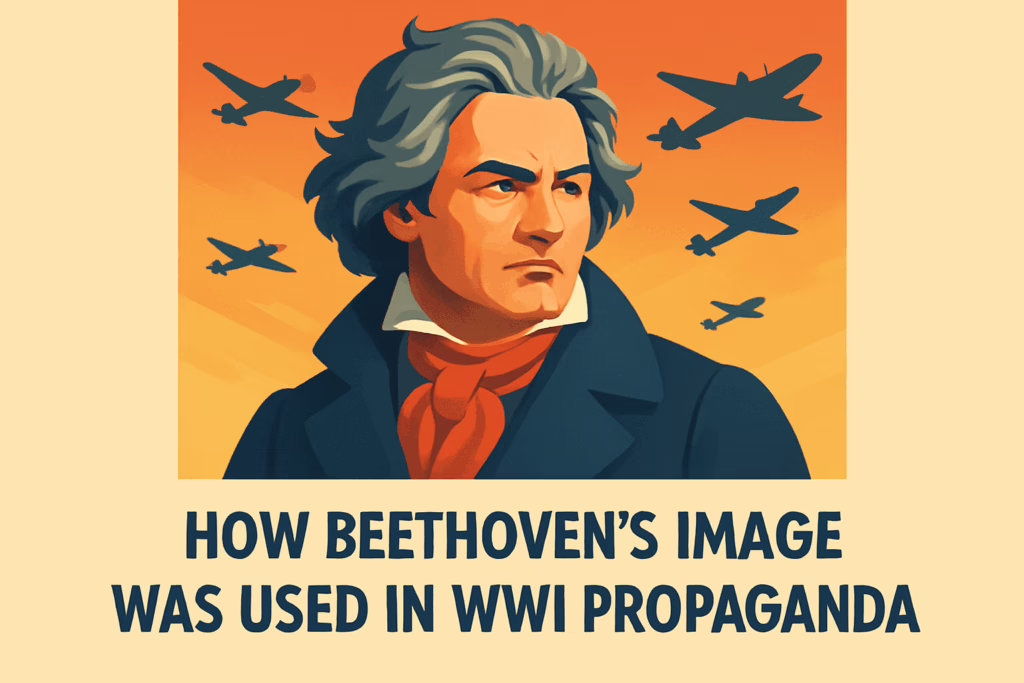
How Beethoven’s Image Was Used in WWII Propaganda
Introduction to the Topic
In the midst of World War II, a period characterized by intense global conflict and nationalistic fervor, the legacy of many cultural icons was mobilized for propaganda purposes. One such distinguished figure was Ludwig van Beethoven, whose music and image were manipulated to serve various political ends. Although primarily celebrated as a towering genius in the world of classical music, Beethoven’s symbolic presence in WWII demonstrates how art and culture can be repurposed to align with specific political ideologies. Understanding this appropriation is crucial not merely because of its historical significance but also because it highlights the powerful and often insidious role that cultural icons can play in shaping wartime narratives.
Beethoven was co-opted by different factions to signify ideologically compatible values, such as heroism and defiance. Propaganda, in general, refers to the dissemination of information—be it true, misleading, or outright false—designed to influence public opinion and further a political agenda. During WWII, key players included Nazi Germany, the Allies, and various resistance movements, all of whom often resorted to propaganda to instill confidence, promote unity, or demonize the enemy. Beethoven’s image was one of many cultural symbols employed, but the inherent complexity of his legacy makes his story particularly compelling.
Why does this matter today? Beyond the historical intrigue, it sheds light on the perennial interaction between art and power. In an age where digital media rapidly spreads information, understanding how culture can be manipulated for propagandistic purposes can equip us with the critical tools needed to analyze current events warily. This article delves into the specifics of how Beethoven’s image was harnessed by different parties during WWII, thereby providing pertinent insights into the ongoing relationship between culture, politics, and propaganda.
Nazi Germany’s Appropriation of Beethoven
The Nazi regime, spearheaded by Adolf Hitler, was fervent in its use of cultural assets to propagate Aryan ideals. Beethoven, a composer who had passed long before the rise of the Third Reich, became an unlikely yet fitting symbol for Nazi propaganda. His music, especially masterpieces like the ‘Fifth Symphony’ and ‘Ninth Symphony’, were interpreted as embodiments of Aryan genius and were ubiquitously utilized in Nazi rallies and broadcasting.
For the Nazis, Beethoven epitomized several attributes they wished to associate with their regime—strength, purity of culture, and a triumphant spirit. Hitler himself admired Beethoven and believed that his music exemplified the height of German culture—a notion the regime was eager to promote. Concerts featuring Beethoven’s compositions were frequent, aimed at stirring national pride and solidifying the idea of cultural superiority.
Nonetheless, this appropriation was fraught with contradictions. Beethoven’s works often carried themes of freedom and resistance, principles antithetical to Nazi ideology. Despite their ideological gymnastics, the Nazis persisted in their selective interpretation to suit their narrative.
The Allies Counter Beethoven’s Image
While the Nazis sought to commandeer Beethoven as a symbol of Aryan greatness, the Allies also invoked his legacy to reinforce their own aims. The most prominent example is the ‘V for Victory’ campaign, which employed Beethoven’s ‘Fifth Symphony’ in service of Allied propaganda.
The opening notes of Beethoven’s ‘Fifth Symphony’ bear a rhythmic resemblance to the Morse code for the letter V (dot-dot-dot-dash), which stood for victory. This audial motif was repeatedly broadcasted by the BBC during wartime to inspire hope and resilience among the beleaguered populations of occupied Europe and the Allied nations. Beethoven, in this context, became synonymous with the notion of inevitable victory over tyranny.
The Allies highlighted Beethoven not as a composer aligned with Nazi ideology, but instead as an artist whose works transcended political boundaries, echoing universal themes of struggle and eventual triumph. Through this reframing, Beethoven’s music became an anthem for freedom, subtly countering Nazi propaganda while bolstering morale.
Resistance Movements and Beethoven’s Legacy
Resistance groups within Axis-occupied territories also engaged in the symbolic employment of Beethoven’s image. These groups, like the European resistance networks, saw in Beethoven’s music a reflection of defiance and the universal fight against oppression.
In some instances, illicit concerts showcasing Beethoven’s works were organized, events that served not only as a cultural respite from the tyranny of occupation but also as acts of symbolic resistance. Beethoven’s ode to human spirit and individual freedom resonated deeply with those fighting against totalitarian rule, evoking the values of liberty and courage in their struggle.
The widespread appreciation of Beethoven’s music across various factions illustrates the polymorphic nature of art: it can be adapted to multiple meanings, resonating with divergent ideologies depending on the lens through which it is viewed. This adaptability made Beethoven an ideal figure for appropriation by diverse political groups.
| Group | Use of Beethoven |
|---|---|
| Nazi Germany | Symbol of Aryan excellence and cultural superiority |
| Allies | Emblem of freedom, resilience, and victory (V for Victory) |
| Resistance Movements | Inspiration for defiance and fight against oppression |
The Complexity of Beethoven’s Cultural Iconography
The multifaceted utilization of Beethoven’s image during WWII underscores the broader role of cultural symbols in propaganda and power dynamics. Beethoven’s legacy, much like the broader pantheon of cultural touchstones, demonstrated an intrinsic ability to be reframed to align with various ideologies—be they authoritarian, democratic, or subversive.
This phenomenon exemplifies cultural flexibility, where a single figure can be interpreted in ways that serve entirely contradictory narratives. The role of such rich, multi-dimensional symbols in propaganda underscores their importance. Beethoven’s music endures and, although associated with events of a dark historical period, continues to be celebrated for its artistic innovation and emotional profundity. His works are reminders that while art can be manipulated for political ends, it often retains an indomitable core of human emotion and creativity that transcends transient ideologies.
Ultimately, the impact of Beethoven’s legacy in WWII serves as a vivid case study in understanding how art can be co-opted by various forces. It prompts us to question the integrity of representations and encourages discerning engagement with cultural narratives both past and present.
Conclusion and Call to Action
Throughout history and especially during WWII, Beethoven’s image was appropriated by multiple factions for their propaganda efforts. This manipulation demonstrates the power and influence of cultural symbols in defining ideological battles, suggesting that music and art have significant roles far beyond mere entertainment.
The study of Beethoven’s wartime appropriation provides valuable insights into the complex interaction between culture and politics. The use of musical genius to further ideological goals invites us to critically consider how contemporary cultural icons—be they musicians, artists, or thinkers—are similarly leveraged in today’s socio-political landscapes.
As modern consumers of culture and media, there is a continual need for vigilance and critical analysis. Recognizing historical examples such as this equips us with the necessary mindset to engage with current media narratives discerningly, ensuring a more informed public discourse.
Your next step? Delve deeper into the stories of how music and art have been employed throughout history. Explore their narratives and interpretations to understand their complex roles in society. Stay aware, stay informed, and remain critical—it is as much a civic duty today as it was during the tumultuous years of World War II.
Frequently Asked Questions
1. How was Beethoven’s image used in Nazi propaganda during World War II?
During World War II, the Nazi regime extensively used Beethoven’s image to promote their ideology of Aryan supremacy. Beethoven, a German composer, was portrayed as the epitome of German cultural genius and racial superiority. The Nazis sought to emphasize Beethoven’s German heritage and musical prowess as exemplars of what they believed to be the inherent supremacy of German culture. His music was used in rallies, events, and even state broadcasts to evoke a sense of national pride and intellectual lineage. The regime conveniently ignored Beethoven’s own liberal ideals and struggles against authoritarianism, instead focusing on his German identity to fit their narrative.
2. How did the Allied powers use Beethoven in their own wartime propaganda efforts?
The Allied powers, particularly the British and Americans, also utilized Beethoven’s legacy to counter Nazi propaganda. Beethoven was depicted as a symbol of freedom, resistance, and the universal struggle against tyranny. His Symphony No. 5, with its distinctive “V” for Victory motif, became an anthem of hope and resilience. This interpretation emphasized his defiance against oppression and was often played on radio broadcasts to inspire troops and citizens alike. The Allies leveraged Beethoven’s image as a figure who transcended national borders and represented the universal fight for liberty and justice, countering the Nazis’ narrow depiction.
3. Why was Beethoven’s music specifically chosen for propaganda, and what qualities made it effective?
Beethoven’s music was chosen for propaganda for several reasons. Firstly, its emotional intensity and dramatic power made it easily adaptable for stirring nationalistic feelings or inspiring hope and determination. His compositions are profound and carry a gravitas that few other works can match. Secondly, Beethoven himself was a globally recognized figure, giving his music an instant authority and gravitas that could be leveraged for political purposes. Thirdly, the malleability of the meaning attached to his works allowed different interpretations to be shaped to suit either the nationalist rhetoric of the Nazis or the liberationist message of the Allies. These qualities made his music an effective tool in the psychological warfare employed during WWII.
4. Did Beethoven have any particular political beliefs that were overlooked or highlighted during WWII propaganda?
Beethoven’s own writings and musical works suggest a passionate belief in individual freedom, human rights, and fraternity, ideals stemming from the Enlightenment and the French Revolution. His struggle with authority, as evidenced in works like his opera “Fidelio,” reflects his disdain for oppression, making irony that the Nazis would later use his image for their authoritarian purposes. During WWII, these personal beliefs of Beethoven were largely overlooked by the Nazis, who focused solely on his ethnic German roots. On the other hand, the Allies brought attention to these liberal, humanistic elements of Beethoven’s ethos, portraying him as a champion of the very freedoms they were fighting to protect.
5. How did Beethoven’s legacy emerge after WWII, considering its use in propaganda?
Post-WWII, Beethoven’s legacy underwent a process of reevaluation. While the war saw his image heavily politicized, afterwards efforts were made to reclaim his true heritage as a universal icon of artistic brilliance and human emotional expression. Scholars and musicians worldwide worked to detach Beethoven from the aggressive nationalistic associations that had been forced upon him, emphasizing instead the richness of his creative genius and his contributions to humanity’s cultural heritage. His music returned to being appreciated primarily for its artistic value rather than its propaganda utility, and his place as a central figure in classical music was reestablished beyond the confines of any political boundaries. Today, he is celebrated for his revolutionary impact on music and his deep, complex engagement with the human condition.