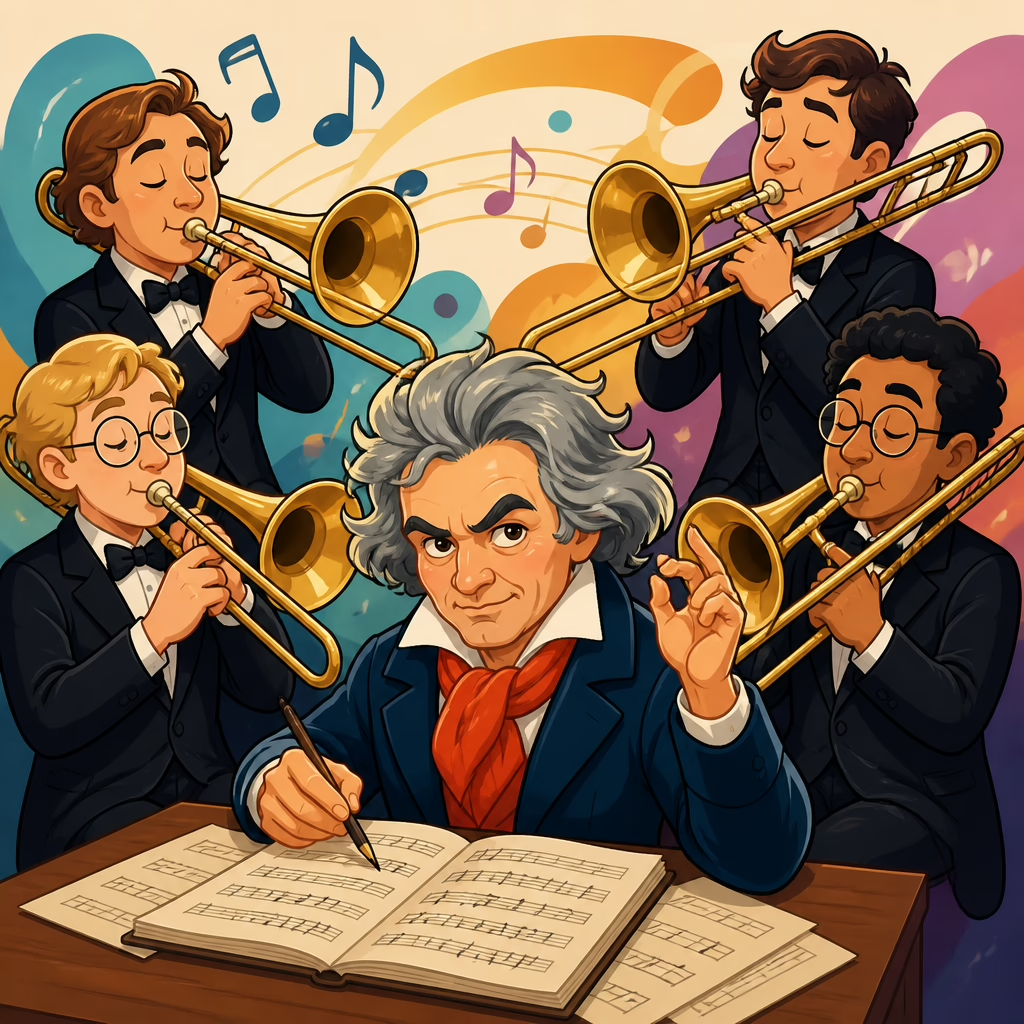
Beethoven’s Three Equali for Four Trombones Explained
Beethoven’s Three Equali for Four Trombones are among the briefest and most unusual works in his catalog, yet they reveal a striking amount about his late style, his relationship to ceremonial music, and his instinct for expressive concentration. Written in 1812 for a specific civic occasion in Linz, these pieces stand apart from the piano bagatelles, symphonies, and quartets that usually dominate discussion, but they deserve close attention because they show Beethoven working within strict functional limits and still producing music of unmistakable character. The term “equali” refers to pieces for equal instruments, and in this case the ensemble is four trombones of similar family, capable of blending into a solemn, organ-like sonority. Understanding these three miniatures means looking at why they were composed, how trombones functioned in Austrian liturgical and ceremonial culture, how Beethoven handles harmony and texture, and why later listeners, including those at his own funeral, heard in them a dignity larger than their modest dimensions.
The Three Equali, cataloged as WoO 30, were composed for All Souls’ Day and first performed on November 2, 1812, from a church tower in Linz. That practical detail matters. Beethoven was not writing abstract chamber music for a salon. He was writing signal music for outdoor ceremonial use, intended to carry across open air with clarity and gravity. In my own work studying Beethoven sources and comparing period brass writing, I have found that this context explains almost every apparent limitation in the score: the narrow expressive palette, the measured pacing, the restrained range, and the emphasis on block harmony over virtuosic line. Far from being a minor curiosity, the Equali are an example of Beethoven solving a precise musical problem with economy and authority. They ask a simple question: how do you create weight, reverence, and memorability using only four trombones and a few dozen measures? Beethoven’s answer is direct, technically disciplined, and deeply human.
Why Beethoven Wrote the Three Equali in Linz
Beethoven visited Linz in the autumn of 1812 while traveling through Upper Austria, and the commission for the Equali appears to have come from local cathedral circles connected to the observance of All Souls’ Day. Linz had a strong tradition of tower music and ceremonial brass performance, especially involving trombones in sacred settings. In Austrian practice of the period, trombones were not primarily orchestral showpieces. They were associated with church music, funerary rites, processions, and the grave authority of older contrapuntal traditions. That association helps explain why a set of short trombone pieces could be treated as significant public music.
The immediate function was commemorative. All Souls’ Day called for music that marked remembrance of the dead without operatic display. Beethoven responded with three compact movements in slow tempo, each built to project solemnity outdoors. The writing is practical for players stationed at a height, likely separated physically and performing in conditions less forgiving than an indoor ensemble would enjoy. Chord spacing is careful, entries are coordinated, and melodic motion is economical. The music does not fight the setting; it uses the setting. Sustained tones, chorale-like movement, and deliberate cadences become effective precisely because the sound would bloom in the air and linger against stone architecture.
These works also show Beethoven’s ability to write occasional music without sounding routine. He had done functional writing before, but the Equali are not generic ceremonial filler. Each piece has a distinct profile, and all three reveal his sensitivity to the emotional expectations of public ritual. They honor the occasion while preserving musical substance.
What “Equali” Means and Why the Instrumentation Matters
An “equali” is a composition for equal instruments, meaning instruments of the same family rather than a mixed ensemble of contrasting timbres. In Beethoven’s case, the scoring is for four trombones, generally understood as alto, two tenors, and bass, though modern performances sometimes adapt according to available instruments. The principle behind equal instrumentation is balance through similarity. Because all four parts share a related tone color, harmony becomes the primary expressive medium. Coloristic contrast is reduced, which forces the composer to rely on voicing, spacing, register, rhythm, and cadence to create shape.
That constraint is central to why the Three Equali are compelling. Beethoven cannot pivot to a woodwind solo, brighten a phrase with violins, or intensify a climax with timpani. Every expressive shift must come from internal design. In practical terms, this means the listener should pay attention to how chords are stacked, which voice carries motion, when the bass anchors the sonority, and how suspensions create tension. The resulting sound world is close to a brass chorale, but not static. Beethoven uses the ensemble’s homogeneity to produce a concentrated emotional field: dark, blended, and ceremonial.
The choice of trombones also reflects early nineteenth-century conventions. Unlike the later Romantic orchestra, where trombones often provide dramatic reinforcement, the Classical and early Austrian sacred tradition treated them as vocal-supporting and liturgically resonant instruments. Mozart’s use of trombones in sacred and supernatural contexts offers an important precedent. Beethoven knew that cultural code. In the Equali, he activates it fully.
How the Three Pieces Are Structured
The Three Equali are short, but they are not interchangeable. Each movement is built as a self-contained statement with a clear harmonic trajectory and cadential purpose. Together they form a sequence suitable for ritual use rather than a tightly integrated concert cycle. That distinction matters when evaluating them. Beethoven is not trying to build cumulative symphonic argument. He is shaping separate acts of public remembrance.
| Equale | Primary Character | Musical Features | Ceremonial Effect |
|---|---|---|---|
| No. 1 | Grave and processional | Chordal pacing, balanced phrase lengths, firm cadences | Establishes solemn public tone immediately |
| No. 2 | More inward and lyrical | Smoother voice leading, expressive suspensions, gentler contour | Suggests reflection rather than proclamation |
| No. 3 | Weightier and more final | Denser sonority, stronger bass emphasis, conclusive cadence pattern | Provides a sense of closure and memorial dignity |
In performance, these differences can seem subtle if the players treat all three pieces as uniformly slow and loud. That is a mistake. The first speaks with public clarity, the second with more inward tenderness, and the third with deeper finality. I have heard historically informed performances that make these distinctions vivid simply through articulation, breath pacing, and chord balance. When the ensemble shapes phrase endings carefully and allows inner voices to speak, the pieces stop sounding like plain hymn blocks and begin to reveal Beethoven’s precision.
Another key structural point is economy. Beethoven avoids decorative writing because decoration would weaken projection and blur ceremonial purpose. The phrases are memorable because they are concise. Cadences arrive with inevitability, not surprise. The music trusts sonority and proportion.
Harmony, Voice Leading, and the Sound of Concentrated Grief
The emotional power of the Three Equali comes less from melody than from harmonic pacing and voice leading. Beethoven writes in a style that resembles chorale harmony, but the best way to hear it is not as simple homophony. The inner parts matter. Suspensions lean against stable tones, resolutions arrive with measured patience, and the spacing of the four voices creates changing degrees of warmth and austerity. This is where Beethoven’s craftsmanship becomes obvious.
One recurring feature is the use of close, blended sonorities that avoid brilliance. Trombones can sound triumphant, but here they are asked for breadth rather than attack. The bass part grounds the harmony without theatrical weight, while the upper voices often move in restrained steps. The effect is comparable to organ registration in a church acoustic: solid, devotional, and slowly unfolding. Beethoven understands that with equal instruments, each small harmonic inflection registers strongly because timbral distraction is minimal.
Cadences are especially important. Beethoven does not rush them. He prepares arrivals through controlled voice leading, often letting dissonance resolve in a way that feels ritualized rather than dramatic. That distinction is essential. These are not operatic laments. They are formal acts of remembrance. The grief they express is communal, contained, and dignified.
This harmonic language also anticipates aspects of Beethoven’s late compression. The Equali are much earlier than the late quartets, of course, but they share one trait with the late works: nothing unnecessary remains. Every measure has function. In that sense, the pieces are excellent study material for anyone interested in how Beethoven can imply depth without expansion.
Performance Practice: What Modern Listeners Should Listen For
Modern performances vary widely because the pieces sit between church repertory, brass ensemble tradition, and Beethoven scholarship. Some ensembles perform them on modern trombones with broad Romantic vibrato and heavy dynamic shaping. Others use period instruments or period-informed style, favoring cleaner attacks, leaner tone, and more transparent balance. While both approaches can succeed, the score benefits from restraint. Overly lush sonority can make the music feel generalized, whereas disciplined blend lets the harmonic writing speak.
Tempo is a frequent issue. Because the pieces are short and solemn, performers sometimes drag them. Yet outdoor ceremonial music must maintain line and breath. A pulse that is too slow fragments phrases and weakens cadential direction. The best readings sustain motion beneath the gravity. Articulation should be clear but never clipped, and dynamic contrast should arise from phrase structure rather than modern concert theatrics.
Balance among parts is another decisive factor. The inner trombones often carry the expressive glue of the harmony. If the top line dominates continuously, listeners miss the contrapuntal subtlety that gives the music life. Conductors and brass coaches often compare this repertory to vocal quartet singing for good reason: tuning, vowel-like blend, and sensitivity to resolution matter more than sheer volume.
For listeners exploring Beethoven’s smaller forms, the Equali reward repeated hearing. Their scale invites underestimation, but their effect depends on attention. Hearing how a single suspension resolves, or how a bass motion changes the color of the whole chord, opens the pieces considerably. If you are studying Beethoven’s concise writing more broadly, the main guide to his shorter keyboard works at this complete guide to Beethoven’s bagatelles provides a useful parallel in another medium: brevity used seriously, never casually.
Their Afterlife and Connection to Beethoven’s Funeral
The Three Equali gained lasting historical resonance because two of them were adapted for men’s chorus and performed at Beethoven’s funeral in 1827, with text beginning “Miserere.” That later use was not an incidental footnote. It confirmed how naturally the music carried associations of mourning, reverence, and public memorial. Arranged by Ignaz von Seyfried, the choral version translated the trombone sonorities into vocal lament while preserving the essential gravity of the originals.
This funeral connection has shaped the reception of the Equali ever since. Many listeners first encounter the pieces through references to Beethoven’s death rather than their original Linz context. That can be both helpful and limiting. Helpful, because it immediately explains their emotional world. Limiting, because it risks turning them into retrospective symbols rather than recognizing them as purposeful works written fifteen years earlier for a different rite. The better view is that both contexts reveal the same core strength: the music’s ability to dignify communal grief without sentimentality.
Their afterlife also demonstrates the portability of Beethoven’s ideas. A piece written for tower trombones could become a funeral chorus because its structure was fundamentally vocal and ceremonial. That adaptability is not accidental. Beethoven wrote lines that breathe like chorale parts and harmonies that support text even when no words are present. The result is music that belongs equally to instrumental and vocal traditions of mourning.
Why the Three Equali Matter Within Beethoven’s Output
It would be easy to dismiss the Three Equali as a historical curiosity: short occasional pieces for an unusual ensemble, overshadowed by major works from nearby years. That judgment misses their significance. They matter because they show Beethoven’s compositional identity surviving intact under narrow constraints. He writes for a specific occasion, a specific acoustic purpose, and a highly restricted instrumental palette, yet the music still bears his hallmarks: structural clarity, harmonic purpose, economy, and emotional seriousness.
They also broaden our view of what counts as important in Beethoven. Not every revealing work is monumental. Sometimes a small score shows craft more nakedly than a large one because there is nowhere to hide. In the Equali, Beethoven cannot rely on developmental scale or orchestral contrast. He must persuade through proportion and sonority alone, and he does. For performers, the pieces are a lesson in ensemble discipline and harmonic listening. For scholars, they illuminate Viennese and Austrian ceremonial traditions often left at the margins of Beethoven discussion. For general listeners, they offer a concentrated encounter with musical mourning that remains direct even today.
Beethoven’s Three Equali for Four Trombones demonstrate how much expressive force can live inside a few minutes of carefully shaped ceremonial music. Composed in Linz for All Souls’ Day in 1812, they use the tradition of equal brass instruments to create a dark, blended, organ-like sonority perfectly suited to public remembrance. Their meaning lies not in grand thematic drama but in disciplined harmony, precise voice leading, and a clear understanding of ritual function. Each piece has its own character, from processional gravity to inward reflection to final closure, and together they form one of Beethoven’s most concentrated statements of communal grief.
They also matter because they connect function and artistry without compromise. The same music that served a tower performance in Linz could later serve, through adaptation, as part of Beethoven’s own funeral observance. That durability comes from compositional integrity. Nothing in these works is ornamental or wasted. If you want to understand how Beethoven could speak powerfully in miniature, start with these three pieces, listen for the inner voices and cadences, and hear how restraint becomes eloquence. Then return to them again with the score in hand; they will seem larger each time.
Frequently Asked Questions
What are Beethoven’s Three Equali for Four Trombones, and why are they considered unusual in his output?
Beethoven’s Three Equali for Four Trombones, WoO 30, are a set of three short pieces composed in 1812 for four trombones. They are unusual because they sit far outside the categories most listeners associate with Beethoven. When people think of his music, they usually think of piano sonatas, string quartets, symphonies, or dramatic vocal works. By contrast, these Equali are compact ceremonial pieces written for an all-trombone ensemble, a medium he almost never used on its own.
Their rarity in Beethoven’s catalog is part of what makes them so fascinating. They show him working not on a grand public symphony or an expansive chamber form, but within a highly specific civic and liturgical function. The word “Equali” refers to pieces for instruments of the same family or equal standing, and in this case the ensemble consists of alto, tenor, and bass trombones. Beethoven wrote the pieces for a solemn occasion in Linz, where such trombone music had long-standing ceremonial associations, especially in religious and memorial contexts.
They are also unusual because of their brevity and restraint. These works do not aim for the dramatic conflict and resolution that define so much of Beethoven’s larger music. Instead, they rely on concentrated harmonic writing, dignified pacing, and the grave sonority of the trombone choir. Even in miniature, however, Beethoven’s personality is unmistakable. The pieces reveal how much expressive weight he could place in a few measured phrases, and they offer a glimpse of his ability to adapt his voice to local custom without losing artistic seriousness.
Why did Beethoven compose the Three Equali in 1812, and what was their original purpose?
Beethoven composed the Three Equali in 1812 in Linz for a specific civic and ceremonial purpose. They were written at the request of Johann Nepomuk Glöggl, a musician and organizer connected to musical life in Linz, for observances associated with All Souls’ Day. In that setting, trombones had an established role in outdoor tower music and sacred ceremonial performance, particularly in music tied to mourning, remembrance, and public ritual. Beethoven was therefore not inventing an abstract chamber work for brass; he was contributing to a living local tradition.
This context matters because it helps explain the pieces’ character. The music is solemn, direct, and intentionally functional. These are not concert showpieces designed to dazzle with virtuosity. Instead, they were meant to serve an occasion that called for gravity and collective reflection. Their pacing, harmonic language, and chorale-like textures reflect that purpose. Beethoven understood the ceremonial demands of the commission and responded with music that is clear, dignified, and powerfully economical.
The historical setting also reveals something important about Beethoven’s practical side. He is sometimes imagined only as a revolutionary genius pushing against convention, but works like the Equali show that he could also write effectively for immediate social use. He could compose within constraints of instrumentation, duration, and occasion while still producing music of lasting interest. That balance between function and expression is one reason the pieces continue to attract scholarly and musical attention today.
What does the title “Equali” mean, and how is the music scored?
The title “Equali” comes from a term used for compositions written for equal or related instruments, especially within the same family. In practice, it often refers to music for a homogeneous ensemble whose members blend closely in color and function. In Beethoven’s case, the three pieces are scored for four trombones, typically understood as alto, two tenor parts, and bass trombone. This was a standard kind of low-brass choir in early nineteenth-century central Europe and was especially suitable for sacred and ceremonial use.
This scoring is central to the identity of the work. The trombone ensemble produces a sonority that is noble, dark, and resonant without being flashy. Unlike trumpets or horns, which can suggest brilliance or heroic display, the trombone choir carries strong associations with church music, solemnity, and vocal-like chorale texture. Beethoven takes advantage of that character by writing in a way that emphasizes vertical harmony, blended movement, and measured declamation rather than rapid figuration.
The four-part texture often invites comparison to choral writing because each instrument behaves almost like a vocal line within a compact harmonic structure. That feature gives the Equali much of their expressive force. Beethoven does not treat the trombones merely as loud ceremonial instruments; he uses them as a grave, blended ensemble capable of sustained harmonic depth. Understanding the title and scoring helps listeners hear the pieces not as oddities, but as highly purposeful works shaped by the sound world for which they were intended.
How do the Three Equali reflect Beethoven’s late style, even though they are so short?
Although the Three Equali were written before the very last masterpieces of Beethoven’s final years, they still anticipate qualities often associated with his late style: compression, concentration, formal economy, and a remarkable ability to say a great deal with very little. These pieces are brief, but they are not slight. Beethoven strips away ornament and theatrical expansion, leaving behind a starkly expressive musical surface in which harmony, spacing, and pacing do most of the work.
One of the most striking late-Beethoven traits present here is the sense of distilled utterance. There is no wasted material. Each phrase feels purposeful, and the harmonic motion unfolds with calm inevitability. Rather than building large-scale drama through contrast and development, Beethoven creates intensity through stillness, weight, and controlled progression. That kind of expressive concentration would become a defining feature of many later works, where inwardness and structural clarity often replace overt display.
These pieces also show Beethoven’s gift for transforming limitation into strength. He is restricted by the ensemble, by the ceremonial function, and by the modest dimensions of the forms. Yet those restrictions seem to sharpen his imagination rather than hinder it. The result is music that feels both public and intimate: public in its ritual function, intimate in its condensed emotional focus. For that reason, the Equali can be heard as more than occasional pieces. They are small but revealing documents of Beethoven’s mature artistic thinking.
Why do Beethoven’s Three Equali still matter to listeners, performers, and scholars today?
The Three Equali for Four Trombones still matter because they illuminate an aspect of Beethoven that larger, more famous works do not always show. They remind listeners that his genius was not limited to monumental forms. He could write music of great depth on a small scale and for a highly specialized purpose. For modern audiences, that makes the pieces valuable not only as curiosities, but as evidence of Beethoven’s flexibility, seriousness, and responsiveness to context.
For performers, especially brass players, the works occupy an important place in the repertory because they combine historical significance with real musical substance. They demand blend, control, intonation, and sensitivity to harmonic pacing rather than soloistic bravura. In that sense, they are ideal ensemble pieces: every part matters, balance is crucial, and expression depends on collective discipline. They also connect modern trombonists to a long ceremonial tradition that stretches beyond the concert hall into civic and sacred practice.
For scholars and serious listeners, the Equali help broaden the picture of Beethoven’s career. They raise questions about genre, function, local tradition, and the relationship between public utility and artistic ambition. They also invite comparison with the sacred, chorale-like, and memorial dimensions of his other music. In later years, two of the pieces were adapted for vocal use at Beethoven’s own funeral, which deepened their association with mourning and remembrance. That afterlife gives them additional poignancy. Far from being minor footnotes, the Three Equali offer a compact but revealing window into Beethoven’s musical world.