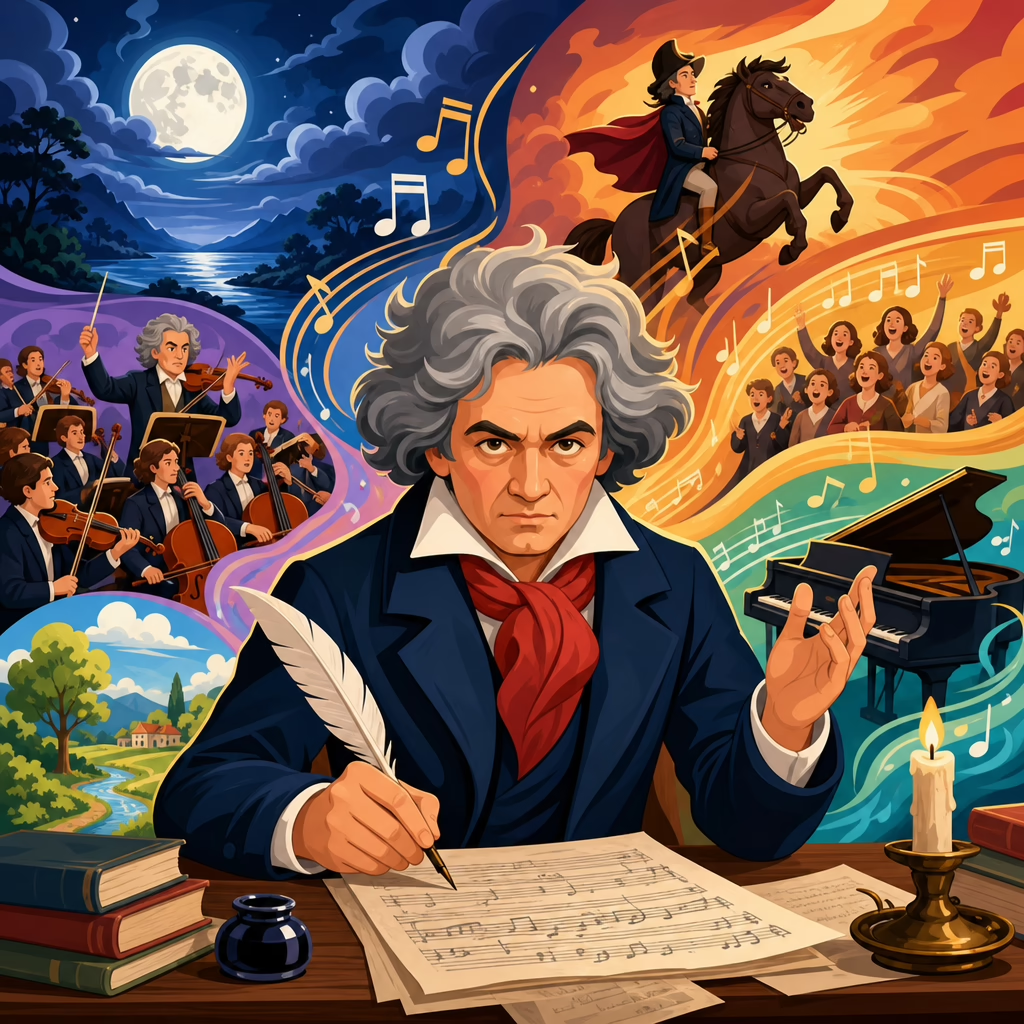
Animated Explainers of Beethoven’s Most Famous Pieces
Animated explainers of Beethoven’s most famous pieces make a demanding body of music easier to hear, see, and remember. For a multimedia gallery, they do more than decorate a listening page: they turn abstract structure into something a broad audience can follow in real time. When I have built music education pages, the most successful entries were never the ones with the longest biographies or the densest theory notes. They were the ones that helped visitors answer practical questions fast: What am I hearing, why does it sound that way, and where should I listen next? Beethoven is ideal for that format because his works are both famous and architecturally clear when presented well.
Beethoven’s reputation rests on more than cultural prestige. He reshaped sonata form, expanded the expressive range of the symphony, transformed the piano sonata into a public statement, and wrote chamber music that rewards repeated listening. Yet many listeners still meet his catalog through fragments: the four-note opening of the Fifth Symphony, the choral finale of the Ninth, the moonlit triplets of the so-called Moonlight Sonata, or the triumphant melody from Ode to Joy. Animated explainers bridge the gap between recognition and understanding by synchronizing sound with notation, color, timelines, thematic labels, and historical context.
In this hub article, “Miscellaneous” means the wide set of Beethoven works and explainer formats that do not fit neatly into one instrument family or one classroom category. A useful hub should connect orchestral, piano, chamber, and vocal works; distinguish beginner-friendly listening guides from score-based analysis; and point readers toward different modes of engagement, from short visual summaries to deep movement-by-movement breakdowns. The goal is comprehensive orientation. Instead of treating each masterpiece as an isolated monument, this page shows how animated explainers can reveal recurring ideas in Beethoven’s style: motivic development, dramatic contrast, rhythmic insistence, variation, and large-scale tension and release.
That matters because Beethoven’s music is often introduced with mythology rather than method. People hear that he was revolutionary, heroic, deaf, and indispensable to Western music, but those labels do not teach them how to listen. A good animated explainer does. It can show how a tiny motive drives an entire movement, why a recapitulation feels satisfying, or how an apparent lyrical pause prepares a stronger return. For students, teachers, casual listeners, and curators assembling a multimedia gallery, the right explainer turns passive admiration into active comprehension. That is the purpose of this hub: to map Beethoven’s most famous pieces, identify what an animation should clarify in each one, and help readers choose the best next article or media asset for deeper exploration.
What animated explainers reveal better than text alone
Beethoven’s music is especially suited to animation because his compositional logic is audible yet often difficult to describe without a visual aid. In practice, the best explainers combine three layers. First, they anchor the listener with a timeline: exposition, development, recapitulation, scherzo, variation set, coda. Second, they mark recurring themes and motives with stable colors or symbols, allowing viewers to recognize returns and transformations. Third, they connect musical events to plain-language prompts such as “sequence rises,” “harmony destabilizes,” or “transition intensifies.” I have seen even first-time listeners track sonata form successfully when these cues appear at the exact moment the sound changes.
Text can explain that Beethoven develops small cells obsessively, but animation can show the process. In the opening movement of Symphony No. 5, for example, a visual layer can trace the famous short-short-short-long rhythm across different instruments and tonal areas. In the finale of Symphony No. 9, an explainer can display rejected themes before the cellos and basses introduce the Ode to Joy melody, making the dramatic “search” intelligible. For piano works, keyboard roll animations, scrolling scores, and phrase maps help viewers connect hand movement, register, and harmony. This is valuable not only for trained musicians. It helps general audiences hear relationships that otherwise pass by too quickly.
Strong explainers also reduce a common problem in Beethoven coverage: overemphasis on anecdote. The story of his hearing loss is historically important, but if every media asset leads with biography and neglects musical mechanics, the listener learns less than they should. The more useful sequence is context, listening target, and then interpretation. State when a piece was written, what genre it belongs to, what to listen for, and how the animation will mark those events. That formula works whether the page features a two-minute social clip, a ten-minute guided analysis, or an interactive score embedded in a multimedia gallery.
Beethoven works that benefit most from visual explanation
Not every famous piece requires the same kind of treatment. Some works need form maps; others need instrument highlighting, text underlay, or motif tracking. The table below identifies high-value Beethoven pieces for a hub page and the visual strategy that best explains them to mixed audiences.
| Piece | Why listeners know it | Best animation focus | Key concept to explain |
|---|---|---|---|
| Symphony No. 5 in C minor, Op. 67 | Iconic opening motive | Color-coded motive tracking | How one rhythm drives an entire movement |
| Symphony No. 6 “Pastoral,” Op. 68 | Nature scenes and storm | Scene-by-scene program timeline | Program music versus pure depiction |
| Symphony No. 9 in D minor, Op. 125 | “Ode to Joy” finale | Movement map with text and theme returns | How Beethoven builds a choral symphony |
| Piano Sonata No. 14 “Moonlight,” Op. 27 No. 2 | Famous first movement | Harmony and texture overlay | Why the calm surface still feels tense |
| Piano Sonata No. 8 “Pathétique,” Op. 13 | Grave introduction and slow movement | Section labels and contrast markers | How drama is created through tempo and register |
| Für Elise, WoO 59 | Universal piano staple | Phrase repetition and form chart | Rondo-like return and contrast episodes |
| Violin Sonata No. 9 “Kreutzer,” Op. 47 | Virtuosic scale and literary fame | Dialogue between instruments | Equal partnership, not accompaniment |
| String Quartet No. 14, Op. 131 | Late-style prestige | Continuous movement roadmap | How seven connected sections form one arc |
For a sub-pillar hub under Multimedia Gallery, these pieces provide breadth. They span the Beethoven works people search for most often, and they represent different listening problems. Symphony audiences need orchestral orientation. Piano beginners need guidance through form and harmony. Chamber music listeners benefit from visualizing conversational texture. A well-planned hub should link outward from each featured item to separate articles, playlists, or interactive modules focused on one piece, one movement, or one analytical theme.
How to explain the symphonies in plain terms
The symphonies are usually the entry point, and animated explainers work best when they avoid jargon overload. With the Fifth Symphony, start with the four-note cell and immediately demonstrate repetition, variation, and orchestral transfer. Do not merely say that the motive is “famous.” Show where it returns, how it expands, and why the transition from C minor struggle to C major triumph feels earned. Leonard Bernstein popularized this kind of direct thematic explanation in televised concerts, and the principle remains sound for digital media: identify the idea, replay it, and connect it to structure.
The Sixth Symphony needs a different method because it is programmatic. Beethoven titled its movements with descriptions of countryside scenes, but he also specified that it was “more the expression of feeling than painting.” An effective animation therefore labels bird calls, brook motion, peasant dance, and storm effects while reminding viewers that the real point is emotional experience. Showing orchestral texture is useful here. When lower strings build the storm and winds flash through the texture, viewers understand how depiction emerges from instrumental writing rather than from narration alone.
The Ninth Symphony requires scale management. Most explainers fail when they rush from “Beethoven added chorus” to “here is Ode to Joy.” A better sequence begins with the unusual weight of the first movement, the energy of the scherzo, the slow movement’s variation design, and only then the disruptive opening of the finale. At that point, animation can illustrate the instrumental recitatives that reject earlier material before the famous melody appears. That single choice teaches viewers something essential: Beethoven did not paste a tune onto a symphony; he staged an argument about what kind of finale this work needed.
Piano favorites: what viewers should see and hear
Piano pieces attract the broadest casual audience, but they are often oversimplified. The Moonlight Sonata is the clearest example. Many videos treat the first movement as background music, detached from its harmonic daring and formal tension. A better animated explainer highlights the triplet accompaniment, marks dissonances, and shows bass movement under the surface. The movement feels still, but it is not static. Its emotional pull comes from controlled instability. When viewers can see phrase boundaries and harmonic pressure points, they hear why the piece sustains attention beyond mood alone.
The Pathétique Sonata benefits from contrast mapping. The grave opening should be framed as a dramatic threshold, not as an isolated preface. Then the animation can show how the allegro launches with urgency, how Beethoven uses sforzandi and register to intensify conflict, and why the famous adagio cantabile offers relief without dissolving structure. For beginners, the key insight is that Beethoven’s drama is engineered. He controls expectation through timing, silence, and return. An animated score can make that visible by flagging delayed cadences and repeated rhythmic figures.
Für Elise is deceptively useful in a multimedia hub because nearly everyone recognizes it while few can explain its form. This is where a short explainer can outperform a long lecture. Label the returning A section, identify the contrasting episodes, and point out how the opening melody balances charm with slight instability. Because the piece is overfamiliar, viewers enjoy discovering that its structure is more crafted than they assumed. For a gallery page, it also serves as an on-ramp to broader Beethoven listening: from miniature keyboard favorite to larger rondos, sonatas, and variation works.
Chamber music, late style, and the miscellaneous hub function
A “Miscellaneous” Beethoven hub should not stop at the obvious hits. Some of the richest animated content comes from chamber music and late works because these areas show how Beethoven thinks across voices and long spans. The Kreutzer Sonata is a strong example. Many older presentations frame it as a violin showpiece, but the modern, accurate explanation is partnership. Animation can alternate color emphasis between violin and piano, illustrating imitation, challenge, and shared propulsion. That visual correction matters because it reflects Beethoven’s expansion of the genre beyond accompanied sonata conventions.
Late Beethoven especially rewards guided visuals. In Op. 131, seven movements run continuously, and listeners can lose the thread without a map. A well-designed explainer labels each section, marks the fugue subject, and indicates tonal and emotional pivots. This does not trivialize the work; it gives audiences the orientation they need to hear the continuity. I have found that even advanced listeners appreciate a simple arc diagram when entering late quartets, because the issue is not intelligence but memory under time pressure. Animation supports memory by attaching sonic events to stable visual markers.
This is where the hub function becomes important. A sub-pillar page should help visitors move from famous works to adjacent discoveries. If they arrive for the Fifth Symphony, the hub can guide them to the Eroica for larger symphonic ambition. If they start with Moonlight, it can direct them toward the Appassionata or Waldstein for expanded sonata rhetoric. If they engage with Ode to Joy, it can connect them to the Missa solemnis for Beethoven’s broader treatment of chorus and transcendence. The hub is not a miscellaneous bin; it is a structured crossroads.
Building a better multimedia gallery around Beethoven
The most effective Beethoven gallery combines concise explainers with layered depth. At minimum, each entry should include a short summary, the date and opus number, movement list, performance duration, and one explicit listening goal. Add an embedded animation or synchronized score from a recognized tool such as Soundslice, a YouTube score video, or a custom SVG timeline. Then support that media with plain-language notes and links to related pages. Internal cross-linking matters because users rarely know whether they want biography, analysis, or recommendations until they begin listening.
Quality control is equally important. Use reliable score sources such as Bärenreiter, Henle, or IMSLP where public-domain material is appropriate, and distinguish between urtext reading and editorial tradition when it affects what viewers hear. Name conductors, ensembles, and pianists when performance choices shape the explanation. Carlos Kleiber’s Fifth, Furtwängler’s wartime Ninth, and Wilhelm Kempff’s Beethoven sonatas do not make the same interpretive points, and a serious gallery should acknowledge that. Animated explainers gain authority when they are tied to identifiable performances and transparent analytical choices.
The central benefit is simple: animation helps people listen actively. Beethoven’s most famous pieces already command attention, but attention alone does not create understanding. When a multimedia gallery pairs clear visual explanation with accurate context, audiences hear form, motive, and expression with new precision. That makes every related article more useful, from symphony guides to piano deep dives and chamber music introductions. If you are building out the Multimedia Gallery’s miscellaneous Beethoven coverage, start with the landmark works, choose one visual question per piece, and link each explainer to the next logical listening step. That is how a hub page becomes genuinely educational instead of merely decorative.
Frequently Asked Questions
What makes animated explainers especially useful for understanding Beethoven’s most famous pieces?
Animated explainers are useful because they translate Beethoven’s music from something people only hear into something they can also see and track in real time. Beethoven often builds large works from short rhythmic cells, dramatic contrasts, repeated motives, and carefully timed returns. For many listeners, especially those without formal music training, those patterns can be hard to recognize during a first hearing. Animation solves that problem by highlighting entrances, showing when a theme changes shape, mapping sections as they unfold, and pointing out where tension rises or releases. Instead of asking visitors to memorize technical vocabulary before they can enjoy the music, animated explainers let them follow the logic of a piece while the sound is happening. That makes the experience more immediate, more memorable, and far less intimidating.
For a multimedia gallery, this matters even more. A good listening page should help users answer practical questions quickly: what am I hearing, why does this moment feel important, and where am I in the piece right now? Animated explainers do exactly that. They turn abstract musical form into a guided visual experience without flattening the emotional impact. In Beethoven’s case, where listeners often encounter famous openings but may not understand how entire movements are organized, animation bridges the gap between recognition and comprehension. It helps casual visitors stay engaged longer, gives students a clearer entry point, and supports repeat listening because each replay reveals a bit more of the structure.
Which Beethoven pieces work best in an animated explainer format?
Some Beethoven works are especially well suited to animated explanation because they contain themes, forms, and dramatic turns that become much clearer when visually mapped. The first movement of Symphony No. 5 is a classic example. Its famous four-note idea is easy to recognize, but animation can show how that short motive drives the whole movement, reappearing in different contexts and creating unity across large spans of music. Symphony No. 6, the “Pastoral,” also works beautifully because its scene-like character invites visual guidance: listeners can follow how Beethoven suggests nature, flowing water, storms, and calm without reducing the piece to a simple storybook. The “Moonlight” Sonata, the “Pathétique” Sonata, Für Elise, Symphony No. 9, and the “Eroica” Symphony are all strong candidates as well because they balance familiarity with enough structural richness to reward visual breakdowns.
The best choices are usually pieces that satisfy two conditions. First, the music should already carry broad recognition or emotional appeal, giving audiences a reason to click. Second, it should contain clear musical events that animation can illuminate: recurring themes, strong contrasts, sectional design, surprising modulations, or notable orchestration changes. Beethoven offers many such moments. Even shorter excerpts can work if the explainer focuses tightly on a compelling feature, such as a motif, a transition, or a development section. In practice, the strongest gallery selections often mix iconic works with a few less obvious choices, allowing visitors to move from well-known pieces into deeper listening with confidence.
How can an animated explainer show Beethoven’s musical structure without oversimplifying it?
The key is to guide rather than reduce. A strong animated explainer does not pretend that Beethoven’s music can be fully summarized by a few labels on a screen. Instead, it chooses the most important structural ideas for a particular listening goal and presents them clearly. For example, an explainer might identify the opening theme, the transition, the arrival of a contrasting idea, the instability of the development, and the return of the recapitulation. It may also visualize dynamic swells, rhythmic insistence, instrumental entrances, or harmonic tension. Done well, these cues help listeners hear relationships they might otherwise miss, while still leaving room for the music’s emotional ambiguity and expressive power.
Oversimplification happens when visuals force the music into rigid, misleading categories or distract from listening with too much decoration. The better approach is selective clarity. Use animation to answer the questions listeners naturally have: what just came back, what changed, why does this section feel unsettled, and why does the return feel satisfying? Beethoven’s music can handle explanation because it is both highly constructed and deeply dramatic. A thoughtful explainer respects both sides. It treats form as something living and audible, not as a classroom diagram detached from sound. That balance is what makes multimedia teaching effective: the visuals support the ear instead of competing with it.
Who benefits most from animated explainers of Beethoven: beginners, students, or experienced listeners?
All three groups benefit, but they benefit in different ways. Beginners gain the most obvious advantage because animated explainers lower the barrier to entry. Beethoven can seem overwhelming if a listener feels they are supposed to understand sonata form, thematic development, or orchestral texture before pressing play. Animation removes that pressure. It gives newcomers a way to follow the shape of the music and notice landmarks without requiring specialist background knowledge. That first sense of orientation is often what turns passive hearing into active listening.
Students benefit because animated explainers reinforce concepts that are otherwise difficult to hold in the mind during real-time listening. Reading about a motive on a page is one thing; seeing and hearing that motive transform across a movement is much more effective. For classroom use, music appreciation pages, and independent study, this can improve retention and make discussions more concrete. Experienced listeners also gain something valuable. Good explainers can sharpen attention, reveal fresh angles on familiar works, and make analytical observations easier to communicate to others. In other words, the format is not only remedial. At its best, it creates a shared listening framework that helps a broad audience engage Beethoven at a higher level, each from their own starting point.
What should a high-quality multimedia gallery include alongside animated explainers of Beethoven’s music?
A high-quality gallery should offer more than the animation itself. It should combine the explainer with clean audio or embedded performance video, short contextual notes, clearly labeled sections, and navigation that lets visitors move between pieces easily. Brief introductions are useful when they answer practical questions quickly: when was the piece written, what should listeners pay attention to first, and what makes this work historically or emotionally significant? Timed chapter markers can be especially effective, allowing users to jump to key moments such as the opening theme, a major transition, or the climactic return. Captions, transcripts, and accessible visual contrast are also important so the gallery serves a wider audience well.
The strongest galleries also respect different listening habits. Some visitors want a fast overview, while others want to linger and compare performances. That means the page should support layered engagement: a concise summary at the top, a detailed explainer below, and optional deeper material such as composer context, instrumentation notes, score excerpts, or related works. For Beethoven, it also helps to connect pieces through recurring ideas in his style, such as motivic economy, dramatic contrast, and the expansion of classical forms into something more psychologically intense. When those supporting elements are organized well, the gallery becomes more than a decorative listening page. It becomes a practical, memorable learning tool that helps visitors hear Beethoven with greater confidence and curiosity.