A Practical Guide to the Six Minuets WoO 10
The Six Minuets WoO 10 occupy a modest corner of Beethoven’s catalog, yet they reward close study because they show how the young composer handled dance form, keyboard texture, and social function before the bolder language of his middle period emerged. In practical terms, these pieces are short piano minuets, written in a style tied to late eighteenth-century domestic music making, but they are far from disposable salon trifles. For pianists, teachers, and listeners, a practical guide to the Six Minuets WoO 10 means understanding what “WoO” signifies, how a minuet works, what technical and musical demands each piece presents, and why this set still matters in the Beethoven repertoire.
“WoO” stands for Werke ohne Opuszahl, or works without opus number, a catalog category used for pieces that Beethoven did not assign an opus number during publication. That label does not imply low quality. It usually reflects publication history, chronology, or genre. The six minuets belong to Beethoven’s early years, when the minuet was still a familiar aristocratic dance type, generally in triple meter, often balanced in phrase structure, and commonly used for instruction, entertainment, or courtly settings. In performance, however, a minuet is never just “one-two-three.” It depends on weight hierarchy, elegant articulation, proportionate ornamentation, and a clear sense of character.
I have found that students often underestimate these pieces because they look easy on the page. The opposite is usually true. Their textures are transparent, so uneven tone, careless fingering, blurred pedaling, or weak rhythmic control become instantly obvious. At the same time, the set offers unusual value: it teaches Classical style at manageable length. Each minuet asks for concise storytelling, not sheer virtuosity. That makes WoO 10 especially useful for intermediate pianists moving beyond method-book repertoire into authentic Beethoven. It also helps experienced players refine touch, voicing, and stylistic discipline in music that leaves nowhere to hide.
Another reason these works matter is that they illuminate Beethoven before the mythology. Here we meet a composer working within inherited forms, testing small contrasts of register, cadence, accent, and phrase extension. The result is music that can be taught, practiced, and performed with immediate musical payoff. A focused deep dive is worthwhile because the Six Minuets WoO 10 are not merely historical curiosities; they are compact studies in Classical balance, and when approached practically, they become some of the most instructive short works in Beethoven’s keyboard output.
What the Six Minuets WoO 10 are and how to approach them
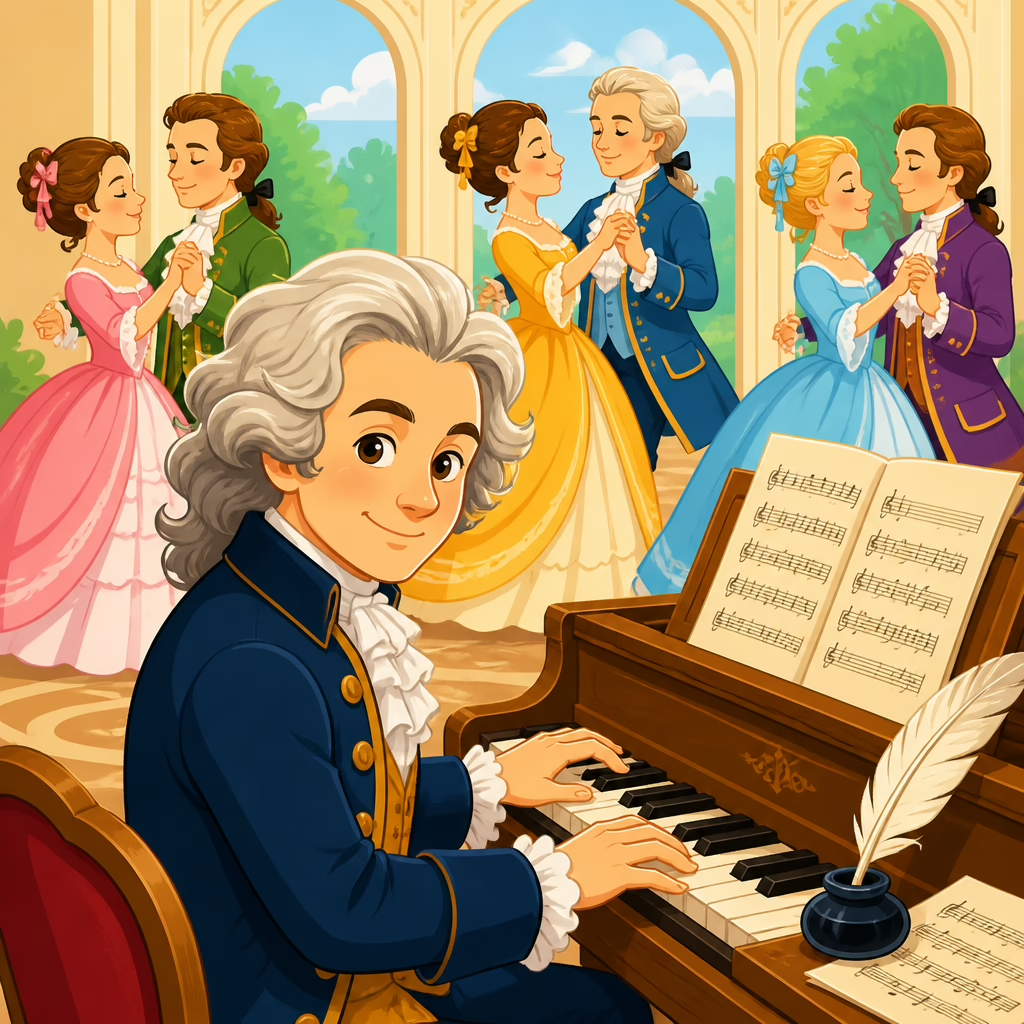
The Six Minuets WoO 10 are a set of short keyboard dances generally associated with Beethoven’s Bonn years or very early Vienna period, composed before the mature style that listeners usually identify with his name. They belong to the everyday musical world of the late eighteenth century: teaching rooms, private homes, and small gatherings rather than concert halls. That context matters. These pieces were built for clarity, memorability, and immediate appeal. A pianist should therefore resist the urge to inflate them into miniature sonatas. The right approach is poised, proportionate, and rhythmically grounded.
Structurally, each minuet relies on compact binary design, clear cadences, and regular phrases, often with repeats that should not be treated as mechanical duplication. On the repeat, a performer can shape dynamics, refine articulation, or slightly vary timing within the bounds of style. The dance pulse must remain tangible, but not heavy. In lessons, I describe the ideal minuet beat as “lifted gravity”: beat one has weight, beats two and three release, and the bar always moves forward. If every beat is equal, the music turns square. If beat one is pounded, it stops dancing.
Finger legato rather than pedal legato should do most of the work. On modern pianos, overpedaling quickly muddies the harmonic rhythm, especially in passages with Alberti-like accompaniment or repeated bass notes. Short half-pedal touches can help at cadences, but detached bass with singing upper lines usually sounds more idiomatic. Ornaments, where present, must begin in tempo and fit the phrase rather than sit on top of it. The governing principle is economy: every expressive choice should clarify meter, harmony, or character.
For readers wanting the larger context of Beethoven’s short piano works, this set sits naturally alongside the bagatelle tradition and related miniatures; a broader overview appears in the main guide at https://lvbeethoven.com/a-complete-guide-to-beethovens-bagatelles/. Within WoO 10 itself, though, the priority is not breadth but specificity: each minuet needs its own tempo profile, articulation plan, and tonal center of gravity.
Musical character, technique, and common performance issues
The central practical question is simple: how do you make short minuets sound finished rather than merely correct? The answer lies in three linked areas: phrase direction, articulation contrast, and harmonic awareness. In Beethoven’s early dance writing, phrase direction often depends on a small melodic rise, a dominant arrival, or a slight increase in rhythmic activity. If you identify that point and aim toward it, even an eight-bar period gains shape. If you play every measure with the same dynamic and touch, the music sounds assembled rather than spoken.
Articulation is equally decisive. Slurs indicate more than legato; they show gesture. A two-note slur in Classical repertoire often implies a mild leaning on the first note and release on the second. Detached notes do not automatically mean dry staccato. Many should be lightly separated, especially in accompaniment patterns, so the dance pulse remains buoyant. I often hear players blur phrase endings by holding through rests or clipping slurred pairs too sharply. Both errors flatten the style. The notation usually tells you exactly how to keep the rhetoric alive if you read it literally and intelligently.
Harmony provides the third layer. Because the textures are spare, modulations and cadential patterns carry unusual expressive weight. A move to the dominant in a major-key minuet can create the only real expansion in the piece; a brief shift to the relative minor can darken the color enough to justify subtler voicing. Students improve quickly when they mark cadences, sequence points, and bass-line goals before worrying about speed. These are not pieces to “get through.” They are pieces to balance.
| Practical focus | What to listen for | Common mistake | Useful correction |
|---|---|---|---|
| Triple-meter pulse | A clear strong-weak-weak hierarchy with forward motion | Accenting all three beats evenly | Lean gently into beat one and lighten beats two and three |
| Phrase endings | Cadences that relax without losing tempo | Rushing final bars or dragging before the cadence | Count subdivisions and release tension through the wrist, not by slowing too early |
| Articulation | Contrast between slurred figures and detached accompaniment | Using the same touch everywhere | Practice one hand at a time with exaggerated articulation differences |
| Pedaling | Clean harmony and audible bass definition | Covering entire measures with pedal | Use brief pedal only at harmonic arrivals or not at all |
Technically, the Six Minuets WoO 10 are accessible for many intermediate players, but they demand disciplined basics. Evenness in scales and broken chords matters because the figurations are exposed. Hand balance matters because melody can shift between hands without warning. Rotational flexibility matters because repeated notes and small intervals can become stiff if played with isolated finger action alone. These pieces also train economical movement. Large gestures look impressive but often disrupt timing in short Classical phrases. Quiet wrists, organized fingering, and stable fingertip contact produce better results than visible effort.
Tempo is another area where practical judgment outweighs habit. Many performers choose speeds that are either too slow, making the pieces sound ceremonious, or too fast, erasing their elegance. A useful test is whether the smallest note values still speak clearly while the bar retains dance lift. If ornaments smear or accompaniment turns breathless, the tempo is too quick. If phrases sag and repeats feel interminable, it is too slow. Historically informed recordings can help, but the final decision should come from the instrument in front of you, the room acoustic, and the player’s ability to maintain character.
How to study, teach, and program the Six Minuets WoO 10
For practice, I recommend starting away from the keyboard with a phrase map. Mark repeats, cadences, modulation points, and any sequential pattern. Then decide where each phrase begins, peaks, and releases. This ten-minute analysis prevents hours of unfocused repetition. At the keyboard, hands-separate work should not be limited to note learning. Use it to define touch: sing the melody with the right hand alone, then play the bass alone until its articulation is dependable. When the hands rejoin, the character is already built in.
Rhythmic discipline is best trained by counting full measures aloud and subdividing internally, especially at cadences and after rests. A surprising number of slips in these minuets come not from difficult notes but from casual timing. Repeats should also be practiced intentionally. On first pass, establish the plain text. On the repeat, try a slightly different dynamic contour, a finer release at phrase endings, or clearer bass shaping. In Classical performance, tasteful repetition is not romantic indulgence; it is structural clarification.
Teachers can use WoO 10 to introduce style without overwhelming students with length. The set builds essential skills: reading symmetrical phrase structure, hearing tonic-dominant relationships, controlling detached left-hand patterns, and shaping ornaments within pulse. It also opens valuable historical conversation. Students learn that Beethoven did not begin with the “Appassionata.” He developed inside inherited conventions and learned to animate small forms before expanding them. That lesson makes the early works pedagogically powerful.
In programming, the Six Minuets WoO 10 work well in clusters rather than as isolated encores. Two or three can serve as a Classical-style interlude in a studio recital, a teaching demonstration on dance types, or a contrast set beside early Haydn and Mozart minuets. They are also effective in lecture-recitals because listeners can hear interpretive choices immediately. A performer can show, for example, how changing articulation in the bass alters the entire dance feel, or how a slightly different repeat transforms a miniature from dutiful to vivid.
The main limitation of the set is exactly what gives it value: brevity. These are not grand statements, and they should not be sold as hidden monuments. Their importance lies in concentration. Played with understanding, they teach economy, proportion, and style more efficiently than many longer pieces. That is why they remain practical repertoire for pianists who want a cleaner Classical technique and a more convincing grasp of early Beethoven.
Conclusion
A practical guide to the Six Minuets WoO 10 begins with a simple recognition: small Beethoven pieces deserve serious musicianship. These minuets are early, concise, and technically manageable, but they are not casual background music. They ask for a true minuet pulse, careful voicing, restrained pedaling, articulate phrasing, and close attention to cadence and harmony. In return, they offer one of the clearest entry points into Beethoven’s early keyboard language.
The strongest performances keep the dance alive while honoring Classical proportion. That means shaping repeats thoughtfully, balancing the hands intelligently, and letting gesture arise from notation rather than from added drama. For students, the set builds style and control. For teachers, it provides efficient material for teaching articulation, phrase structure, and tonal hearing. For experienced pianists, it is a useful corrective against overplaying and a reminder that transparency can be more demanding than virtuosity.
If you are learning or revisiting the Six Minuets WoO 10, treat each one as a complete statement with its own character, not as a preliminary exercise. Study the cadence points, decide on articulation before tempo, and aim for elegance over display. Done well, these short dances become lasting tools for understanding Beethoven at close range. Put one on the stand this week and work until every phrase truly dances.
Frequently Asked Questions
What are Beethoven’s Six Minuets WoO 10, and why are they worth studying?
Beethoven’s Six Minuets WoO 10 are a set of short piano dance pieces from his early years, and they offer a valuable look at the composer before the dramatic breakthroughs of his middle period. The designation “WoO” means “Werke ohne Opuszahl,” or works without opus number, a category used for pieces that were not assigned a standard opus number in Beethoven’s lifetime. Although these minuets are modest in scale, they are anything but insignificant. They show Beethoven working within a familiar late eighteenth-century social genre while already displaying a strong sense of structure, keyboard color, and character.
They are worth studying because they sit at the intersection of style, pedagogy, and performance practice. For listeners, they reveal how Beethoven absorbed the musical language of Haydn, Mozart, and the broader Viennese Classical tradition. For pianists, they provide compact studies in phrasing, articulation, balance, and dance rhythm. For teachers, they are useful repertoire because they develop musical judgment without the technical overload found in larger sonatas and variation sets. In short, the Six Minuets WoO 10 may be small pieces, but they are rich in lessons about form, elegance, and expressive control.
Are the Six Minuets WoO 10 just simple beginner pieces, or do they require deeper musical interpretation?
They are approachable, but they should not be mistaken for merely decorative beginner repertoire. On the surface, the Six Minuets WoO 10 are concise and technically less demanding than Beethoven’s major sonatas, which makes them attractive for intermediate players and teaching studios. However, that accessibility can be misleading. Their apparent simplicity places more responsibility on the performer, not less. Because the textures are often transparent, every aspect of playing becomes exposed: rhythmic steadiness, phrase shaping, articulation, voicing, and stylistic awareness all matter greatly.
Interpretively, these minuets depend on a convincing sense of dance. A minuet is not simply a slow, polite piece in triple meter; it carries weight distribution, gesture, and social poise. A performer has to understand how the phrases breathe, where the harmonic tension rises and falls, and how repeated ideas can be varied through touch and timing rather than exaggerated tempo changes. These works also invite attention to Classical balance. The performer must avoid both blandness and over-romanticizing. That means shaping cadences intelligently, keeping ornaments graceful, and using dynamics in a way that sounds elegant rather than oversized. So while the notes may be manageable, the musical demands are genuinely sophisticated.
What should pianists focus on when learning and performing the Six Minuets WoO 10?
Pianists should begin with style before mechanics. These pieces belong to the world of late eighteenth-century domestic keyboard music, so clarity, proportion, and rhythmic poise are essential. The first priority is establishing a dependable triple-meter pulse with a real sense of lift. Even in a lyrical or gentle minuet, the underlying dance character must remain present. That does not mean playing heavily on the first beat of every measure, but it does mean feeling the hierarchy of the bar and allowing the phrases to move naturally through it.
Next, focus on articulation and touch. Many passages benefit from clean finger work, light detachments, and carefully judged legato rather than continuous pedal-based blending. Players should listen for the difference between melodic singing tone and accompanimental support, especially in textures where the right hand carries a graceful line over a simpler left-hand pattern. Voicing is especially important because the musical interest often lies in subtle contrasts rather than in thick textures or overt virtuosity.
Pedaling should generally be restrained and purposeful. On a modern piano, too much pedal can obscure the crispness and transparency that help this repertoire speak. Short, selective pedal can be effective for resonance at cadences or to support a sustained melodic moment, but the basic sound should come from the fingers. It is also wise to study phrase lengths and formal divisions carefully. These are short forms, often built from balanced periods, repeated sections, and clear cadential goals. Understanding that design helps the performer avoid monotony and shape each minuet as a coherent whole. In practical terms, the best performances combine elegance, rhythmic grace, and enough character to make each piece feel distinct.
How do the Six Minuets WoO 10 reflect Beethoven’s early style and his place in the Classical tradition?
The Six Minuets WoO 10 reflect a young Beethoven who was still writing within inherited conventions yet already thinking with unusual purpose. These pieces show his command of the Classical language of symmetry, phrase balance, and tonal clarity. Their textures and dance orientation place them firmly within the world shaped by composers such as Haydn and Mozart, as well as by the broader culture of domestic keyboard playing in the late eighteenth century. The forms are concise, the rhetoric is controlled, and the musical gestures are grounded in familiar social functions.
At the same time, there are small but telling signs of Beethoven’s individuality. Even in brief dance pieces, he often brings a sharper profile to motives, stronger harmonic direction, and a more deliberate handling of contrast than one might expect from mere salon entertainment. He tends to make musical material feel purposeful. Cadences, repetitions, and dynamic turns are not simply formulaic; they often seem energized from within. That quality is important because it reminds us that Beethoven did not emerge suddenly as the revolutionary figure of the “Eroica” era. His mature voice grew out of close engagement with existing forms, and works like the Six Minuets WoO 10 document that developmental process in a very tangible way.
For that reason, the set is historically useful as well as musically rewarding. It helps listeners hear continuity between Beethoven and his predecessors, while also catching early glimpses of the concentration and structural intelligence that would later define his larger works. These minuets may not announce a revolution, but they show a composer learning how to make even conventional forms count.
Who should explore the Six Minuets WoO 10—students, teachers, or general listeners?
The short answer is that all three groups can benefit from them, though in different ways. Students will find the Six Minuets WoO 10 especially useful as an introduction to Classical style beyond the most elementary teaching pieces. They encourage players to think about phrase structure, articulation, left-hand support, ornamentation, and stylistic restraint. Because the technical demands are moderate compared with larger Beethoven works, students can devote more attention to musical discipline and stylistic awareness. These pieces are excellent training in how to make a small form sound complete and expressive.
Teachers can use the set as a practical bridge between foundational keyboard study and more advanced Classical repertoire. The minuets provide clear opportunities to address issues such as dance pulse, balanced phrasing, repetition with variation, clean pedaling, and historically informed interpretation on the modern piano. They also support broader conversations about genre: what domestic music meant in Beethoven’s time, how keyboard pieces functioned socially, and why short forms deserve serious musical attention. In a teaching setting, they are valuable not only as repertoire but also as tools for cultivating taste and listening skills.
General listeners should not overlook them either. The Six Minuets WoO 10 are an appealing way to encounter Beethoven on a smaller, more intimate scale. They reveal a composer capable of charm, economy, and refinement, qualities that can sometimes be overshadowed by the grandeur of the sonatas and symphonies. For anyone interested in Beethoven’s artistic development, these works offer a rewarding perspective: they show how much can be said within tight formal limits and how much personality can emerge through apparently simple means. That combination of accessibility and substance is exactly why the set remains worth hearing, studying, and teaching today.