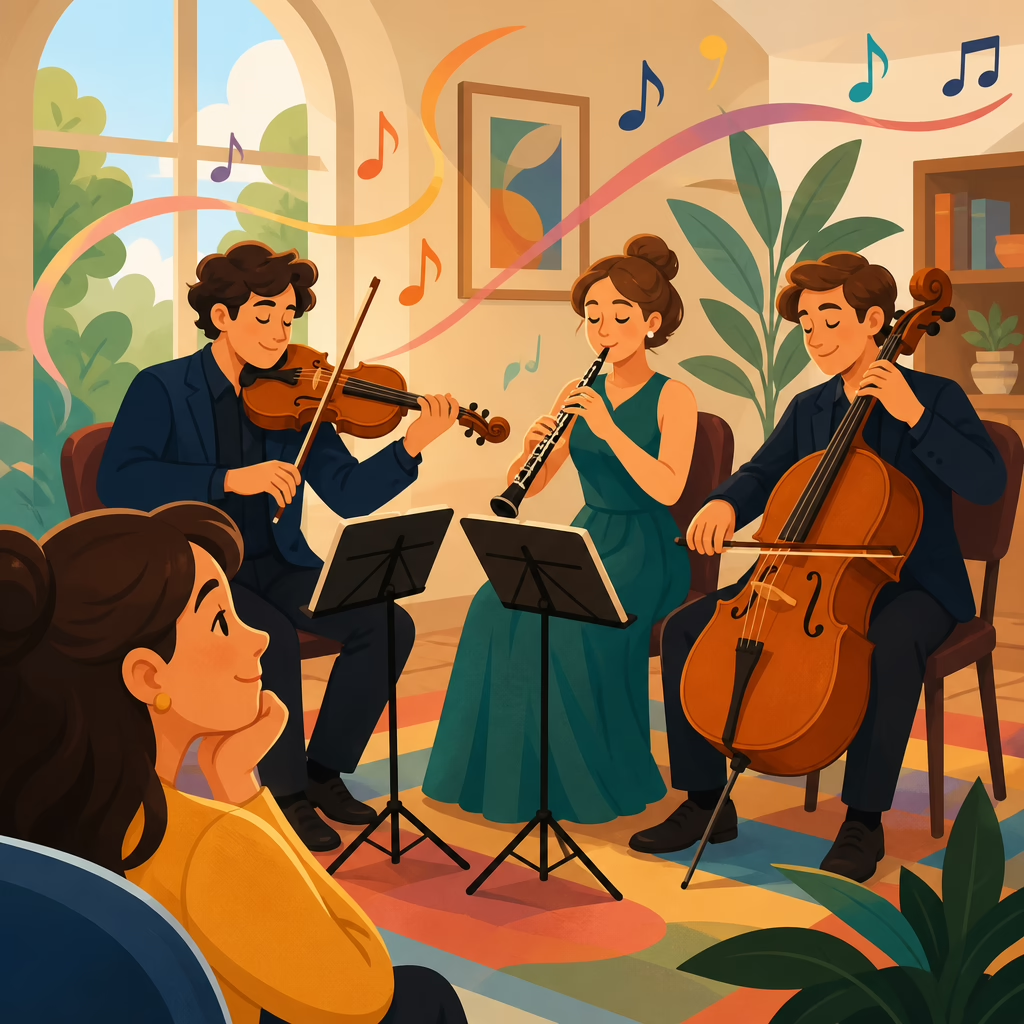
A Listener’s Guide to the Oboe Trio Op. 87
Beethoven’s Oboe Trio Op. 87 is one of those works that rewards close listening because it sounds immediately graceful while quietly revealing unusual craftsmanship, instrumental wit, and a distinct place in his early career. In practical terms, the piece is a trio for oboe, violin, and viola, a combination that already tells a listener something important: this is chamber music built on contrast, with the oboe’s bright, penetrating line set against the warmer, more blended sonority of two strings. Although many listeners encounter Beethoven through the symphonies, piano sonatas, or string quartets, this trio opens a more intimate door into his musical thinking. It shows how he handled conversation between unequal voices, how he shaped variation and form before his middle-period breakthroughs, and how he transformed social music into something more enduring.
The work is usually dated to Beethoven’s Bonn years and published later in Vienna, which explains part of its character. It belongs to a world where wind players were often virtuosi attached to courts or noble households, and where chamber pieces needed to satisfy both cultivated amateurs and serious professionals. A listener’s guide should therefore begin with three key ideas. First, timbre matters as much as melody here; knowing which instrument carries a line changes what you hear. Second, form matters because the music often gains force through balance, return, and subtle disruption rather than through sheer drama. Third, style matters because this is Beethoven speaking in a late eighteenth-century language while already pushing against its neatness. I have used this trio in listening classes and pre-concert talks, and the same reaction appears again and again: people are surprised by how much personality the score projects once they stop hearing it as a minor curiosity. That surprise is exactly why the piece matters. It captures Beethoven before the heroic image hardened, and it lets listeners hear his intelligence at work in miniature, through elegance, surprise, and disciplined invention.
What to know before listening: scoring, background, and sound world
The title “Oboe Trio Op. 87” can be slightly misleading if you expect the later Romantic idea of a trio with equal, seamlessly blended partners. Beethoven writes for instruments with sharply different physical properties. The oboe can sustain a singing phrase with a focused edge; the violin can match agility but blends more easily; the viola anchors harmony and rhythm while also taking melodic turns that add color rather than sheer brilliance. Because of that scoring, listeners should not expect the democratic continuity of a string trio. Instead, expect a theater of roles. The oboe often states, ornaments, or crowns a phrase. The strings answer, support, imitate, or gently destabilize that statement.
Historically, the work also reflects practical music making in Bonn. Beethoven knew excellent wind players there, and he understood how to write music that sounded flattering in performance without becoming empty display. This is one reason the trio feels so idiomatic. The oboe lines breathe naturally, with phrases that recognize the instrument’s need for articulation and air. The violin writing tends toward clarity and dialogue instead of heavy accompaniment. The viola part is more than filler; it shapes inner harmony and often turns transitions from routine into expressive events. If you know Beethoven mainly through dense motivic argument, this lighter surface can seem unassuming at first. Listen longer, and the refinement becomes unmistakable.
In style, the trio sits close to the serenade and divertimento tradition, but it is not merely decorative. Beethoven uses familiar forms because they offer a stable frame for timing, surprise, and character contrast. Cadences are often prepared with unusual care. Repeated phrases are rarely exact copies in expressive effect. Dynamic turns sharpen social elegance into drama for a moment, then release the tension before the music becomes heavy. That balance between charm and structural purpose is the central listening challenge and the central pleasure.
First movement: how Beethoven builds poise and momentum
The opening movement establishes the trio’s essential social contract: lyrical ease on the surface, disciplined architecture underneath. Listen first for the opening theme as an act of presentation. Beethoven does not hurl material at the listener; he offers it with courtly assurance. The oboe’s entrance has a vocal quality, and the strings frame it in a way that resembles polite conversation rather than contest. Yet within that politeness, Beethoven is already organizing the movement with clear motivic relationships. Small rhythmic figures recur in different voices, and phrase endings are calibrated so that the music keeps moving even when it appears to settle.
What makes this movement work is the management of expectation. In many early Classical chamber pieces, a balanced phrase can become predictable very quickly. Beethoven avoids that problem by varying instrumental emphasis and harmonic pacing. A line first heard as melody may return as accompaniment. A supporting figure in the viola may suddenly matter because it nudges the harmony toward a new area. The result is momentum without obvious strain. For a first hearing, focus on three events: who begins an idea, who completes it, and who changes its meaning. In performance, those handoffs create much of the movement’s life.
The development section deserves special attention because it shows Beethoven’s early command of proportion. He does not overwork the material. Instead, he selects what is usable, shifts it through related keys, and lets texture do part of the expressive labor. An oboe figure can sound ornamental in the exposition, then more probing when displaced harmonically later on. Likewise, string exchanges that seemed merely companionable can acquire tension when the bass implication weakens and the listener loses tonal footing for a moment. This is not revolutionary Beethoven, but it is unmistakably the work of a composer who knows how to make modest means feel eventful.
Slow movement: song, breath, and intimate expression
The slow movement is where many listeners first fall in love with Op. 87 because its expressiveness is direct without being sentimental. Here the oboe’s singing capacity comes fully into focus. Beethoven writes lines that feel shaped by breath, and that matters. The phrasing is not just melodic contour on a page; it is embodied timing. A fine oboist will make the rests, tapering ends, and reentries feel like thought itself, as though the instrument is speaking in measured sentences. The violin and viola do not merely cushion that voice. They create a harmonic and rhythmic environment in which the oboe’s line can sound inevitable.
Listen for suspension and release. Beethoven often delays harmonic arrival by holding a note against the changing harmony beneath it or by placing a dissonant note where a listener subconsciously expects consonance. In a larger Beethoven adagio, such moments may become existential. Here, they remain intimate, but they are no less skillful. The emotional effect is tenderness with backbone. This movement does not collapse into generalized sweetness because the harmony keeps the expression honest. When performers respect that harmonic logic, the music breathes naturally. When they overindulge tempo or vibrato, the line can lose its classical profile.
I often tell new listeners to imagine the slow movement as a scene lit by changing daylight rather than by spotlight. Nothing is exaggerated, yet everything is visible. The viola’s inner notes matter because they tint the harmony from within. The violin often mediates between oboe prominence and ensemble blend. The best recordings preserve that chamber balance rather than treating the oboe as a concerto soloist with string backup. If you compare interpretations, this is the criterion that separates stylish reading from merely pleasant performance.
Menuetto and finale: wit, variation, and ensemble conversation
The later movements confirm that Beethoven understood character pieces as structural opportunities, not as lightweight interludes. In the Menuetto, rhythm does much of the expressive work. Accents and phrase lengths create a dance that sounds proper at first, then faintly mischievous. Beethoven enjoys the tension between expected symmetry and local disruption. A phrase may seem ready to close neatly, but an accent, inner-voice motion, or oboe inflection gives it a slight sideways push. That push is enough to keep the listener alert. The trio section typically offers contrast not just in melody but in texture and register, refreshing the ear before the return.
The finale is especially rewarding because it gathers the work’s social energy into more overt play. Depending on the edition and performance tradition, listeners may notice the movement’s kinship with variation practice and comic timing. Themes are not only repeated; they are tested under altered conditions. Register changes brighten or darken familiar material. The oboe may decorate where the strings once spoke plainly, or the strings may sharpen rhythmic definition around a smoother wind line. Beethoven’s gift here lies in preserving clarity while increasing animation.
For a concise comparison of what to listen for across the main sections, this overview helps:
| Section | Primary listening focus | What Beethoven achieves |
|---|---|---|
| First movement | Theme handoffs between oboe and strings | Balance, momentum, and subtle motivic unity |
| Slow movement | Breath-shaped phrasing and harmonic suspensions | Intimacy without sentimentality |
| Menuetto | Accent patterns and phrase symmetry | Dance character with restrained wit |
| Finale | Variation in texture, register, and articulation | Playfulness grounded in formal control |
One useful way to hear these movements is to notice that Beethoven keeps redefining equality. The players are not equal by timbre, not always equal by thematic weight, and not equal in sheer audibility. But they become equal in responsibility. Each part must shape timing, articulation, and transition with precision or the whole design loosens. That is why the trio feels so satisfying in top performances: each musician seems to think structurally, not just locally.
How to choose a recording and what separates a strong performance
Because Op. 87 is not among Beethoven’s most recorded chamber works, listeners benefit from knowing what standards to apply. Start with ensemble balance. The oboe should lead when written to lead, but never dominate so completely that the violin and viola become harmonic furniture. In rehearsals, this is usually the first issue experienced players address, because the oboe’s projection can flatten the work’s conversational design if not carefully integrated. Second, listen for articulation. Beethoven’s classical style depends on clearly differentiated attacks, especially where repeated notes, answering figures, or dance rhythms define character. Slurred prettiness throughout is a warning sign.
Third, evaluate tempo choices by whether they preserve phrase function. A slow movement that drags loses breath; a menuetto taken too fast loses courtly stance; a finale driven too hard stops sounding witty and starts sounding anxious. Historically informed performers sometimes illuminate the score by using lighter articulation, sparer vibrato, and a stronger sense of meter. Modern-instrument groups can be equally persuasive if they maintain transparency and rhetorical clarity. The issue is not ideology but execution.
For listeners building a broader map of Beethoven’s smaller-scale works, this trio also serves as a useful waypoint alongside pieces discussed in the main guide at https://lvbeethoven.com/a-complete-guide-to-beethovens-bagatelles/. The connection is not one of genre but of listening method: in both cases, compact forms reveal how much Beethoven can do with proportion, character contrast, and tiny motivic details. In my experience, people who learn to hear those details in short Beethoven works become better listeners across the entire catalog.
Why Op. 87 matters in Beethoven’s output
Op. 87 matters because it documents Beethoven’s ability to write music of genuine individuality before the traits most audiences label “Beethovenian” arrive at full force. It also matters because it challenges the hierarchy that places intimate occasional works below large public statements. This trio is not a sketch for something greater. It is a finished solution to a specific artistic problem: how to compose for an asymmetrical ensemble in a style that satisfies immediate pleasure and sustained scrutiny at once. Beethoven solves that problem through lucid form, instrument-aware writing, and a consistent instinct for making every return mean something slightly different.
For listeners, the reward is twofold. First, Op. 87 offers accessible entry. Its melodies are clear, its textures transparent, and its dimensions manageable. Second, it offers durable richness. The more closely you follow phrase exchange, harmonic timing, and color contrast, the more intelligently the piece seems to unfold. That is the mark of serious chamber music. If you want to deepen your hearing of Beethoven beyond the standard masterworks, spend time with the Oboe Trio Op. 87, compare two recordings, and listen once with the score in hand. It will stop sounding like a rarity and start sounding like what it is: a beautifully judged work by a composer already fully in command of his craft.
Frequently Asked Questions
What makes Beethoven’s Oboe Trio Op. 87 distinctive among his chamber works?
Beethoven’s Oboe Trio Op. 87 stands out first because of its instrumentation: oboe, violin, and viola. That is an unusual combination even by Classical-era standards, and it immediately gives the work a special sonic identity. The oboe brings brightness, clarity, and a slightly theatrical vocal quality, while the violin and viola provide warmth, blend, and harmonic support. Because there is no cello or keyboard, the texture feels lighter and more exposed than in many other chamber works, which means every line matters and every exchange between players becomes audible in a very direct way.
What makes the trio especially rewarding is that its elegance can disguise how carefully it is built. On a first hearing, it may sound simply charming and poised, but closer listening reveals Beethoven experimenting with balance, color, and conversational interplay. He is not just writing a melody with accompaniment; he is constantly redistributing importance among the three instruments. The result is music that feels sociable on the surface but is full of structural intelligence underneath. That combination of ease and craft is one of the work’s defining strengths.
The trio also occupies an important place in Beethoven’s early career. It shows him working within Classical forms and manners associated with Mozart and Haydn, yet already displaying the alertness, wit, and individuality that would become unmistakably his own. For listeners, that makes Op. 87 a valuable piece not only in itself but also as a window into Beethoven’s artistic development. It belongs to the world of refined late-18th-century chamber music, yet it already hints at a composer who thinks dramatically, enjoys contrast, and knows how to turn a modest ensemble into a highly engaging musical conversation.
How should a listener approach the unusual combination of oboe, violin, and viola?
A good way to listen is to treat the instrumentation as the key to the whole piece. The oboe naturally attracts attention because its tone is more penetrating and immediately identifiable than the strings. It can sing above the ensemble, cut through textures, and articulate musical ideas with a kind of verbal clarity. The violin and viola, by contrast, can either support that brightness with a blended cushion of sound or answer it with more intimate, mellow phrases. The essential drama of the trio comes from how these contrasting sound worlds meet, overlap, and occasionally challenge one another.
It is also useful to notice that the strings are not there merely to accompany the oboe. Beethoven gives all three players meaningful roles, and some of the most satisfying moments come when the balance shifts. At times the oboe leads with a graceful theme; at other times the violin takes over, or the viola adds depth and character in ways that subtly reshape the harmony and mood. Listening for those shifts helps you hear the work not as a solo with backup, but as chamber music in the truest sense: music built from interaction, responsiveness, and shared responsibility.
Another productive listening strategy is to focus on texture. Because the ensemble lacks a bass instrument, the music often feels transparent. That transparency lets you hear details of phrasing, imitation, and rhythmic give-and-take more clearly than in denser chamber settings. The lines can seem almost conversational, with one instrument proposing an idea and another refining, echoing, or gently contradicting it. If you listen for those exchanges rather than only for big melodies, the trio becomes much richer. Its appeal lies not just in beautiful themes, but in the finesse with which Beethoven stages contrast between timbres and distributes musical attention.
What should listeners pay attention to in the way Beethoven writes for the three instruments?
One of the most impressive aspects of Op. 87 is Beethoven’s sensitivity to what each instrument can express while still making them function as a coherent ensemble. The oboe often carries material that benefits from its clean attack and singing upper register, allowing themes to emerge with particular vividness. The violin can either match that brilliance or soften it, depending on register and articulation, while the viola often works in the middle space where it can enrich harmony, stabilize texture, or step forward with understated eloquence. Beethoven understands that the character of a musical idea changes depending on who presents it, and he uses that fact imaginatively throughout the work.
Listeners should also notice how often Beethoven plays with conversational pacing. A phrase may begin in one instrument and be completed in another, or a motif may circulate in a way that keeps the ear engaged. These handoffs are not decorative details; they are part of the music’s intelligence. Beethoven creates motion not only through harmony and rhythm but through the social behavior of the lines themselves. A theme can sound assertive in the oboe, more lyrical in the violin, and more inward when colored by the viola. Hearing those transformations adds a great deal to the experience.
Equally important is the balance between clarity and surprise. Beethoven often writes in a way that sounds natural and proportioned, but within that apparently easy flow he introduces subtle twists of timing, texture, or emphasis. A passage may seem straightforward until an inner line suddenly becomes more prominent, or a familiar phrase shape is answered in an unexpected register. These are the kinds of details that reward repeated listening. The trio does not rely on overwhelming scale or dramatic force; instead, it draws the listener in through refined craftsmanship, quick instrumental wit, and a constant awareness of how sound color can shape musical meaning.
Why does the piece sound graceful on the surface while feeling more complex the closer you listen?
This is one of Beethoven’s great gifts as a composer: he can make sophisticated writing sound unforced. In the Oboe Trio Op. 87, the themes are often clear, balanced, and immediately appealing, which gives the music its graceful first impression. The phrases breathe naturally, the textures are transparent, and the interplay among instruments feels polished rather than labored. That surface accessibility is part of why the work is so enjoyable. A listener does not need technical knowledge to respond to its elegance, charm, and poise.
Yet beneath that elegance lies careful design. Beethoven uses contrast with remarkable efficiency, especially in matters of instrumentation, phrasing, and thematic distribution. Because the ensemble is so exposed, even small compositional decisions become audible. A change in register, a reallocation of a melody, a shift from blended texture to more pointed dialogue, or a slight rhythmic tension can alter the character of an entire passage. The music is therefore richer than it may initially appear, not because it is obscure, but because it is concentrated. Beethoven says a great deal with relatively economical means.
That is why close listening pays off so well. The first hearing may leave an impression of charm and balance; subsequent hearings reveal how actively Beethoven is shaping expectation. He is attentive to instrumental personality, to the pacing of musical conversation, and to the expressive possibilities of small formal decisions. In other words, the gracefulness is real, but it is not simple. It is the result of disciplined craft. The more you notice how naturally the piece unfolds while still remaining full of internal variety, the more impressive it becomes.
Where does Op. 87 fit in Beethoven’s early career, and why does that matter for listeners?
Op. 87 belongs to Beethoven’s early period, when he was still working within inherited Classical forms while increasingly asserting a personal voice. For listeners, that placement matters because it helps explain the piece’s mixture of refinement and individuality. You can hear Beethoven engaging with the chamber traditions shaped by composers such as Mozart and Haydn: there is clarity of structure, elegance of phrasing, and a strong sense of proportion. At the same time, there is already something distinctly Beethovenian in the alertness of the musical dialogue, the relish for contrast, and the way even seemingly light textures are charged with purpose.
Listening to Op. 87 in that context can sharpen your appreciation of what the piece achieves. It is not yet the Beethoven of the monumental middle-period works, with their expanded scale and overt heroic rhetoric. Instead, it reveals a composer mastering intimacy, character, and precision. That makes the trio especially valuable because it reminds us that Beethoven’s originality did not depend only on dramatic weight or symphonic breadth. He could be just as inventive in a compact chamber setting, where the focus falls on nuance, color, and interaction among individual lines.
For modern audiences, the trio also broadens the picture of Beethoven beyond the most famous works. It shows him responding creatively to an unusual instrumental combination and finding expressive possibilities in restraint. Rather than hearing the piece merely as an early curiosity, it is better to hear it as a finely judged and musically revealing work in its own right. Understanding its place in Beethoven’s development helps listeners recognize both continuity and emergence: continuity with the Classical tradition he inherited, and emergence of the distinctive imagination that would later redefine chamber music on a much larger scale.