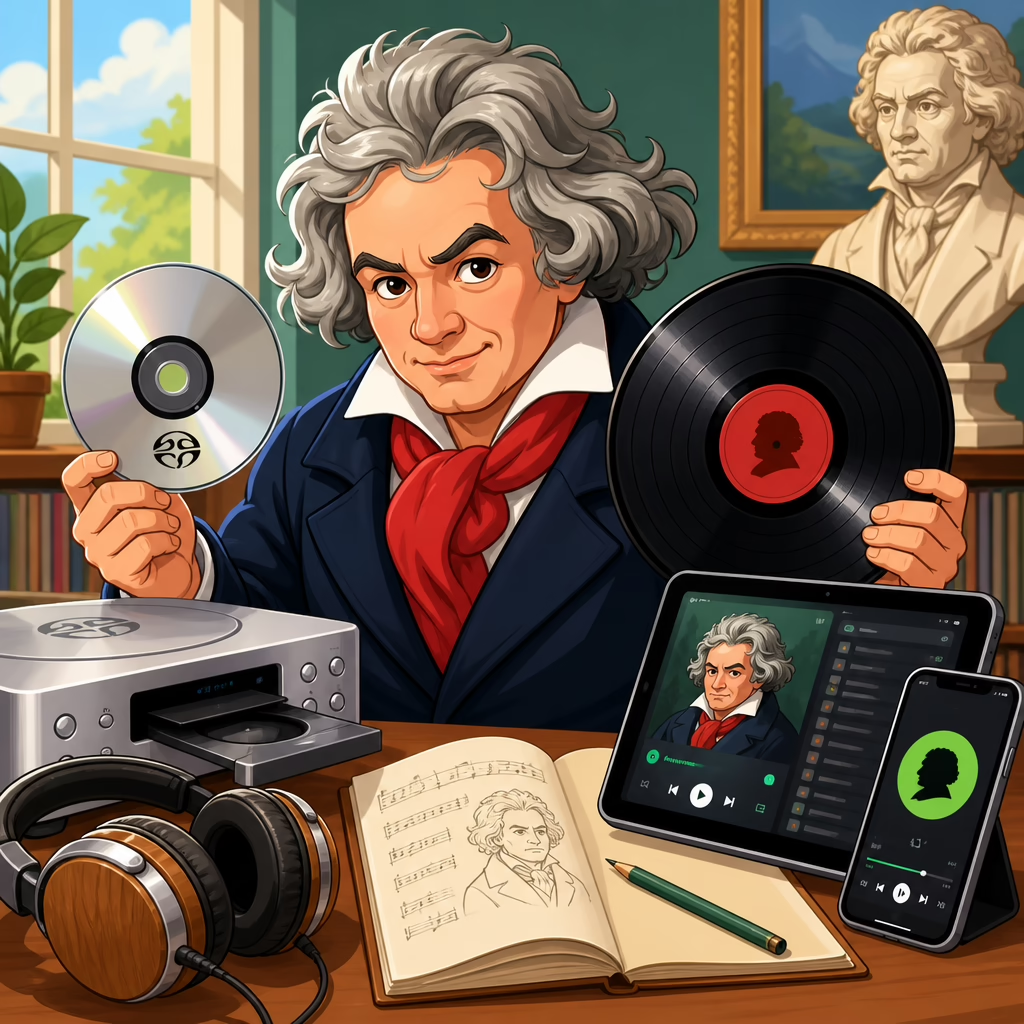
A Collector’s Guide to Beethoven on SACD Vinyl and Streaming
Building a serious Beethoven library across SACD, vinyl, and streaming requires more than chasing famous conductors: it means understanding how recording formats shape what you hear, what editions are available, and which releases reward repeated listening. In this collector’s guide to Beethoven on SACD, vinyl, and streaming, the focus is not on ranking symphony cycles in the abstract, but on helping you choose the right format for the right recording and the right listening goal. That distinction matters because the same Beethoven performance can sound revelatory on one medium and merely competent on another.
Collectors often use the same words to describe different things, so clear definitions help. SACD, or Super Audio CD, is an optical disc format that stores high-resolution stereo and sometimes multichannel audio, typically encoded as DSD. Vinyl refers to analog records, including original pressings, audiophile reissues, and newly cut editions sourced from analog or digital masters. Streaming covers subscription and download platforms delivering Beethoven in lossy, CD-quality, high-resolution PCM, and sometimes immersive formats. “Best” is therefore not a single category. It can mean best performance, best transfer, best pressing, best value, or best access to repertoire.
After years of comparing Beethoven editions in dedicated listening sessions, I have learned that format decisions are practical as much as aesthetic. A collector who wants the Vienna Philharmonic in a warm, large-scale analog perspective may prioritize vintage Deutsche Grammophon or Decca vinyl. Someone who values channel separation, low noise floor, and surround playback may favor SACD from Pentatone or Channel Classics. A listener exploring ten different Eroica recordings in one evening will likely get the greatest advantage from streaming. Each route serves a different purpose, and confusion starts when people expect one format to excel at everything.
Beethoven especially rewards format awareness because his discography spans nearly every recording era, from shellac transfers to modern high-resolution sessions. The music also exposes weaknesses quickly. The opening of the Fifth Symphony tests transient attack and dynamic contrast. The Seventh demands rhythmic grip and bass definition. The Ninth reveals whether a system can hold together massed chorus, soloists, and orchestra without congestion. Piano sonatas raise another challenge: close microphone placement, hammer noise, and room resonance become obvious in ways casual listeners often underestimate. For collectors, choosing well means matching format characteristics to these musical demands.
How format changes the Beethoven listening experience
SACD’s main advantage for Beethoven is not magic warmth or exaggerated detail; it is stability. Good SACD playback gives a black background, wide dynamic range, and low distortion during complex tuttis. In practice, that matters in works such as the Missa solemnis or the Ninth Symphony, where climaxes can turn hard on ordinary CD issues. Many hybrid SACDs also include a standard CD layer, which makes them practical for collectors who want archival security without giving up compatibility. Labels such as BIS, Pentatone, Chandos, and Channel Classics have used the format especially well for orchestral and chamber Beethoven.
Vinyl offers a different kind of value. With the right pressing and setup, Beethoven on LP can present instrumental body, hall bloom, and a sense of continuous flow that many collectors find emotionally persuasive. That does not automatically mean more accurate. Inner groove distortion, off-center pressings, worn originals, and noisy surfaces are real liabilities, particularly in late quartets and piano sonatas where sustained tone and soft dynamics matter. Still, original or early pressings of classic cycles can be deeply satisfying artifacts, and mastering choices on LP often differ enough from digital reissues to justify owning both.
Streaming is the strongest format for breadth, comparison, and discovery. It lets you test interpretive differences quickly, compare remasters, and hear obscure historical performances that would be prohibitively expensive on physical media. The limitation is variability. Not every platform hosts the same mastering, metadata can be wrong, and album organization is often poor for collectors who care about session chronology, matrix information, or original couplings. Even high-resolution streams are only as useful as the mastering supplied. A 24-bit file from a brittle remaster remains brittle. Convenience does not replace discernment.
For a systematic way to evaluate interpretive and sonic differences within Beethoven symphony sets, it helps to use a consistent framework like the one outlined in this guide to comparing Beethoven symphony cycles like a critic. That kind of method becomes even more useful when formats complicate judgment. A lean period-informed recording on SACD may seem brighter than a plush analog LP, but brightness may come from orchestral forces, microphone placement, or hall acoustics rather than the medium itself. Serious collecting starts when you separate performance choices from format signatures.
What to buy on SACD first
If you are building a Beethoven collection on SACD, start with recordings made natively in high-resolution or transferred by labels with a strong engineering reputation. Modern cycles by labels such as BIS and Pentatone often justify the format because they capture genuine orchestral depth, precise imaging, and convincing bass extension. In chamber music, labels including Harmonia Mundi and Channel Classics have produced SACDs where string tone remains detailed without edge, a crucial balance in the late quartets. The ideal first purchases are recordings whose dynamic range and acoustic space clearly exceed what compressed streaming commonly delivers.
Multichannel SACD deserves special attention in Beethoven because the best surround mixes do not create gimmicks; they restore venue perspective. In the Pastoral Symphony, rear channels can carry hall decay and ambient field, making winds and lower strings easier to localize without unnatural spotlighting. The same applies to piano concertos, where the solo instrument should remain integrated with the orchestra rather than enlarged unnaturally. I recommend checking whether a release was mixed specifically for multichannel or simply repurposed, because thoughtful surround mastering makes a much bigger difference than the format logo alone.
Historical transfers on SACD are more controversial but can be excellent. Some labels have issued classic analog and even early mono performances on SACD using careful DSD mastering. When done well, the result is not “modernized” sound; it is lower digital grain, smoother treble, and more coherent orchestral texture than on older CD editions. However, source limitations remain. Tape hiss, microphone saturation, and constricted stage width do not disappear. Buy these for better preservation and playback quality, not because the format can turn a 1950s tape into a 2020s recording.
How to collect Beethoven on vinyl intelligently
Vinyl collecting becomes expensive fastest when buyers chase labels instead of specific cuts and pressings. With Beethoven, an original pressing is not always the best sounding option. Early stampers on Deutsche Grammophon tulip labels, Decca wide bands, Philips, EMI ASD, and Columbia can be outstanding, but condition is decisive. Groove wear from decades of mistracking will damage fortissimo strings and flatten dynamics. For this repertoire, I always prioritize clean surfaces, flat records, and documented mastering lineage over romantic ideas about age. A near-mint later pressing often beats a noisy first issue every time.
Pay close attention to whether a modern reissue was cut from analog tape or a digital file. An all-analog chain can yield excellent results, especially in orchestral Beethoven, but a high-resolution digital source is not automatically inferior if mastered well and pressed carefully. What matters is transparency from source to lacquer. Reissue labels that disclose engineers, tape sources, and cutting chains inspire far more confidence than vague marketing language. When information is absent, collector forums, Discogs notes, and label catalogs often help establish whether a reissue is genuinely distinctive or merely convenient.
| Format | Best use for collectors | Main strengths | Main cautions |
|---|---|---|---|
| SACD | Reference listening, multichannel, modern engineering | High resolution, low noise, strong dynamics, archival stability | Playback hardware required, catalog smaller than streaming |
| Vinyl | Classic analog recordings, tactile collecting, alternate mastering | Tonal richness, collectible pressings, large historical catalog | Surface noise, condition risk, storage and setup demands |
| Streaming | Discovery, comparison, broad access, budget listening | Huge catalog, instant access, playlist flexibility | Metadata errors, shifting availability, inconsistent mastering |
Some Beethoven repertoire is especially rewarding on vinyl. Mid-century symphony cycles, string quartets, and piano sonatas often benefit from LP mastering that emphasizes body and coherence over forensic detail. For example, a well-preserved analog pressing of a classic quartet recording can present blended upper strings more naturally than a sharply equalized digital remaster. By contrast, large choral works with extreme dynamic range may challenge both vintage cutting and budget turntables. Collect selectively. Vinyl is strongest where its strengths align with the music and where your playback system can support the medium properly.
How to use streaming without collecting blindly
Streaming is the most efficient audition tool a Beethoven collector has ever had, but it works best when used critically. Start by comparing at least two performances of the same work with different interpretive profiles: for instance, a period-instrument account against a modern symphony orchestra reading. Then compare the same performance across platforms if possible. Qobuz, Apple Music Classical, Idagio, and Tidal do not always carry identical masters. I have repeatedly found one service offering a more natural transfer while another hosts a louder, brighter remaster under nearly identical cover art.
Metadata discipline matters more in Beethoven than in many repertories. Movement titles are often truncated, opus numbers omitted, soloists buried, and remaster dates missing. Build your own listening log with conductor, orchestra, soloists, label, recording year, and platform. This small habit prevents expensive mistakes when you later buy an SACD or LP and realize the stream you admired was a different edition. Streaming should narrow your choices, not scatter them. The goal is to identify performances worth owning in durable form and to avoid buying famous names before you know which mastering actually suits you.
Lossless and high-resolution streaming can sound excellent, but system matching still matters. Ethernet is generally more stable than weak Wi-Fi, DAC quality remains audible, and volume matching is essential when comparing releases. Louder almost always seems better on first impression, especially in Beethoven overtures and symphonies where impact is immediate. Normalize levels and listen to three things: string texture in soft passages, brass hardness at climaxes, and the sense of space after final chords. These cues reveal whether a stream is merely vivid or genuinely faithful. A careful collector treats streaming as evidence, not authority.
Choosing by repertoire, not just by format
The smartest Beethoven collections are built repertoire by repertoire. Symphonies often justify multiple formats because comparative listening is central to enjoying them; you may want streaming for access, SACD for a modern reference cycle, and vinyl for a favored classic set. Piano sonatas are more format sensitive. If you value pedal nuance, room decay, and tonal color, excellent SACD or high-resolution streaming can outperform mediocre LP copies. String quartets sit in the middle: great vinyl can be intimate and glowing, while first-rate SACD preserves articulation and ensemble placement with exceptional precision.
Concertos and vocal works require another layer of judgment. In the piano concertos, balance between soloist and orchestra is everything, and some older vinyl masterings can either spotlight the piano too aggressively or tuck it too far back. On SACD, modern engineering often solves this elegantly. In Fidelio, the Missa solemnis, and the Ninth Symphony, text clarity and spatial organization become major factors, giving high-quality digital formats a real advantage. That said, many collectors still prefer legendary analog performances despite sonic compromises because interpretation remains the core value. Format should serve the performance, never replace it.
Budget also shapes smart decisions. If funds are limited, spend money where ownership matters and stream the rest. Buy physical editions of Beethoven recordings you return to repeatedly, especially when mastering quality, booklet essays, or multichannel content add long-term value. Stream exploratory repertoire and secondary comparisons. Over time, this hybrid approach produces a more coherent collection than impulsive buying. You avoid duplicate purchases, learn which labels consistently match your taste, and preserve shelf space for editions that genuinely deserve it. The best Beethoven library is not the biggest one; it is the one built with tested preferences and clear priorities.
A collector’s guide to Beethoven on SACD, vinyl, and streaming comes down to disciplined listening and format literacy. SACD is strongest when you want modern engineering, low noise, and sometimes superb multichannel realism. Vinyl shines when pressing quality, mastering, and analog character enrich already distinguished performances. Streaming wins for breadth, discovery, and side-by-side comparison, provided you verify metadata and do not mistake availability for quality. None of these formats is universally superior, and Beethoven’s vast discography is too varied for simple rules.
The practical lesson is straightforward: choose format according to repertoire, recording history, playback system, and how you actually listen. Use streaming to explore widely, SACD to secure reference editions, and vinyl to preserve or enjoy special masterings and historic artifacts. When you compare carefully, you hear past hype and start identifying which releases communicate Beethoven’s structure, energy, and emotional range most convincingly. That is the real benefit of collecting well.
Start with one work you know intimately, compare it across all three formats, take notes, and let your next purchase be guided by evidence rather than reputation.
Frequently Asked Questions
What makes SACD, vinyl, and streaming different when collecting Beethoven recordings?
Each format shapes the listening experience in a different way, and that matters a great deal with Beethoven because his music depends on dynamic contrast, orchestral weight, inner detail, and a convincing sense of structure over long spans. SACD is often the most appealing physical format for listeners who want modern high-resolution sound, especially in recordings with wide dynamics, realistic orchestral scale, and carefully engineered acoustic space. A strong SACD can reveal string texture, brass placement, hall ambience, and low-level detail that make a symphony or piano sonata feel more lifelike and less flattened.
Vinyl offers a different set of rewards. For many collectors, its appeal lies not only in sound but in edition history, mastering choices, pressing quality, and the tactile pleasure of living with a specific release. A great Beethoven LP can sound vivid, spacious, and emotionally gripping, particularly when the mastering preserves tonal richness and momentum. At the same time, vinyl introduces variables that matter to collectors: condition, cartridge matching, surface noise, off-center pressings, and the fact that some long works require side breaks that interrupt the musical arc.
Streaming is unmatched for access, comparison, and discovery. It lets you move quickly between performances, compare tempi, hear multiple remasterings, and sample rare or out-of-print interpretations before spending money on physical editions. The limitation is consistency. Catalogs change, mastering information may be incomplete, and the same performance can appear in multiple transfers of uneven quality. For a serious Beethoven library, the best approach is usually not choosing one format over the others, but understanding what each one does best: SACD for high-resolution immersion, vinyl for collectible and historically significant editions, and streaming for breadth, convenience, and repertoire research.
How should a serious collector decide which Beethoven recordings are best to buy on SACD rather than on vinyl or through streaming?
A useful rule is to match the format to the recording’s strengths and to your listening goal. SACD is often the best choice for recordings that benefit from modern engineering, large dynamic range, and stable imaging. That includes many recent symphony cycles, chamber recordings, and piano releases where the label paid special attention to acoustic realism and resolution. If your priority is hearing orchestral layers clearly, following Beethoven’s dense inner writing, or experiencing the impact of quiet-to-loud transitions without compression, SACD has a strong advantage.
Vinyl becomes especially attractive when the issue itself is historically important or when a particular analog mastering has developed a reputation among collectors. Some Beethoven performances are prized not simply because of interpretation, but because a specific pressing captures body, warmth, and presence in a way later digital reissues do not fully reproduce. In those cases, you are collecting an edition as much as a performance. That said, buying vinyl makes the most sense when you have a playback system capable of revealing those benefits and the patience to evaluate pressing condition and provenance carefully.
Streaming is ideal when you are in the comparison stage or when repertoire breadth matters more than ownership. If you want to hear five different approaches to the “Eroica,” compare fortepiano versus modern piano in the sonatas, or explore period-instrument Beethoven before committing to a purchase, streaming is enormously efficient. Many collectors use streaming as a scouting tool, then buy SACD for modern recordings they truly love and vinyl for landmark editions with collectible value. That strategy avoids format dogmatism and builds a library around use, not just prestige.
Is it better to collect complete Beethoven cycles or individual standout performances across formats?
For most collectors, individual standout performances are the smarter foundation, especially at the beginning. Complete cycles are appealing because they promise consistency and shelf order, but Beethoven often rewards selective collecting more than composer completism. A conductor who is superb in the Seventh Symphony may be less compelling in the Pastoral; a pianist who is revelatory in late sonatas may be less persuasive in the early works. Building from individual performances lets you choose the interpretation and format that best suit each piece rather than accepting a one-size-fits-all solution.
That said, complete cycles have real value. They can offer a unified interpretive viewpoint, consistent engineering, and better cost efficiency than buying major works one by one. On SACD, a complete cycle can be especially attractive if the recording team maintained high sonic standards throughout and if you want an integrated listening experience. On vinyl, complete cycles can be more complicated because quality may vary from pressing to pressing, and assembling the best editions can take time. On streaming, complete cycles are easy to sample, which makes them ideal for deciding whether a conductor’s overall conception actually holds together for you.
The strongest long-term strategy is often hybrid. Choose a few complete cycles that provide coherence and reference value, then supplement them with individual recordings that excel in specific works. This is particularly sensible with Beethoven, where performance style varies dramatically across generations, instruments, and schools of interpretation. A serious library benefits from contrast: traditional symphonic weight alongside period-informed clarity, modern piano brilliance alongside historically grounded fortepiano, and canonical readings alongside less obvious alternatives that deepen your perspective.
What should collectors pay attention to besides the performer’s reputation when evaluating a Beethoven release?
Performer reputation is only the beginning. Collectors should also look closely at recording date, engineering philosophy, remastering history, edition information, and the physical or digital source from which the release derives. Beethoven is especially sensitive to recording quality because so much of the musical argument depends on rhythmic tension, balance, and dynamic scale. A famous interpretation can feel underwhelming if the transfer is dull, compressed, or lacking focus, while a less celebrated performance can become indispensable if the sound reveals instrumental interplay and structural energy convincingly.
For SACD, pay attention to whether the release is a native high-resolution recording or a repackaging of older digital material. That distinction does not automatically determine quality, but it helps set expectations. Also consider whether the issue includes stereo, multichannel, or both, since multichannel can greatly enhance the sense of hall space in orchestral Beethoven. For vinyl, collector priorities expand further: original pressing versus reissue, mastering engineer, pressing plant, vinyl weight only as a secondary factor, and seller grading accuracy. Quiet surfaces and proper centering often matter more than marketing language.
With streaming, metadata quality becomes critical. You want to know exactly which performance and mastering you are hearing, not just the artist name and work title. Different platforms may host different transfers, and compilations can obscure source details. Reviews, label notes, and discographic databases are extremely useful here. In practical terms, the best Beethoven release is not merely the one attached to a famous name, but the one where interpretation, edition, and sound all support repeated listening. Serious collectors listen for staying power, not first-impression glamour.
How can a collector build a balanced Beethoven library without overspending or duplicating too many recordings?
The key is to collect with a plan rather than by impulse. Start by identifying core repertoire categories: symphonies, piano sonatas, string quartets, concertos, overtures, masses, and a few essential chamber works. Then decide what role each format will play in your library. Many collectors find it useful to designate streaming for discovery and comparison, SACD for modern reference recordings they expect to revisit often, and vinyl for historically significant or sonically distinctive editions worth owning as objects. That immediately reduces wasteful overlap.
Next, build in layers. Begin with a small number of reference performances in each major category rather than chasing every famous cycle at once. Live with them long enough to understand what you value: drive versus grandeur in the symphonies, lyrical warmth versus structural severity in the sonatas, modern-instrument polish versus period-informed articulation. Once your own taste becomes clearer, additional purchases become more targeted and meaningful. This also helps prevent the common collector mistake of buying multiple versions that serve the same purpose without truly expanding your perspective.
It is also wise to keep notes on specific editions, not just performances. Write down catalog numbers, mastering details, pressing information, and what you actually heard. A disciplined checklist can save significant money, especially when streaming versions, CD-derived reissues, SACD editions, and vinyl repressings all circulate under similar artwork. Finally, leave room in the budget for quality over quantity. A smaller Beethoven library chosen intentionally across SACD, vinyl, and streaming will usually give more long-term satisfaction than a larger one built around reputation alone. The best collection is one that invites return listening, deepens your understanding of the music, and makes each format earn its place.