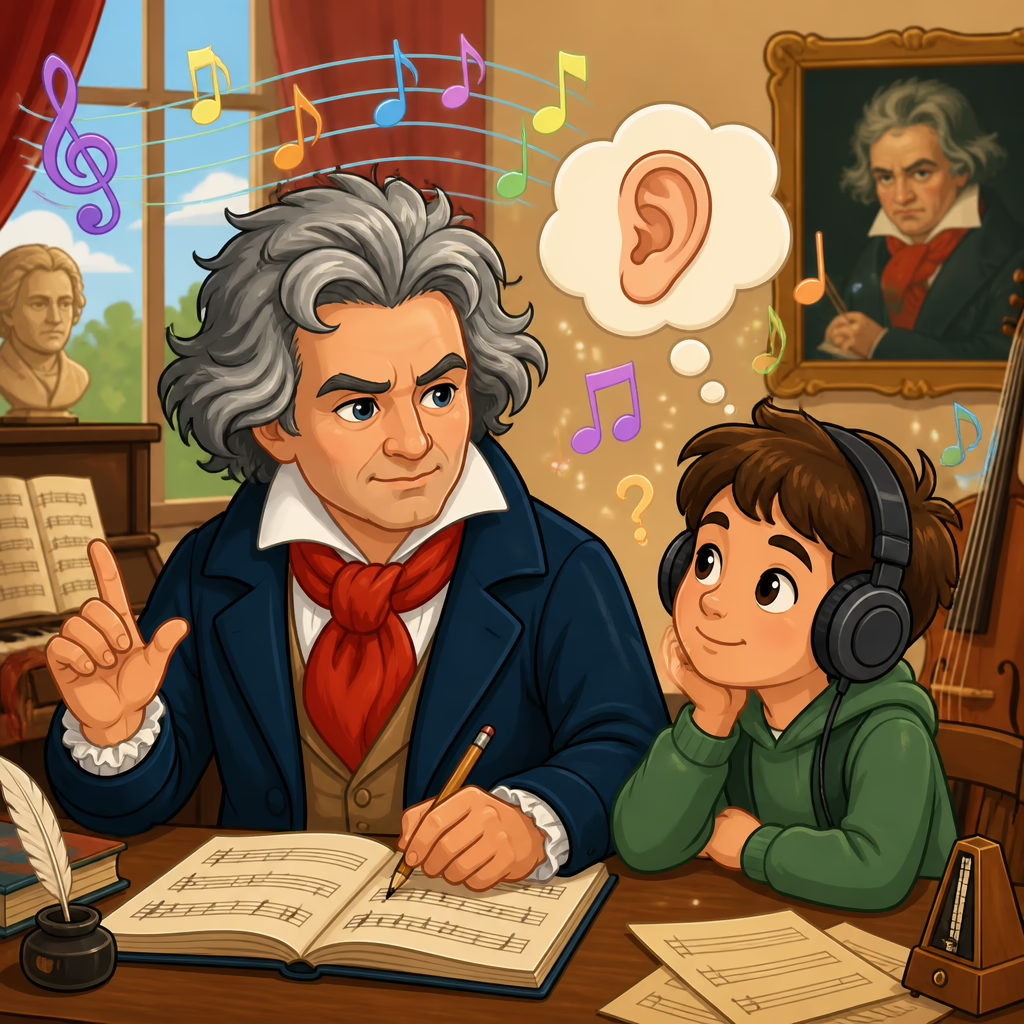
Beethoven Ear Training Exercises for Students
Beethoven ear training exercises for students build listening skills by turning short, memorable musical ideas into active classroom practice. In music education, ear training means learning to identify rhythm, melody, harmony, form, tempo, articulation, and expressive character by listening before relying on notation. When the source material comes from Ludwig van Beethoven, students gain more than abstract drills: they work with music that is structurally clear, emotionally vivid, and historically central to Western classical study. That combination matters because students often engage faster when the listening task feels connected to a recognizable composer rather than a worksheet of isolated intervals.
I have used Beethoven listening activities with elementary classes, middle school general music students, and beginner instrumentalists, and the same pattern appears each time. Students who hesitate to sing solfege from a page will confidently echo the opening motive of Symphony No. 5. They may not know the term motif at first, but they can hear that the famous short-short-short-long pattern returns, changes, and drives the piece forward. That is the entry point. Beethoven’s music gives teachers compact ideas that can be clapped, sung, moved, compared, and discussed in plain language. Ear training becomes less about testing and more about guided noticing.
For students, the value of Beethoven ear training exercises is practical. Better aural discrimination supports ensemble accuracy, sight-singing, dictation, phrasing, and historical listening. It also strengthens music memory. A student who can hear contour, pulse, and recurring patterns internally will learn repertoire faster and perform with more confidence. Beethoven is especially useful because his works often feature strong contrasts, clear cadences, repeated motives, and dramatic dynamic shifts. Those traits make his music ideal for focused listening tasks that ask simple but important questions: What changed? What came back? Did the melody move by step or leap? Did the sound become louder, fuller, faster, or more tense?
This article focuses on specific Beethoven ear training exercises for students, not on broad composer biography or generic musicianship routines. The goal is to help teachers, tutors, parents, and student musicians choose listening tasks that match developmental level and produce measurable growth. The best exercises are short, repeatable, and tied to one listening target at a time. When students can identify a motive, track a dynamic contrast, sing back a phrase ending, or distinguish major from minor in context, they are doing authentic aural work rooted in real music. Beethoven provides unusually effective material for that work.
Why Beethoven Works So Well for Ear Training
Beethoven’s music is effective for ear training because it combines clarity with expressive force. Many passages are built from concise cells that students can remember after one or two hearings. The opening of Symphony No. 5 in C minor is the clearest example, but it is not the only one. “Ode to Joy” from Symphony No. 9 uses mostly stepwise motion and balanced phrases, making it ideal for melodic echo and phrase comparison. Für Elise offers a recognizable minor-key opening and a distinctive contour that students can identify quickly. The second movement of Symphony No. 7 gives a steady pulse and repeating harmonic pattern useful for beat tracking and mood analysis.
From a teaching standpoint, Beethoven also offers contrast at manageable scale. Students can hear sudden dynamics, accents, sforzando attacks, rests, and textural changes without needing advanced theory vocabulary first. I often start by asking younger students to classify what they hear using pairs of opposites: smooth or detached, loud or soft, same or different, rising or falling, major or minor sounding. Later, those same observations can be relabeled with formal terms such as legato, staccato, forte, piano, sequence, cadence, tonic, and mode. This sequence respects how aural understanding usually develops: the ear notices before the intellect names.
Another advantage is transfer. Once students learn to hear motive, sequence, and phrase structure in Beethoven, they can apply those skills to band literature, choir music, film music, and popular song. Ear training succeeds when students stop treating listening as a composer-specific trivia game and begin hearing patterns everywhere. Beethoven is a strong training ground because his writing is disciplined enough to expose structure clearly. If a student learns to hear a repeated rhythmic cell transformed through dynamics and register, that listening habit will carry into later repertoire.
Core Beethoven Ear Training Exercises by Skill
Start with rhythmic motive recognition. Play the opening of Symphony No. 5 and ask students to tap the pattern, then identify where it returns. For beginners, the right answer can be physical rather than verbal: they raise a finger each time they hear the motive. For more advanced students, ask whether the motive stays on the same pitch, shifts by sequence, or moves between instruments. This exercise builds temporal focus and pattern memory. It also teaches that listening is active tracking, not passive exposure.
Use melodic echo with “Ode to Joy.” Sing or play the first phrase on a neutral syllable, then have students echo it. Because the melody is largely stepwise and phrase lengths are regular, students can succeed early. Next, ask them to identify whether the second phrase is the same, similar, or different from the first. This simple discrimination develops phrase awareness and prepares students for melodic dictation. On instruments, students can finger the contour before naming notes, which reduces cognitive overload.
For mode and expressive character, use Für Elise. Play the opening and ask students what emotional color they hear, then guide them toward the sound of minor. Students do not need abstract definitions first. They need repeated, contrasting experiences. Follow with a major-key excerpt such as “Ode to Joy” and ask which sounds brighter or more settled. When students pair sound with language consistently, major and minor become audible categories rather than memorized labels.
Dynamic and articulation listening works well with excerpts from Beethoven piano sonatas and symphonic openings. Students can mark a listening map with symbols for forte, piano, crescendo, accent, and rest. In class, I often use a one-minute excerpt and stop after each phrase so students can justify what they heard: “I marked accent because the attack was stronger and shorter.” That sentence shows real listening evidence. For a broader planning sequence that fits elementary settings, teachers can connect these tasks to a structured curriculum in Beethoven lesson plans for elementary music classes.
| Exercise | Beethoven Excerpt | Primary Skill | Best For |
|---|---|---|---|
| Tap and track the motive | Symphony No. 5, first movement opening | Rhythmic recognition and memory | Elementary through middle school |
| Sing the phrase back | Symphony No. 9, “Ode to Joy” | Melodic echo and contour hearing | Elementary, choir, beginners |
| Major or minor comparison | Für Elise and “Ode to Joy” | Mode identification | Elementary through early theory |
| Dynamic listening map | Piano sonatas or symphonic excerpts | Articulation and dynamics | General music and ensemble classes |
| Phrase ending prediction | Simple Beethoven themes | Cadence awareness | Middle school and beginner theory |
Adapting Exercises for Different Ages and Settings
Elementary students need brevity, repetition, and movement. A thirty-second excerpt is often enough. Ask them to march the beat during Symphony No. 7, freeze on rests, or show high and low contour with their hands during “Ode to Joy.” At this stage, success means accurate noticing, not technical terminology. If students can tell you that the music got suddenly loud, ended softly, or repeated the same idea, the ear training is working. Visual icons and call-and-response routines help maintain attention without diluting the listening goal.
Middle school students can handle comparison and short dictation. After hearing two Beethoven phrases, they can decide whether phrase B is identical, varied, or contrasting. They can notate rhythm with stick notation, trace melodic contour, or circle where a cadence sounds complete. This age group responds well to challenge when the task feels achievable. I have seen reluctant learners become invested when asked to “catch the returning idea” in Symphony No. 5 or identify which performance uses stronger contrast.
High school and beginner college students benefit from analytical listening. They can track motives across a development section, compare phrase structures, and describe harmonic tension in practical terms. A useful exercise is score-free listening first, score study second. Students hear the excerpt, describe what they noticed, then verify with notation. This order prevents visual dependence and trains the inner ear. Instrumental ensembles also gain from rehearsal-based ear training: brass can identify balance changes in tuttis, while strings can listen for articulation consistency in thematic returns.
Private teachers can individualize quickly. Pianists might sing left-hand bass motion before playing, violinists can echo interval patterns from themes, and voice students can practice phrase memory using textless solfege. Online instruction works too if the teacher limits each session to one excerpt and one objective. Shared audio, quick polls, and verbal reflection can replace much of the in-room routine. The principle stays constant across settings: isolate one aural target, choose a Beethoven excerpt that reveals it clearly, and require students to respond in a way that proves what they heard.
Common Mistakes and How to Improve Results
The most common mistake is asking students to hear too many things at once. If an exercise requires them to track rhythm, dynamics, form, and historical context in one hearing, most will guess. Effective Beethoven ear training exercises for students are narrow. One hearing might target beat versus rhythm. Another might target major versus minor. A third might target phrase repetition. Precision increases confidence, and confidence increases participation.
A second mistake is overexplaining before listening. Teachers sometimes define every term, summarize the piece, and preview every answer. That turns ear training into lecture. Students should hear first, respond second, and receive labels third. Beethoven’s music is strong enough to support discovery. Let students notice the repeated motive before you explain motivic development. Let them hear tension before you mention dominant harmony. The sequence matters.
Another issue is choosing excerpts that are too long. For training the ear, shorter is usually better. Twenty to sixty seconds allows repeated hearings without fatigue. It also makes assessment cleaner. You can ask a direct question and get a direct answer. Finally, avoid treating wrong answers as failure. If a student says two phrases are different when they are actually similar, ask what changed. Often they noticed articulation or register even if the contour stayed close. That response reveals partial listening success and gives you the next teaching step.
To improve results, keep a consistent routine. Use the same response methods for several weeks: tap, sing, trace, choose, describe. Repeated formats reduce procedural confusion and let students focus on sound. Track growth with simple checks such as “Can identify recurring motive in one hearing” or “Can distinguish major and minor with musical examples.” When progress is measured through listening behaviors rather than vague appreciation goals, Beethoven becomes a practical ear training resource rather than a ceremonial composer study.
Building Lasting Listening Skills Through Beethoven
Beethoven ear training exercises for students are effective because they connect foundational listening skills to music with unmistakable identity. Students learn rhythm by tracking motives, melody by echoing phrases, mode by comparing expressive color, and form by noticing return and contrast. These are not isolated academic tasks. They support ensemble rehearsal, independent practice, memory, and musical confidence. Beethoven works especially well because his themes are memorable, his contrasts are audible, and his structures reward repeated listening.
The strongest teaching approach is simple: choose a short excerpt, define one listening goal, require a clear response, and repeat over time. Younger students may move or clap; older students may sing, notate, or analyze. In every case, the ear should lead. When students can explain what they heard and why they heard it, they are developing durable musicianship. Start with one famous excerpt, keep the task focused, and build a sequence that makes listening visible. If you teach music or support a young musician, use Beethoven this week and listen for measurable growth.
Frequently Asked Questions
What are Beethoven ear training exercises for students, and why are they effective?
Beethoven ear training exercises are listening-based classroom activities that use short passages, motives, rhythms, and musical contrasts drawn from Beethoven’s music to help students recognize core musical elements by ear. Instead of starting with printed notation, students first listen for specific features such as pulse, rhythm patterns, melodic contour, phrase length, dynamics, articulation, harmonic tension, and expressive character. This approach is effective because Beethoven’s music often presents these elements with unusual clarity. His motives are memorable, his contrasts are strong, and his phrase structures are often easy for students to notice even when the music itself is artistically sophisticated.
For students, that combination is ideal. A brief Beethoven theme can become the basis for clapping rhythms, singing back intervals, identifying repeated motives, comparing major and minor color, tracking tempo changes, or describing how the music builds tension and release. These are not isolated drills with random sounds; they are connected to real repertoire, which makes the learning more meaningful and easier to remember. Students are not simply “guessing what they hear.” They are developing a disciplined habit of musical attention.
These exercises are also effective because they connect technical listening with musical understanding. A student might identify a repeated rhythmic pattern in a Beethoven excerpt, but then also discuss why that repetition creates drive, urgency, or excitement. That moves ear training beyond mechanical skill and into interpretation. In music education, that is a major advantage: students learn to hear structure and expression at the same time. Beethoven’s music supports this especially well because it is both architecturally strong and emotionally direct.
Which musical skills can students develop through Beethoven-based ear training?
Students can develop a wide range of foundational listening skills through Beethoven-based ear training. At the most basic level, they can strengthen pulse awareness, rhythm recognition, melodic memory, and pitch discrimination. For example, a teacher may play or sing a short Beethoven motive and ask students to echo it, identify whether it moves by step or leap, or determine whether the second version is the same or slightly altered. These simple exercises build accuracy, concentration, and confidence.
As students progress, Beethoven’s music can be used to develop more advanced aural skills. Students can learn to identify phrase structure, cadences, dynamic contrasts, articulation differences such as legato versus staccato, changes in tempo, and shifts in tonal color. They can also begin recognizing harmonic function at an age-appropriate level, such as hearing moments of stability and instability, tension and release, or the difference between a passage that sounds “finished” and one that sounds “open.” Beethoven’s writing is especially useful here because his musical ideas are often compact, repeated, and transformed in ways students can track with repeated listening.
Another important area is expressive listening. Beethoven gives students excellent material for describing character: heroic, lyrical, playful, dramatic, mysterious, or forceful. When students are taught to connect what they hear to expressive vocabulary, they become more thoughtful musicians and stronger performers. They start to understand that ear training is not only about naming intervals or rhythms; it is about hearing how musical details create meaning. In that sense, Beethoven-based listening work supports theory, performance, composition, and music appreciation all at once.
How can teachers use Beethoven ear training exercises in the classroom?
Teachers can use Beethoven ear training exercises in highly practical, flexible ways across general music, choir, band, orchestra, piano, and music theory settings. A strong starting point is to choose a very short excerpt with a clearly defined musical feature, such as a repeated rhythm, a simple motive, a contrasting articulation, or a strong dynamic shape. Students can listen first without notation and respond physically by clapping, tapping the beat, conducting, moving to the phrase, or raising hands when they hear a repeated idea. This keeps the work active and lowers the barrier for less experienced readers.
From there, teachers can sequence activities from simple to more analytical. For instance, students might first identify whether two played examples are the same or different, then echo the rhythm, then sing the contour on a neutral syllable, and finally describe the expressive effect of the passage. Older or more advanced students can notate a short rhythm from memory, identify a cadence type at a basic level, compare two interpretations, or discuss how Beethoven develops a motive across a larger section. This gradual release model helps students succeed while still moving toward deeper understanding.
Teachers can also integrate Beethoven listening into warm-ups, bell-ringers, rehearsal breaks, small-group stations, and assessment tasks. A choir director might use a Beethoven phrase to practice inner hearing before singing. A band director might isolate rhythmic figures from a Beethoven-derived arrangement to sharpen ensemble precision. A general music teacher might use famous excerpts to lead discussions of form and character. The key is to keep the listening goal specific. Rather than asking students to hear everything at once, teachers should focus attention on one or two musical elements per exercise. That makes the activity purposeful, measurable, and much more effective.
Are Beethoven ear training exercises appropriate for beginners, or are they better for advanced students?
Beethoven ear training exercises can work extremely well for beginners as long as the material is carefully selected and the task is developmentally appropriate. The name “Beethoven” can make the repertoire seem advanced, but many of his most useful teaching examples are built from short, clear, memorable ideas. Beginners do not need to analyze full sonata forms or identify complex harmonic procedures. They can simply listen for steady beat, repeated patterns, loud versus soft, short versus long sounds, upward versus downward melody, and contrasting moods. Beethoven’s concise musical language often makes those distinctions easier to hear than in more densely textured music.
For intermediate students, the same excerpts can be revisited with richer goals. They might identify phrase endings, compare motives, detect small melodic changes, or distinguish tonic and dominant functions by ear. For advanced students, Beethoven becomes equally valuable in more sophisticated work involving formal listening, motivic transformation, harmonic motion, stylistic interpretation, and dictation. In other words, the repertoire scales well. The difference is not usually the music itself, but the listening question the teacher asks.
This adaptability is one of the strongest arguments for using Beethoven in ear training. A beginning student and an advanced student can hear the same excerpt but engage with it at different levels. The beginner may clap the rhythmic motive, while the advanced student explains how that motive is sequenced, fragmented, or used to create structural momentum. That makes Beethoven especially useful in classrooms with mixed ability levels. Teachers can differentiate by complexity of response without needing entirely separate source material.
What makes Beethoven especially valuable compared with generic ear training drills?
Generic ear training drills can be useful for isolating a single skill, but Beethoven offers something broader and often more educationally powerful: context. When students work with actual Beethoven excerpts, they are not just training the ear in the abstract. They are learning how real musical ideas function within style, expression, and structure. A rhythm is no longer just a rhythm; it is part of a motive that drives a phrase forward. A dynamic contrast is not merely an isolated change in volume; it helps create drama. This kind of contextual listening leads to stronger musical understanding and better retention.
Beethoven is especially valuable because his music often balances accessibility with depth. Many of his themes are easy to remember after only one or two hearings, which is ideal for student listening tasks. At the same time, those themes are rich enough to support repeated study. Students can return to the same excerpt to hear new details over time: motive, phrase shape, accompaniment texture, harmonic direction, formal role, and expressive impact. That layered learning is much harder to achieve with decontextualized drills that are designed only to test recognition.
There is also an important cultural and historical benefit. Using Beethoven in ear training introduces students to one of the central figures of Western art music while keeping the experience active rather than purely informational. Students are not only told that Beethoven is important; they discover why his music has endured by hearing its clarity, power, and inventiveness for themselves. In the classroom, that creates a more integrated form of music education, one that combines listening skill, historical awareness, stylistic understanding, and artistic engagement in a single exercise.