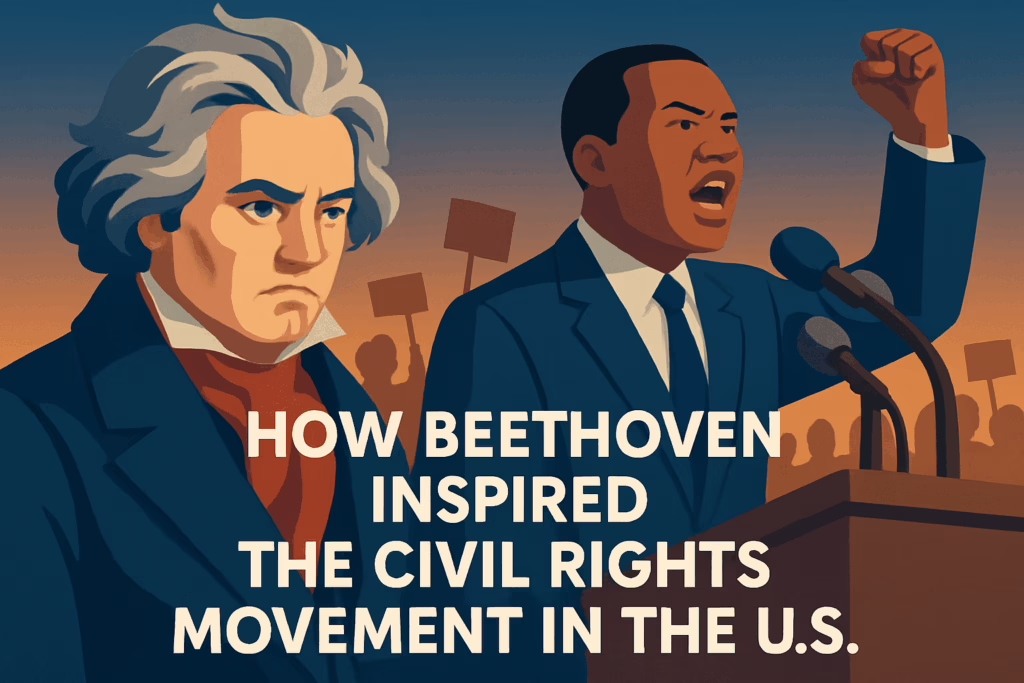
How Beethoven Inspired the Civil Rights Movement in the U.S.
Introduction to Beethoven’s Influence on the Civil Rights Movement
Beethoven, a towering figure in the world of classical music, was born in Germany in 1770. His compositions have transcended time, resonating with audiences across centuries and continents. However, Beethoven’s legacy extends beyond the realm of music; his works have served as a powerful inspiration to various social movements, notably the Civil Rights Movement in the United States. The Civil Rights Movement was a pivotal era between the 1950s and 1960s focused on ending racial segregation and discrimination against African Americans and securing legal recognition of their citizenship rights. Activists and leaders within the movement found a profound kinship in Beethoven’s compositions, drawing strength, hope, and motivation from his music during their struggle for justice and equality.
The relationship between Beethoven’s music and the Civil Rights Movement might initially seem like an unlikely pairing. Still, delving into the core values and themes of Beethoven’s work reveals striking parallels. His music exudes an ethos of defiance, triumph over adversity, and the universal spirit of freedom—all themes that were central to the Civil Rights Movement. Understanding how Beethoven’s music inspired this monumental movement can offer insights into how art and culture can transcend their original contexts to ignite social change. This exploration not only highlights Beethoven’s profound influence but also underscores the enduring impact of music as a catalyst for societal transformation.
Beethoven’s Legacy as a Cultural Unifier
One of the key ways Beethoven’s music influenced the Civil Rights Movement was through its role as a cultural unifier. The universal appeal of his compositions transcended cultural and racial boundaries, which allowed individuals from different backgrounds and races to come together, united in the shared experience of his music. His Symphony No. 9, in particular, with its choral finale set to Friedrich Schiller’s poem “Ode to Joy,” became a symbol of hope and unity. The lyrics speak of universal brotherhood—a theme of profound relevance to the Civil Rights Movement.
During the 1960s, prominent civil rights leaders like Martin Luther King Jr. and organizations including the Southern Christian Leadership Conference saw the unity exemplified by Beethoven’s work as a metaphorical soundtrack for their cause. King’s speeches often mirrored the hope and determination found in Beethoven’s compositions, encapsulating the drive for a harmonious society predicated upon equality and human rights. The message of unity in diversity reverberated deeply with activists seeking to bridge racial divides and foster an inclusive society.
Prominent Figures Who Drew Inspiration from Beethoven
Beethoven’s influence on the Civil Rights Movement can also be illustrated through specific figures who derived inspiration and fortitude from his work. One notable example is Marian Anderson, an African American contralto singer whose performances helped erode racial barriers in the arts. Anderson made history in 1939, when, with the support of Eleanor Roosevelt, she performed at the Lincoln Memorial after being denied a venue by the Daughters of the American Revolution due to her race. At this iconic concert, she sang classical pieces, including those by Beethoven, before an integrated audience of over 75,000 people. Her rendition of Beethoven solidified her as an embodiment of resilience and grace, reinforcing Beethoven’s music as a beacon of the fight for civil rights.
Similarly, Paul Robeson, a singer, actor, and civil rights activist, frequently performed songs by Beethoven and often referenced the composer’s works during his own activism. Robeson, whose artistry was inseparable from his advocacy, appreciated the power of Beethoven’s music to articulate the deep yearning for equality and justice—a cause with which Robeson was intimately involved. Through his interpretation of Beethoven, Robeson demonstrated the ability of music to not only entertain but also induce contemplation and spur social action.
Beethoven’s Call for Freedom and Individual Expression
Another significant aspect of Beethoven’s influence was his passionate articulation of freedom and individual expression, which resonated deeply during the Civil Rights Movement. Beethoven himself faced significant barriers and challenges throughout his life, including hearing loss, which isolated him from the outside world. Despite these struggles, he continued to compose music that celebrated the human spirit’s resilience and creativity.
His Piano Sonata No. 23, commonly known as the “Appassionata,” encapsulates a fervent sense of struggle and liberation—an emotional crescendo echoed in the aspirations of the Civil Rights Movement. Beethoven’s personal commitment to freedom and his revolutionary spirit found a parallel in the activists’ determination to overcome systemic injustice and advocate for fundamental rights. Through the metaphor of Beethoven’s personal challenges, activists could draw parallels to their own fight against oppression, finding encouragement in the composer’s undaunted resolve.
Table of Beethoven’s Inspirational Influence
| Aspect of Beethoven’s Influence | Representative Example | Impact on the Civil Rights Movement |
|---|---|---|
| Cultural Unifier | Symphony No. 9 “Ode to Joy” | Symbolized unity and harmony for civil rights advocates |
| Inspirational Figures | Marian Anderson’s Lincoln Memorial concert | Showed barrier-breaking power of classical music |
| Call for Freedom | Piano Sonata No. 23 “Appassionata” | Emphasized resilience and individual expression |
The Enduring Legacy of Beethoven’s Music
The legacy of Beethoven’s music and its impact on the Civil Rights Movement continue to endure long after the movement’s heyday. His compositions are frequently performed at events dedicated to commemorating the achievements and sacrifices of civil rights activists. Moreover, the monumental struggle of the Civil Rights Movement and Beethoven’s music together serve as essential reminders of the breakthroughs that can emerge from perseverance and hope.
Today’s generations can reflect on the past and draw inspiration from Beethoven’s emphasis on unity, courage, and equality as they face their own challenges. As society continues to grapple with issues of injustice and inequality, the teachings derived from both Beethoven’s work and the civil rights struggle offer valuable lessons for collective progress. The music of Beethoven affirms not only the transformative power of the arts but also the enduring potential for change embedded in human creativity and resilience.
Summarizing Beethoven’s Lasting Impact
Beethoven’s profound influence on the Civil Rights Movement in the U.S. illustrates the intersection of art and activism. His music transcended its historical and cultural origins to inspire a movement centered on profound societal transformation. Beethoven’s themes of unity, individual freedom, and resilience found new relevance within the movement, inspiring both leaders and participants in their quest for justice and equality.
Understanding how Beethoven influenced the Civil Rights Movement reinforces the idea that art can play a vital role in addressing social issues, breaking down societal barriers, and fostering a spirit of unity among diverse individuals. Reinforcing the concept of music as a powerful force for social change, his work continues to encourage listeners to reflect upon their roles in society and their potential to drive impact.
As we confront the challenges of the modern world, let us draw strength from Beethoven’s enduring legacy and the courage of those who fought for civil rights. Allow his music to remind us not only of past triumphs but also of the endless possibilities for change and progress. Engaging with Beethoven’s work can serve as a step toward honoring those who stood on the forefront of the civil rights battle and can inspire us to continue their efforts toward attaining a more just and equitable world.
May we take this as a call to action—to use art, culture, and individual dedication as vehicles of change, toward a society that embodies the universal values of harmony and human dignity championed by both Beethoven and the pioneers of the Civil Rights Movement.
Frequently Asked Questions
1. How did Beethoven’s music influence the Civil Rights Movement in the United States?
Beethoven’s music resonated deeply with the ethos of the Civil Rights Movement due to its themes of triumph over adversity, human struggle, and yearning for freedom. During the movement, leaders and activists often drew parallels between Beethoven’s perseverance in the face of personal challenges—such as his hearing loss—and the struggle for racial equality. His Ninth Symphony, with its “Ode to Joy,” became an anthem for unity and the universal brotherhood of all humanity, embodying the dreams of those fighting for civil rights. Moreover, the music served as a source of strength and motivation, reminding activists of the power and resilience needed to achieve societal change.
2. Which specific pieces of Beethoven were particularly significant during the Civil Rights Movement?
While many of Beethoven’s compositions were influential, the Ninth Symphony, in particular, held special significance. Its final movement, “Ode to Joy,” symbolized hope and the triumph of the human spirit over oppression, making it a universal anthem for peace and solidarity. Additionally, his Fifth Symphony, with its iconic opening motif often interpreted as “fate knocking at the door,” resonated with the urgency and determination of the movement. These pieces not only inspired but also provided solace and a sense of shared struggle among those advocating for change.
3. Were there specific events or moments in the Civil Rights Movement where Beethoven’s music played a pivotal role?
Beethoven’s music was integral to various pivotal moments in the Civil Rights Movement. Notably, it was played during rallies, marches, and gatherings to uplift spirits and rally the masses. For example, the March on Washington for Jobs and Freedom in 1963, where Dr. Martin Luther King Jr. delivered his historic “I Have a Dream” speech, included performances of Beethoven’s works that underscored the event’s call for unity and justice. The music echoed the ideals of hope and perseverance in the face of adversity, providing an emotional backdrop that resonated deeply with participants and listeners alike.
4. How did Beethoven’s personal life and challenges inspire activists within the Civil Rights Movement?
Beethoven’s personal life, marked by profound challenges such as his deteriorating hearing and personal struggles, drew admiration and provided inspiration for activists. His relentless pursuit of his art despite his deafness became a metaphor for the indomitable spirit required to fight systemic racism and inequality. Activists saw parallels between Beethoven’s perseverance and their own struggles against entrenched social barriers. His ability to transcend personal limitations through his music inspired a similar transcendence among those who faced prejudice, discrimination, and social injustice, reinforcing the belief that change, though challenging, was possible.
5. Did any Civil Rights leaders directly cite Beethoven as an influence, and if so, how?
Yes, several Civil Rights leaders acknowledged Beethoven’s influence. Dr. Martin Luther King Jr., for instance, was known to appreciate classical music and occasionally referenced classical composers, including Beethoven, in his speeches and writings as exemplars of resilience and the ability to communicate universal truths. Coretta Scott King, a trained singer and advocate in her own right, often highlighted the role of music in the movement and Beethoven’s works as symbols of the broader struggle for human rights. These leaders recognized the universal language of Beethoven’s music as a unifying force that transcended racial boundaries, echoing their vision for a just and equitable society.