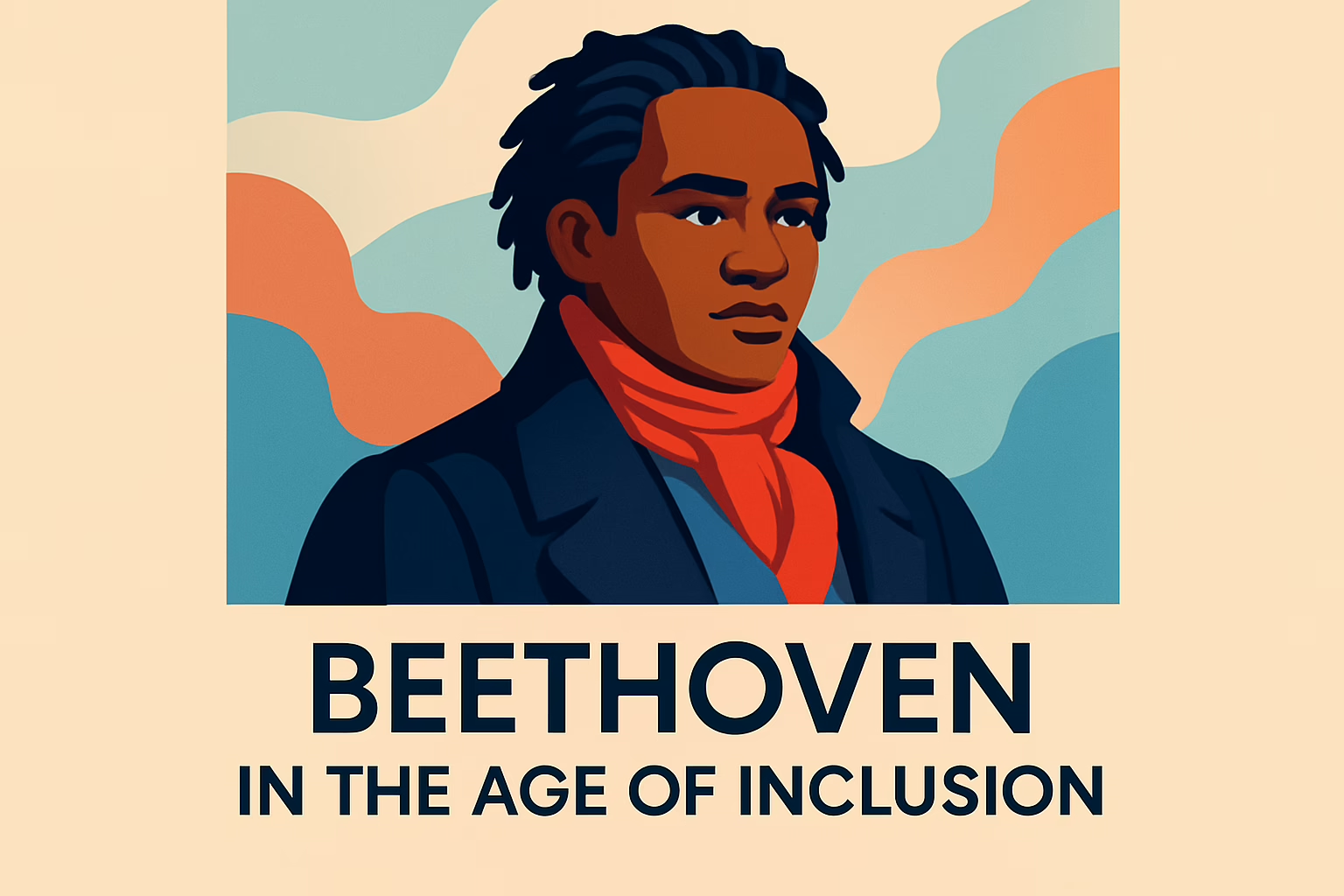
Reinterpreting Beethoven in the Age of Inclusion
The works of Ludwig van Beethoven have long been regarded as pillars of classical music. His compositions, from symphonies to sonatas, are celebrated for their complexity, emotion, and profound depth. Yet, as we move further into the 21st century, there is an increasing call to reinterpret and recontextualize these masterpieces to reflect the diverse society in which we live. But what does it mean to reinterpret Beethoven’s work? Put simply, it involves examining and presenting his music through the lens of modern inclusivity, embracing different cultural, social, and artistic perspectives. This endeavor matters significantly as it allows us to invite more audiences into the rich world of classical music, ensuring that it is not only preserved but also revitalized for future generations.
In past centuries, classical music was often an elite art form, accessible primarily to certain social classes and often dominated by European white males. Today, however, there’s a growing acknowledgment that the music of iconic composers like Beethoven transcends its origin, offering a universal language that speaks to many. As such, Beethoven’s work is ripe for reinterpretation, and doing so in an inclusive manner—where various voices and backgrounds are appreciated—will enable the music to resonate more broadly. By exploring new dimensions in performance and analysis, we create opportunities for fresh insights and understandings, ensuring that Beethoven’s musical genius continues to illuminate for all people, everywhere.
The Relevance of Inclusive Reinterpretations
Inclusive reinterpretation of Beethoven’s work is not merely an academic exercise—it has real-world implications. Today’s cultural landscape demands that we break down barriers and widen the reach of classical music. An example of this is the recent symphonic performance collaboration in New York City that spotlighted Beethoven’s Ninth Symphony, incorporating African instrumental and vocal traditions alongside the original Western orchestration. This approach offered a unique perspective and illustrated the symphony’s central themes of brotherhood and unity, resonating powerfully with a diverse audience.
Moreover, renowned conductor Marin Alsop, a formidable proponent of inclusive interpretations, champions the notion that including diverse voices in Beethoven’s music uncovers layers that might otherwise be overlooked. Her work with the Baltimore Symphony Orchestra, bringing in musicians from varied backgrounds, has shown that such collaborations can deepen the communal appreciation for classical pieces and challenge traditional interpretations.
Changing Performance Practices
Performance practice is a crucial area through which Beethoven’s music can be inclusively reimagined. Traditional performances often adhere strictly to the historical norms of Beethoven’s era, but many contemporary musicians are now exploring how different performance styles and instruments from various cultures can inject new life into familiar compositions.
For instance, the Silk Road Ensemble, founded by cellist Yo-Yo Ma, aims to explore the interchange between cultures. In their performances, Beethoven’s music intersects with traditional music from the Middle East, Asia, and elsewhere, creating a unique tapestry of sound that captures the essence of globalization. This approach not only highlights the adaptability of Beethoven’s music but also offers listeners an opportunity to experience it through an expansive cultural dialogue.
Diverse Musical Analysis
Beyond performances, scholarly analysis of Beethoven’s work can also adopt a more inclusive perspective. Musicologists around the world are revisiting Beethoven’s compositions, interpreting them in contexts beyond the traditional Western scope to uncover broader meanings that resonate with various cultural narratives.
One aspect that has drawn attention is Beethoven’s use of motifs that convey universal emotions, such as struggle, joy, and peace. By analyzing these elements through the lenses of cultures that value oral storytelling or communal music-making, new insights into these age-old compositions emerge. Scholars have applied African musicological methodologies, which prioritize rhythm and communal participation, offering fresh perspectives on works like Beethoven’s ‘Eroica’ Symphony, known for its thematic explorations of heroism and resilience.
Technology and Accessibility
Technology plays a pivotal role in expanding the accessibility of Beethoven’s music to a broader audience. Here, inclusivity intersects with digital innovation, allowing people to engage with classical music uniquely and personally. Online platforms provide a space for creators to adapt Beethoven’s work using digital tools, reaching individuals who might otherwise be excluded due to geographical, financial, or social constraints.
For example, initiatives like the Open Symphonic Project use virtual reality to transport users to the center of a live Beethoven performance, enabling them to explore the music interactively. This technology democratizes access to musical experiences, ensuring that individuals who may not have the opportunity to attend live performances can still participate in and appreciate classical music.
The following table showcases the various ways technology enhances the accessibility and inclusivity of Beethoven’s music:
| Technological Tool | Impact on Accessibility |
|---|---|
| Virtual Reality (VR) | Immersive experience for remote audiences |
| Streaming Services | Immediate access to performances worldwide |
| Online Courses | Educational content for global learning |
Educational Initiatives and Community Engagement
Educational initiatives also play a vital role in facilitating an inclusive reimagining of Beethoven. By integrating Beethoven’s compositions into diverse educational programs, stakeholders can offer a more comprehensive understanding of the composer’s works and their relevance across cultures.
Organizations like El Sistema, which began in Venezuela, provide music education to young people from underserved communities, using Beethoven’s music as a tool for social development and cultural connection. These programs empower students with the opportunity to engage with classical music in ways that are meaningful to them, offering pathways to personal and communal growth.
Additionally, community-centered projects, such as neighborhood orchestras and ensemble performances, bring Beethoven’s music into local contexts. By performing in non-traditional venues like community centers and schools, these projects transcend the stereotype that classical music is an art reserved for concert halls, making it accessible and relevant to various community members.
Redefining Classical Music Traditions
Reinterpreting Beethoven’s music in an inclusive manner ultimately challenges the norms of classical music traditions, pushing boundaries and encouraging a creative rethinking of the genre. This process allows for the blending of genres, promoting cross-cultural collaborations where Beethoven’s music serves as a bridge between different musical traditions.
Examples abound, such as the East-West Chamber Orchestra’s rendition of Beethoven’s pieces, accompanied by traditional instruments from Asia and Africa. By doing so, they redefine the edge of classical music and illustrate the transformative power of cross-genre interpretation.
This innovative approach encourages an intersection of ideas and traditions, underscoring the timeless nature of Beethoven’s compositions. It fosters a vibrant reflection of society’s evolving cultural fabric and affirms the universal appeal of his music across generations.
Summarizing Key Takeaways
The reinterpretation of Beethoven’s work in today’s age of inclusion is a momentous step towards harnessing the universal nature of music to transcend entrenched barriers. By embracing diverse perspectives in performance, analysis, technology, education, and tradition, we ensure that Beethoven’s compositions continue to inspire and resonate globally.
For readers, the main benefit of this inclusive approach is the enriched understanding and appreciation of classical music as a continually evolving art form. It highlights that music untethered by cultural constraints offers endless possibilities for personal connection and societal growth.
To delve further, consider attending concerts or accessing recordings that reflect an inclusive approach to Beethoven’s music. Engage with educational programs that embrace cross-cultural perspectives, or explore virtual platforms that bring these magnificent works directly to you.
In conclusion, reinterpreting Beethoven in the age of inclusion showcases the potential for classical music to unite and empower. By actively supporting and participating in these efforts, we contribute to a vibrant, diverse, and harmonious cultural future.
Frequently Asked Questions
1. What does “reinterpreting Beethoven in the age of inclusion” mean?
Reinterpreting Beethoven’s work in the current age of inclusion refers to the process of examining and presenting his music through modern lenses that reflect the diverse and multicultural world we live in today. This approach involves recognizing that every listener’s background and experiences can influence the understanding and appreciation of Beethoven’s compositions. By reinterpreting his work, musicians, scholars, and cultural organizations aim to break down barriers that have historically limited access to classical music, offering a more inclusive and accessible experience.
This reinterpretation can manifest in various ways. For instance, it might include performances by diverse musicians who bring their unique stylistic influences to his music, or programming that places Beethoven’s work alongside the works of underrepresented composers. This process also involves acknowledging the socio-cultural dynamics of both Beethoven’s time and today, ensuring that interpretations do not exist in a vacuum but rather engage with the world around us.
2. How does cultural diversity impact the reinterpretation of Beethoven’s music?
Cultural diversity fundamentally impacts the reinterpretation of Beethoven’s works by bringing a multitude of perspectives and interpretations to his compositions. When musicians from different cultural backgrounds engage with Beethoven’s music, they infuse it with their own cultural nuances, rhythms, and interpretative styles, offering fresh and varied takes that can broaden our understanding of his work.
These diverse interpretations may highlight different aspects of Beethoven’s compositions or offer novel ways of expressing the emotion and complexity inherent in his music. Additionally, recontextualizing Beethoven in a multicultural setting encourages conversations about representation within classical music spaces, thus prompting efforts to ensure that concert halls and educational institutions become more welcoming to all.
3. Why is it important to contextualize Beethoven’s works for today’s audiences?
Contextualizing Beethoven’s works for contemporary audiences is vital for several reasons. First, it fosters a more inclusive cultural landscape within classical music by highlighting both the universal and particular elements of his compositions. When we consider the historical, social, and political circumstances of Beethoven’s time, along with those of our own, we can appreciate how these factors influence our interpretation and reception of his music.
Such contextualization brings relevance to Beethoven’s works in a way that resonates more deeply with modern audiences, who may otherwise feel alienated by classical music’s often outdated traditions. This process of contextualization also serves educational purposes, helping audiences to understand not only Beethoven’s genius but also the relevance of classical music in the ongoing dialogue about cultural inclusivity and social change.
4. In what ways are musicians and orchestras adapting Beethoven’s compositions for inclusivity?
Musicians and orchestras are adapting Beethoven’s compositions for inclusivity through various innovative approaches. One prominent method is collaborative performances, wherein orchestras partner with artists from diverse musical genres—such as jazz, world music, and electronic music—to blend these styles with Beethoven’s classical elements. This creates a fusion that respects the original compositions while inviting new interpretations and audiences.
Additionally, some orchestras are making conscious efforts to diversify their programming by integrating works by composers from underrepresented communities alongside Beethoven’s. This not only gives these composers the recognition they deserve but also provides audiences with a richer, more varied musical experience. Moreover, educational outreach programs aim to make Beethoven’s music accessible to broader demographics, breaking down financial and cultural barriers to attendance and participation in classical music events.
Furthermore, there is a growing emphasis on digitization and online platforms that make Beethoven’s music available to anyone with internet access, further broadening the audience base and encouraging global participation in classical music appreciation.
5. How does reinterpreting Beethoven contribute to broader societal discussions about inclusion?
Reinterpreting Beethoven contributes to broader societal discussions about inclusion by challenging the traditional hierarchies and exclusive practices that have long dominated the classical music world. It encourages the reconsideration of who gets to tell the story of classical music and who belongs in its spaces. By doing so, it actively promotes diversity, equity, and inclusion within the arts.
This act of reinterpretation encourages reflection on societal values and systems of privilege that influence which narratives and artists are given prominence. It opens up opportunities for underrepresented voices to be heard and validated, fostering a sense of belonging and representation for a wider audience.
In a world where conversations about diversity and inclusivity are crucial, reinterpreting Beethoven serves as a microcosm of larger societal shifts towards equity, inspiring broader dialogue and actions that challenge existing norms and advocate for a just and inclusive cultural ecosystem.