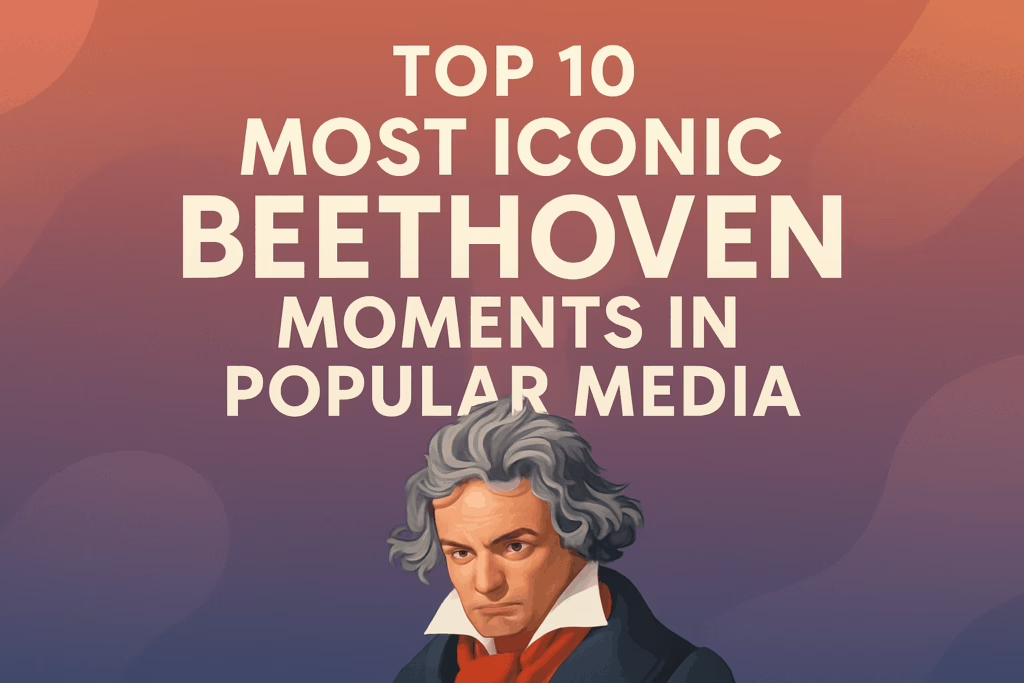
Top 10 Most Iconic Beethoven Moments in Popular Media
When it comes to classical music, few names carry as much weight as Ludwig van Beethoven. Born in 1770, Beethoven’s compositions have transcended time and space, influencing the very fabric of both classical and modern music. But his influence doesn’t stop at concert halls and symphonies. Beethoven’s masterpieces have permeated popular media, appearing in films, television shows, commercials, and even video games. His music’s dynamic range and emotional depth make it the perfect accompaniment to poignant scenes, epic battles, and even moments of sheer happiness or despair in storytelling. Understanding Beethoven’s poignant presence in popular media allows us to appreciate not just his genius, but also how his work continues to impact culture today.
So why does it matter? For one, here is a chance to understand the versatility of Beethoven’s compositions and their ability to connect with audiences on an emotional level, regardless of the medium. Furthermore, examining these iconic moments in popular media can provide insight into how classical music remains relevant, affecting modern audiences just as profoundly as it did two centuries ago. Let’s delve into the top 10 iconic Beethoven moments immortalized in popular media to appreciate the enduring nature of his music.
1. “A Clockwork Orange” and Beethoven’s Ninth Symphony
Stanley Kubrick’s “A Clockwork Orange,” released in 1971, is renowned for its unsettling yet masterful use of imagery and music. One of the most iconic uses of music in the film is Beethoven’s Ninth Symphony, also known as “Ode to Joy.” It takes a twisted role as it accompanies the film’s protagonist, Alex, during moments of violence and introspection. The irony of associating a piece of music symbolizing universal brotherhood with scenes of brutality creates a disturbing yet unforgettable experience for the audience.
This striking use of Beethoven in the film speaks volumes of the duality of human nature, highlighting the thin line between civility and savagery.
2. “Immortal Beloved” – A Life Retold Through Music
This 1994 film attempts to unravel the enigma of Beethoven’s personal life, focusing on the mystery of the composer’s “Immortal Beloved.” Beethoven’s masterful music takes center stage, most prominently his “Moonlight Sonata,” which is used effectively to emphasize the depth and passion of his spirit as well as his unrequited love. Throughout the film, his compositions are woven seamlessly into the narrative, adding layers of emotion and complexity.
The film’s clever use of Beethoven’s music to narrate his life story offers viewers an auditory journey into the heart and mind of the composer.
3. “The Simpsons” – A Dose of “Fifth Symphony”
“The Simpsons,” a cornerstone of American pop culture, has often embedded classical music within its episodes. Beethoven’s Fifth Symphony is notably featured in several episodes, typically accompanying comedic yet dramatic moments. This famous “da-da-da-dum” motif has become shorthand in media for impending doom or monumental events.
- Episode: “Homer’s Odyssey” – The Fifth plays during Homer’s dramatic “farewell” when he considers ending it all.
- Episode: “Burns Verkaufen der Kraftwerk” – Accompanies a parody of a powerful office transition.
The recurring use of this motif in “The Simpsons” underscores the symphony’s broad cultural penetration and how it is utilized to amplifying narrative impact.
4. “Die Hard” – Beethoven’s Ninth Takes on a New Role
Bruce Willis’s “Die Hard” might seem like an unlikely film to feature Beethoven, but movie fans will recall that Beethoven’s Ninth Symphony marks key moments in the film, particularly during scenes involving the antagonist, Hans Gruber. This atypical juxtaposition of a cultural villain with the ‘joyous’ strains of “Ode to Joy” offers a clever spin that adds a layer of complexity to the film’s narrative, making it a classic example of ironic musical usage.
This sequence showcases how the symphony can be reinvented within modern contexts for cinematic impact.
5. “Sherlock” – Investigative Drama Meets Classical Grandeur
In the critically acclaimed TV series “Sherlock,” led by Benedict Cumberbatch as the iconic detective, Beethoven’s Seventh Symphony punctuates important sequences. Beethoven’s music complements the mental calculations Sherlock employs in solving intricate cases.
| Episode | Scene Involvement |
|---|---|
| “A Scandal in Belgravia” | Used as scene ends where Sherlock formulates deductions. |
| “The Reichenbach Fall” | Sets the stage for intensely dramatic revelation scenes. |
Beethoven’s music is perfectly aligned with the cerebral and dramatic nature of the character and the story, proving to be a seamless addition to the series.
6. “Fantasia” – A Classical Cartoon Experience
Disney’s “Fantasia” not only introduced animated audiences to a host of classical composers but also reserved a special place for Beethoven’s Sixth Symphony, “Pastoral Symphony.” The segment reimagines the music’s allegory, presenting an animated, mythological setting inhabited by unicorns, centaurs, and other fantastical beings.
This innovative visualization of Beethoven’s work appeals to all ages, showcasing the composer’s elaborate musical landscapes in imaginative ways. “Fantasia” immortalizes classical music within the world of cinema, engaging audiences with both sound and sight.
7. “Bill & Ted’s Excellent Adventure” – Beethoven Rocks Out
The film “Bill & Ted’s Excellent Adventure” takes audiences on a whirlwind, comedic journey through history with its unlikely teenage heroes. The two high school students enlist none other than Beethoven himself to help them pass a history test. Beethoven’s character has a memorable scene where he is introduced to modern musical instruments, specifically a synthesizer in a music store, engaging in an energetic rock performance!
This portrayal exemplifies how Beethoven’s compositions transcend time, illustrating the playful yet profound impact he can have across genres and centuries.
8. “Mr. Holland’s Opus” – Inspiration and Passion Personified
In the 1995 film “Mr. Holland’s Opus,” Beethoven’s “Symphony No. 7” underscores the inspirational journey of a music teacher named Mr. Holland. Throughout the film, Holland’s dreams of becoming a professional composer are sidelined by his dedication to teaching, and Beethoven’s music is symbolic of struggle, dedication, and passion.
In one inspirational scene, Mr. Holland teaches a class about the brilliance of Beethoven, explaining the emotional depth carried in his music, despite losing his hearing. This moment lays bare the transformative power of Beethoven’s work on both personal and educational fronts.
9. “Cartoons – Comedic Timing with Beethoven’s Fifth”
Beethoven’s Fifth Symphony is a staple within the world of classic cartoons. Its recognizable opening bars perfectly punctuate comedic timing, depicting everything from grand entrances to unforeseen mishaps.
- Looney Tunes often features the symphony, especially in skits involving character “drama” or exaggerated chases.
- The symphony is also utilized in Tom and Jerry episodes for high-contrast comedic effect, marking moments of cunning vs. cluelessness.
This use of the Fifth highlights its impressionable motifs, reinforcing Beethoven’s cross-generational and multidisciplinary appeal.
10. “Misery” – A Dramatic Dimension with Beethoven’s ‘Moonlight Sonata’
In the film “Misery,” Beethoven’s “Moonlight Sonata” adds a chilling layer to scenes of tension and foreboding. The psychological horror-thriller, featuring James Caan and Kathy Bates, uses Beethoven’s composition to enhance moments of suspense and psychological conflict between the characters.
The juxtaposition of tranquil melody with rising tension exemplifies the sonata’s emotional versatility, complementing the film’s psychological depth and thriller dynamics.
Conclusion
From films and television to cartoons and video games, Beethoven’s music finds a place in the heart of popular media, resonating in ways that are both profound and playful. Each of these iconic moments showcases how Beethoven serves as an emotional catalyst, the depth of his compositions providing soundtracks to moments of triumph, tragedy, comedy, and thrill.
These featured instances not only highlight the versatility of Beethoven’s music but also its timeless nature, continuing to captivate and inspire audiences around the globe. As his work reaches new listeners across various genres and age groups in media, it sustains its powerful legacy, opening classical music to fresh interpretations and engagements.
To truly appreciate the full spectrum of Beethoven’s brilliance, consider revisiting these iconic moments and allow yourself to be immersed in both the rich history and contemporary resonance of his music. Pinpoint your favorite Beethoven moments or seek new ones in today’s multifaceted media landscape and celebrate not just the musical genius of Beethoven, but a cultural titan eternally in motion.
Frequently Asked Questions
What makes Beethoven’s music so popular in films and other media?
Beethoven’s music is renowned for its emotional depth, complexity, and universality, making it an ideal accompaniment for a wide range of storylines and scenes. His compositions often evoke powerful emotions, whether they be triumph, despair, joy, or introspection, which resonate deeply with audiences. For instance, the dramatic intensity of the iconic “Symphony No. 5” with its famous four-note motif perfectly underscores climactic scenes in movies and television. The enchanting “Moonlight Sonata,” on the other hand, provides a hauntingly beautiful backdrop for moments of reflection or melancholy. Additionally, Beethoven’s music is recognized globally, so it has instant recognition factor which can enhance the audience’s emotional connection to the media. From underscoring pivotal dramatic moments to elevating light-hearted scenes, his music’s versatility and timeless appeal continue to captivate filmmakers, advertisers, and game developers alike.
Can you give examples of specific Beethoven moments in popular movies?
Beethoven’s music has graced the soundtracks of many popular films, often enhancing the emotional and narrative depth of pivotal scenes. For instance, Stanley Kubrick’s “A Clockwork Orange” uses Beethoven’s Ninth Symphony, often called “Ode to Joy,” in stark contrast to the film’s violent and dystopian themes, creating a chilling juxtaposition. Another example is the film “Immortal Beloved,” where Beethoven’s “Symphony No. 7” accompanies a sequence that visually interprets the profound emotional transformation it represents. In “The King’s Speech,” the slow movement of his “Symphony No. 7” accompanies the climactic speech, emphasizing themes of overcoming adversity and the triumph of spirit. The use of “Moonlight Sonata” in romantic dramas underscores moments of longing and unspoken love. These are but a few examples highlighting how Beethoven’s compositions continue to enrich cinematic storytelling.
How has Beethoven’s music been used in television shows?
Television has long found a friend in Beethoven’s music for both its ability to deepen storytelling and its familiarity to a diverse audience. His music has graced many TV shows, ranging from sitcoms to dramas. For example, “Billions,” the popular drama series, used parts of Beethoven’s works to convey tension and ambition. Another notable instance is the animated show “The Simpsons,” which has incorporated classical pieces, including Beethoven’s, to add a layer of humor and cultural reference to its satirical storytelling. Additionally, crime dramas often use his music in suspenseful sequences or during climactic moments to intensify the emotional stakes, drawing viewers further into the narrative. The versatility and universal appeal of Beethoven’s music make it a staple in television scoring. Whether as the main theme or woven into the fabric of an episode, Beethoven’s works consistently enrich the television viewing experience.
Has Beethoven’s music appeared in video games, and in what way?
Absolutely, Beethoven’s music has also found a place in the world of video games, enhancing the gaming experience with its emotional and auditory depth. Video game creators often seek powerful and immersive soundscapes to draw players into their virtual worlds, and Beethoven’s dramatic scores are perfect for this purpose. Take, for instance, the game “Eternal Sonata,” which centers around the music of Chopin but also pays homage to other classical greats, including Beethoven. In games like “Fallout,” classical music, including Beethoven’s compositions, plays from in-game radios, providing a haunting contrast to the post-apocalyptic setting. Moreover, rhythm and music-based games often include Beethoven’s works as part of their classical music challenges, inviting gamers to interact with these timeless compositions in an engaging way. This use of Beethoven’s music in the gaming industry showcases its continuing relevance in modern entertainment.
Why do advertisers choose Beethoven’s music for commercials?
Advertisers often turn to Beethoven’s music to lend a sense of elegance, sophistication, or emotional impact to their commercials. Beethoven’s masterpieces are instantly recognizable, evoking cultural prestige and trust—qualities many brands wish to associate with their products. For example, car companies have used parts of Beethoven’s symphonies to underscore the luxury and refinement of their vehicles, creating an image of class and timeless quality. Similarly, luxury brands might use a Beethoven string quartet to elevate the perceived worth of their offerings, invoking feelings of excellence and distinction. Furthermore, Beethoven’s music can evoke nostalgia and familiarity, creating an emotional connection with an audience that may be more inclined to make a purchase. The wide appeal and emotional richness of Beethoven’s compositions make them a powerful tool in the world of advertising, helping brands to tap into viewers’ hearts and minds.