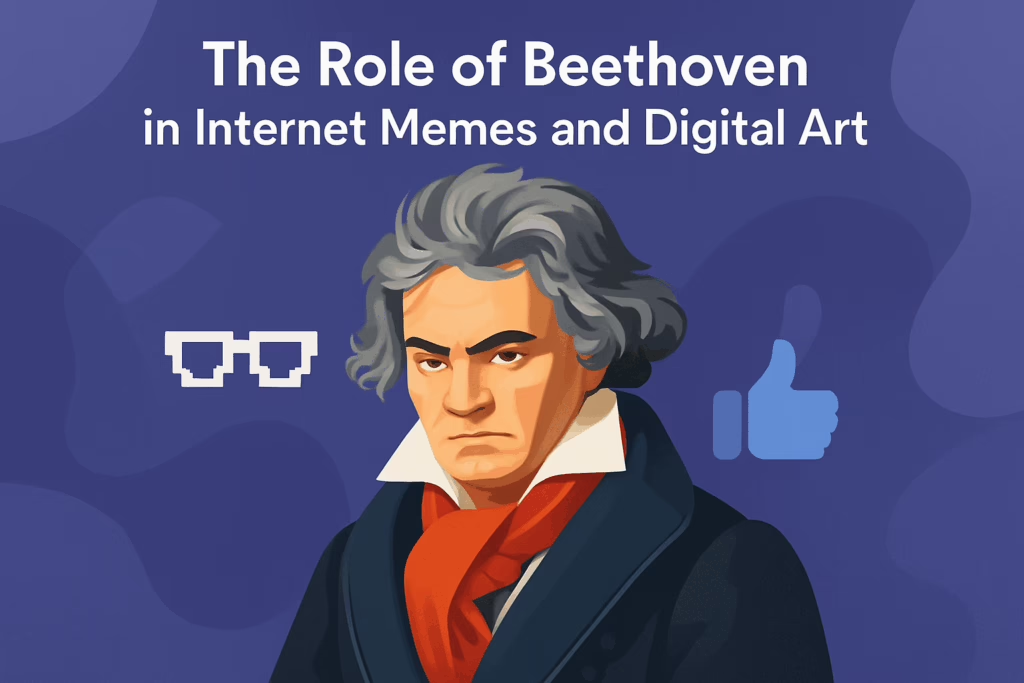
The Role of Beethoven in Internet Memes and Digital Art
In the digital age, where memes and digital art play a pivotal role in communication and culture, the figure of Ludwig van Beethoven has emerged as an unexpectedly influential icon. Beethoven, a classical composer from the late 18th and early 19th centuries, is not just confined to traditional music appreciation. Today, his persona and works extend far beyond concert halls, popping up in internet memes and influencing digital artists around the globe. Understanding why a historical figure such as Beethoven has found a place in online culture provides insight into how historical icons can bridge past and present, influencing new forms of expression and communication. This is especially relevant as digital content continues to evolve rapidly with modern technology, blurring the lines between classical and contemporary, serious and humorous.
Beethoven’s Legacy in Internet Culture
Beethoven’s presence in internet culture is a testament to the timelessness of his works and public persona. The composer’s intense expressions and distinctive features have become fodder for internet memes. Memes, a cultural phenomenon characterized by humorous or satirical content, often use familiar images or figures to convey a point in a relatable way. Beethoven’s stern demeanor and reputation as a tortured genius make him an ideal candidate for memes dealing with themes of artistic struggle or perfectionism.
One real-world example of Beethoven’s impact is the viral meme format called “When You Finally Reach the Coda,” which humorously exploits the complexities and repetitions found in Beethoven’s musical compositions, comparing them to the mundane yet frustrating cycles of everyday life. This captures the intersection of classical music and contemporary internet humor, showcasing how Beethoven’s complex compositions can still be relatable in today’s world.
Digital Art Inspired by Beethoven
Beyond memes, Beethoven has also significantly influenced digital art. His compositions, particularly their emotive power and structural complexity, inspire artists to explore new media and methods. Digital artists take cues from Beethoven’s innovative spirit, creating works that echo his sound in a visual form. The use of synesthesia-inspired digital art, where music is represented in color and shape, is one example of how Beethoven’s influence persists in modern artistic expressions.
Take, for example, the digital painting series “Beethoven’s Symphony No. 9 Visualized,” where an artist translates the auditory experience of this iconic symphony into abstract visual art. These digital artworks use bright colors and dynamic forms to mirror the symphonic crescendos and energy, making the emotional depth of Beethoven’s scores accessible in a format that resonates with modern audiences.
User Engagement and Educational Value
Beethoven’s role within memes and digital art does more than entertain; it also serves educational purposes. By leveraging humor and visual appeal to make classical music more approachable, these forms of digital content engage younger audiences who might otherwise dismiss classical genres as outdated. Memes about Beethoven can spark curiosity, leading individuals to explore his music more deeply.
Furthermore, digital platforms often provide educational content side-by-side with memes, blurring the lines between entertainment and learning. Some platforms offer breakdowns of Beethoven’s works alongside humorous reinterpretations, making music theory and appreciation more inviting through context and modern analogies, effectively promoting a more profound appreciation for classical music.
- Increased Interest in Classical Music
- Creative Expression Integration
- Blending Humor and Education
Beethoven as a Digital Icon
In embracing digital content, Beethoven’s image has been revitalized for a new generation, shaping his identity into a meme-worthy icon that balances reverence with humor. This shift not only preserves historical integrity but also adapts his image for a visual and fast-paced world, ensuring that the impact of his legacy continues to captivate minds.
Moreover, Beethoven’s adaptation into digital art also influences contemporary composers and musicians, encouraging them to explore innovative expressions and cross-genre experimentation. The digital age enables musicians to reinterpret Beethoven’s works by integrating them with modern musical genres, therefore, broadening the audience for classical compositions and enriching the tapestry of contemporary music.
Conclusion: The Future of Beethoven in Digital Culture
As we have seen, Beethoven’s exploration into the realm of internet memes and digital art demonstrates a unique intersection of past and present. His work continues to inspire and educate, proving that classical music still holds relevance in modern society. The integration of Beethoven into digital culture ensures that his legacy endures, bridging generational divides and nurturing a continual appreciation for the arts.
For readers interested in exploring this fascinating blend of classical and contemporary, it is suggested to engage with digital art communities and meme pages that feature Beethoven to witness firsthand the innovative ways his legacy is being transformed. By actively participating or creating content themselves, individuals contribute to an ongoing dialogue that celebrates the timelessness of classical music in modern platforms.
Overall, Beethoven’s role in digital culture exemplifies the seamless fusion of history with modernity, suggesting a vibrant future where more historical figures might similarly be reimagined. Whether through a humorous meme or an intricate digital artwork, Beethoven’s presence on the internet proves that classical music can be both relevant and relatable, affirming its place in the dynamic world of online culture.
Frequently Asked Questions
1. Why is Beethoven a popular figure in internet memes?
Beethoven has become a celebrated figure in internet memes for a few reasons. First, his iconic persona as a musical genius strikes an intriguing contrast with the typically playful and humorous nature of memes. This dynamic allows for a comical clash that meme creators put to good use. Additionally, Beethoven’s life and works offer a rich bank of content to draw from. Whether it’s the notoriously stormy personality he was known for, the challenges he faced such as his eventual deafness, or his universally recognized compositions like “Ode to Joy” and “Für Elise,” these elements provide fertile ground for satire and creative expression. Memes often play on the juxtaposition of Beethoven’s perceived seriousness with the often silly formats of modern meme culture. Moreover, his larger-than-life legacy and the enduring mythos surrounding his genius make him a figure who is easily recognizable and impactful, even to those who might not be classical music aficionados.
2. How do digital artists incorporate Beethoven into their work?
Digital artists employ Beethoven as a muse in an array of inventive ways. For starters, they might experiment with his image, often incorporating his likeness into contemporary settings or abstract compositions to juxtapose the classical with the modern. This can range from pop-art-style depictions to more surreal, avant-garde interpretations that challenge traditional art norms. Furthermore, his music serves as a wellspring of inspiration. Artists tend to draw on the emotional intensity and technical skill evident in Beethoven’s compositions to inform their art’s mood and energy. Collaborations across media also occur, where digital pieces may sync up with Beethoven’s works in virtual shows or enhanced digital experiences, offering a fresh avenue for audiences to engage with classical music. This blend of sound, movement, and imagery found only in digital platforms has opened new realms of creativity where Beethoven’s legacy continues to resonate.
3. Can you give examples of specific memes involving Beethoven?
Sure! One type of popular meme featuring Beethoven involves comedic takes on his deafness. These memes usually juxtapose laughably mundane “hearing” scenarios with Beethoven’s profound hearing loss, sometimes captioned with phrases like, “When you’re deaf but still dropping bangers,” referencing his continued prowess in composition despite his handicap. Another meme series plays with the idea of Beethoven’s “angry artist” stereotype, illustrating him reacting negatively to current musical trends such as pop or electronic music, often employing modern internet slang and humor. This contrast underscores how his timeless standards of classical music confront the sometimes ephemeral nature of trending styles. Memes also exist that humorously imagine Beethoven as a modern pop star, complete with sunglasses and edgy attire, highlighting how his prolific output would translate into contemporary celebrity culture. These types of memes share a humorous, often affectionate take on both his esteemed body of work and larger-than-life personality.
4. Has Beethoven’s presence online influenced the appreciation of classical music?
Absolutely, Beethoven’s presence in digital spaces has played a role in revitalizing interest in classical music, especially among younger generations more accustomed to digital consumption. Through memes and digital art, audiences who might not typically engage with classical music have a more relatable and casual entry point into exploring it. By encountering Beethoven in familiar and accessible online contexts—an environment many frequent regularly—it can demystify classical music and encourage further listening and research. This phenomenon is often referred to as “edutainment,” where entertainment serves as a springboard for educational discovery. Many people seek out his compositions after seeing memes or art pieces, developing a more profound appreciation for his work and, by extension, classical music more broadly. Online platforms also encourage sharing and discussion, further facilitating a communal aspect that fosters ongoing interest and appreciation.
5. Are there negative aspects to the way Beethoven is used in memes and digital art?
While the use of Beethoven in memes and digital art predominantly garners positive attention, there are some critiques worth considering. Some traditionalists argue that reducing Beethoven to comedic internet formats can trivialize his genius or neglect the true depth and seriousness of his contributions to music. There is also the possibility of oversimplification, where the layered complexities and historical contexts of his life and work are either inaccurately portrayed or not addressed at all. This can perpetuate misconceptions or lead to an incomplete understanding of his enduring artistic significance. Furthermore, relying too heavily on humor might deflect from the appreciation that his compositions and life experiences deserve. It’s important, within creative expressions, to strike a balance that honors and respects Beethoven’s legacy while making it approachable and relevant for contemporary audiences.