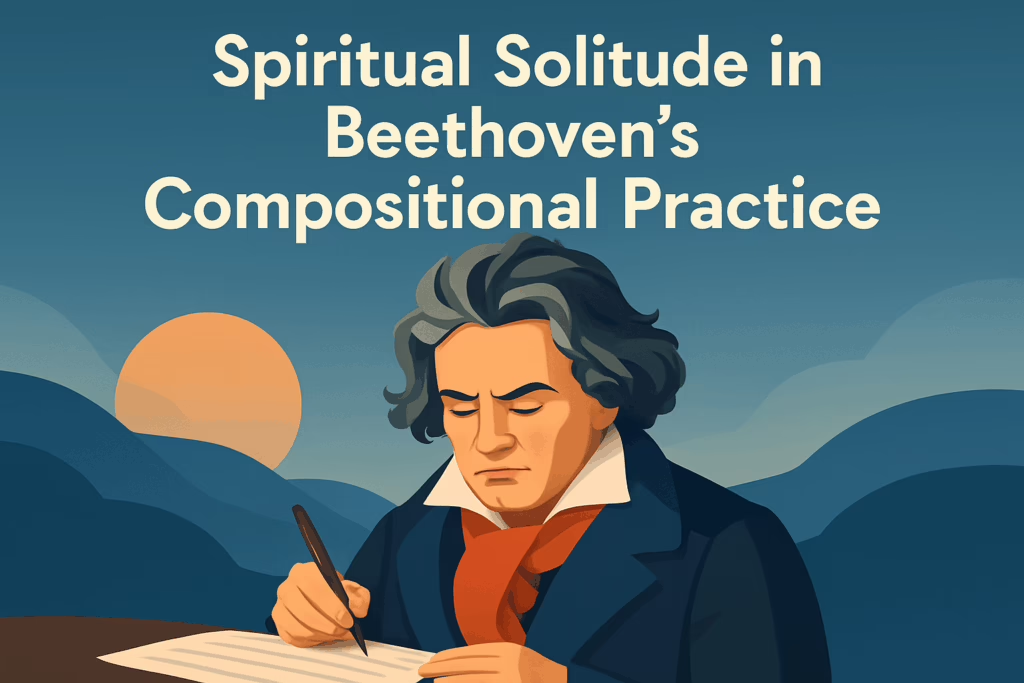
Spiritual Solitude in Beethoven’s Compositional Practice
Ludwig van Beethoven stands as one of the most towering figures in classical music. Known for his groundbreaking compositions, Beethoven imbued his music with a profound depth that still resonates today. His journey through music was not merely a professional endeavor; it was a deeply personal and spiritual experience. This article explores the concept of spiritual solitude in Beethoven’s compositional practice, examining how isolation and introspection profoundly influenced his work.
To understand spiritual solitude, we must first define it. It refers to a state of being where an individual seeks inner peace and enlightenment through isolation and reflection. For Beethoven, this solitude was not always a choice but often a consequence of his growing deafness and personal struggles. Yet, it became a powerful tool for musical creation. Despite—or perhaps because of—his struggles, Beethoven’s music exudes emotional depth and spiritual insight, offering listeners a sense of connection with the divine or philosophical truths.
This topic matters because it sheds light on the intersection of personal struggle and artistic brilliance. By understanding how Beethoven’s spiritual solitude shaped his compositions, we gain insights into the broader concept of how isolation can lead to profound creativity and innovation. For modern audiences, Beethoven’s approach offers valuable lessons in using solitude as a means to achieve self-discovery and artistic excellence.
The Role of Isolation in Beethoven’s Creative Process
Beethoven’s life was marked by profound isolation. His deteriorating hearing led to his withdrawal from social life, and as his deafness worsened, he became intensely introspective. This isolation, while a personal tragedy, became a fertile ground for his creativity. Beethoven found solitude to be a sanctuary where ideas flourished and profound musical expressions were born.
In this environment of silence, Beethoven composed some of his most significant works, such as the Symphony No. 9. The intense personal solitude allowed him the freedom to experiment with bold and innovative musical ideas without the distraction or influence of the external world. Beethoven’s famous “Heiligenstadt Testament,” a letter he wrote to his brothers expressing his despair over his deafness, also highlights his determination to overcome his isolation through music. It is here that we see the bond between personal struggles and creative outputs.
Meditation and Music: Beethoven’s Spiritual Retreat
For Beethoven, solitude was not merely physical but also spiritual. Away from societal pressures, he engaged in deep contemplation, treating music as a form of meditation. This approach allowed him to focus on the intricate relationship between notes, exploring themes and emotions with unparalleled sensitivity.
- Example: During his time in the Austrian countryside, Beethoven would often take long walks, immersing himself in nature’s tranquility. This practice served as a spiritual retreat, providing a peaceful backdrop for introspection and composition.
- Another Example: The “Pastoral Symphony” is a masterpiece that reflects the composer’s meditative connection with nature, depicted in its serene movements that portray scenes from the countryside.
Thus, Beethoven’s spiritual engagements through solitude cultivated a space where music could emerge untainted by worldly distractions, allowing him to tap into deep reservoirs of creative expression.
Beethoven’s Personal Struggles as Catalysts for Artistic Depth
Beethoven’s life was fraught with personal challenges that further isolated him from society. Yet, these hardships became driving forces for his creativity. The pain of his hearing loss and his solitary life were transformed into deep wells of emotion that infused his compositions with authenticity and power.
An illustrative example is the composition of the late string quartets. Written during the later years of his life, these works explore themes of suffering and transcendence. They are introspective and complex, reflecting a profound introspection driven by his personal tribulations. Beethoven poured his soul into these compositions, using them as a medium to navigate his inner turmoil while articulating a vision of hope and resolve.
His composition of “Missa Solemnis” is another profound realization of his inner spiritual journey. Despite the external challenges, Beethoven’s commitment to capturing the spiritual majesty of the mass did not waver. The monumental piece is noted for its intricate complexity and profound depth, depicting his ongoing quest for spiritual and emotional fulfillment despite personal isolation.
| Influence | Musical Work | Characteristics |
|---|---|---|
| Isolation | Symphony No. 9 | Bold, innovative ideas |
| Meditation | “Pastoral Symphony” | Serene, nature-inspired |
| Personal Struggles | Late String Quartets | Introspective, complex |
| Spiritual Quest | “Missa Solemnis” | Intricate, profound depth |
The Universality of Solitude’s Influence in Creativity
While Beethoven’s solitude was born from specific personal circumstances, the influence of isolation on creativity is a universal phenomenon. Many artists across various disciplines have similarly found that solitude provides a unique space for introspection and innovation. By retreating from the noise and distractions of the outside world, artists can access deeper creative waters.
For instance, writers and painters often seek solitude to nurture their ideas and develop new concepts. The quiet found in solitude allows them to delve into their thoughts and emotions without interruption. Just as Beethoven used isolation to engage in profound musical exploration, modern creators use it to explore novel ideas and forge new paths in their various fields.
Through Beethoven’s example, we can understand how solitude can serve as both a struggle and a blessing, acting as a crucible for creativity. It highlights the potential for isolation to foster transformative artistic expression, an enduring lesson that continues to inspire artists and creators today.
Spiritual Solitude and Modern Interpretation of Beethoven’s Music
Contemporary audiences continue to find resonance and meaning in Beethoven’s work, partly due to the profound depth instilled by his spiritual solitude. Modern interpretations often focus on these thematic elements, drawing connections between Beethoven’s personal journey and his musical legacy.
Musicians and conductors today remain deeply inspired by the emotional and spiritual undertones of Beethoven’s compositions. This enduring legacy is a testament to the power of his solitary journey. By understanding the contextual backdrop of his creative process, performers and audiences alike can appreciate the layered complexities and emotional richness that define his music.
Furthermore, the concept of using solitude as a catalyst for creativity is reflected in many modern creative practices. Whether in the form of artist retreats or personal meditative practices, the lessons from Beethoven’s spiritual journey remain relevant. The notion that creativity can emerge from silence and personal struggle offers artists a path to explore their creative potential and produce impactful works.
Conclusion
Beethoven’s life and work are striking reminders of the symbiotic relationship between personal solitude and creative brilliance. His ability to transform challenging isolation into a wellspring of musical genius offers timeless lessons on the power of solitude. Through spiritual solitude, Beethoven accessed profound depths of expression that continue to inspire generations of listeners and creators.
Key takeaways from Beethoven’s journey include the recognition of solitude as a catalytic force in creativity, the power of personal struggles to drive artistic growth, and the enduring relevance of integrating solitude with creative processes across disciplines. By learning from Beethoven’s experiences, contemporary artists can harness solitude to explore and expand their creative horizons, producing work that speaks to the core of human experience.
The next step for readers is to explore Beethoven’s music with a renewed appreciation for the role of spiritual solitude in its creation. Listen to his compositions, particularly those born during his periods of isolation, and reflect on the intricate interplay of emotion and innovation that defines his legacy. Embrace the power of solitude in your own creative process, allowing it to reveal the depths of your imagination and inspire your artistic journey.
Embrace this newfound understanding of solitude’s potential, allowing it to be a source of empowerment and transformative creativity, as embodied by one of music’s greatest masters, Ludwig van Beethoven.
Frequently Asked Questions
1. What is meant by “spiritual solitude” in Beethoven’s compositional practice?
Spiritual solitude refers to a state of introspection and isolation that allows an individual to delve deeply into their own thoughts and feelings, fostering a profound personal and often transformative experience. In Beethoven’s compositional practice, this solitude was not just about physical isolation but a deeper, almost sacred seclusion where he could retreat into his inner self to create music that resonated with his profound emotions and philosophical beliefs. Beethoven sought this seclusion deliberately, often escaping the distractions of daily life to immerse himself wholly in his musical ideas. His deafness further compounded this solitude, forcing him inward, away from the external world, thereby intensifying his personal and spiritual journey. The solitude provided him with a canvas on which his inner world was poured out, resulting in compositions that are not only technically revolutionary but also imbued with deep emotional and spiritual resonance. The sense of isolation allowed him to access a unique artistic vision, uninfluenced by the prevailing musical norms or societal expectations, leading to an authentic expression of his inner spiritual experiences.
2. How did Beethoven’s struggle with deafness influence his experience of spiritual solitude?
Beethoven’s encroaching deafness was both a personal tragedy and a pivotal force in his development as a composer. As his hearing deteriorated, he became increasingly isolated from the social and musical environments that defined his earlier life. This struggle forced him into a state of profound solitude, where he had to rely on his inner hearing and imagination to guide his compositions. During this period, Beethoven’s relationship with sound transformed; instead of hearing music externally, he developed a heightened inner sense of auditory imagination. This condition compelled him to embark on deeper introspective journeys, disconnecting further from the external world and drawing closer to his internal emotions and spiritual insights. This intensified solitude was paradoxically liberating, allowing him to break existing musical boundaries and create compositions that spoke directly from his heart. With less external input and distraction, Beethoven’s music became increasingly innovative and personal, incorporating his struggles and triumphs into works of overwhelming passion and intensity. In essence, his deafness and the resultant solitude became a crucible for his genius, amplifying his spiritual introspection and the resultant creative output.
3. In what ways did Beethoven’s notion of solitude differ from mere loneliness?
Solitude and loneliness, while often conflated, represent distinct emotional and psychological states. Beethoven actively sought solitude as a means of fostering creativity and spiritual exploration, distinct from the more passive and often distressing nature of loneliness. Solitude, for him, was a chosen state, a conscious decision to withdraw from the outer world to delve into the rich tapestry of his internal thoughts and feelings. This solitude was productive and spiritually enriching; it was an opportunity for reflection, insight, and artistic conception. In contrast, loneliness is typically unwanted, marked by a sense of isolation and a longing for connection. Beethoven’s solitude was marked by the absence of social interaction but was accompanied by an inner connectivity with his spiritual self and his muse. That is not to say Beethoven was immune to loneliness; certainly, he experienced it, particularly due to his inability to hear and connect with others through music as he once did. However, his notion of solitude transcended mere absence of companionship; it was a deliberate and essential part of his artistic process, allowing him to access his deepest creative reservoirs and elevate his compositions beyond the ordinary.
4. How did Beethoven’s spiritual solitude manifest in his compositions?
Beethoven’s spiritual solitude found vivid expression in his compositions, infusing them with an emotional depth and complexity that continues to captivate audiences. This solitude allowed him to explore profound philosophical and existential themes, which he translated into music with unparalleled effectiveness. Works like his late string quartets or the Ninth Symphony are imbued with a sense of introspection and transcendence often attributed to this inner solitude. In these compositions, one can hear the struggle, resilience, and eventual catharsis that Beethoven experienced within his isolated state. His music often journeys from darkness to light, capturing the essence of human perseverance through adversity. Moreover, the sheer innovation found in these pieces, from the sublimely intricate fugues to the groundbreaking symphonic structures, reflects the unbounded creative freedom his solitude afforded him. This freedom allowed him to challenge and redefine musical conventions of his time, creating works that resonate with spiritual and emotional richness. Thus, Beethoven’s compositions serve as a testament to how spiritual solitude can be a powerful catalyst for artistic brilliance.
5. Can Beethoven’s approach to isolation and introspection offer insights to modern creatives?
Absolutely, Beethoven’s approach to isolation and introspection resonates powerfully with modern creatives, offering profound insights into the creative process. In today’s fast-paced and often overwhelming world, the deliberate pursuit of solitude can be a crucial strategy for creativity. Beethoven’s life illustrates the value of stepping away from external demands and distractions to connect with one’s inner self. In solitude, creatives have the opportunity to cultivate a deeper understanding of their thoughts, emotions, and artistic vision, leading to authentic and innovative outcomes. His experience also underscores the importance of resilience and adaptability; faced with profound challenges, including his deafness, Beethoven transformed adversity into an opportunity for significant artistic evolution. For modern creatives, this translates into a powerful lesson about embracing challenges and finding strength and inspiration within one’s difficulties. Moreover, Beethoven’s journey exemplifies the idea that true creativity often requires breaking away from conventional norms and expectations, much like his bold departures from musical tradition. Thus, while the specifics of the modern creative’s environment may differ, the underlying principles of Beethoven’s solitude — introspection, resilience, and innovation — are timelessly relevant for anyone seeking to push the boundaries of their artistic endeavors.