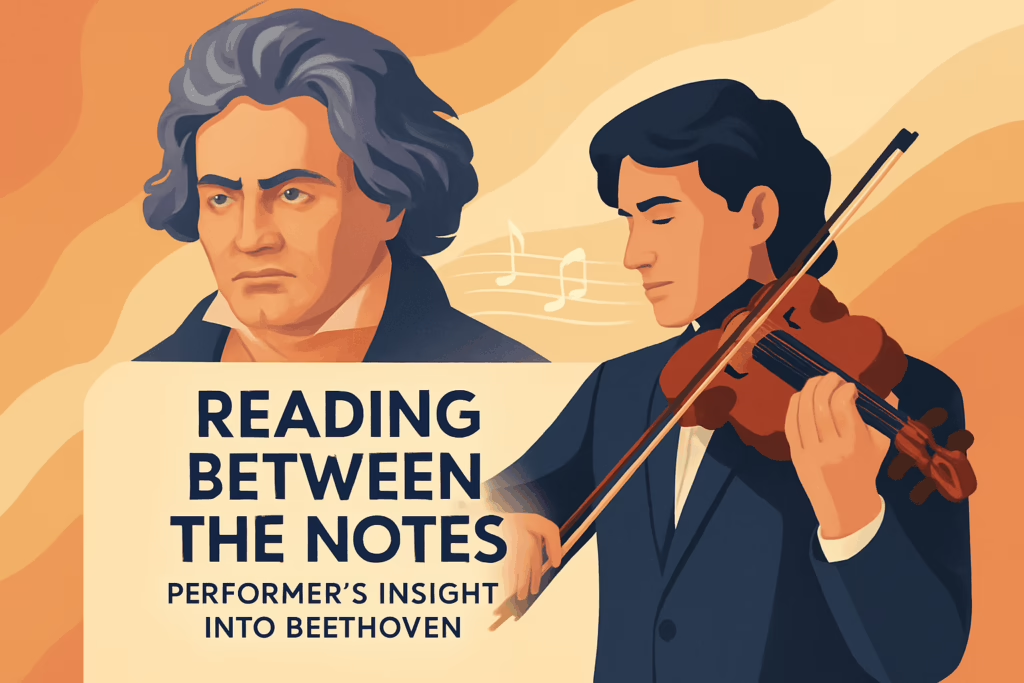
Reading Between the Notes: Performer’s Insight into Beethoven
Understanding the work of a legendary composer like Ludwig van Beethoven requires more than just reading notes on a sheet of music. It involves delving into the myriad nuances and emotions evoked by his compositions. The term “performer’s insight” refers to the ability of musicians to interpret and convey this deeper understanding to audiences. Leveraging performer’s insight elevates the standard performance into a transcendental experience, often bringing new life to centuries-old music. This insight is not simply a commendable trait; it is essential for the continual appreciation and revitalization of Beethoven’s works. With each performance, musicians bridge the historical divide to share fresh interpretations that can delight, challenge, and inspire us today. By decoding Beethoven’s genius through the eyes of performers, we unearth an enriched dialogue between the past and present. In this exploration, we delve into how performers interpret Beethoven’s work, from his iconic symphonies to his lesser-known chamber pieces and sonatas.
The Role of Emotion in Beethoven’s Works
Beethoven is renowned for the emotional depth present in his compositions. A notable example is the transition from darkness to light in his Symphony No. 5, famously known for its “fate knocking at the door” motif. This particular work exemplifies the dramatic journey of despair to triumph, which performers strive to embody in every iteration. But how do performers achieve this?
To convey the emotional weight of Beethoven’s music, performers often draw from their personal experiences or translate the historical context into their performances. Understanding the struggles and triumphs Beethoven faced, such as his encroaching deafness, enables musicians to imbue their interpretation with authentic emotion. This genuine expression is palpable for audiences, providing a visceral connection to the music.
A performer’s insight into the emotional landscape of a piece is vital. By interpreting dynamics, tempo changes, and phrasing uniquely, they weave a personal narrative. For instance, in the “Moonlight” Sonata, individual performers might emphasize the serene melancholy of the Adagio or the turbulent, stormy character of the final movement by adjusting their touch on the piano keys and varying their use of pedal, thus adding subtle shades to the composition’s inherent emotions.
Decoding the Structure: Understanding Beethoven’s Form
Beethoven’s compositions are not only emotional but also structurally complex. His Fifth Symphony offers an excellent case study in symphonic form. The piece is meticulously organized into four movements that evolve thematically, yet are cohesively interrelated.
For performers, recognizing these structural elements is crucial in crafting a performance that maintains the integrity of Beethoven’s vision. A symphony becomes more than a collection of notes — it is an architectural masterpiece where each section faithfully leads into the next. Musicians may spend significant time analyzing the score, examining motifs, harmonic progressions, and formal structures. This robust theoretical analysis provides them with a framework to deliver intelligible and engaging interpretations.
Consider the “Eroica” Symphony, where the second movement’s funeral march stands out as a contrast to the generally heroic and celebrative tone. Performers may use slight variations in tempo and articulation to highlight the dichotomy between the movements’ contrasting themes, thereby giving audiences a richer understanding of Beethoven’s compositional intent.
Mastering Technical Challenges: Instruments and Interpretation
The technical demands of Beethoven’s compositions cannot be overstated. Pieces like the “Hammerklavier” Sonata stretch the abilities of even the most accomplished pianists. Understanding these challenges helps performers approach the works with the reverence and diligence they require.
Each instrument offers its unique challenges and rewards when performing Beethoven. String quartets, for example, require a delicate balance between individual expression and ensemble unity. In Beethoven’s late string quartets, performers often engage in intense rehearsals to perfect not only their individual parts but also the synergy of the group. They must navigate complex rhythms, unconventional harmonies, and an array of dynamic markings that push the limits of their technical abilities.
To overcome these technical hurdles, performers often dissect each piece, isolating difficult passages and practicing them meticulously. By employing strategies like slow practice, varied tempos, and focused technical drills, musicians prepare themselves to execute the intricate layers of Beethoven’s compositions. This technical mastery ensures the music is performed with the precision and passion it deserves.
Historical Context: Beethoven’s World
Beethoven’s music was profoundly influenced by the socio-political climate of his time. The tumultuous backdrop of the Napoleonic Wars and the Enlightenment ideals permeating Europe shaped his compositions significantly. A notable piece reflecting this is his Symphony No. 3 “Eroica,” initially dedicated to Napoleon Bonaparte before Beethoven famously rescinded this dedication upon Napoleon’s self-coronation.
Musicians who consider the historical context of Beethoven’s works often find depth and meaning beyond the written notes. For example, in performances of the “Eroica” Symphony, the historical significance is expressed through powerful dynamics and decisive accents, symbolizing the turmoil and optimism of Beethoven’s era. Vocal works such as the “Ode to Joy” from Symphony No. 9 are imbued with a universal call for unity and brotherhood, themes deeply resonant with the political aspirations of the time.
By interpreting these historical elements through performance, musicians offer audiences a multifaceted understanding of Beethoven’s works. They guide listeners through the historical journey while maintaining an awareness of the timeless human themes deeply woven into the fabric of the compositions.
| Factor | Impact on Performance |
|---|---|
| Emotional Context | Shapes dynamic expression, phrasing, and tempo |
| Structural Understanding | Ensures coherence and logical progression within the music |
| Technical Mastery | Enables precision and clarity in execution |
| Historical Context | Enhances thematic depth and authenticity |
Real-world Example: Beethoven’s Ninth Symphony
Among Beethoven’s most celebrated compositions is his Ninth Symphony, renowned for its ambitious scale and choral finale. The elaborate nature of the score demands not only technical proficiency but also intense emotional and conceptual understanding from performers. For instance, the choral component requires singers to exemplify unity in both diversity and sonority, echoing the “universal brotherhood” message embodied in the “Ode to Joy” theme.
Performers often collaborate with conductors and ensembles to integrate their interpretations cohesively. A celebrated example includes the historically informed performances by orchestras like the Berlin Philharmonic, which integrate period instruments and playing techniques into modern performances. By doing so, they explore the original sound textures intended by Beethoven while still incorporating modern interpretative possibilities.
This synergistic blend of historical reverence and creative exploration exemplifies the diverse approaches that performers take in bringing Beethoven’s Ninth Symphony to life for contemporary audiences. By embedding their insight and artistic sensibilities into Beethoven’s monumental work, performers continually re-energize and reinvent its presentation.
Conclusion
In conclusion, performer’s insight plays a pivotal role in interpreting and understanding Beethoven’s music. By delving into emotional nuances, structural complexities, technical demands, and historical contexts, musicians can present enriched, contemporary performances that resonate deeply with audiences. This dedication to unraveling Beethoven’s intentions ensures that his compositions remain vibrant and relevant. As a listener, one might take the next step by experiencing live performances or recordings with a renewed appreciation for the nuanced interpretations musicians bring to Beethoven’s works. This enriches the listener’s understanding and cultivates a deeper connection to one of the world’s greatest composers. In doing so, the timeless genius of Beethoven continues to inspire and move audiences across generations.
Frequently Asked Questions
What does “Reading Between the Notes” mean in the context of performing Beethoven’s music?
“Reading Between the Notes” is a metaphorical expression that captures the deep and nuanced process a performer embarks on when interpreting Beethoven’s music. It’s about going beyond the printed score to grasp the emotional currents and artistic intentions that hover inside and around each note and rest. Beethoven’s compositions are notorious for their complexity; they are rich with emotion, requiring musicians to engage with more than just technical accuracy. When performers “read between the notes,” they are attuned to the subtle dynamics, phrasing, and tempo fluctuations that can transform a straightforward rendition into a poignant expression of Beethoven’s genius. This approach helps the performer connect with both the human aspect of Beethoven as a composer and with the audience, ensuring that the music resonates on a more profound emotional and intellectual level. Essentially, the goal is to capture the spirit of the music and communicate Beethoven’s intentions, making it as compelling and relevant to today’s listeners as it was during his lifetime.
Why is performer’s insight considered important when interpreting Beethoven’s pieces?
Performer’s insight is crucial when interpreting Beethoven’s pieces because it bridges the gap between historical context and modern audience reception, allowing for a performance that is both authentic and engaging. Beethoven’s music is layered with emotional depth, idiosyncratic quirks, and groundbreaking compositions that defy the conventions of his time. Each work, from his symphonies to sonatas, carries with it a variety of expressive elements that a performer must contend with. Utilizing insight means understanding the historical and cultural context of the era in which Beethoven composed, along with an appreciation of his personal struggles, triumphs, and innovations. With this understanding, performers can make informed, respectful decisions about how to highlight contrasts, tensions, and resolutions within the music. Insight allows musicians to emphasize the drama and dynamism in Beethoven’s work, often bringing a fresh perspective to his most beloved and commonly performed pieces, keeping them vital and emotionally stirring.
How can modern performers develop and enhance their insight into Beethoven’s music?
Developing insight into Beethoven’s music as a modern performer involves a combination of in-depth research, practical experimentation, and personal reflection. It starts with thoroughly studying Beethoven’s life, influences, and the historical period during which he composed. Reading his letters, contemporaneous critiques, and accounts of his performances can provide valuable context. From a practical standpoint, performers might experiment with different tempos, dynamics, and articulations during rehearsals to understand how each variation affects the emotional delivery of the piece. Listening to and analyzing recordings by renowned musicians and interpretations that made a significant impact can also offer inspiration and perspective. Additionally, seeking feedback from teachers, peers, or mentors can be invaluable. Finally, performers must allow themselves to engage emotionally with Beethoven’s music, connecting their personal experiences and feelings with the compositions to forge an authentic interpretation that resonates both with themselves and their audience.
Are there specific examples where performer’s insight has transformed the presentation of a Beethoven piece?
There are countless examples of performer’s insight transforming Beethoven’s music into fresh and exhilarating experiences. One poignant example is Leonard Bernstein’s renditions of Beethoven’s symphonies, notable for their bold interpretations and emotional intensity. Bernstein famously encouraged performers to understand and communicate the underlying emotion and philosophy in Beethoven’s music rather than just focusing on technical perfection. Similarly, pianist Artur Schnabel’s interpretations of Beethoven’s piano sonatas are revered for their intellectual depth and individuality. Schnabel appreciated and conveyed the emotional weight and complexity embedded within the sonatas, offering powerful interpretations that emphasized the structural and spiritual elements of the pieces. More recently, Daniel Barenboim’s approach to Beethoven’s work combines historical authenticity with modern sensibilities, offering interpretations celebrated for their clarity, passion, and originality. These performers’ insights bring uniqueness to each performance, captivating audiences and ensuring that Beethoven’s music continues to evolve and resonate across different contexts and generations.
Can non-musicians appreciate the nuances and depth of Beethoven’s music as much as trained performers?
Absolutely, non-musicians can appreciate the nuances and depth of Beethoven’s music. While trained performers have the advantage of technical expertise and perhaps a deeper understanding of musical theory, non-musicians can connect with and enjoy Beethoven’s music through other means. The emotional intensity, dramatic contrasts, and intrinsic beauty of his compositions are universal and highly accessible to listeners across all walks of life. Listening with intent, attending live performances, or engaging with informative programs and lectures about Beethoven can deepen appreciation. Non-musicians often bring a fresh perspective, unhindered by technical details, focusing instead on personal and emotional reactions to the music. For many, it’s Beethoven’s ability to express the full range of human emotions—joy, sorrow, triumph, despair—that resonates deeply. Engaging with Beethoven’s music, regardless of one’s musical training, can provide a powerful, enriching experience, as it taps into shared human emotions and transcends cultural and temporal boundaries.