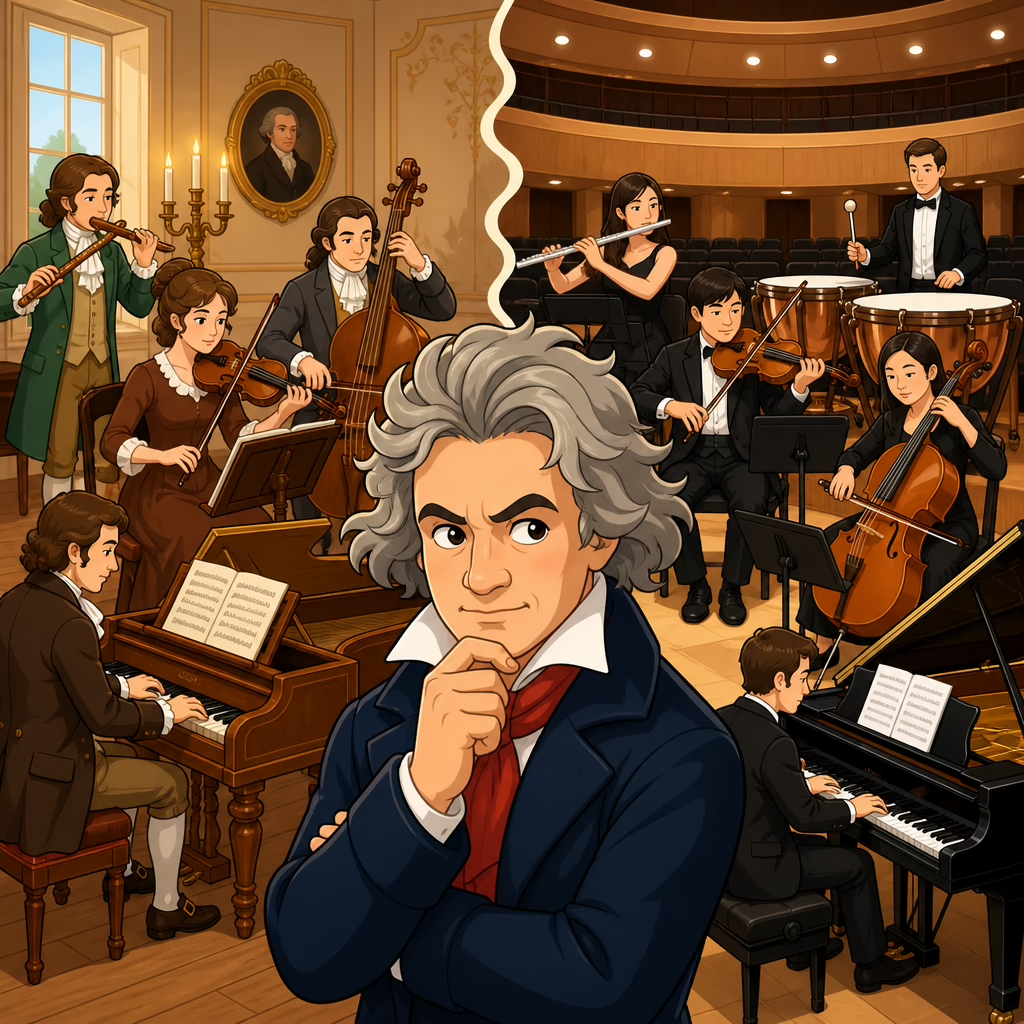
Period Instruments vs Modern Instruments in Beethoven
Beethoven sounds radically different depending on whether performers use period instruments or modern instruments, and that difference is not a matter of fashion but of acoustics, technique, and musical priorities. In Beethoven performance, “period instruments” usually means instruments built in the style of roughly 1790 to 1827, or faithful replicas, played with historical setups such as gut strings, classical bows, natural horns, natural trumpets, wooden flutes, smaller timpani, and lower pitch standards. “Modern instruments” refers to the post nineteenth-century orchestra most listeners know today: metal-wound strings under higher tension, Tourte-influenced bows used with modern technique, valve brass, Boehm-system flutes, more powerful woodwinds, larger sections, and a generally standardized pitch around A=440 or A=442. The debate matters because Beethoven wrote at the fault line between the Classical and Romantic orchestra. His scores reward precision, attack, transparency, and rhythmic nerve, yet they also invite weight, grandeur, and long-span lyricism.
I have spent years comparing Beethoven symphony and concerto recordings in score study sessions, rehearsals, and critical listening, and one lesson becomes unavoidable: instrument type changes not just color, but phrasing, tempo relationships, balance, and even what counts as a convincing interpretation. A sforzando in the Eroica lands differently when natural horns bark through the texture instead of blended valve horns. The opening of the Fifth gains a sharper profile when strings speak on gut with less sustained vibrato. The slow movement of the Seventh can feel less saturated but more harmonically exposed on period setup. These are not abstract distinctions. They shape what the ear hears as drama, nobility, tension, and release. For anyone comparing Beethoven recordings, understanding period versus modern instruments is one of the fastest ways to hear why conductors make such different choices and why no single tradition owns the music.
What period instruments change in Beethoven’s orchestral sound
Period instruments alter Beethoven primarily through articulation, dynamic response, and sectional balance. Gut strings have a quicker bloom and a faster decay than modern steel or synthetic setups, so repeated notes and accents speak more distinctly, but long sustained lines require more active bow management. Classical bows encourage lift and directional phrasing rather than the heavily cushioned legato often heard in twentieth-century Beethoven. Woodwinds from Beethoven’s era are less uniformly powerful note to note, yet that unevenness can make lines sound more characterful and conversational. Natural horns and trumpets do not smooth every pitch into identical brilliance; stopped notes and harmonic limitations create a grainier, more urgent rhetoric that matches Beethoven’s writing remarkably well.
The result is not automatically “smaller.” That is a common misconception. Good period orchestras can sound fierce, even shocking, because the attack profile is so immediate. Listen to the opening movement of the Fifth in recordings by John Eliot Gardiner or Roger Norrington: the strings cut, winds emerge cleanly, and brass punctuate rather than blanket. In the Seventh, period timpani often strike with harder sticks and less resonance than in modern symphonic practice, making rhythmic cells feel like structural pillars. In the Pastoral, wooden flutes and classical oboes can suggest an outdoor, reedy freshness that modern instruments often beautify into something more blended. Beethoven’s orchestration often becomes easier to parse because each family occupies its own acoustic space.
Pitch level also matters. Many historically informed performances use A=430, about a semitone lower than modern concert pitch. Lower pitch can darken the sonority slightly and reduce string tension, which affects response and timbre. Combined with leaner vibrato, this often produces a texture listeners describe as transparent, wiry, or sinewy. Those adjectives are useful if understood correctly. Transparent means contrapuntal lines remain audible under pressure. Wiry means the sound carries tensile energy instead of upholstered warmth. Sinewy means Beethoven’s rhythms feel connected to muscular movement. None of these qualities is inherently superior, but all of them can illuminate details hidden in lush modern performances.
How modern instruments reshape Beethoven’s power and lyricism
Modern instruments bring their own strengths, and dismissing them as inauthentic misses how persuasively they can realize Beethoven’s scale. The modern symphony orchestra evolved partly to solve projection, intonation, and technical consistency problems. Valve brass can sustain and tune difficult passages with far greater security. Modern flutes and oboes produce a wider dynamic range. The string section, using higher tension and modern bows, can sustain long crescendos and broad cantabile lines in ways period strings usually cannot match. This matters in Beethoven because he was constantly pushing toward symphonic mass, especially in the Third, Fifth, Seventh, and Ninth Symphonies.
When a conductor like Herbert von Karajan, Carlos Kleiber, or Claudio Abbado leads Beethoven on modern instruments, the listener often gains a wider dynamic envelope and a more continuous legato line. The slow introduction of the Fourth Symphony can feel more ominous because lower strings sustain the harmonic suspense. The funeral march in the Eroica can acquire monumental weight through densely blended strings and dark, centered winds. In the Ninth, a large modern chorus and orchestra can project the finale’s public, utopian dimension with overwhelming force. These are not accidents of taste. Modern instruments allow sustained pressure across long spans, and Beethoven’s architecture can thrive under that kind of cumulative energy.
The tradeoff is that modern orchestras can blur the rhythmic edge Beethoven depends on if conductors favor plush sonority over articulation. Thick vibrato across the string section can reduce harmonic bite. Large sections can cover woodwind interjections that are crucial to Beethoven’s conversational style. Brass can become homogenized, replacing the dangerous profile of natural instruments with safer grandeur. Yet the best modern Beethoven avoids these pitfalls. Conductors such as David Zinman, Bernard Haitink, and modern-instrument Abbado often combine lean textures with contemporary technique, proving that “modern” need not mean heavy. The central question is not authenticity versus progress. It is whether the instrumental means clarify Beethoven’s structural and expressive aims.
Where the differences are easiest to hear
If you want to identify period versus modern Beethoven quickly, focus on five musical parameters: tempo, accent, bass line, wind presence, and brass color. First, period performances often adopt brisker tempi, partly influenced by Beethoven’s metronome marks and partly because lighter instrumental resistance makes fast articulation cleaner. Second, accents hit harder and decay faster. Third, bass lines sound more sprung than saturated; cellos and basses drive rhythm rather than creating a continuous cushion. Fourth, winds sit forward in the balance, often sounding like individual speakers rather than part of a blended wash. Fifth, brass color is more varied and volatile on natural instruments.
The best test cases are specific movements. In the first movement of the Eroica, compare the horn calls before the recapitulation in a period recording against a traditional modern one; on natural horns they can sound thrillingly exposed, almost athletic. In the scherzo of the Fifth, period timpani and bass articulation make the transition to the finale feel like coiled spring releasing. In the Seventh’s finale, repeated rhythmic figures can either dance with dangerous momentum or pound with symphonic solidity, depending on the setup. In the Missa solemnis and Fidelio overtures, trumpet and timpani profiles tell you immediately which orchestral language is in play.
For a structured way to weigh these traits across complete cycles, it helps to use a comparison framework rather than relying on broad impressions. A practical starting point appears in the main guide at how to compare Beethoven symphony cycles like a critic, especially for judging consistency from symphony to symphony. Once you start listening for recurring instrumental effects, you will notice that period and modern approaches are not binary camps but continuums. Some modern orchestras borrow historical articulation and hard-stick timpani. Some period ensembles use larger forces and more blended phrasing than early pioneers did. Hearing these gradations is the mark of an informed listener.
Typical strengths and limitations in practice
| Approach | Typical strengths | Typical limitations | Best heard in |
|---|---|---|---|
| Period instruments | Sharper articulation, clearer inner voices, vivid wind and brass character, agile tempos | Less sustained string mass, more exposed intonation, smaller sonic cushion in large halls | Symphonies 1 to 8, overtures, rhythmically driven movements |
| Modern instruments | Greater projection, stronger legato, broader dynamic span, secure brass and woodwind tuning | Potentially thick textures, less distinctive brass color, risk of generalized vibrato and accent softening | Symphonies 3, 5, 7, 9, concerto slow movements, choral climaxes |
| Hybrid modern historically aware style | Combines precision with power, often respects Beethoven’s rhythmic profile without sacrificing scale | Can sound compromise driven if concept is unclear or orchestral habits are inconsistent | Complete cycles aiming for balance across all repertory |
In rehearsal, these strengths and limitations show up immediately. Period strings must work harder to maintain unanimity in sustained piano passages, but they gain clarity in offbeat accompaniment patterns. Natural brass players navigate notes through the harmonic series and hand-stopping techniques, which can create electrifying color but also more audible risk. Modern players benefit from mechanical consistency, yet conductors must actively prevent that consistency from becoming neutral. Beethoven rarely wants neutral. He wants profile. Any comparison that ignores the practical behavior of the instruments themselves will misread why one performance sounds incisive and another sounds monumental.
Symphony by symphony implications
The First and Second Symphonies often benefit enormously from period instruments because their Haydnesque wit, pungent winds, and disruptive accents come into relief. On modern instruments they can sound like preliminary Beethoven unless conductors keep textures lithe. The Eroica is more contested. Period ensembles reveal the music’s volatility, rhythmic asymmetry, and abrasive heroism, while modern orchestras can make its epic span and tragic breadth overwhelming. The Fourth thrives on quick reflexes and color contrast; period instruments often make its mercurial personality unmistakable. The Fifth depends on uncompromising rhythmic definition, so historically informed practice has strongly influenced even modern accounts.
The Sixth, or Pastoral, is a reminder that historical performance is not only about speed and attack. Period winds evoke rustic atmosphere with less polish and more local color, which suits Beethoven’s scene painting. Yet modern strings can make the long lyrical arcs of the “Scene by the Brook” glow with uncommon warmth. The Seventh is often a showcase for historical style because its dance rhythms and obsessive repetitions gain physical spring, though modern orchestras can produce a Dionysian sweep that period bands sometimes cannot equal in pure mass. The Eighth, compact and rhythmically mischievous, usually responds well to lean sonorities. The Ninth is the hardest case. Period instruments can sharpen every line and restore startling balances, but modern orchestras still hold an advantage in choral weight and architectural breadth when the performance space is large.
These patterns are tendencies, not laws. Frans Brüggen’s Orchestra of the Eighteenth Century, Gardiner’s Orchestre Révolutionnaire et Romantique, and Harnoncourt’s Chamber Orchestra of Europe all demonstrate different answers within historically informed Beethoven. On the modern side, Kleiber’s Fifth and Seventh, Abbado’s Berlin and Lucerne Beethoven, and Zinman’s Tonhalle cycle show that contemporary instruments can sound rhythmically alive and texturally clean. The serious listener should stop asking which camp is right and start asking which instrumental setup best serves each score, each movement, and each conductor’s musical argument. That question yields far richer listening.
How to choose recordings and what to listen for
If you are building a Beethoven library, start by matching your goal to the instrumental approach. Choose period recordings if you want to hear Beethoven’s disruptive edge, wind writing, and rhythmic engine with maximum exposure. Choose modern recordings if you want symphonic amplitude, sustained lyricism, and the full weight of the postwar orchestral tradition. Choose hybrid cycles if you want a middle path. In practical terms, compare one movement across three conductors before committing to an entire cycle. The first movement of the Fifth, the second movement of the Seventh, and the opening of the Eroica are ideal test pieces because they reveal tempo policy, articulation, balance, and orchestral philosophy within minutes.
Listen actively for whether the bass line propels or cushions, whether winds comment or disappear, whether brass threaten or merely crown climaxes, and whether loud passages remain transparent. Also ask whether the performance persuades on its own terms. A period orchestra that sounds dry, underpowered, or mannered has not automatically captured Beethoven better than a modern one. A modern orchestra that smooths every accent into velvet has not honored the score simply by sounding beautiful. The best Beethoven, on either instruments, communicates inevitability: every tempo, accent, and timbral choice feels tied to the structure of the music. That is the standard worth applying, and it will make your listening far more precise. Return to favorite recordings with these criteria in mind, and Beethoven’s orchestral world opens up in vivid, audible detail.
Frequently Asked Questions
What is the main difference between period instruments and modern instruments in Beethoven performance?
The main difference is that period instruments change the actual sound world Beethoven’s music inhabits. This is not simply a matter of “old instruments versus new instruments,” but a shift in tone production, balance, articulation, dynamic behavior, and orchestral blend. In Beethoven, period instruments usually refer to instruments built in the style of the late eighteenth and early nineteenth centuries, or carefully made replicas, used with historical setups and techniques. That includes gut strings instead of modern metal strings, shorter and lighter classical bows, natural horns and trumpets without valves, wooden flutes, smaller timpani, and generally lower pitch standards than are common today.
All of that affects what listeners hear. Gut strings tend to produce a more varied, speech-like tone with less continuous sustain than modern strings. Classical bows encourage clearer attacks and quicker releases, which can make rhythms sound more sharply profiled and energetic. Natural brass instruments have a brighter, more exposed, and sometimes more rugged sound than valved modern brass, which changes the color of Beethoven’s climaxes. Wooden flutes blend differently from metal flutes, often sounding less penetrating but more integrated into the orchestral texture. Even timpani can feel more incisive and less symphonically padded than in many modern performances.
On modern instruments, Beethoven is often presented with a broader, smoother, more sustained sonority. Modern strings can project a richer and more continuous line, modern winds and brass provide greater mechanical ease and consistency, and the overall orchestra can produce a more monumental, saturated sound. Neither approach is inherently “correct” in a simplistic sense, but each reveals different truths in the music. Period instruments often highlight transparency, rhythmic volatility, contrast, and dramatic risk. Modern instruments often emphasize power, blend, legato continuity, and architectural weight. In Beethoven, those differences are substantial enough to shape the listener’s understanding of the music’s character.
Why do period instrument performances of Beethoven often sound faster, lighter, or more rhythmically urgent?
They often sound that way because the instruments themselves respond differently, and because historically informed performers usually build their interpretation around those responses. Period setups tend to produce quicker articulation and less sustained resonance. That means textures clear more rapidly, inner lines are easier to distinguish, and repeated rhythmic figures can spring forward with more bite. When string players use gut strings and classical bows, for example, the music naturally speaks in shorter, more articulated gestures. That can make Beethoven’s accents, syncopations, sforzandos, and sudden contrasts feel more immediate and more theatrical.
There is also an important relationship between tempo and sonority. On modern instruments, especially with large orchestras, slower tempos can help preserve fullness and grandeur, and long phrases can remain supported by sustained tone. On period instruments, the sound often carries kinetic energy differently. Leaner textures and quicker decay can allow brisk tempos without muddiness. As a result, many period performances sound more propelled, not because conductors are trying to be fashionable, but because the orchestral fabric supports motion in a distinctive way.
Beethoven’s writing benefits enormously from this sense of propulsion. His music is full of dynamic shocks, abrupt turns, obsessive rhythmic cells, and dramatic tension built from repeated motives. Period instruments can bring out the edge in those ideas. The effect is not merely “lighter” in the sense of being smaller or less serious. In fact, historically informed Beethoven can sound fiercely intense. The urgency comes from attack, contrast, and momentum rather than from mass alone. Many listeners are surprised to discover that a period orchestra can sound less upholstered but more dangerous, more volatile, and in some passages more radical than a modern symphonic reading.
How do specific period instruments like gut strings, natural horns, and wooden flutes change Beethoven’s orchestral sound?
Each family of instruments alters the orchestra in a very concrete way. Gut strings, for instance, have a more textured and variable timbre than modern steel or synthetic-core strings. They can sound warm and vivid, but they do not sustain in the same uniform manner as modern strings. That gives Beethoven’s string writing a more articulate and speech-like quality. Fast passagework can feel wiry and alive, and accents can register with a sharper rhetorical profile. Because the strings do not automatically create a thick carpet of sound, wind and brass lines often emerge more distinctly through the texture.
Natural horns and natural trumpets may be the most dramatic difference for many listeners. Because they lack valves, they rely on the natural harmonic series and hand-stopping techniques to produce notes outside that series. This creates differences in color from note to note, which modern valved brass largely smooth out. In Beethoven, that can make horn calls sound more raw, noble, and precarious, while trumpet writing can feel more brilliant and startling. The sound is not as homogenized, and that unevenness is part of the expressive result. Climaxes can feel less polished but more electrifying, more like events than like perfected surfaces.
Wooden flutes also reshape the balance of the orchestra. Compared with modern metal flutes, they usually have a less uniformly penetrating tone and a more nuanced range of color across registers. That means they often blend into the orchestra rather than riding above it. Beethoven’s woodwind writing can therefore sound more conversational and more integrated with strings and other winds. Oboes, clarinets, and bassoons in historical setups likewise contribute a more characterful, less standardized palette.
Smaller timpani and harder sticks can further sharpen the rhythmic spine of the ensemble. Instead of a generalized symphonic rumble, timpani strokes can cut through with remarkable clarity, supporting Beethoven’s sense of drive and conflict. Put all these elements together, and the orchestra becomes more transparent, more contrast-rich, and more overtly dramatic. Listeners often hear not just a different timbre, but a different hierarchy of musical priorities.
Did Beethoven expect his music to be played this way, and does that make period instruments more authentic?
Beethoven composed for the instruments of his own time, so in that basic historical sense, yes, he expected a sound closer to what we now call period instruments than to a modern symphony orchestra. He wrote with the resources, limitations, and possibilities of early nineteenth-century instruments in mind. His balances, articulations, dynamic effects, and orchestral rhetoric were conceived for that environment. If we want to understand how his notation functioned in its original context, period instruments can offer invaluable evidence.
At the same time, authenticity is more complicated than simply using old equipment. No modern performer can recreate Beethoven’s world in a total sense. Concert halls are different, training traditions are different, audiences listen differently, and even the best replicas exist within a modern culture of scholarship and performance. Historical performance is therefore not a time machine. It is an informed interpretive practice that tries to recover aspects of earlier sound and style through research, experimentation, and musicianship.
That said, period instruments do have a strong claim to historical relevance. They can illuminate why Beethoven wrote certain articulations, why brass and timpani have such a confrontational role, why balances between strings and winds may function differently than in a modern orchestra, and why certain tempos or textures make particular sense. They often reveal Beethoven as a composer of disruption, attack, and high-contrast rhetoric rather than only as a monumental symphonist in the later Romantic mold.
But “more authentic” should not automatically mean “better” for every listener or every performance. Modern instruments can also communicate Beethoven profoundly, especially when players engage seriously with style, articulation, phrasing, and structural clarity. The most productive way to think about authenticity is not as a rigid badge of legitimacy, but as a question: what choices bring us closer to the musical logic of the score? Period instruments are one powerful answer, and in Beethoven they often expose details and energies that modern performances can overlook.
Which approach should listeners choose for Beethoven: period instrument recordings or modern instrument recordings?
The best answer is to hear both, because they do not simply duplicate one another. They offer complementary perspectives on Beethoven. If you want to hear sharper textural clarity, more exposed wind and brass colors, punchier timpani, and a style that often foregrounds rhythmic tension and dramatic contrast, period instrument performances are essential. They can make familiar works sound newly volatile and surprisingly contemporary. Many listeners come away feeling that Beethoven’s music regains some of its original unpredictability and edge.
If, on the other hand, you are drawn to a richer string sound, greater sustaining power, broader legato, and the symphonic grandeur associated with the nineteenth- and twentieth-century orchestral tradition, modern instrument performances can be deeply rewarding. Beethoven’s large-scale structures, lyric breadth, and heroic scope can be tremendously compelling in that sound world. Great modern orchestras can deliver enormous dynamic range and sonorous impact, and when conductors pay close attention to articulation and rhythm, modern performances need not sound heavy or generalized.
In practical terms, the choice depends on what you want to notice. Period Beethoven often helps listeners hear orchestration, accent patterns, and motivic interplay with unusual vividness. Modern Beethoven may emphasize emotional expansiveness, tonal richness, and cumulative power. One approach may feel more startling; the other may feel more monumental. Both can be artistically valid, and both can deepen appreciation of the