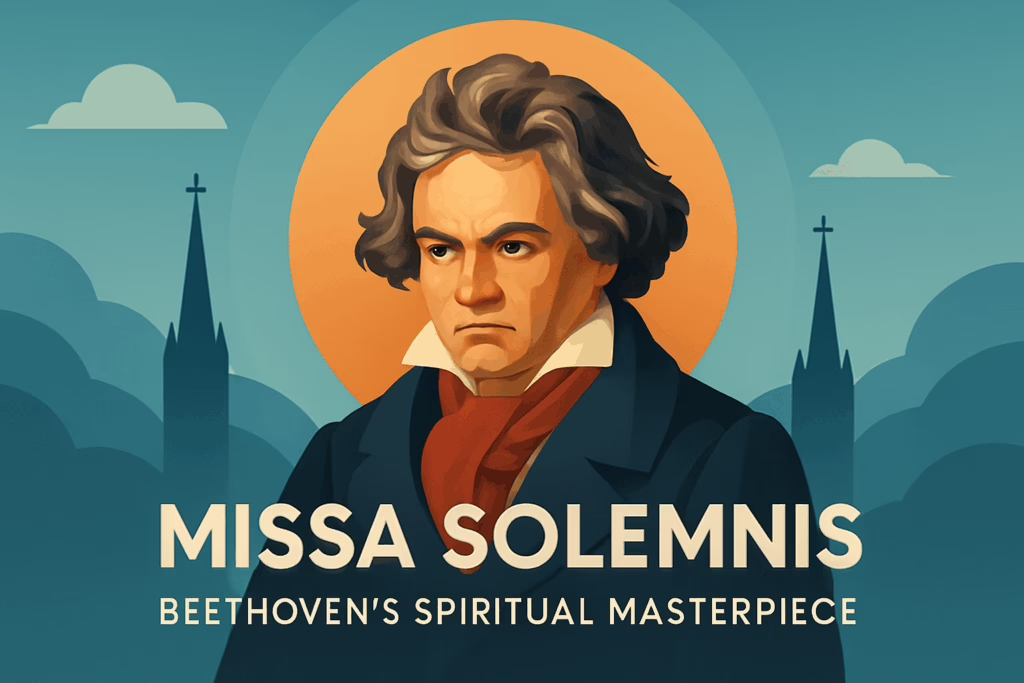
Missa Solemnis: Beethoven’s Spiritual Masterpiece
Ludwig van Beethoven’s “Missa Solemnis” stands as one of his most ambitious and profound compositions. This piece exemplifies the intersection of faith, music, and human expression in the world of classical music. Composed between 1819 and 1823, this mass in D major was initially intended to honor the elevation of Beethoven’s patron, Archduke Rudolph, to Archbishop. It is more than just a musical composition; it is a reflection of Beethoven’s evolving spiritual journey, an exploration of the divine, and an attempt to convey the universal meaning of faith through music.
The term “Missa Solemnis” translates to “Solemn Mass,” a liturgical form within the Roman Catholic tradition characterized by its elaborate and formal structure. It is part of the Catholic liturgical celebration and involves various components, including the Kyrie, Gloria, Credo, Sanctus, and Agnus Dei. Each of these sections has its own liturgical significance and musical demands, making each performance a testament to the skill and dedication of the musicians involved.
What makes the “Missa Solemnis” especially significant is its ability to transcend its religious roots, speaking not only to believers but also to a broader audience seeking to explore complex human emotions through music. This work matters because it challenges both performers and listeners to consider the role of music in spiritual and existential reflection. Beethoven’s genius lies in his ability to merge deep emotional introspection with the structured rigor of classical composition, creating a vista for the soul that encourages introspection and celebration alike.
The Genesis of Missa Solemnis
When exploring the “Missa Solemnis,” it is essential to consider its origins. Beethoven began this work with a clear intent: to honor his patron and friend, Archduke Rudolph’s entry into his ecclesiastical role as Archbishop of Olomouc. However, the project soon evolved into something far more significant. Beethoven, who had endured profound personal struggles, including his growing deafness, poured his spiritual interests and existential ponderings into the “Missa Solemnis.”
This evolution in the purpose is evident when comparing the work to Beethoven’s previous compositions. Unlike much of his other work, the “Missa Solemnis” does not adhere strictly to traditional musical structures but instead delves into a more exploratory and introspective field. Beethoven’s letters and manuscripts reveal how he grappled with both artistic ambition and spiritual inquiry during this period, suggesting that the mass was as much about personal catharsis as it was a public celebration.
Musical Structure and Innovations
The “Missa Solemnis” is structured in five parts: Kyrie, Gloria, Credo, Sanctus, and Agnus Dei. Each section explores different theological themes and demands a range of musical expressions, both serene and forceful. Beethoven’s innovative use of orchestration and vocal arrangements breaks boundaries, ushering in new ways of experiencing the liturgical text.
The Kyrie, traditionally a plea for divine mercy, is expressed through intertwined themes of simplicity and complexity that combine choir, soloists, and orchestra. Beethoven makes the Kyrie a supplication that rests upon intricate harmonies and emotional depth, setting the tone for the rest of the mass.
- Kyrie: A dynamic plea for divine compassion.
- Gloria: A jubilant celebration that embodies spiritual exultation.
- Credo: A powerful declaration of faith, underpinned by Beethoven’s personal beliefs.
- Sanctus: A holy acclamation punctuated by spiritual reverence.
- Agnus Dei: A profound invocation for peace.
The Gloria is marked by its jubilant rhythms and energetic exaltations of the divine, while the Credo explores themes of faith through complex counterpoint and harmonic explorations. In the Sanctus, Beethoven breaks with tradition by incorporating jubilant flourishes in an attempt to encapsulate the awe of divine glory. The Agnus Dei introduces peace and introspection, inviting the listener into a space for prayer and reflection.
Theological and Philosophical Dimensions
Beethoven’s “Missa Solemnis” is far more than a reflection of liturgical texts. The mass serves as a canvas for Beethoven’s philosophical musings and spiritual revelations. At a time marked by both personal tribulation and global change, Beethoven was seeking solace in faith while questioning its tenets.
The Credo, or the statement of belief, is a section that sparkles with Beethoven’s philosophical considerations. Rather than merely reiterating doctrinal beliefs, it challenges listeners to ponder their own faith journeys. In particular, Beethoven’s use of musical resolution and complex chord progressions suggests his active engagement with theological questions.
The overlapping voices and instrumental voices in the “Missa Solemnis” create a tapestry of sound that captures the struggles and triumphs of the human spirit. Particularly poignant is the transition from the Credo into the Sanctus, which shifts the focus from the articulation of belief to the act of worship, inviting listeners to partake in this transcendent experience.
Impact and Legacy
The legacy of Beethoven’s “Missa Solemnis” is immense and it continues to inspire musicians and scholars alike. Upon its premiere, the composition was hailed as a monumental work, despite its difficulty in performance. It is considered by many both as an artistic triumph and an edifying exploration of the human spirit.
Real-world examples of its impact include its role in contemporary concerts and its influence on subsequent composers. Musicians continue to showcase their craft through performances of the “Missa Solemnis,” with its challenging vocal and orchestral demands serving as a rite of passage for many. Factors like tempo, dynamics, and emotional delivery add further complexity, requiring conductors and musicians to delve deeply into Beethoven’s artistic vision to fully realize its potential on stage.
| Element | Musical Significance | Interpretative Challenge |
|---|---|---|
| Kyrie | Plea for mercy | Balancing solemnity and intensity |
| Gloria | Expression of joy | Conveying jubilant dynamics |
| Credo | Declaration of faith | Navigating complex harmonies |
| Sanctus | Proclamation of holiness | Achieving spiritual reverence |
| Agnus Dei | Call for peace | Creating introspective ambiance |
Moreover, Beethoven’s work has found relevance in non-religious forums where its universal themes of struggle, faith, and reconciliation resonate deeply with audiences. Scholars and theologians have ventured into examining how Beethoven’s philosophical inquiries and spiritual considerations contribute to a broader understanding of existential questions in music.
Conclusion
In conclusion, Beethoven’s “Missa Solemnis” stands as a towering achievement in the classical repertoire, encompassing complex themes of faith, philosophy, and artistic innovation. The work is emblematic of Beethoven’s skill in transcending conventional boundaries, dramatizing theological concepts, and engaging the listener in existential reflection. For those who seek both musical brilliance and profound thought, the “Missa Solemnis” offers a rich tapestry of sound and meaning.
For musicians and listeners alike, the “Missa Solemnis” provides not only an opportunity to experience Beethoven’s genius but also a chance to embark on a journey of spiritual and intellectual discovery. As a listener, consider attending a live performance or exploring recorded interpretations to better appreciate the multi-layered complexity and emotional depth encoded within the music. As a musician, embracing its challenges will hone both your technical prowess and expressive capacity, allowing you to bring to life one of classical music’s most enduring masterpieces.
Regardless of your background or beliefs, engaging with the “Missa Solemnis” is an invitation to explore the universal questions that connect humanity in its quest for meaning and connection with the divine. Let Beethoven’s masterpiece be a portal to personal reflection and shared human experience, and may it inspire you to delve deeper into the world of classical music and the spiritual narratives it embodies.
Experience the majesty of “Missa Solemnis” and partake in a timeless dialogue between music and spirituality.
Frequently Asked Questions
What is “Missa Solemnis” and why is it considered Beethoven’s spiritual masterpiece?
“Missa Solemnis” is one of Ludwig van Beethoven’s most monumental works, both in scope and in its emotional and spiritual depth. Composed between 1819 and 1823, the piece was originally intended to honor the elevation of his patron, Archduke Rudolph, to Archbishop. However, it quickly became more than just a liturgical composition. It stands as a profound reflection of Beethoven’s personal journey and spiritual evolution. The Mass in D major transcends its religious origins and explores the universal themes of faith and humanity. Beethoven melds complex choral and orchestral compositions with rich emotional textures to create music that speaks directly to the soul. This has earned “Missa Solemnis” the title of a spiritual masterpiece, as it represents the intersection of faith, music, and human expression in the classical music landscape.
What are the key components of “Missa Solemnis,” and how do they contribute to its impact?
“Missa Solemnis” is structured around the traditional sections of a Mass: Kyrie, Gloria, Credo, Sanctus, and Agnus Dei. Each of these sections plays a critical role in the piece’s overall impact. The Kyrie opens with a plea for mercy, setting a tone of introspection that pervades the entire work. This section is characterized by its solemnity and the interplay of voices and orchestra, invoking a deep sense of reverence. The Gloria, in contrast, bursts forth with joy and exuberance, its energetic rhythms and lively melodies reflecting the jubilance of divine praise. The Credo, which is often considered the centerpiece of the composition, explores the depths of faith and belief with an intensity that is both formidable and awe-inspiring. The Sanctus follows with a serene and ethereal atmosphere that elevates the listener towards a celestial perspective. Finally, the Agnus Dei brings the work to a contemplative close, with themes of peace and redemption woven throughout. These components together create an experience that is at once emotionally and spiritually compelling.
How did Beethoven’s personal life and experiences influence the creation of “Missa Solemnis”?
Beethoven’s personal life and experiences had a profound impact on the creation of “Missa Solemnis.” During the period of its composition, Beethoven was grappling with numerous challenges, both personal and professional. His hearing loss had progressed significantly, isolating him from the world and intensifying his inner reflections. This period also coincided with a time of political and social upheaval across Europe, which influenced his worldview and artistic expression. Beethoven’s own evolving spiritual beliefs and quest for a deeper meaning in life are intricately woven into the fabric of the mass. Despite its initial commission as a celebratory work, Beethoven infused the music with his personal struggles, aspirations, and search for spiritual truth. The depth and complexity of these elements are what ultimately make “Missa Solemnis” not just a religious piece, but a universal expression of the human spirit.
What technical and musical innovations are present in “Missa Solemnis” that set it apart from other masses of the era?
“Missa Solemnis” is noteworthy for its technical and musical innovations, which set it apart from other liturgical works of its time. Beethoven employed advanced compositional techniques that expanded the expressive capabilities of traditional mass forms. Notably, he made extensive use of counterpoint, a complex technique requiring the integration of multiple musical lines, which gives the work its rich texture and depth. The orchestration is particularly innovative, as Beethoven expanded the size and role of the orchestra, incorporating large-scale symphonic elements. This allowed for a broader palette of sound and color, enhancing the dramatic and emotional impact of the piece. Additionally, Beethoven’s treatment of the choral sections is highly intricate, with demanding vocal lines that push the boundaries of traditional religious music. These innovations not only transformed the mass into a sophisticated concert piece but also influenced the evolution of choral and orchestral music in the years to follow.
Why is “Missa Solemnis” not often performed, and what challenges does it present to musicians?
“Missa Solemnis” is considered one of the most challenging works in the choral-orchestral repertoire, which is a primary reason why it is not frequently performed. Its complexity lies in both the technical demands it places on musicians and the interpretative depth required to convey its spiritual message. The choral sections, in particular, are exceptionally difficult, requiring high levels of vocal precision and stamina. Singers are often tasked with navigating intricate and densely woven harmonies, which necessitate rigorous preparation and rehearsal. For the orchestra, Beethoven’s expansive and detailed scoring demands virtuosity and a cohesive ensemble effort to achieve the intended sound and balance. Conductors face the challenge of unifying these elements while capturing the emotional and spiritual nuances of the piece. Furthermore, the length and scale of “Missa Solemnis” require significant logistical considerations, from space to staffing and financial resources. Despite these challenges, performances of the work are deeply gratifying and resonate profoundly with audiences, providing a transformative experience that underscores its status as a spiritual masterpiece.