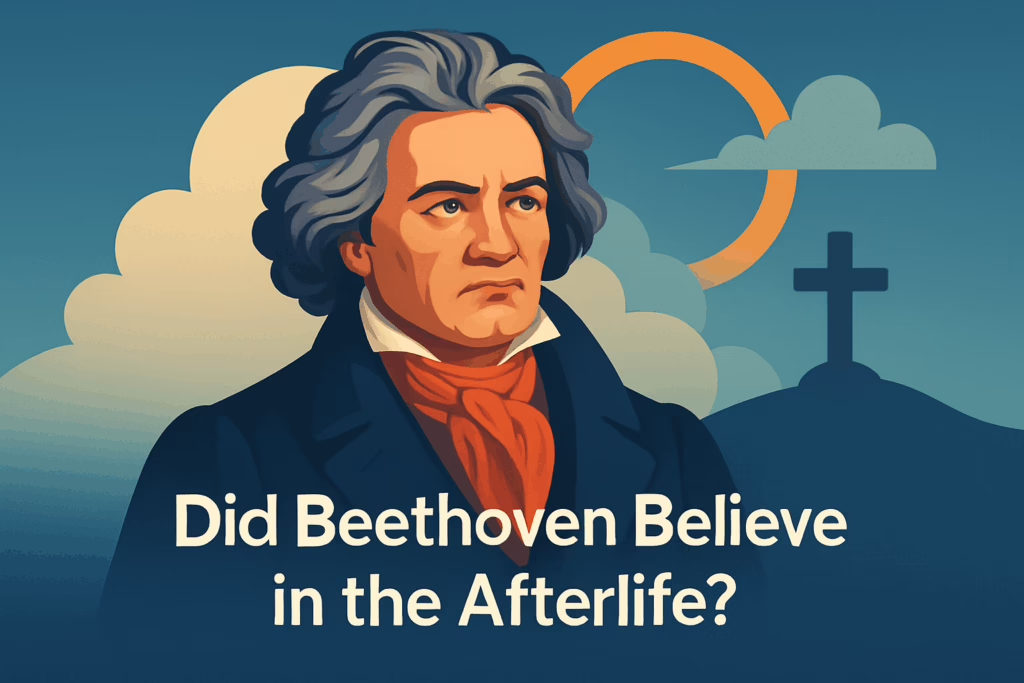
Did Beethoven Believe in the Afterlife?
The question of whether Ludwig van Beethoven, one of history’s most eminent composers, held a belief in the afterlife has intrigued scholars, musicians, and enthusiasts alike. The very notion of the afterlife invites discussions that bridge the spiritual with the philosophical, exploring themes that transcend our mortal existence. Beethoven, renowned for his profound musical creations, left behind not only a legacy of symphonies and sonatas but also a trail of letters, notes, and anecdotes that offer glimpses into his personal beliefs. Understanding his views on the afterlife can provide a deeper insight into the motivations and inspirations behind his compositions and his outlook on life. This investigation matters because it helps us appreciate Beethoven not just as a composer but as a thinker grappling with questions about existence and eternity.
Beethoven’s Life and Its Influences
Beethoven was born in December 1770 in Bonn, in what is now Germany. From a young age, his life was marked by personal and professional struggles. His father, Johann, pushed him into music, hoping to mold him into a prodigy similar to Mozart. As Beethoven matured, he experienced profound personal hardships, including an increasingly strained relationship with his father, financial difficulties, and ultimately the loss of his hearing. These experiences inevitably impacted his belief system and approach to spirituality.
Beethoven’s religious affiliations were a complex blend of the Roman Catholicism he was born into and a broader, more philosophical view of spirituality. The Enlightenment era, which emphasized reason and individualism, also played a significant role in shaping his thoughts. Beethoven’s letters often reveal a man who questioned traditional religious institutions while maintaining a deep sense of spirituality. At times, he referred to God and divine justice, suggesting an acknowledgment of a higher power but expressed skepticism about organized religion.
The Role of Spirituality in Beethoven’s Music
Beethoven’s compositions are imbued with a sense of spirituality that transcends religious dogma. His Symphony No. 9, for instance, employs Friedrich Schiller’s “Ode to Joy,” a celebration of human unity and brotherhood, which some interpret as a nod to the divine or transcendent aspirations of humanity. Through his music, Beethoven communicated emotions and ideas that often touch upon the spiritual essence of existence.
During the composition of the “Missa Solemnis,” Beethoven wrote profoundly about his intentions for the piece. In a letter detailing his goals for this significant work, he expressed a desire to awaken religious feelings of those who heard it. Such statements suggest that Beethoven viewed his music as a conduit for spiritual communion. This intention can be seen as an indicator of his belief in something greater than the tangible world, hinting at an afterlife or eternal realm where music bridges the earthly with the divine.
Personal Correspondence and Reflections
Beethoven’s extensive correspondence offers valuable insights into his thoughts about life and what lies beyond. In his letters, Beethoven often mused about death and the possibility of a continued existence. He frequently expressed a desire for a peaceful end and showed curiosity about what follows life. For instance, he once remarked on the fleeting nature of life and the hope that death would lead to a “new life” or existence.
Despite his struggles, Beethoven sought solace in what he termed the “moral world.” His writings at various points reflect his aspiration towards moral perfection, interpreting music as a means to elevate the soul. Beethoven’s search for moral purity suggests a belief in rewards or reconciliation in an afterlife, where the soul achieves its ultimate fulfillment, unbounded by the trials of earthly life.
Analyzing Beethoven’s Final Months
The final months of Beethoven’s life provide further evidence of his evolving contemplations on the afterlife. Suffering from numerous health issues and aware of his impending death, Beethoven faced the end with bravery and introspection. Accounts from friends and caregivers describe Beethoven as increasingly focused on spiritual matters, with his mind several times drifting toward contemplations of eternity.
| Aspect of Beethoven’s Thoughts | Real-Life Examples |
|---|---|
| Interest in Spirituality | Beethoven’s dedication lines in “Missa Solemnis” and letters invoking God |
| Acknowledgment of a Moral Higher Power | References to divine justice and moral world in letters |
| End-of-life Reflections | Conversations with visitors expressing hope for a new life post-death |
On his deathbed, Beethoven’s final words were noted to have been about hearing in heaven, expressing not just a wish but a belief that the limitations of his earthly life would be overcome in the hereafter. This statement has sparked much discussion and interpretation regarding Beethoven’s spiritual conviction and hope for an afterlife where he could once again experience the full breadth of sound.
Beethoven’s Legacy and Its Reflection on His Beliefs
Beethoven’s musical legacy continues to inspire, demonstrating an enduring resonance with audiences worldwide. It is this timeless quality of his work that points to elements of his belief system, including notions of eternity and transcendence. His compositions resonate with themes of struggle, triumph, and the sublime, all of which align closely with beliefs about an afterlife, where the soul experiences ultimate freedom and expression.
The Ninth Symphony, in particular, stands as a monument to universal brotherhood and joy, ideas that transcend the temporal world, suggesting Beethoven’s aspiration toward a unified, sublime afterlife. By researching Beethoven’s life, thoughts, and music, we gain valuable insights into his views and the profound effect they had on his work and those it continues to touch. Whether he definitively believed in the afterlife remains debatable, but the enduring belief in human spirit and potential found in his compositions often feels like a testament to such faith.
Conclusion: Reflecting on Beethoven’s Beliefs
In understanding whether Beethoven believed in the afterlife, we explore a rich tapestry of personal experiences, correspondences, and an undeniable spiritual presence in his music. While it’s difficult to conclude definitively, Beethoven’s life and works suggest a spiritual and philosophical engagement with the concept rather than adherence to any rigid doctrine. His interest in the moral order, divine justice, and transcendent human potential alludes to a belief in something beyond mere physical existence.
The key takeaway from this exploration is the recognition of Beethoven as a deeply introspective thinker whose reflections on life, death, and the hereafter informed his astounding and enduring musical creations. This aspect of Beethoven’s character teaches us not only about his personal journey but also about the power of music as a vehicle for exploring profound existential questions. We are encouraged to delve deeper into his compositions and letters as a means of connecting with his meditative inquiry into life’s greatest mysteries.
For those inspired by Beethoven’s story, the next step is to experience his music actively, allowing it to guide one’s own reflections on spirituality and existence. Listen to his symphonies or read his letters, seeking the inherent wisdom in his life and work, and perhaps, find personal inspiration in exploring your beliefs about life, death, and the beyond.
Frequently Asked Questions
1. Did Beethoven ever explicitly state his belief in the afterlife?
The topic of Beethoven’s belief in the afterlife is both fascinating and complex, largely because there are no explicit statements from Beethoven himself confirming or denying such a belief. While Beethoven was known for his expressive letters, personal notebooks, and other writings, there isn’t a single documented instance where he clearly articulates his viewpoint on the afterlife in the way we would expect from a concrete answer. However, Beethoven was known to grapple with the notion of existence and mortality, evident in his personal struggles and the depth of emotion expressed in his works. His compositions often touched on themes of triumph, despair, and redemption, which are sometimes interpreted as his philosophical musings on life, death, and what may lie beyond.
2. How did Beethoven’s personal struggles and health issues influence his thoughts on the afterlife?
Beethoven’s personal struggles—particularly his battle with deafness and frequent health challenges—are pivotal to understanding his potential thoughts on the afterlife. These profound hardships were part of his reality, forcing him to confront his own mortality and perhaps contemplate what this meant for him beyond his earthly existence. As his hearing deteriorated, Beethoven became more introspective and reflective. The turmoil he experienced is mirrored in the emotional depth and complexity of his music. The longing for peace, the search for meaning amidst suffering, and the hope for transcendence can be seen as expressions indicating his curiosity or belief in something beyond the tangible world, even if he never verbally confirmed such beliefs.
3. Can Beethoven’s religious background offer any insights into his belief in the afterlife?
Beethoven was raised in a Catholic household, and this religious background might offer some clues into his views on the afterlife. While his personal religiosity is often debated, his references to spirituality in his music suggest an engagement with religious themes. Religious teachings on the afterlife, common in Catholic doctrine, may have influenced his understanding of immortality and existence beyond death. Certain works of Beethoven, like the Missa solemnis, are imbued with sacred themes, hinting at his engagement with ideas about the divine and the eternal. Yet, despite these insights, Beethoven was known for his critical, independent thought, which means that while his upbringing could have influenced him, it does not definitively establish his belief in life after death.
4. Are there any notable works of Beethoven that reflect his views on life and death?
Absolutely, Beethoven’s compositions often reflect his deep engagement with themes of life, death, and beyond. One prominent example is his Ninth Symphony, particularly the “Ode to Joy,” which symbolizes universal brotherhood and could be interpreted as an optimistic embrace of life beyond personal suffering. The “Heiligenstadt Testament,” a letter he wrote despairingly during a low point in his deafness, vividly captures his struggle with thoughts of mortality and his artistic calling. It reveals a man contemplating his legacy and what his continued lack of hearing meant for his life’s purpose. These works exhibit Beethoven’s philosophical wrestling with big ideas about human existence, providing a glimpse into his inner world—one where notions of eternity, existence, and moral purpose were at play, even without explicit mention of an afterlife.
5. What do modern scholars and musicians say about Beethoven’s possible belief in the afterlife?
Modern scholars and musicians often have varied interpretations when it comes to Beethoven’s belief in the afterlife. Some interpret his works as evidence of his belief in a transcendent dimension beyond worldly existence. They see the emotive force in his music as a quest for understanding life’s mysteries, including what could come after. Others view him as a humanist who was more concerned with the here and now, focusing his artistic energy on leaving a lasting legacy that spoke to the human condition, independent of religious or spiritual motifs. Regardless of their positions, scholars and musicians continuously explore Beethoven’s life and works for clues, suggesting that while a definitive answer on his afterlife beliefs may remain elusive, the exploration is a testament to the depth and enduring fascination of Beethoven’s genius.