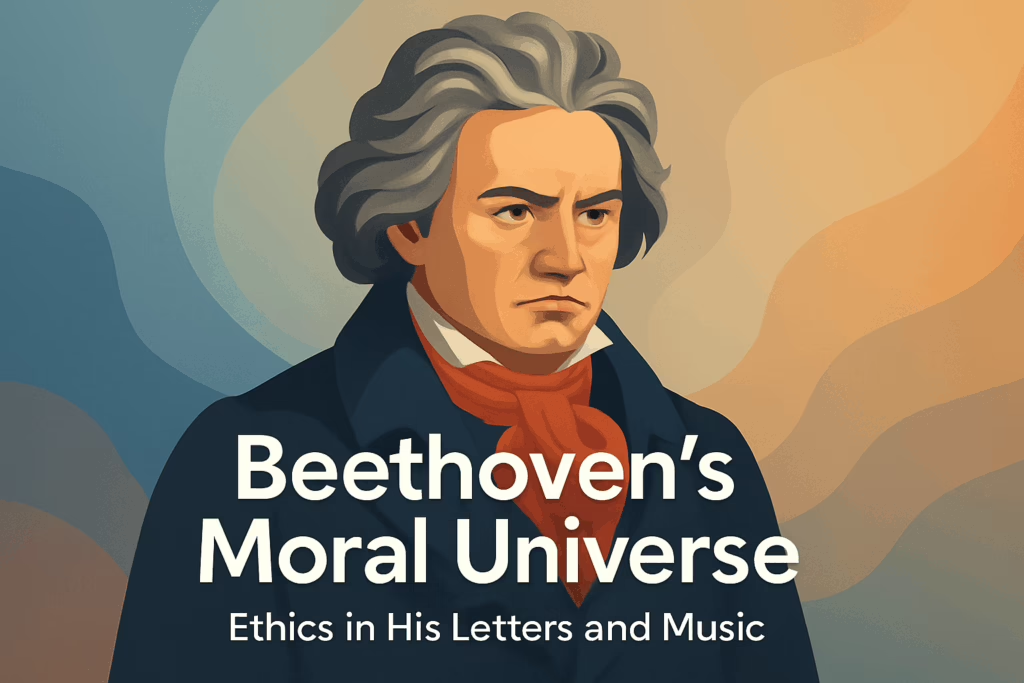
Beethoven’s Moral Universe: Ethics in His Letters and Music
Ludwig van Beethoven, a towering figure in the world of classical music, lived during a time of social upheaval and personal challenges. His compositions not only left a profound impact on the musical landscape, but also reflected a deep moral and ethical framework that governed his life and work. Beethoven’s letters and music reveal a complex interplay between artistic expression and personal values, offering insights into how he grappled with moral dilemmas and societal expectations. Understanding the ethical dimension of Beethoven’s work is crucial for appreciating the depth and humanity of his music. This exploration provides a lens through which listeners can connect more intimately with the themes and emotions expressed in his compositions.
To fully grasp the significance of Beethoven’s ethical considerations, it’s important to define key concepts such as morality, ethics, and their relationship to art. Morality refers to principles concerning the distinction between right and wrong or good and bad behavior. Ethics, on the other hand, is the systematic study of these principles and how they apply to individual and collective conduct. In the context of Beethoven’s life and music, these concepts illuminate how personal convictions manifest in creative expression, offering a richer understanding of his enduring legacy.
The Influence of Enlightenment Ideals
The Enlightenment, a period characterized by an emphasis on reason, individualism, and progress, had a profound impact on Beethoven’s thinking. As a young composer, Beethoven was immersed in the ideas of leading philosophers such as Immanuel Kant and Jean-Jacques Rousseau, whose writings emphasized moral autonomy and the value of human dignity. These ideals resonated deeply with Beethoven, shaping his views on personal freedom and responsibility.
Beethoven’s commitment to Enlightenment principles is evident in his correspondence. In one of his letters, he wrote about the importance of “truth and honesty in all things” and the necessity of living according to one’s convictions. This moral stance is reflected in his music, particularly in pieces like the “Eroica” Symphony, which celebrates heroism and the triumph of the individual will over adversity.
- Example in Music: The “Eroica” Symphony, initially dedicated to Napoleon Bonaparte as a symbol of democratic ideals, was later rededicated to celebrate universal heroism after Beethoven became disillusioned with Napoleon’s authoritarian turn.
- Relevance Today: The “Eroica” continues to be a powerful reminder of the struggle for freedom and the importance of individuality.
The Ethical Implications of Beethoven’s Deafness
One of the most profound challenges Beethoven faced was his progressive hearing loss, which began in his late twenties. This disability not only affected his personal life but also posed significant ethical questions about his ability to compose and perform. In a poignant letter known as the “Heiligenstadt Testament,” Beethoven expressed his deep despair and the temptation to end his life due to the isolation and frustration caused by his deafness.
Despite these challenges, Beethoven’s steadfast commitment to his art and his ethical obligation to fulfill his creative potential drove him to continue composing. His ability to overcome personal adversity is embodied in his music, particularly in the Ninth Symphony, which culminates in the “Ode to Joy,” a powerful affirmation of life and unity.
- Example in Music: The Ninth Symphony, composed when Beethoven was almost completely deaf, represents his triumph over personal adversity and his unwavering dedication to artistic integrity.
- Relevance Today: The Ninth Symphony serves as an enduring testament to resilience and the belief in a shared human experience.
Beethoven’s Social Consciousness and Philanthropy
Beethoven’s ethical framework extended beyond his personal challenges to include a profound social consciousness. He was acutely aware of the inequalities and injustices of his time, and he often expressed these concerns through both his music and actions. Beethoven’s engagement with social issues is evident in his support for political movements advocating freedom and equality.
One illustrative example of Beethoven’s social commitment is his involvement with the “Missa Solemnis,” a composition intended for the installation of his student, Archduke Rudolph, as Archbishop of Olomouc. Though the music is deeply spiritual, its themes of peace, justice, and compassion reflect Beethoven’s hope for a more equitable society.
- Example in Music: The “Missa Solemnis” embodies Beethoven’s vision of universal brotherhood and ethical harmony, transcending religious and cultural boundaries.
- Relevance Today: The work continues to inspire calls for social justice and reminds us of our shared responsibilities to one another.
Interpersonal Ethics and Personal Relationships
Beethoven’s letters also provide insight into his interpersonal ethics and how he navigated complex personal relationships. Despite his sometimes irascible personality, Beethoven valued honesty and integrity in his interactions with others. He often expressed his frustrations with those who did not meet his high ethical standards, and he was quick to defend his principles, even at the cost of personal and professional relationships.
One notable example is Beethoven’s relationship with his nephew Karl, whom he attempted to raise after a tumultuous custody battle. Beethoven’s letters during this period reveal both his paternal devotion and the ethical dilemmas he faced in balancing authority, care, and compassion.
- Example in Music: The String Quartet Op. 131, written during Beethoven’s guardianship of Karl, reflects his emotional struggles and the ethical complexities of familial responsibility.
- Relevance Today: The quartet remains a poignant exploration of personal sacrifice and ethical duty in relationships.
The Role of Ethics in Beethoven’s Creative Process
Beethoven’s approach to composition was inherently ethical, as he was driven by a commitment to authenticity and innovation. He viewed music as a moral force capable of uplifting the human spirit and effecting social change. For Beethoven, the act of creating music was not merely a technical endeavor but a profound ethical pursuit.
One of the clearest examples of this ethical commitment is his development of the late string quartets, which are characterized by radical departures from traditional forms and structures. These compositions, though challenging for audiences at the time, exemplify Beethoven’s belief in the artist’s duty to push creative boundaries and remain true to their inner vision.
In considering the ethical dimensions of Beethoven’s creative process, it’s important to recognize how his dedication to truth and authenticity has influenced generations of artists and continues to inspire those who seek to balance artistic innovation with ethical integrity.
| Composition | Ethical Theme | Impact |
|---|---|---|
| Symphony No. 3 “Eroica” | Individual Heroism | Celebration of personal freedom and heroism |
| Ninth Symphony | Universal Unity | Affirmation of life and shared humanity |
| Missa Solemnis | Social Justice | Vision of universal brotherhood |
| String Quartet Op. 131 | Familial Responsibility | Exploration of personal sacrifice and duty |
Conclusion: Embracing Beethoven’s Ethical Legacy
In examining the ethical dimensions of Beethoven’s letters and music, we gain a deeper appreciation for the complexity and humanity of his work. His commitment to personal integrity, social consciousness, and artistic authenticity continues to inspire audiences and musicians alike. Beethoven’s legacy challenges us to consider how our own values and actions align with the principles of truth, justice, and empathy, both in art and in life.
The exploration of Beethoven’s moral universe serves as a call to action, encouraging us to engage with his music not only as listeners but as active participants in the ethical dialogues it evokes. As we reflect on Beethoven’s life and work, we are reminded of the enduring power of art to bridge divides, elevate the human spirit, and illuminate the path toward a more just and compassionate world.
To harness the full potential of Beethoven’s ethical insights, I encourage readers to dive deeper into his letters and compositions. Let Beethoven’s music guide you on a journey of self-discovery and moral reflection, and consider how his enduring legacy can inspire positive change in your own life.
Frequently Asked Questions
1. How did Beethoven’s personal challenges influence his ethical views and musical compositions?
Beethoven’s life was fraught with personal trials, including his battle with deafness, financial instability, and family issues. Despite these struggles, he consistently demonstrated resilience and a strong moral compass. His letters often reflect his deep concern for justice, equality, and humanity. This ethical worldview is vividly expressed in his music, where he champions ideas of freedom, heroism, and personal triumph. For instance, his Third Symphony, the “Eroica,” originally dedicated to Napoleon, embodies the spirit of heroism and revolutionary ideals. However, once Beethoven learned of Napoleon crowning himself emperor, he withdrew the dedication, indicating his disdain for tyranny and reinforcing how his personal beliefs directly impacted his artistic decisions.
2. What role did Beethoven’s letters play in revealing his moral philosophy?
Beethoven’s letters offer invaluable insights into his personal beliefs and ethical considerations. They reveal a man deeply engaged with the social and political issues of his time, and someone who reflected on his place within that milieu. Through his correspondence, it becomes clear that Beethoven held a profound belief in the brotherhood of man and was influenced by Enlightenment ideals. He eloquently communicated his disdain for aristocratic privilege and his belief in the dignity of the individual. This correspondence not only reveals the ethical underpinnings of his character but also serves as a lens through which his musical compositions can be understood. By studying his letters alongside his music, we gain a comprehensive view of how his ethical values were intertwined with his artistic endeavors.
3. In what ways did societal expectations and norms challenge Beethoven’s moral convictions?
Beethoven lived during a period of significant social upheaval, characterized by the Napoleonic Wars and the shifting political landscape of Europe. These dynamics posed challenges to his moral convictions, particularly concerning issues of freedom and equality. Despite the prevailing norms of deference to aristocratic patrons, Beethoven often resisted such conventions, asserting his independence as an artist. Situations that tested his integrity are found in his dealings with patrons and publishers, where he frequently insisted on fair contracts and artistic freedom, sometimes at great personal and financial cost. Beethoven’s refusal to capitulate to societal pressures, choosing instead to adhere to his principles, underscores his reputation as a musical revolutionary and a progressive thinker.
4. How does Beethoven’s music reflect his ethical and moral ideas?
Beethoven’s music is often seen as a direct expression of his moral and ethical worldview. Thematic elements of struggle, triumph, and humanity are recurrent across his works, serving as a conduit for his philosophical reflections. His Ninth Symphony, featuring the ‘Ode to Joy,’ is a prime example of music imbued with a message of unity and brotherhood. It invokes the idea of universal joy and connection, transcending national and cultural barriers. Additionally, pieces like the “Fidelio” opera encapsulate his beliefs in freedom and justice, telling a tale of personal sacrifice and moral courage. Through such compositions, Beethoven’s music transcends mere auditory experience, emerging as a narrative of ethical deliberation and a quest for societal betterment.
5. What insights about Beethoven’s ethical views can be drawn from his handling of personal relationships in his letters?
Beethoven’s letters to family, friends, and peers offer a window into his ethical mindset, particularly how he navigated personal relationships. His correspondence is marked by efforts to balance duty and personal desires, such as his turbulent relationship with his nephew Karl. Through these letters, we see a man grappling with the expectations of guardianship and familial responsibility, often advising Karl with a mix of sternness and affection. Beethoven’s deep compassion and sense of responsibility also emerge in letters to his financial supporters, where he frequently expresses gratitude and outlines his vision of artistic integrity over monetary gain. These interactions provide a nuanced understanding of his moral priorities and how he sought to live an authentic life aligned with those values.