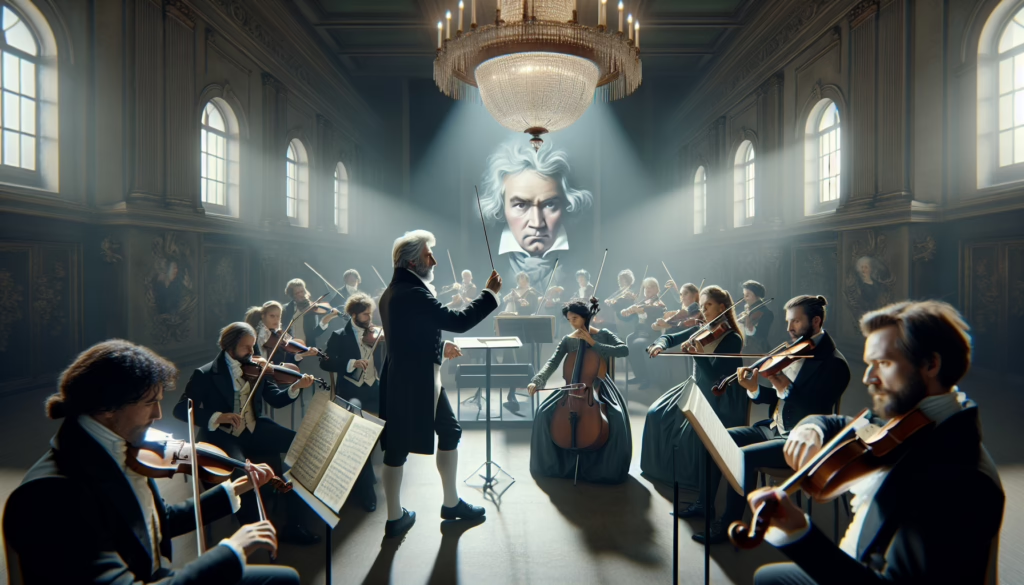
Beethoven’s Choral Works in Live Performance: A Guide
Beethoven’s choral works in live performance occupy a distinctive place in concert life because they unite symphonic scale, operatic intensity, liturgical heritage, and civic drama in ways few composers matched. In this guide, “choral works” includes the obvious landmarks such as the Ninth Symphony, the Missa solemnis, and Christus am Ölberge, but it also extends to shorter cantatas, incidental choruses, concert finales, and occasional works that appear less often on modern programs. For performers, presenters, and listeners, this repertoire matters because every live rendering raises practical questions about forces, venue acoustics, language, balance, historical style, and audience expectations. I have worked on Beethoven programs where one rehearsal adjustment to chorus placement transformed textual clarity, and I have also seen excellent orchestras overwhelm strong choirs simply through stage geometry. That is why a useful guide must do more than praise the music. It needs to explain what these pieces demand in the hall, why some succeed brilliantly in performance while others fail, and how this miscellaneous body of repertoire connects the larger Beethoven in Performance landscape. Treated as a hub, this subject helps readers navigate not just famous scores but the full range of Beethoven’s writing for voices and orchestra in real concert conditions today.
What belongs in Beethoven’s choral performance repertoire
The standard live-performance canon begins with Symphony No. 9 in D minor, Op. 125, whose choral finale has become a global concert staple. Close behind it stands the Missa solemnis in D major, Op. 123, one of the most demanding works in the repertory for chorus, vocal soloists, and orchestra. Christus am Ölberge, Op. 85, Beethoven’s oratorio on Christ at Gethsemane, appears less often but remains essential for understanding his dramatic sacred style. Around these central works sits a wider miscellaneous group: the Choral Fantasy, Op. 80; Meeresstille und glückliche Fahrt, Op. 112; Elegischer Gesang, Op. 118; Calm Sea and Prosperous Voyage in English-speaking programs; the incidental music to Egmont, Op. 84, which includes choruses in complete performances; and occasional cantatas such as the Cantata on the Death of Emperor Joseph II and the Cantata on the Accession of Emperor Leopold II, both early works now revived selectively.
This broader definition matters in live programming because Beethoven did not write “choral music” in a single mode. Some scores are liturgical, some theatrical, some ceremonial, and some overtly public-facing. Presenters who treat them as one undifferentiated category miss their performance logic. The Missa solemnis needs spiritual concentration, immense stamina, and a venue that supports contrapuntal detail. The Choral Fantasy works best when marketed as a hybrid showpiece joining piano concerto energy with a communal vocal conclusion. The early cantatas demand contextual framing because audiences rarely know them. If this page functions as a miscellaneous hub, it should connect those distinctions clearly: sacred versus secular, standalone versus concert finale, familiar masterpiece versus specialist revival. That structure helps readers move deeper into focused articles on each work while understanding why they coexist within Beethoven’s larger performance practice.
What makes these works difficult in concert
Beethoven’s choral writing is hard live because its challenges are structural, not merely technical. Conductors must reconcile symphonic momentum with the physical limits of singers. Choruses need diction that carries through thick orchestration. Soloists face exposed tessituras, often at high dynamic pressure, with little room for comfort. In the Missa solemnis, for example, the “Gloria” and “Credo” require sustained brilliance and rhythmic precision over long spans; fatigue is not incidental but built into the experience. In the Ninth Symphony, the bass-baritone’s opening recitative must project authority immediately, after a full symphonic movement plan has already reshaped the audience’s ear. In Christus am Ölberge, the dramatic pacing can sag if the performers treat it as static sacred music rather than urgent theater.
Acoustics add another layer. Beethoven’s orchestration can become congested in reverberant spaces, especially when modern strings play with full vibrato and brass use a broad symphonic sound. I have repeatedly found that choruses sing more accurately when they can hear timpani articulation and lower strings clearly; muddy stage sound almost always leads to late consonants and blurred entrances. Language compounds the issue. German text in the Ninth or Choral Fantasy requires crisp final consonants, while the Latin of the Mass requires unified vowel strategy across sections. None of these problems are solved by simply hiring excellent musicians. They are solved by rehearsal planning, seating decisions, and tempo choices grounded in the score rather than tradition alone.
How conductors, choruses, and orchestras prepare successfully
Preparation for Beethoven’s choral works starts long before the first tutti rehearsal. The best conductors build a rehearsal sequence around dependencies: chorus note-learning first, then text under rhythm, then sectional work with keyboard, then orchestral integration, then balance corrections in the hall. This sounds obvious, but in practice many organizations under-budget chorus-orchestra calls and then try to fix ensemble instability during dress rehearsal. Beethoven punishes that shortcut. In the “Et vitam venturi” fugue from the Missa solemnis or the final pages of the Ninth, the ensemble either has a shared rhythmic architecture or it falls apart audibly.
Chorus size should match the room and the orchestra, not marketing assumptions. A chamber choir of forty can outperform a larger amateur chorus in textual clarity, while a festival chorus of one hundred twenty may be necessary in a large civic hall. Historically informed groups often use smaller forces and period instruments to reveal articulation and text, whereas major symphony orchestras may favor a bigger choral mass for ceremonial impact. Both approaches can work if the internal proportions are coherent.
| Work | Primary live challenge | Best preparation focus | Common performance risk |
|---|---|---|---|
| Symphony No. 9 | Balance in the finale | Text rhythm with orchestra | Choir covered by brass and strings |
| Missa solemnis | Endurance and fugue precision | Sectional drilling and pacing | Fatigue by the Credo or Agnus Dei |
| Christus am Ölberge | Dramatic continuity | Character-driven rehearsal | Oratorio feels static |
| Choral Fantasy | Coordination after piano-led opening | Cue structure and transitions | Uneven ensemble at entry points |
| Meeresstille und glückliche Fahrt | Color and atmosphere | Dynamic shading and diction | Surface excitement without contrast |
Solo casting is equally decisive. Beethoven often writes for voices that combine heroic projection with agile text delivery, and that combination is rarer than presenters assume. A powerful but inflexible soprano may survive the Ninth and still struggle in the Missa solemnis, where line, blend, and stamina matter differently. In my experience, ensembles succeed most when they cast singers who understand ensemble discipline rather than operatic dominance. Live Beethoven rewards singers who can listen laterally across the quartet and vertically into the chorus-orchestra texture.
Interpretation: modern symphonic style versus historical performance
One of the most important questions in Beethoven performance is whether to approach the choral works through the twentieth-century symphonic tradition or through historically informed practice. The older symphonic model, associated with conductors such as Wilhelm Furtwängler, Herbert von Karajan, and Otto Klemperer, emphasizes weight, breadth, and monumental architecture. It often uses large choruses, sustained legato, and broad tempos that underline grandeur. This can generate overwhelming impact in the Ninth and profound solemnity in the Missa solemnis, but it can also blur counterpoint and obscure text.
Historically informed interpreters such as John Eliot Gardiner, Philippe Herreweghe, and Nikolaus Harnoncourt shifted the conversation by foregrounding Beethoven’s metrical profile, articulation, and sharper dynamic contrasts. Period brass, hard-stick timpani, lighter strings, and reduced vibrato make choral lines more audible and rhythmic motives more pointed. Listeners often hear inner voices and textual detail with unusual clarity in these performances. The tradeoff is that some audience members miss the sheer mass associated with older landmark recordings and live traditions.
The strongest current performances often draw intelligently from both streams. A modern orchestra may adopt leaner articulation, antiphonal violins, and more exact observance of Beethoven’s accents while preserving the carrying power of contemporary instruments. A chorus may sing with clean consonants and transparent vowels without sacrificing warmth. This blended approach is especially effective in miscellaneous repertoire that lacks rigid expectation. For works like Meeresstille und glückliche Fahrt or the early cantatas, conductors have more freedom to shape a persuasive middle path because audiences usually arrive with fewer inherited assumptions than they do for the Ninth.
Programming, audience expectations, and the neglected works
Programming Beethoven’s choral music well means understanding audience recognition curves. The Ninth sells itself. The Missa solemnis attracts serious listeners, church musicians, conservatory students, and seasoned subscribers, but it needs explanation because its rewards are cumulative rather than immediately theatrical. Christus am Ölberge and the early cantatas are harder to place unless tied to a festival theme, an anniversary, Holy Week programming, or a broader exploration of Beethoven’s political and spiritual imagination.
This is where a miscellaneous hub becomes valuable. Readers looking for Beethoven’s choral works in live performance often want to know what lies beyond the standard pair of the Ninth and Missa solemnis. The answer is substantial. The Choral Fantasy makes an excellent season bridge between concerto audiences and choral audiences. Egmont excerpts can anchor a spoken-text or semi-staged production. Elegischer Gesang works beautifully in memorial concerts or paired programs exploring death and consolation. Meeresstille und glückliche Fahrt is ideal when an orchestra wants Beethoven with chorus but not the logistical commitment of a full evening sacred work.
Presenters should also manage expectations honestly. Not every neglected Beethoven score is a hidden masterpiece equal to the canonical works. Some are historically important more than theatrically infallible. Yet live performance can reveal strengths that recordings flatten: ceremonial brilliance, rhetorical boldness, and the excitement of hearing Beethoven test vocal-orchestral forms that later composers would expand. Smart contextual notes, pre-concert talks, and digital program essays increase audience readiness and improve reception for the lesser-known works.
How to listen in the hall and where to go next
For listeners, the best way to hear Beethoven’s choral works live is to track four things at once: text clarity, rhythmic grip, the relationship between soloists and chorus, and the conductor’s long-range architecture. Ask whether the words can be understood at major entries. Notice whether fugues accelerate emotionally without literally rushing. Listen for how the chorus changes function—from commentator to protagonist to collective witness—across different works. In the Ninth, compare the human voices with the symphonic argument already established. In the Missa solemnis, hear how prayer, proclamation, and conflict coexist rather than blending into one devotional mood.
As a hub within Beethoven in Performance, this page points naturally toward deeper articles on each major score, on venue acoustics, on period versus modern instruments, on choral diction in German and Latin, and on the practical economics of mounting large-scale Beethoven. The main benefit of understanding this miscellaneous repertoire is simple: live performances become more intelligible and more rewarding. You hear not just famous melodies but decisions, risks, and traditions at work. Use this guide as your starting map, then follow the individual work pages, compare interpretations, and attend the next Beethoven choral performance with a sharper ear and clearer expectations.
Frequently Asked Questions
What counts as Beethoven’s choral music in live performance?
In concert life, Beethoven’s choral output means much more than the few titles most listeners already know. The obvious pillars are the Symphony No. 9, especially its choral finale, the Missa solemnis, and the oratorio-like Christus am Ölberge. But a fuller guide also includes occasional cantatas, shorter concert works, choruses written for specific civic or ceremonial events, incidental music with vocal sections, and finales that bring chorus into primarily orchestral settings. This broader view matters because Beethoven did not treat chorus as a decorative add-on. He used massed voices to expand the emotional, philosophical, and public reach of a performance.
That is one reason Beethoven’s choral works occupy such a distinctive place on stage. They sit at the meeting point of several traditions at once: the symphonic tradition, the sacred and liturgical tradition, the theatrical world of opera, and the public world of state or civic ceremony. In a single evening, a Beethoven choral score can feel devotional, dramatic, monumental, and politically charged. For audiences, that creates a uniquely high-stakes live experience. For conductors, orchestras, choruses, and vocal soloists, it means the performance must balance clarity of text, architectural control, vocal stamina, orchestral weight, and large-scale momentum. So when people speak about Beethoven’s choral works in performance, they are really talking about a broad and ambitious body of music that asks performers to think beyond category and style labels.
Why is Beethoven’s Ninth Symphony such a special live event?
The Ninth is special because it functions as both symphony and public ritual. The first three movements build a vast instrumental world of tension, struggle, contrast, and release, and then the finale breaks that world open by adding vocal soloists and chorus. In live performance, that moment still has enormous impact. The entrance of the human voice after so much purely orchestral argument can feel shocking, liberating, and communal all at once. Beethoven’s setting of Schiller’s “Ode to Joy” turns the concert hall into a space of collective declaration, which is why the work is often chosen for commemorations, inaugurations, anniversaries, and moments of cultural symbolism.
It is also special because it is so difficult to bring off convincingly. The finale is structurally daring, with abrupt shifts of mood, tempo, texture, and scale. The baritone’s opening declamation must sound commanding and inevitable, the quartet must project over a large orchestra, and the chorus must combine power with precision, especially in fugal and rhythmically driven passages. A successful performance does not just sound loud or grand; it must feel organized from within. The best live Ninths preserve the drama of discovery, making the audience feel that the work’s argument is unfolding in real time rather than simply delivering a familiar monument. That combination of iconic status, technical challenge, and emotional immediacy is what makes a live Ninth unlike almost any other concert experience.
How does the Missa solemnis differ from other Beethoven choral works in concert?
The Missa solemnis differs above all in its spiritual and formal ambition. While the Ninth often presents itself as a public, outward-facing statement, the Missa solemnis can feel more inward, searching, and liturgically rooted, even when it is performed in a concert hall rather than a church. Beethoven takes the traditional Mass text and expands it into a work of immense scale and complexity. Each major section—the Kyrie, Gloria, Credo, Sanctus, and Agnus Dei—has its own dramatic profile, and the whole score asks performers to sustain concentration across long spans of contrapuntal writing, lyrical solos, orchestral commentary, and moments of blazing choral proclamation.
In live performance, the piece often feels less immediately “public” than the Ninth but in some ways even more demanding. It requires exceptional discipline from the chorus, since the writing moves between intricate fugues, transparent prayer-like textures, and explosive declarations of faith. The solo quartet must sing with both chamber-music sensitivity and heroic presence, while the conductor must shape the work as a spiritual journey rather than a sequence of impressive set pieces. Audiences sometimes find the Missa solemnis more overwhelming than overtly theatrical, but that is part of its power. It is one of Beethoven’s most uncompromising scores, and hearing it live reveals the astonishing seriousness with which he treated sacred text, musical architecture, and the expressive possibilities of choral sound.
What are the biggest performance challenges in Beethoven’s choral works?
The greatest challenges come from scale, balance, diction, endurance, and style. Beethoven writes for chorus with a symphonic imagination, which means the singers must often function as a fully integrated instrument within a large orchestral structure rather than simply carrying a melody above accompaniment. Choruses need enough weight to ride over the orchestra in climactic passages, but they also need the flexibility to articulate quick rhythms, shape contrapuntal lines, and deliver text clearly. This is especially important in works like the Ninth and the Missa solemnis, where the words are not incidental; they are central to the work’s expressive and philosophical force.
There is also the issue of stamina. Beethoven can ask soloists and choristers to sustain high energy through long movements, difficult tessituras, and repeated surges of intensity. Conductors must pace rehearsals and performances carefully so that climaxes still have something in reserve. Balance is another major concern. If the orchestra is too heavy, the chorus sounds buried; if the chorus forces, the tone hardens and the text becomes blurred. Style matters as well. Modern performances may differ in size, tempo, articulation, vibrato, and phrasing depending on whether they follow a large romantic tradition, a historically informed approach, or some blend of the two. The most successful performances usually combine grandeur with transparency, allowing Beethoven’s massed sonorities to register without turning everything into a wall of sound.
Are Beethoven’s lesser-known choral works worth hearing live?
Absolutely. The less frequently performed works can be some of the most revealing in understanding how Beethoven used chorus outside the famous masterpieces. Shorter cantatas, occasional pieces, and incidental choruses may not have the same universal profile as the Ninth or the Missa solemnis, but they often show Beethoven experimenting with public rhetoric, ceremonial display, dramatic declamation, and text setting in highly concentrated form. In live performance, these pieces can be especially rewarding because they let audiences hear another side of his imagination: more occasional, more directly theatrical, sometimes more rooted in specific historical events, and often more surprising than expected.
They are also valuable in programming terms. A concert that includes a lesser-known Beethoven choral work can illuminate the better-known ones by context and contrast. Listeners may notice recurring traits: the way Beethoven uses chorus to embody a collective voice, the way brass and timpani heighten public grandeur, or the way he alternates monumental statements with more intimate solo or ensemble writing. For performers, these works can offer challenges that are different in scale but no less interesting, particularly in matters of text projection, character, and ensemble precision. For audiences, they provide the pleasure of discovery. Hearing these rarer scores live reminds us that Beethoven’s relationship with the chorus was not confined to a handful of monuments; it was a continuing part of how he imagined music speaking to community, ceremony, faith, and drama.