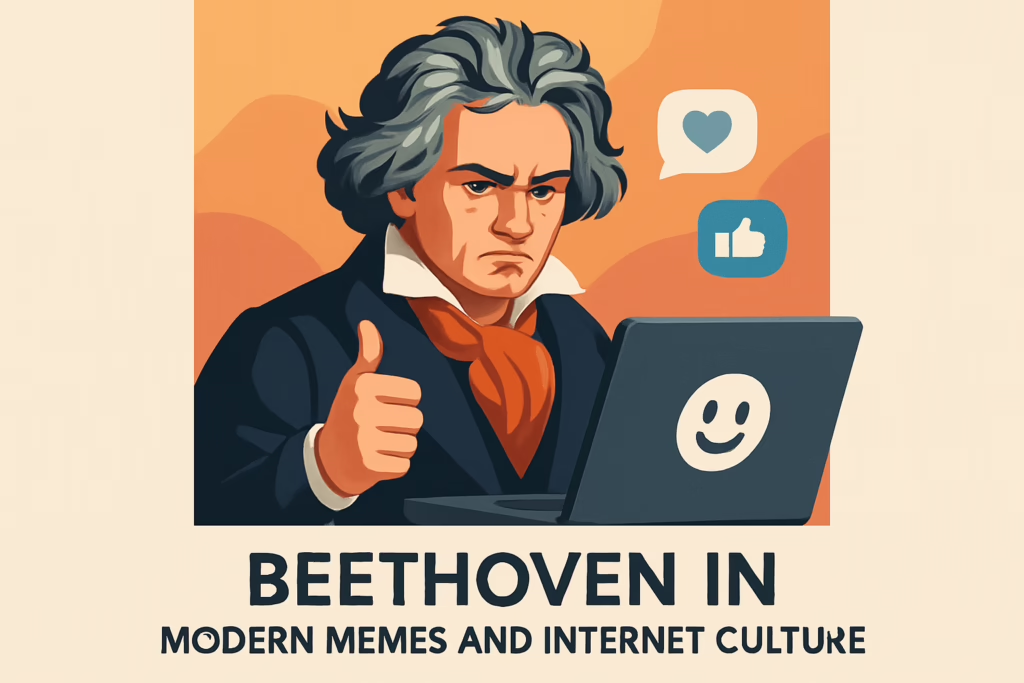
Beethoven in Modern Memes and Internet Culture
Beethoven has become one of the internet’s most durable cultural punchlines, symbols, and remixable icons, appearing in memes, reaction images, viral audio jokes, short-form video edits, gaming references, and niche fandom posts that often have little to do with eighteenth-century concert halls. In modern memes and internet culture, “Beethoven” can mean the historical composer Ludwig van Beethoven, the heroic image of genius associated with him, the famous opening motif of Symphony No. 5, or even the oversized emotional intensity that his music now represents online. This matters because meme culture does not simply trivialize classical music; it repackages it, introduces it to new audiences, and reveals how digital communities translate legacy art into shared language. I have worked with pop-culture content strategies for arts topics, and Beethoven consistently stands out as the classical figure people recognize instantly, even when they cannot name a full symphony. That instant recognition makes him unusually powerful in internet discourse. A meme needs speed, familiarity, and flexibility, and Beethoven delivers all three. His severe portrait, dramatic biography, hearing-loss narrative, and thunderous musical hooks make him ideal for visual and audio reuse across platforms from Reddit and YouTube to TikTok, Instagram, Discord, and X.
To understand Beethoven in memes, it helps to define the key forms. A meme is a repeatable unit of online culture that gains meaning through imitation and variation. Internet culture is broader: it includes platform habits, fandom language, remix practices, algorithm-driven trends, and community in-jokes. In that environment, Beethoven functions as both subject and shorthand. He can signal “classical music,” “genius,” “drama,” “rage,” “elite taste,” “study mode,” or “old thing made weirdly relevant.” Unlike many composers, he crosses multiple digital uses at once. Mozart often appears as the effortless prodigy; Bach as the structured technician; Beethoven as the intense force of emotion and struggle. That framing is historically simplified, but it is culturally effective. It explains why the Fifth Symphony’s short-short-short-long rhythm survives in joke formats, why Moonlight Sonata scores millions of streams in moody playlists, and why users overlay Beethoven imagery on everything from gaming losses to exam panic. As a miscellaneous hub within Beethoven in pop culture, this article maps the main ways he circulates online, the formats where he thrives, the reasons creators keep returning to him, and the limits of turning a major composer into an endlessly reusable internet symbol.
Why Beethoven Works So Well as Meme Material
Beethoven succeeds online because he combines a recognizable face, recognizable music, and a recognizable life story. Few historical artists offer all three. His wild hair and stern portraits read instantly even at thumbnail size, which matters in feeds built around split-second attention. His biography is also meme-ready: a rebellious genius, increasingly deaf, battling hardship, yet producing monumental works. Internet culture prefers compressed archetypes, and Beethoven compresses neatly into “suffering genius who still delivered.” That is not the full man, but it is the version platforms reward.
The music itself helps. The opening of Symphony No. 5 is among the most identifiable motifs in Western music. It works as a punchline because it is short, percussive, and dramatic. In practical editing terms, creators can drop those four notes behind clips of bad decisions, dramatic reveals, villain entrances, or exaggerated existential dread. Fur Elise and Moonlight Sonata perform different jobs. Fur Elise often signals beginner piano culture, nostalgia, or “I know one classical piece.” Moonlight Sonata, especially the first movement, signals melancholy, introspection, goth aesthetics, or cinematic sadness. That range gives Beethoven unusual memetic breadth.
There is also a status dimension. Posting Beethoven can be ironic, sincere, or both. Users deploy him to joke about being “cultured,” to parody highbrow taste, or to genuinely share discovery of classical music through playlists, anime edits, film scenes, and game soundtracks. The internet thrives on layered meaning, and Beethoven supports it. One image can mock elitism while also expressing real admiration.
Common Meme Formats and Platform-Specific Uses
Different platforms shape different Beethoven memes. On Reddit and X, static images and quote misattributions circulate widely. These include fake Beethoven captions about modern annoyances, productivity, romance, or hating distractions. The joke often depends on contrast: an imposing nineteenth-century portrait paired with very online frustration. On Instagram and Tumblr, Beethoven appears in aesthetic posts that mix candles, sheet music, dark academia imagery, and moody excerpts. On TikTok and YouTube Shorts, audio drives the format, so creators use Beethoven as soundtrack shorthand for drama, intellect, chaos, or emotional release.
Reaction memes are especially common. A severe Beethoven portrait may be used to mean “I warned you,” “this is serious now,” or “my anger has entered symphonic form.” Another frequent format places classical music over absurdly mundane content, creating comic inflation. A cat jumping off a counter with the Fifth Symphony behind it becomes a joke because Beethoven lends world-historical significance to a trivial event. I have seen arts brands use exactly this contrast to reach younger audiences without forcing a lecture on music history.
Editing culture has expanded Beethoven’s internet life beyond simple jokes. Fan editors sync crescendos to anime battles, sports comebacks, cinematic reveals, and videogame boss fights. These edits work because Beethoven’s music still delivers clean emotional architecture: tension, escalation, release. In algorithmic video environments, that structure increases watch time because viewers feel a payoff building. The old music survives partly because it remains highly editable.
| Format | Typical Beethoven Use | Why It Works |
|---|---|---|
| Reaction image | Stern portrait with modern caption | Instant contrast between historical gravity and trivial complaint |
| Short-form video edit | Symphony No. 5 or Moonlight Sonata under dramatic footage | Clear emotional cues and recognizable audio hooks |
| Study or mood post | Moonlight Sonata, late quartets, piano sonatas | Signals focus, seriousness, and introspection |
| Parody high-culture joke | “Only intellectuals understand this” style posting | Lets users mock and perform sophistication at once |
| Gaming meme | Boss-fight or failure clips with Beethoven soundtrack | Turns ordinary play into epic narrative |
Beethoven Audio Memes, Remixes, and Viral Sound Culture
Audio is where Beethoven remains strongest. Public-domain compositions are easy to perform, sample, and reinterpret, which removes licensing barriers that block many modern songs. A creator can use a recording they own or a licensed library version and instantly access centuries of cultural weight. This practical advantage matters. Memes do not spread only because an idea is funny; they spread because the material is available, editable, and familiar.
The most common audio meme pattern is exaggeration through classical scoring. If a clip shows a friend failing an easy task, adding the Fifth Symphony reframes the moment as a tragic destiny. If a clip shows someone staring out a rainy window, Moonlight Sonata transforms it into stylized sorrow. Fur Elise often appears in beginner-piano jokes, ringtone nostalgia, and “everyone knows this piece but not the title” explainers. These uses answer a real audience question: what Beethoven music do people actually hear online? Usually, it is the Fifth, Fur Elise, Moonlight, Ode to Joy, and occasionally the Pathétique Sonata or Symphony No. 9 finale.
Remix culture pushes further. Producers have blended Beethoven motifs with trap beats, lo-fi study loops, EDM drops, metal guitar covers, and game soundtrack aesthetics. Some versions are novelty content, but others serve as gateways. Streaming and search data routinely show that familiar hooks pull listeners toward full works. In practice, audiences often encounter Beethoven first through a meme sound, then through a recommendation, then through a concert clip or playlist. Internet culture can flatten art, but it can also create discovery paths.
Gaming, Fandoms, and Cross-Media References
Beethoven is deeply woven into gaming and fandom spaces because his music communicates stakes quickly. Streamers and editors regularly use Beethoven to dramatize speedruns, impossible challenge attempts, fake “final boss” moments, and spectacular failures. The joke lands even when viewers know little about classical music. They understand that Beethoven means intensity. In multiplayer communities, that shared understanding is enough.
Anime, film, and television fandoms also recycle Beethoven references. When a scene involves obsession, genius, rivalry, or emotional collapse, users often score fan edits with Beethoven because his reputation amplifies those themes. This is especially true in fandoms built around gifted but unstable characters. The composer’s image has become a narrative shortcut for “grand, tortured brilliance.” That shorthand appears in AMVs, fancams, ship edits, and character playlists.
There is also overlap with broader pop culture franchises. Beethoven references surface in cartoons, commercials, and films, then return to the internet as clip-based memes. That loop matters. Many users do not know Beethoven from concert culture first; they know him from Looney Tunes, school music classes, movie trailers, or the use of Ode to Joy in advertising and major event broadcasts. Internet culture builds on existing recognition rather than creating it from scratch.
Irony, Prestige, and the “Cultured” Persona Online
One of the most interesting aspects of Beethoven memes is how often they revolve around taste performance. Users post Beethoven to signal refinement, then undercut that signal with irony. The joke may be “I am extremely sophisticated,” while the actual content is a chaotic late-night snack, a gaming meltdown, or a screenshot of unread emails. This tension between prestige and absurdity is central to online humor.
Dark academia aesthetics intensified this trend. Between 2020 and 2023 especially, Beethoven portraits, sheet music textures, candlelit desks, and grayscale sculptures circulated heavily on TikTok, Pinterest, and Instagram. In some posts, Beethoven represented serious engagement with classical art. In others, he was simply visual shorthand for moody intelligence. Either way, he benefited from the same attention economy that boosts visually coherent symbols.
From experience, the strongest cultural content does not fight this ironic layer; it explains the real history while recognizing the joke. Audiences respond better when institutions admit that Beethoven can be both monumental and memeable. That balance preserves credibility and increases reach.
Limits, Misreadings, and Why Context Still Matters
Meme culture makes Beethoven accessible, but it also distorts him. The internet repeatedly reduces him to three clichés: angry genius, sad piano man, and deaf hero. Each contains some truth, yet all are incomplete. Beethoven wrote far more than the handful of pieces most memes use, and his artistic development across early, middle, and late periods cannot be captured by a single emotional label. The late string quartets, for example, rarely appear in meme circulation despite being central to his long-term reputation among musicians.
There is also a factual problem. Misattributed quotes spread constantly, and many users pair Beethoven portraits with sayings he never wrote. This weakens public understanding, especially when educational accounts repeat the error. Reliable context comes from established sources such as scholarly editions, major orchestras, conservatory materials, and reference works like Grove Music Online. When creators use Beethoven responsibly, they can keep the joke while avoiding misinformation.
Another limitation is overuse. Because the Fifth Symphony is so recognizable, it can become generic shorthand for “something dramatic happened.” That reduces a radical work to sonic wallpaper. Yet even this has a paradoxical upside: constant reuse keeps Beethoven present in collective memory in a way many equally important composers are not.
Beethoven in modern memes and internet culture is not a side note to his legacy; it is now one of the main ways global audiences encounter him. Online, he functions as composer, character, symbol, soundtrack, status marker, and reusable joke format all at once. His image thrives because it is visually distinct, his music survives because it remains emotionally immediate, and his biography persists because digital culture favors powerful archetypes. Across reaction images, dramatic edits, gaming clips, fandom videos, study playlists, and ironic “cultured” posts, Beethoven continues to do what strong cultural figures always do: adapt to the medium without disappearing inside it.
For readers exploring the broader Beethoven in pop culture topic, this miscellaneous hub provides the map. The key takeaway is simple: memes do not merely make Beethoven funny; they keep him legible in a crowded digital environment. They can oversimplify, but they also create entry points that lead to recordings, performances, commentary, and deeper historical curiosity. If you want to understand why Beethoven still matters outside concert halls, follow the memes, the edits, and the audio trends. Then trace them back to the works themselves. That is where the internet joke becomes lasting cultural connection.
Frequently Asked Questions
Why does Beethoven show up so often in memes and internet culture?
Beethoven appears so often in memes because he is instantly recognizable, visually dramatic, and culturally loaded in a way that works perfectly online. His intense portrait style, wild hair, stern expression, and reputation as a tortured genius make him easy to turn into a reaction image, joke template, or exaggerated symbol of “serious art” colliding with chaotic internet humor. Even people who know very little about classical music can usually identify the name Beethoven or at least recognize that he represents classical prestige, intensity, and genius.
That broad recognition gives meme creators a lot to work with. A post can use Beethoven to parody intellectualism, mock over-the-top seriousness, contrast “high culture” with absurd modern trends, or dramatize a situation with an exaggerated sense of importance. The internet thrives on remixing symbols that carry immediate meaning, and Beethoven is one of those symbols. He can stand for discipline, emotional volatility, artistic perfectionism, elite culture, or simply “that famous classical guy,” depending on the joke.
Another reason is that Beethoven’s legacy is already full of familiar cultural fragments. The opening motif of Symphony No. 5 is one of the most recognizable pieces of music in the world, so it can be quoted in short videos, sound effects, parody edits, and punchline reveals without needing explanation. His image and music have been reused for decades in film, commercials, cartoons, and school curricula, which means the internet inherited a ready-made set of references. In meme culture, familiarity is power, and Beethoven has an unusually strong stockpile of familiar signals.
When people reference “Beethoven” online, are they always talking about the historical composer?
No. Online, “Beethoven” often functions as a flexible cultural shorthand rather than a precise historical reference. Sometimes a meme is genuinely about Ludwig van Beethoven the composer, his deafness, his music, his temperament, or his role in music history. But just as often, “Beethoven” means something broader: the stereotype of a misunderstood genius, the image of classical music as dramatic and elite, or the instantly recognizable “da-da-da-dum” energy associated with Symphony No. 5. In many meme contexts, the name is doing symbolic work more than educational work.
This is common in internet culture. Historical figures are frequently flattened into icons that represent a few highly portable ideas. Beethoven is especially vulnerable to this because his public image is so strong. His visual branding, for lack of a better word, is incredibly meme-friendly: intense face, flowing hair, and an aura of emotional thunder. A creator can drop Beethoven into a joke to signal “high art,” “rage,” “genius,” or “musical drama” in a split second.
There is also another layer of ambiguity: some users may think of Beethoven the dog-film character before they think of Beethoven the composer, especially in playful or nostalgic posts. In other cases, gaming communities, short-form video creators, or fandom spaces use “Beethoven” in highly specific in-jokes detached from the actual person. So while the historical composer remains the source of the reference, internet usage often turns “Beethoven” into a remixable cultural container that can hold multiple meanings at once.
Why is Beethoven’s Fifth Symphony so common in jokes, edits, and viral audio memes?
The opening of Beethoven’s Fifth Symphony is one of the most recognizable musical phrases ever written, which makes it ideal for internet reuse. Memes and short-form content depend on quick recognition, and those first four notes communicate “something dramatic is happening” almost instantly. They are short, punchy, and emotionally charged, so they fit perfectly into reaction videos, comedic reveals, ironic buildups, dramatic interruptions, and parody sound design.
Its popularity also comes from how adaptable it is. The motif can be played seriously, distorted for comedy, remixed into electronic beats, inserted into gaming clips, or used as a mock-epic soundtrack for trivial situations. A creator can pair it with a minor inconvenience, a dramatic text exchange, or an absurd overreaction and get an immediate comic effect because the music suggests extreme stakes. That mismatch between grand seriousness and everyday nonsense is a core engine of meme humor.
There is also a historical media factor. Long before social platforms existed, popular culture had already turned the Fifth Symphony into a universal symbol of fate, tension, urgency, and importance. Cartoons, movies, ads, and educational media reused it constantly. Internet culture did not invent that association; it inherited and accelerated it. Because so many users already know what the motif signifies, it continues to thrive in viral formats where speed, familiarity, and exaggerated emotional payoff matter most.
Is using Beethoven in memes disrespectful to classical music, or can it help keep his legacy alive?
It can be both irreverent and beneficial, and those two things are not necessarily in conflict. Memes often strip historical figures of nuance, simplify their achievements, and turn them into punchlines. That can absolutely flatten Beethoven into a cliché: the angry genius, the old dead composer, the dramatic soundtrack machine. For serious music historians, performers, or educators, that oversimplification can feel limiting because it leaves out the complexity of his life, his innovations, and the emotional depth of his work.
At the same time, internet humor keeps Beethoven visible in a cultural landscape crowded with rapidly changing trends. A meme may be silly, but it can also be a point of entry. Many people first become curious about historical figures through jokes, reaction posts, or viral audio snippets. Someone who hears Symphony No. 5 in a meme or sees Beethoven referenced in a comedy edit may go on to search for the full piece, learn about his deafness, or discover other compositions. In that sense, meme culture can function as accidental outreach.
The more useful question is not whether memes are “respectful” in a formal sense, but whether they create cultural relevance. Beethoven remains alive in the public imagination partly because he is constantly being reinterpreted. Internet culture does not preserve him in a museum case; it keeps dragging him into new contexts. That process can be messy, inaccurate, and funny, but it also shows that his image and music still carry extraordinary symbolic power. For a composer centuries removed from his own era, that continued relevance is remarkable.
What kinds of Beethoven-related content are most popular across platforms like TikTok, X, YouTube, and gaming communities?
The most popular Beethoven-related content tends to fall into a few repeatable categories. One major category is reaction-based humor: Beethoven’s portrait used to represent fury, concentration, artistic judgment, or exaggerated disappointment. Another is audio-driven content, especially clips built around Symphony No. 5 or other familiar classical passages used for comedic timing, dramatic emphasis, or fake seriousness. These formats work well across TikTok, YouTube Shorts, and meme repost ecosystems because they deliver instant recognition and emotional contrast.
Short-form video platforms also favor Beethoven edits that juxtapose old and new culture. Creators might pair his music or image with gaming failures, overdramatic school situations, study-content parody, “villain origin” jokes, or hyper-edited transformations from chaos to sophistication. On X and image-based meme spaces, Beethoven is often used in quote-posts and reaction images to signal elite taste, mock pretension, or heighten absurd drama. The joke often depends on putting a figure associated with canonical greatness into a trivial or unserious modern scenario.
In gaming and niche fandom communities, Beethoven references can become even more layered. Players may use his music in boss-fight edits, strategy montages, or ironic “genius mode” clips. Fandom spaces may remix him into anime-style edits, historical crossover jokes, or fandom lore posts that blend classical references with highly online humor. What unites all of this is not strict historical fidelity but remixability. Beethoven survives online because his image, name, and music can be detached from their original setting and inserted into almost any format where drama, irony, prestige, or chaos needs a recognizable face and sound.