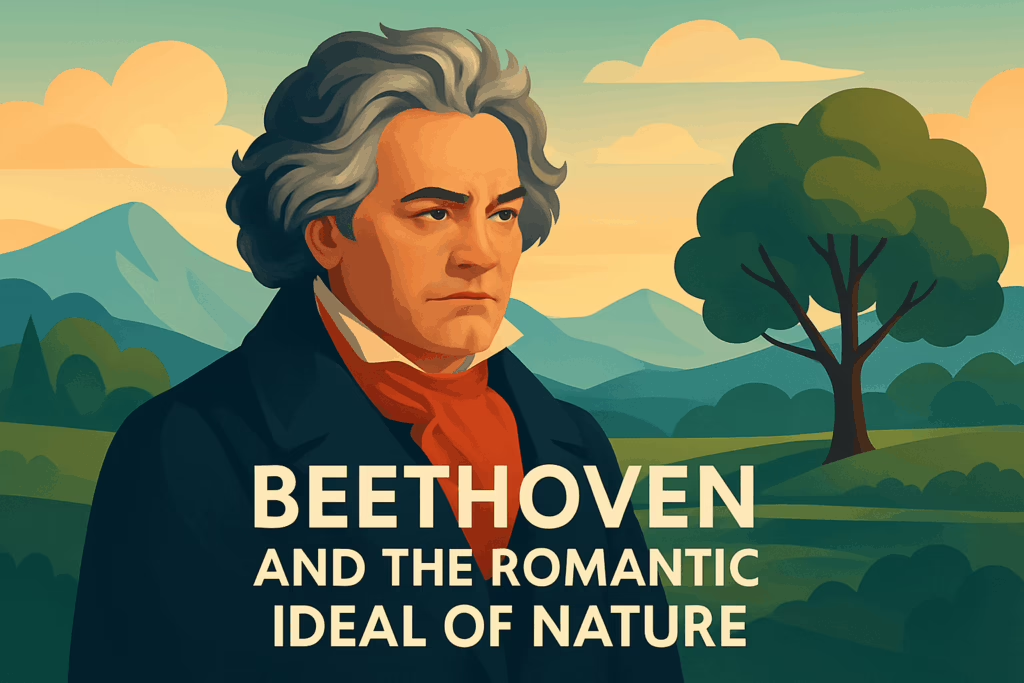
Beethoven and the Romantic Ideal of Nature
Introduction to Beethoven and the Romantic Ideal of Nature
The Romantic period in Western music, which flourished during the 19th century, was characterized by an intense focus on individual expression and the grandeur of the natural world. During this epoch, ideologies about nature shifted dramatically, emphasizing its sublime and transcendental qualities. Ludwig van Beethoven, a towering figure in classical music, stands as a quintessential example of an artist who embodied the Romantic ideal of nature in his compositions. He not only drew inspiration from the natural world but also sought to capture its essence in his music.
The concept of the Romantic ideal of nature involves viewing the natural environment as a source of emotional and spiritual sustenance. This approach diverges from earlier views that often portrayed nature as something to be conquered or merely picturesque. Nature, for Romantics like Beethoven, was a refuge and a mirror for human emotion. This shift gave rise to a wealth of artwork, literature, and music that extolled the beauty and power of the natural landscape.
Understanding Beethoven’s relationship with nature is important because it provides insight into how his music expresses universal human experiences. It illustrates the broader Romantic ethos and reveals how music can transcend mere notes and become a medium for profound expression. Moreover, Beethoven’s works offer timeless reflections on the natural world that continue to inspire audiences today, bridging the gap between past and present.
Beethoven’s Immersion in Nature
Beethoven’s deep-seated affinity for nature was evident throughout his life. Unlike many of his contemporaries who were drawn to the sophistication of urban life, Beethoven often sought solitude in the countryside. He would frequently escape the hustle and bustle of Vienna to retreat into the tranquillity of the rural landscape. These escapes were not mere pastimes but essential to his creative process and well-being. Walking through the woods and sitting by streams, he found inspiration and solace.
One notable example of this connection to nature is Beethoven’s Symphony No. 6 in F major, known as the “Pastoral Symphony.” It is a vivid portrayal of his love for the countryside. Each movement captures a different aspect of rural life, from the peacefulness of a sunny day to the invigorating energy of a storm. Beethoven’s pastoral backdrop is not just a setting but an active participant in the narrative, reflecting the emotions and experiences of those who immerse themselves in nature.
Interpretation of Nature in Beethoven’s Music
Beethoven’s music reflects his imaginative interpretation of nature, often blurring the line between the natural and the human. He infused his compositions with the essence of the landscapes that inspired him, creating melodies and motifs that evoke natural phenomena and human sentiments alike.
In the “Pastoral Symphony,” for instance, Beethoven uses musical themes to represent elements of nature directly. The second movement, “Scene by the Brook,” employs repeated patterns to mimic the gentle flow of water. Such techniques demonstrate Beethoven’s ability to transform musical notes into vivid images of the natural world.
Besides the “Pastoral Symphony,” Beethoven’s Piano Sonata No. 15 in D Major, Op. 28, nicknamed the “Pastoral Sonata,” also evokes nature. Through its rolling melodies and gentle rhythms, listeners can almost picture themselves in a tranquil countryside scene, surrounded by the serenity of the natural world.
The Role of Nature in Beethoven’s Emotional Expression
For Beethoven, nature served as a vital tool for emotional expression. His humanistic outlook saw nature as a reflection of the human condition—an extension of the soul’s longing, joy, and anguish. Beethoven’s works often oscillate between serene beauty and tempestuous intensity, much like the natural world itself.
| Beethoven Composition | Natural Element | Emotional Tone |
|---|---|---|
| Pastoral Symphony | Flowing River | Tranquility |
| Waldstein Sonata | Sunrise | Hope |
| Piano Sonata No. 14 “Moonlight” | Night Sky | Mystery |
The “Moonlight Sonata” is another masterpiece where Beethoven intertwines nature and emotions. The piece is reminiscent of an enchanting night sky, with its brooding first movement creating an atmosphere of mystery and introspection. Nature, in this context, becomes a backdrop for inward reflection and emotional depth.
Nature as a Source of Healing and Inspiration
Beethoven’s turbulent personal life, punctuated by loss, deafness, and social isolation, often led him to seek refuge in nature’s embrace. The natural world became a sanctuary where he could find peace and creativity amidst personal struggles. His introspective wanderings in the countryside were as much about connecting with the world outside as they were about understanding his own inner self.
In moments of despair, Beethoven’s connection to nature remained unbroken. He famously wrote to a friend about his deep appreciation for nature, indicating that it was his unwavering source of inspiration and strength, even when faced with adversity.
Beethoven’s affinity for nature also paralleled the Romantic belief in the healing and transformative power of the natural world. Just as forests renew themselves, Beethoven believed that nature could rejuvenate the human spirit, infusing his music with optimism and vitality.
Conclusion: Embracing Beethoven’s Romantic Ideal of Nature
Beethoven’s enduring legacy is intricately linked with his interpretation of the Romantic ideal of nature. His profound connection with the natural world not only shaped his creative process but also enabled him to explore the depths of human emotion. Through his music, Beethoven illustrated how nature’s grandeur and tranquility reflect the complexities of the human experience.
For modern audiences, Beethoven’s music serves as a reminder of nature’s majesty and its capacity to inspire. His compositions offer a pathway to appreciating the beauty and therapeutic power of the natural world, encouraging individuals to seek solace and inspiration from their surroundings.
As you listen to Beethoven’s works, let the melodies transport you to serene landscapes and tumultuous storms, making time to experience the healing power of nature in your own life. Appreciate the quieter moments as opportunities for reflection, allowing the natural world to ignite creativity and emotional depth. Take a moment today to walk in a park, sit by a river, or simply step outside, letting Beethoven’s Romantic vision guide you toward a deeper connection with the world around you.
Frequently Asked Questions
1. How did Beethoven embody the Romantic ideal of nature in his music?
Beethoven is often celebrated as a pioneer who bridged the Classical and Romantic periods in music. The Romantic ideal cherished nature as a powerful and sublime force, one that inspires deep emotion and spiritual awakening. Beethoven took this idea and wove it seamlessly into his compositions, particularly with his Symphony No. 6, “Pastoral.” This piece is a perfect example of how Beethoven used music to convey the beauty and drama of the natural world. The symphony does not merely mimic sounds of nature, like birds chirping or brooks babbling, which were innovative for his time; it delves deeper to evoke the emotional and spiritual response that these natural elements inspire in the human psyche. Beethoven’s portrayal of a thunderstorm in the symphony’s fourth movement captures nature’s mighty power in a transcendent way, encapsulating the Romantic vision of nature as both nurturing and overwhelming. By infusing his compositions with the vivid imagery and ethos of the natural world, Beethoven created music that engaged listeners on a profound emotional level, emphasizing the interconnection between humanity and the vast, awe-inspiring forces of nature.
2. Why was nature such a pivotal theme for composers during the Romantic era?
During the Romantic period, spanning from the late 18th century to the early 19th century, society experienced significant changes due to the Industrial Revolution, which brought about urban expansion and a disconnect from the natural world. In response, Romantic composers like Beethoven found solace and inspiration in nature, viewing it as an antidote to the burgeoning mechanization and societal strife. Nature was revered not only for its aesthetic beauty but also for its ability to elicit deep emotional responses and introspection. The connection to nature offered an escape from reality, a sanctuary for reflection, and a means to explore the transcendent and sublime. Musicians sought to reflect these complex relationships with nature through their compositions, which allowed audiences to experience a sense of wonder and awe amid the chaos of modern life. The Romantic ideal of nature went beyond mere admiration; it was seen as an empowering, almost divine force that had the power to transform human consciousness and elevate the soul, making it an ideal subject for the era’s expressive and emotive musical explorations.
3. What specific elements of Beethoven’s music reflect the Romantic view of nature?
Beethoven masterfully integrated several musical elements that align with the Romantic view of nature. One primary feature is his use of ‘Leitmotive’, or recurring musical themes, which evoke specific natural scenes and sentiments throughout his compositions. These motifs often mimic environmental sounds, such as birdsongs or rustling leaves, to create an immersive natural experience. Another significant element is his dynamic range and dramatic contrasts in his musical scores. Such contrasts draw from the unpredictable and sometimes tumultuous aspects of nature, as evidenced in the intense crescendos and powerful orchestrations in pieces that convey climatic elements like thunderstorms or peaceful pastoral scenes. Additionally, Beethoven employed the use of unexpected harmonic shifts and modulations to mirror the untamed unpredictability inherent in the natural world. His innovative structural choices and the emotive power of these elements not only captured the Romantic ideal of nature as something awe-inspiring and emotive but also contributed to the sensory richness and emotional depth that define his enduring legacy.
4. How does Beethoven’s personal life influence his perspective on nature in his compositions?
Beethoven’s personal life profoundly influenced his perspective on nature, which in turn translated into his compositions. Known for his tempestuous personality and struggles with health, including his progressive hearing loss, Beethoven found refuge and solace in nature. Retreating to the countryside allowed him to escape the social and emotional pressures of urban life in Vienna, and it was in these locales that he often discovered creative inspiration. His deep connection to the outdoors is vividly expressed in works like the “Pastoral” Symphony, which directly relays his feelings toward nature’s serenity and majesty. Contemplation in natural settings not only provided Beethoven with a sense of peace but also ignited his creativity, helping him to channel his personal adversities into music that resonated with the Romantic ethos. Nature’s role as a muse is evident in the way Beethoven’s compositions blend internal reflection with external beauty, representing his belief in nature’s restorative powers and its capacity to elevate human emotions to transcendental heights.
5. In what ways did the societal changes of Beethoven’s time impact his musical portrayal of nature?
The dramatic societal changes of Beethoven’s era played a pivotal role in shaping his portrayal of nature in music. As the Industrial Revolution took hold of Europe, rapid technological advancements and urbanization began to alter the landscape and people’s relationship with the natural environment. This upheaval fueled a Romantic backlash, where many artists and musicians sought to recapture the essence and purity of nature as a counterbalance to societal progress and the alienation it sometimes caused. Beethoven, acutely aware of these societal shifts, utilized his music to comment on and reflect this shift. His works often depict the dichotomy of human progress against the enduring presence of nature, using the latter as a sanctuary in an increasingly mechanized world. The nostalgic and idealized view of nature prevalent in Beethoven’s compositions resonates with his audiences, offering spiritual solace and a reconnection to natural beauty amidst the turmoil of modernity. This response to societal change not only bolstered the Romantic ideal of nature but also reinforced music’s role as a powerful tool for social commentary and introspection during times of transition.