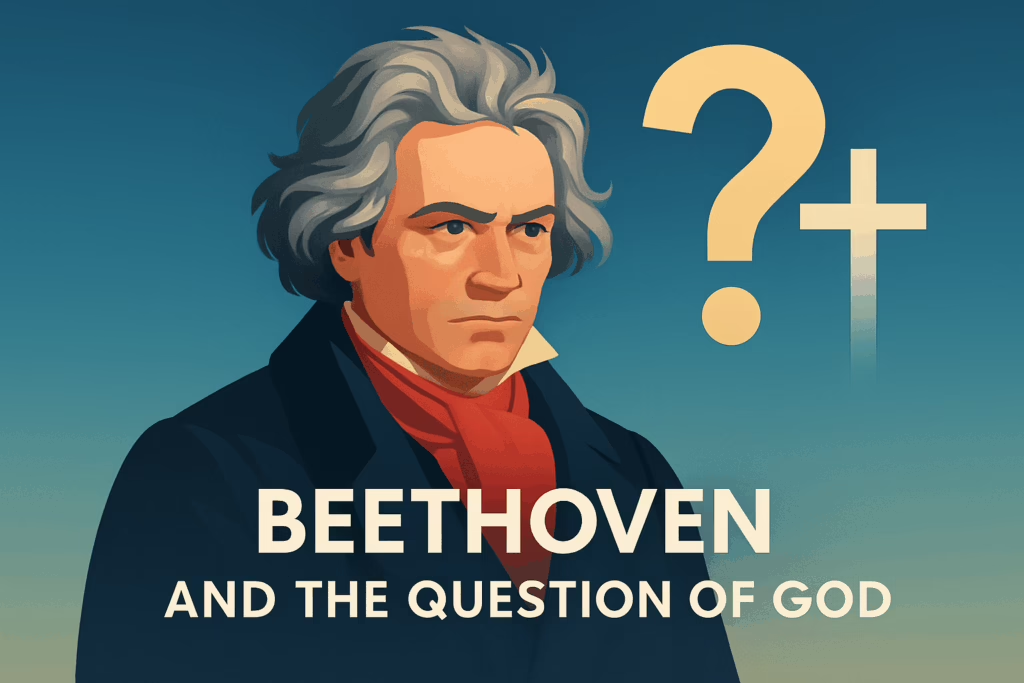
Beethoven and the Question of God
Ludwig van Beethoven, one of the most eminent composers in the history of Western music, is renowned for his powerful symphonies and profound contributions to the arts. Yet, beyond his musical genius lies a fascinating exploration of spirituality and belief. The question of Beethoven’s relationship with God and religion has intrigued historians and music scholars alike. Understanding Beethoven’s spiritual journey offers insight into not only his music but also the complexity of his character. As we delve into Beethoven’s life, we explore his views on divinity and how they find reflection in his compositions. This inquiry matters because it provides a deeper context for Beethoven’s works, allowing both amateur listeners and seasoned musicians to appreciate the transformative power behind his compositions. The exploration of Beethoven’s spirituality illuminates broader themes of faith, creativity, and the human condition.
Beethoven’s Religious Upbringing and Early Influences
Ludwig van Beethoven was born in 1770 in Bonn, a city within the Holy Roman Empire, where Catholicism played a dominant role in daily life. His family was rooted in this tradition, which undeniably shaped his early views on religion. As a boy, Beethoven would have been exposed to religious rituals and practices, attending church regularly with his family. Despite this upbringing, Beethoven’s relationship with established religion was complex and often conflicted.
One core influence during Beethoven’s formative years was the Enlightenment, a movement characterized by an emphasis on reason, individualism, and skepticism of traditional doctrines. This intellectual climate, which permeated European thought, encouraged questioning of established religious views. Beethoven’s teachers and mentors, many of whom were sophisticated thinkers of the time, likely introduced him to Enlightenment ideas. This exposure would have encouraged the young composer to contemplate issues of faith and reason, laying the groundwork for his evolving spiritual perspectives.
Beethoven’s Personal Beliefs and Writings
Throughout his life, Beethoven’s personal letters and notes reveal a deep, often tumultuous engagement with the concept of God. His writings frequently express reverence for a divine presence yet exhibit skepticism towards organized religion. Beethoven’s “Heiligenstadt Testament,” a letter written to his brothers in 1802 as he faced the despair of encroaching deafness, illustrates his prayerful dialogues with God and longing for divine understanding.
In addition to his personal writings, Beethoven’s music resonates with spiritual quests and inquiries. His famed Ninth Symphony, which culminates in the “Ode to Joy,” is a prime example. The choral movement celebrates universal brotherhood and divine love, echoing a belief in spiritual transcendence. Through these creative expressions, Beethoven communicated with a higher power, weaving together his varied beliefs into a musical testament of faith.
Spiritual Themes in Beethoven’s Music
Beethoven’s vast body of work reflects diverse spiritual themes, from struggles with faith to expressions of joy and divine awe. For example, his Missa solemnis, completed in 1823, stands as one of his most ambitious sacred works. Although its structure aligns with the traditional Catholic mass, its musical innovations and emotional depth make it a powerful personal statement.
Moreover, Beethoven’s symphonies frequently explore metaphysical themes. His Third Symphony, the “Eroica,” initially dedicated to Napoleon, ultimately conveys the triumph of the human spirit — an allegory that aligns with spiritual resilience. Similarly, his Sixth Symphony, the “Pastoral,” evokes the tranquility of nature, suggesting harmonious communion with the divine.
Symbolism and Religious Motifs in Beethoven’s Compositions
Beethoven’s compositions often incorporate motifs and symbols that suggest religious and spiritual meaning. His use of counterpoint, a compositional technique where two or more independent melodies are juxtaposed, can be seen as a metaphor for life’s contrasting forces and divine harmony.
Additionally, Beethoven frequently utilized Beethovenian motifs such as the “fate motif,” a short-short-short-long rhythmic figure famously recognizable in the opening of the Fifth Symphony. This motif is often interpreted as fate knocking at the door, symbolizing existential challenges and the hope of overcoming adversity through divine strength.
- Religious motifs: Counterpoint as divine harmony
- Symbolic rhythms: Fate motif in the Fifth Symphony
- Sacred structures: Use of mass formats and biblical texts
These musical techniques not only enhance the depth of Beethoven’s compositions but also echo his philosophical views on human existence and spirituality, creating a bridge between the secular and the sacred.
Real-World Example: The Immortal Beloved Letter
The “Immortal Beloved” letter, discovered after Beethoven’s death, offers a glimpse into his private world and spiritual yearnings. Written in July 1812, this passionate missive addresses an unknown woman, expressing profound love and longing. Within the letter, Beethoven articulates his search for unity and belonging, reflecting on both earthly and spiritual dimensions of love.
Scholars have suggested that this letter epitomizes Beethoven’s relentless quest for a connection that transcends the physical realm. The longing for his “Immortal Beloved” can be seen as a metaphor for divine love, an ultimate union with the eternal. This interpretation adds a rich layer to understanding Beethoven’s spiritual psyche and further illustrates how deeply intertwined his personal passions were with his philosophical and theological reflections.
Modern Interpretations and Legacy
Today, Beethoven’s engagement with the question of God continues to resonate with audiences and musicians worldwide. His works are performed in concert halls and worship settings, celebrated for their profound emotional and spiritual depth. Contemporary interpretations often explore these dimensions, bringing new insights into Beethoven’s complex relationship with divinity.
Beethoven’s legacy as a man who boldly explored the realms of the sacred and the sublime encourages ongoing dialogue about faith, creativity, and the human experience. His life and music inspire individuals to reflect on their beliefs and the role of art in expressing spirituality.
Conclusion: Embracing Beethoven’s Spiritual Quest
In exploring the question of God within Beethoven’s life and works, we gain a better understanding of his artistic genius and spiritual complexities. Beethoven’s compositions, rich with religious motifs, philosophical inquiries, and expressions of divine love, transcend simple categorization. They encourage us to ponder timeless questions about faith, the human condition, and the power of music to convey profound truths.
As listeners, musicians, and scholars, we benefit from embracing Beethoven’s spiritual quest. His exploration invites us to consider our interpretations and engage with his music on a deeper level. Through studying Beethoven’s life, we encounter a narrative of resilience, creative innovation, and an enduring search for meaning. Ultimately, Beethoven’s legacy is a testament to the ability of art to bridge the gap between the earthly and the divine. Let us continue to explore the richness of his works, seeking inspiration in the interwoven themes of faith and creativity.
To further engage with Beethoven’s spiritual insights, listeners can explore his symphonies with fresh ears, reflecting on the questions he raised about existence and the divine. By doing so, we may find our own answers and inspiration in the enduring music of this master composer.
Frequently Asked Questions
1. What is the significance of Beethoven’s religious beliefs in understanding his music?
Beethoven’s relationship with religion and spirituality is an essential aspect of understanding not only his music but also the inner workings of his mind and heart. His compositions are often imbued with a deep sense of emotion and a quest for transcendence, which can be attributed to his spiritual explorations. While Beethoven was born into a Roman Catholic family, his approach to religion evolved throughout his life, becoming more personal and less aligned with organized doctrine. This evolution is reflected in his music, where traditional structures are fused with innovative and often spiritual motifs. Works like the Missa Solemnis and the Ninth Symphony’s “Ode to Joy” are clear indicators of his pursuit of universal brotherhood and his belief in a higher power. By understanding Beethoven’s spiritual beliefs, listeners can appreciate the multi-layered nature of his compositions, which often serve as an auditory representation of his quest for divine meaning.
2. Did Beethoven identify with any specific religion or denomination?
Beethoven’s religious identity was complex and cannot be easily categorized within traditional boundaries. Raised as a Catholic, he never formally denounced his faith but gradually moved away from orthodox practices as he aged. Beethoven’s writings reveal a belief in a personal, all-encompassing deity rather than adherence to a specific religious denomination. His spirituality was deeply personal, characterized by philosophical reflection and a tendency towards deism, which recognizes a creator who does not intervene in the universe. This belief system allowed him to incorporate religious themes into his music without being constrained by dogma. It is this individual and reflective spirituality that makes deciphering his music such an enlightening experience, as it often delves into universal questions of existence, morality, and human connectivity.
3. How did Beethoven’s personal struggles influence his spiritual beliefs?
Beethoven’s life was marked by numerous personal challenges that profoundly impacted his spirituality. Struggles such as his deteriorating hearing, health issues, financial difficulties, and volatile family relationships led him to seek solace and understanding beyond the physical realm. The isolation brought on by his hearing loss, in particular, was a turning point that deepened his introspection and reliance on spiritual reflection. At times, his letters and journals reveal a man tormented yet determined to find peace through his connection with a higher power. These profound struggles fueled his creativity and philosophical inquiries, enabling him to channel his inner turmoil into monumental works of art that speak to the resilience of the human spirit. His music became his sanctuary and vehicle for exploring profound questions about life, divinity, and the eternal. Understanding these personal battles allows for a greater appreciation of the depth and emotion present in his masterpieces.
4. Are there specific pieces in Beethoven’s repertoire that reflect his spiritual beliefs?
Many of Beethoven’s compositions reflect his spiritual and philosophical beliefs, providing insight into the depth of his quest for divine understanding. Notably, the Missa Solemnis stands out as a testament to his spiritual conviction. This choral work was born out of a deep personal and religious exploration and is considered one of his most ambitious compositions. Its grandeur and complexity embody Beethoven’s attempt to connect with the divine. Similarly, his Ninth Symphony, particularly the final movement, “Ode to Joy,” expresses a universal message of brotherhood and joy that aligns with spiritual enlightenment. Through these compositions, Beethoven sought to articulate themes of faith, redemption, and universal harmony. His works often transcend religious borders, resonating with people worldwide through their depth, emotional reach, and philosophical questions, contributing to an understanding of his spiritual ascent.
5. How did Beethoven’s view of God influence his interactions with the world around him?
Beethoven’s interpretation of God and spirituality significantly influenced his worldview and interactions with others. He was known for his passionate, sometimes tempestuous demeanor, and his sense of morality was deeply rooted in his spiritual beliefs. Viewing God as a universal force present in nature and humanity, Beethoven held a profound respect for individual dignity and the power of human connection. Despite often being described as difficult and solitary, his correspondence and actions reflect compassion and dedication to social ideals such as liberty and equality—principles that mirrored his spiritual values. These ideals are mirrored in his music, encouraging unity and introspection among listeners. His effective use of music as a medium for spreading messages of hope, resilience, and divine harmony played a significant role in shaping his legacy as a composer. By examining how Beethoven applied his belief in God to his daily life, we gain insight into the philosophy that fueled his genius and his unwavering commitment to expressing the sublime through music.