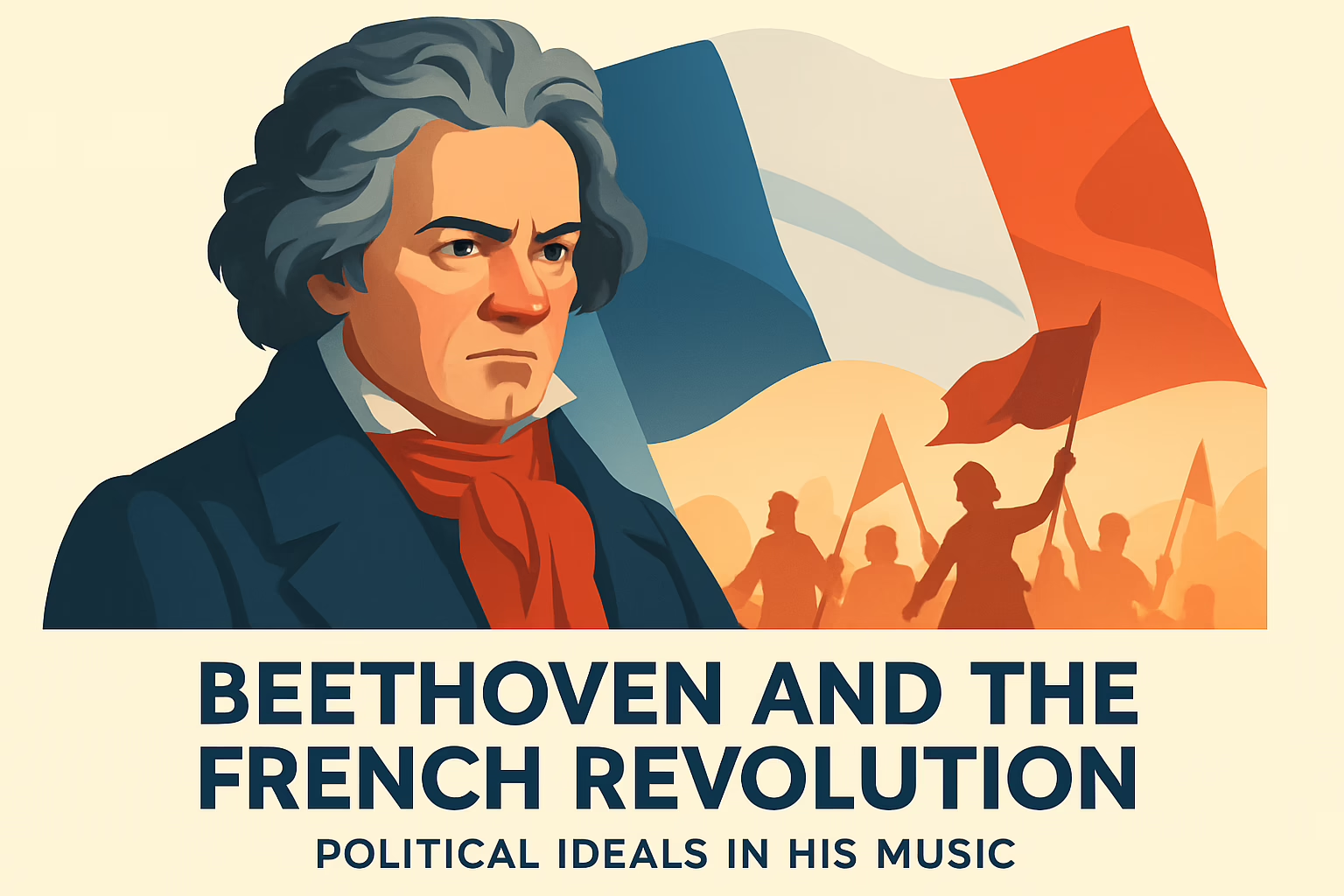
Beethoven and the French Revolution: Political Ideals in His Music
The world of classical music is a tapestry of complex relationships, with historical events often having profound impacts on musical expression. Among such intersections, the works of Ludwig van Beethoven during the era of the French Revolution stand out as a vivid example of how political turmoil can inspire and influence artistic creation. Born in 1770, Beethoven lived through a period of intense socio-political upheaval, primarily epitomized by the French Revolution, which occurred between 1789 and 1799. During this time, ideals such as liberty, fraternity, and equality rose to prominence, significantly impacting societal structures across Europe, including the realms of art and culture.
The essence of the French Revolution was not merely a shift in power but a movement that aspired to redefine the very fabric of society through democratic principles. In music, an art form known for its universality and emotive power, these ideals reverberated strongly. The revolution’s principles of overthrowing oppressive systems and promoting autonomy resonated with Beethoven, who sought to reflect these ideals in his compositions. To fully appreciate Beethoven’s contributions, it is essential to explore the definitions of key terms such as political ideals and artistic expression and understand their interplay in his music.
Political ideals refer to the values and beliefs that shape the governance and organization of society. During the French Revolution, key political ideals included the pursuit of liberty from autocratic rule, the establishment of equality among citizens, and the fostering of fraternity — brotherhood among all men. On the other hand, artistic expression involves conveying ideas, emotions, or worldviews through creative works, using music, literature, visual arts, or any other medium. In Beethoven’s case, his music became a conduit for expressing these revolutionary ideals, offering both a personal reflection and a broader commentary on the societal transformations of his time.
This exploration is crucial because it sheds light on how Beethoven’s engagement with the revolutionary philosophy not only impacted his own works but also contributed to the evolution of Western music. By examining Beethoven’s music through this lens, we gain insights into the power of art as a tool for social change and its role in articulating the human experience during critical periods in history.
The Eroica Symphony: A Revolutionary Turning Point
One of Beethoven’s most notable works reflecting the spirit of the French Revolution is his Symphony No. 3 in E-flat major, commonly known as the “Eroica” Symphony. This symphony represents a significant departure from the classical traditions established by Beethoven’s predecessors like Haydn and Mozart. Originally dedicated to Napoleon Bonaparte, a figure who initially symbolized the revolutionary ideals of liberty and equality, the symphony was retitled “Eroica” after Napoleon declared himself Emperor, much to Beethoven’s disappointment.
The “Eroica” Symphony was revolutionary both in depth and breadth, characterized by its ambitious scale, complexity, and emotional range. Structured in four movements, the symphony’s innovative use of themes and motifs was symbolic of the era’s political dynamism. Each movement thematically explores struggle and triumph, mirroring the revolution’s values and challenges. For example, the first movement’s development section breaks new ground with its extended length and intricate motifs, reminiscent of the perpetual struggle for freedom.
- First Movement: Allegro con brio — Epitomizes boldness and determination.
- Second Movement: Marcia funebre (Funeral March) — Reflects the costs and sacrifices of revolution.
- Third Movement: Scherzo — A lively, unexpected turn mirroring societal shifts.
- Fourth Movement: Finale — Represents a thematically rich and triumphant resolution.
Through this symphony, Beethoven not only advanced symphonic form but also crystallized the confluence of music and political sentiment. The “Eroica” serves as a testament to Beethoven’s genius in channeling the energy of revolutionary ideals into a permanent musical legacy, forever altering the landscape of Western classical music.
Fidelio: An Opera Rooted in Liberty
Beyond symphonic works, Beethoven’s only opera, “Fidelio,” stands as a powerful testament to his engagement with revolutionary ideals. Completed in 1805, “Fidelio” encapsulates themes of personal sacrifice, heroism, and the triumph of justice — concepts central to the spirit of the French Revolution. The opera is based on the story of “Leonore,” or “The Triumph of Married Love,” a tale filled with dramatic twists and deeply rooted in the quest for freedom.
The plot centers on Leonore, who disguises herself as a man, “Fidelio,” to infiltrate a prison and rescue her husband Florestan, wrongfully imprisoned for political reasons by the tyrannical Pizarro. Through Leonore’s bravery and devotion, Beethoven paints a vivid picture of the triumph of liberty over tyranny. Her success in liberating Florestan underscores the revolutionary ideal that justice and morality ultimately prevail against oppression.
The opera’s overture captures this ethos through its gripping and expressive orchestration, foreshadowing the dramatic journey that unfolds. Additionally, the famous “Prisoners’ Chorus,” sung by the incarcerated men in the second act, poignantly encapsulates the longing for freedom and dictatorial constraint:
- “O what joy, in the open air / Freely to breathe again!”
Overall, “Fidelio” not only showcases Beethoven’s foray into operatic form but also highlights his commitment to embedding deeply held beliefs about freedom and justice within his music.
Piano Sonata No. 23: The Appassionata
Beethoven’s Piano Sonata No. 23 in F minor, Op. 57, known as the “Appassionata,” provides yet another lens through which to view Beethoven’s response to revolutionary ideals. Composed during a time when he grappled with personal challenges and the broader currents of change in Europe, the “Appassionata” is a powerhouse of passion and intensity. The sonata came to embody the turmoil and fervor of his era in brilliant musical form.
| Movement | Characteristics |
|---|---|
| Allegro assai | Turmoil, contrasting anxieties, and vigor |
| Andante con moto | Inner calm and reflective reprieve |
| Allegro ma non troppo – Presto | Unbridled energy, culminating in release |
The “Appassionata” is reflective of the revolutionary spirit not through overtly political themes but through its emotional depth and intensity, embodying the inner conflicts of an individual navigating a world in flux. Beethoven’s mastery in the sonata lies in translating external events’ philosophical underpinnings into personal, yet universally relatable, musical expressions.
Conclusion: The Legacy of Revolutionary Ideals in Beethoven’s Music
In examining Beethoven’s works within the context of the French Revolution, it becomes evident that his music was both a reflection and an agent of the era’s transformative ideals. Through his daring symphonic innovations in pieces like the “Eroica,” his operatic foray with “Fidelio,” and emotionally profound sonatas like the “Appassionata,” Beethoven epitomized the confluence of music and revolutionary thought.
This exploration shows that Beethoven not only pushed the boundaries of musical composition but also used his platform to amplify the values of liberty, equality, and fraternity. His works remain, to this day, a testament to the enduring power of art to challenge existing paradigms and inspire action. For modern audiences, Beethoven’s music invites reflection on our own society’s ideals, urging a continual examination of the principles that guide us.
As you listen to Beethoven’s compositions, consider how these revolutionary ideals resonate with contemporary socio-political contexts. Be emboldened by Beethoven’s courage in weaving complex ideals into art, and seek opportunities to engage creatively in the ongoing dialogue of change and progress.
Frequently Asked Questions
1. How did the French Revolution influence Beethoven’s music?
Ludwig van Beethoven’s music was profoundly impacted by the socio-political climate of the late 18th and early 19th centuries, especially by the French Revolution. The revolution was a period marked by drastic changes and intense ideological shifts, aiming to dismantle the old order and promote values of liberty, equality, and fraternity. Beethoven, living through this tumultuous era, was greatly inspired by these ideals, which resonated with his personal beliefs in freedom and individual rights.
His Symphony No. 3, also known as the “Eroica,” is one of the greatest examples of this influence. Originally dedicated to Napoleon Bonaparte, whom Beethoven initially admired as a champion of revolutionary principles, the work represents a heroic struggle and triumph. However, when Napoleon declared himself emperor, betraying the revolutionary ideals, Beethoven famously withdrew the dedication, underscoring the complexity of his relationship with contemporary political events. The music is characterized by its dramatic contrasts, innovative structure, and emotional depth, encapsulating the revolutionary spirit and Beethoven’s response to it.
2. Did Beethoven consider himself a political composer?
While Beethoven is primarily celebrated for his musical genius, he was indeed a composer deeply engaged with the political currents of his time. He did not explicitly label himself as a political composer, but his works were undeniably infused with themes of humanism and the quest for political and individual freedom. Beethoven was profoundly influenced by Enlightenment ideals and was known for his strong personal convictions regarding freedom and justice, making him a composer who transcended mere artistic creation to address broader societal issues.
Beethoven’s belief in the transformative power of music paralleled the revolutionary belief in societal change. For example, his opera “Fidelio,” tells the story of political imprisonment and the triumph of freedom over tyranny, clearly mirroring the struggles of his era. He was also known to support political movements and figures that resonated with his beliefs, although he chose to express these sentiments through his powerful compositions rather than public oratory.
3. Were there specific compositions by Beethoven directly linked to the French Revolution?
Yes, several of Beethoven’s compositions reflect the influence of the French Revolution. Most notably, the “Eroica” Symphony initially dedicated to Napoleon, as discussed earlier, was a direct reflection of revolutionary ideals before his disillusionment with Napoleon’s imperial ambitions. His “Piano Sonata No. 21” in C major, popularly known as the “Waldstein,” also showcases the innovative spirit synonymous with revolutionary change through its bold themes and technical challenges.
Beethoven’s “Symphony No. 9,” with its choral finale set to Friedrich Schiller’s “Ode to Joy,” encapsulates the essence of fraternity and unity, central tenets of the revolution, albeit completed in 1824 as Europe was seeing the effects of those revolutionary ideas unfold across nations. The symphony is heralded as an embodiment of universal brotherhood, illustrating how deeply interwoven these political ideals were within his music.
4. How did Beethoven’s view on Napoleon Bonaparte evolve over time?
Initially, Beethoven was an ardent admirer of Napoleon Bonaparte, seeing him as a figure championing the democratic and egalitarian ideals born from the French Revolution. Napoleon’s rise to power was seen by Beethoven as a triumph of these revolutionary principles, prompting him to originally dedicate his “Eroica” Symphony to him. However, this admiration turned to disenchantment when Napoleon declared himself Emperor of the French in 1804.
Feeling betrayed by what he perceived as Napoleon’s abandonment of revolutionary values, Beethoven scrapped the dedication, famously tearing the title page that bore Napoleon’s name. This symbolic gesture underscored Beethoven’s deep disappointment in Napoleon’s transformation from a liberator to a ruler resembling the monarchs against whom the revolution had fought. This change in Beethoven’s perception dramatically highlights how interconnected his music and political beliefs were, and how these relationships evolved in response to real-world events.
5. In what ways did Beethoven’s music reflect his revolutionary spirit?
Beethoven’s music reflected his revolutionary spirit in various profound and aesthetic ways. Most notably, his compositions often broke with traditional structures and adopted bold, innovative forms that were unprecedented in classical music, much like how the French Revolution sought to overturn the old order. His ability to convey emotional depth and a sense of human struggle through music was revolutionary in itself, reflecting his alignment with revolutionary ideals through sound.
Beethoven’s approach to themes such as struggle, freedom, triumph, and humanity was depicted in grand symphonies, emotive sonatas, and stirring operatic compositions. His Ninth Symphony serves as a monumental expression of universal brotherhood and hope, with the choral finale serving as an anthem to joy and unity. Furthermore, by intentionally infusing these progressive themes into his music, Beethoven aligned himself with the larger societal movements of his day, using his art as both a reflective and transformative force.