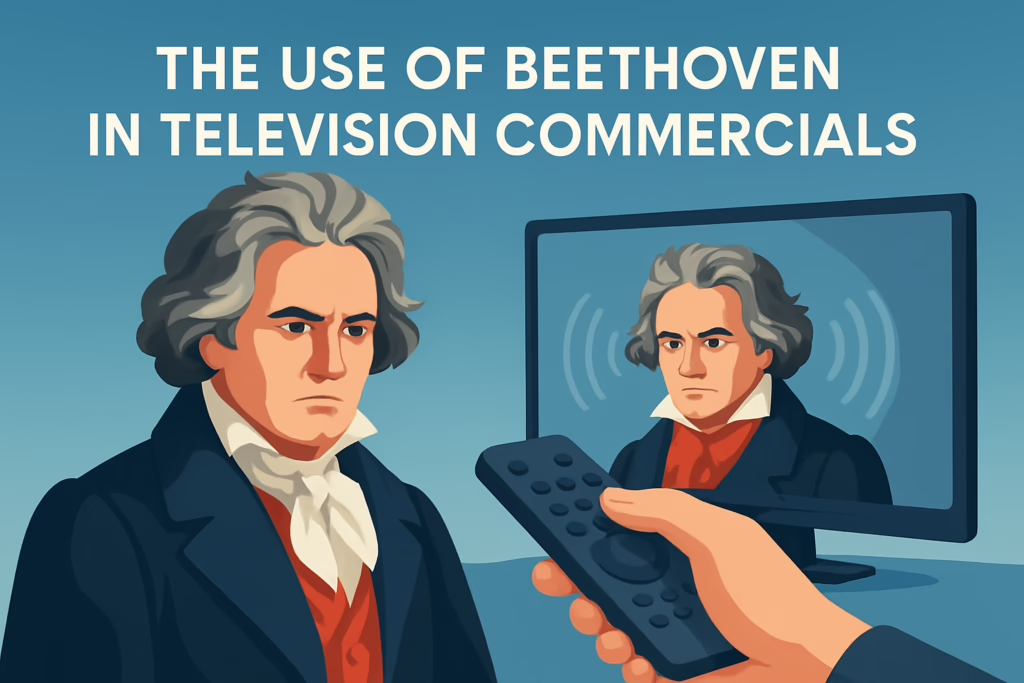
The Use of Beethoven in Television Commercials
Beethoven has long occupied a curious place in advertising: he is the emblem of high culture, personal struggle, genius, discipline, drama, and instant recognizability, all condensed into a few unmistakable musical gestures that television commercials can deploy in seconds. In the world of television advertising, the use of Beethoven in commercials refers to any campaign that borrows his compositions, evokes his public image, or adapts his musical language to shape how viewers feel about a product, service, or brand. This matters because commercial music is never decorative; it is strategic. After years of reviewing ad campaigns, music licensing choices, and brand positioning briefs, I have seen Beethoven cues used to signal premium quality, comic exaggeration, cultural sophistication, rebellious energy, and even family-friendly familiarity. A single phrase from Symphony No. 5 can suggest fate knocking at the door, while “Ode to Joy” can imply unity, celebration, and triumph. For marketers, that density of meaning is invaluable. For audiences, it explains why Beethoven keeps resurfacing across industries as different as cars, insurance, food, finance, and technology.
The topic also sits within the broader story of Beethoven in pop culture. Film and television have turned him into both a historical composer and a flexible symbol, but commercials are especially revealing because they distill associations with ruthless efficiency. An advertiser typically has fifteen, thirty, or sixty seconds to establish tone, introduce a product benefit, and create recall. Beethoven helps solve that problem because his works are part of the cultural vocabulary even for people who cannot name the piece. The first movement motif of the Fifth Symphony, the “Moonlight” Sonata, the “Für Elise” opening, and the choral finale of the Ninth Symphony have all crossed from the concert hall into mass media memory. This article serves as the miscellaneous hub for that subtopic, bringing together how Beethoven’s music functions in television commercials, why brands choose particular works, what legal and creative considerations shape those choices, and how these ads influence public understanding of classical music. By treating commercials as a serious part of Beethoven’s afterlife, we can better understand both modern marketing and the lasting power of canonical music.
Why advertisers choose Beethoven
Advertisers choose Beethoven because he delivers immediate emotional clarity with built-in prestige. Few composers can communicate urgency, triumph, tenderness, and comic intensity as quickly. In practical campaign terms, Beethoven offers three strong advantages. First, recognizability: even short fragments can trigger memory. Second, symbolic weight: his music carries associations with excellence, intellect, tradition, and perseverance. Third, flexibility: the same piece can be played straight for authority or twisted for humor. I have seen creative teams use Beethoven when they wanted a shortcut to “serious but accessible,” especially for products that needed to feel elevated without becoming obscure.
Specific works tend to map onto specific advertising goals. Symphony No. 5 is common when a brand wants drama, momentum, or a joke about excessive seriousness. “Ode to Joy” from Symphony No. 9 often appears when ads portray community, generosity, public celebration, or a breakthrough moment. “Für Elise” works well in spots that need instant familiarity, especially when the ad uses interruption or repetition as part of the gag. The “Moonlight” Sonata is favored for mood, luxury, or introspective calm. These choices are rarely random. Music supervisors, agencies, and editors build them into the story structure of the commercial.
There is also a status effect. Beethoven can make an ordinary product seem more crafted or enduring. Car companies have used classical cues for this reason for decades, pairing engineering claims with music that implies mastery. Financial services brands often use Beethoven selectively when they want to project stability and seriousness without sounding cold. Food and household product campaigns sometimes use him ironically, contrasting grand music with mundane situations to make the ad memorable. That contrast is one of the most durable patterns in television commercials: Beethoven as shorthand for “this matters,” followed by a visual reveal that makes the situation delightfully disproportionate.
How Beethoven’s music functions inside a commercial
In television commercials, Beethoven usually serves one of four functions: emotional accelerator, cultural signal, comic contrast, or mnemonic device. As an emotional accelerator, his music compresses feeling. A rising orchestral swell can make a simple product reveal seem consequential. As a cultural signal, Beethoven tells viewers that the brand wants to be associated with taste, education, heritage, or ambition. As comic contrast, the music elevates trivial action, such as someone choosing a snack or parking a compact car, and the mismatch generates humor. As a mnemonic device, a famous motif makes the ad easier to remember after a single exposure.
The editing pattern matters as much as the composition. Many effective Beethoven-based commercials cut visuals on musical accents, especially with Symphony No. 5. The famous short-short-short-long rhythm matches product reveals, text animations, door knocks, or punchlines. In spots built around “Ode to Joy,” agencies often stage a gradual visual build to mirror the theme’s cumulative character: one person joins, then another, then the full group. This is not accidental. Beethoven’s structural clarity gives editors a predictable backbone, which is why his music continues to outperform less familiar classical repertory in broadcast advertising.
Voiceover and sound design also affect interpretation. A solemn Beethoven cue under a deadpan announcer creates irony. The same cue under a warm, confident narration creates authority. Brands sometimes begin with an authentic-sounding orchestral recording, then shift into a modern beat or branded sonic logo. That move lets them borrow Beethoven’s gravitas while landing in a contemporary sound world. When done well, it feels clever; when done poorly, it feels gimmicky. The difference usually comes down to whether the concept respects the music’s internal rhythm rather than simply dropping it in as an afterthought.
Common Beethoven pieces used in television commercials
Certain Beethoven works dominate television advertising because they are musically concise and culturally familiar. The table below summarizes how brands typically use the most common pieces.
| Beethoven work | Typical advertising effect | Common product categories | Why it works on television |
|---|---|---|---|
| Symphony No. 5, first movement | Drama, urgency, comic exaggeration | Automotive, insurance, retail promotions | The four-note motif is instantly recognizable and easy to sync to cuts |
| Symphony No. 9, “Ode to Joy” | Unity, celebration, triumph | Telecom, public campaigns, holiday retail | The melody builds naturally from individual action to collective payoff |
| “Für Elise” | Familiarity, playfulness, repetition | Consumer goods, education, family brands | The opening phrase is memorable even in very short ad formats |
| Piano Sonata No. 14, “Moonlight” | Luxury, reflection, mood | Fragrance, premium cars, finance | The texture creates atmosphere without overwhelming narration |
| Symphony No. 7, second movement | Determination, gravity, momentum | Technology, health, corporate image | The pulse feels serious and modern despite the music’s age |
These pieces are not used equally in every market, but the pattern is stable. In my experience, the Fifth and Ninth are the safest choices when a campaign needs broad recognition. “Moonlight” is more selective because it creates a narrower emotional field. “Für Elise” is powerful but can tip into cliché if overused. The Seventh’s second movement is less common in mass-market campaigns, yet it often appears in more cinematic advertising because its ostinato creates forward motion without cartoonishness. The most effective brands match the piece to the product promise rather than simply choosing the most famous title.
Industries and campaign styles that rely on Beethoven
Automotive advertising has used Beethoven especially well because the music aligns with engineering narratives. A luxury sedan reveal paired with “Moonlight” or the Fifth suggests craftsmanship, precision, and seriousness. A sports model launch can use Beethoven more aggressively, turning the score into a metaphor for controlled power. The key message is that the car is not merely manufactured; it is composed. Technology brands use Beethoven differently. They often frame innovation as the modern equivalent of genius, pairing heritage music with futuristic visuals to imply that the product is both revolutionary and trustworthy.
Retail and packaged goods campaigns often choose Beethoven for humor. A supermarket promotion accompanied by a grand orchestral hit tells the viewer that saving on laundry detergent is being treated like a historic achievement. That exaggeration is effective because the audience recognizes the joke instantly. Insurance and banking brands tend to use Beethoven more cautiously. They may borrow a stately piano passage or an edited orchestral excerpt to project dependability. In these categories, the music cannot feel too ornate or it risks sounding elitist. Successful campaigns soften the effect with approachable visuals, conversational voiceovers, and everyday scenarios.
Public service campaigns and telecom brands are especially drawn to “Ode to Joy.” The melody’s association with fellowship makes it useful for messaging around connection, access, public benefit, and shared identity. Holiday advertising also leans on Beethoven, particularly when brands want a familiar tune that feels celebratory without relying on standard seasonal music. In all these sectors, Beethoven works best when the creative strategy is clear. If the ad wants prestige, use him sincerely. If it wants comedy, heighten the mismatch. If it wants emotion, let the phrasing breathe. Vague usage usually weakens both the brand and the music.
Licensing, public domain status, and creative adaptation
One reason Beethoven appears so often in commercials is that the compositions themselves are in the public domain. Advertisers do not pay a composition fee to use Beethoven’s notes. However, that does not make the process free or simple. Specific recordings are usually protected by copyright, so a brand must either license an existing recording or commission a new one. In practice, many agencies prefer new recordings because they can control tempo, instrumentation, edit points, and mood. A thirty-second spot may need a custom arrangement that hits exact visual beats, and a bespoke session recording is often the cleanest solution.
Arranging Beethoven for commercial use raises creative and ethical questions. A campaign might use a full orchestra, a solo piano, a string quartet, or a hybrid track with electronic percussion. Each choice changes meaning. A historically informed approach can signal sophistication, while a heavily modernized version can make the music feel newly accessible. I have worked on reviews where the central question was not whether Beethoven fit the brand, but whether the arrangement preserved enough of the original identity to remain recognizable. If the adaptation strips away the core motif or harmonic profile, the ad loses the very cultural capital it wanted to borrow.
There are also practical standards. Broadcasters monitor audio loudness, and editors need clean stems for dialogue, effects, and music. Music supervisors must clear performer contracts, union terms where applicable, and territorial usage if the commercial airs internationally. Global campaigns face another issue: Beethoven is internationally recognized, but ad interpretation is not always uniform. In some markets, a heavily comic use of Beethoven reads as witty; in others, it can feel irreverent. Smart international campaigns test not only the product message but also the cultural handling of the music.
The cultural impact of Beethoven in commercial media
Television commercials do more than sell products; they shape popular memory. For many viewers, a Beethoven melody is first encountered not in a concert hall, classroom, or full recording, but in an advertisement. That can flatten the music into cliché, but it can also keep it alive in public consciousness. I have spoken with listeners who first recognized “Ode to Joy” from a telecom ad and later sought out the full Ninth Symphony. Commercial exposure is therefore not purely corrosive. It can act as an entry point, especially for audiences who might never encounter classical music through traditional institutions.
The tradeoff is simplification. Ads favor the most recognizable bars, which reinforces a narrow canon of Beethoven excerpts and sidelines the breadth of his output. Repetition can turn rich music into shorthand for stock emotions: the Fifth becomes “drama,” “Moonlight” becomes “luxury,” “Für Elise” becomes “cute familiarity.” That reduction is real, and critics are right to notice it. Still, popular culture has always repurposed Beethoven. Commercials are simply one highly visible branch of a larger process in which canonical works gain new meanings through reuse, parody, fragmentation, and technological mediation.
For brands, the lesson is straightforward: Beethoven is powerful because he is culturally loaded, not because he is generic classical wallpaper. For viewers and researchers, the lesson is equally important: every commercial use of Beethoven tells us something about the values the brand wants to project and the assumptions it makes about audience recognition. Studying those choices reveals how classical music circulates in everyday life, how prestige gets translated into commerce, and how a nineteenth-century composer continues to influence twenty-first-century media. Explore the related articles in this hub to see how Beethoven’s presence in commercials connects with his wider role across modern pop culture.
Frequently Asked Questions
Why is Beethoven used so often in television commercials?
Beethoven appears so frequently in television advertising because his music communicates powerful ideas almost instantly. In just a few notes, advertisers can evoke grandeur, seriousness, emotional struggle, triumph, refinement, or cultural prestige. Television commercials operate under severe time constraints, so they benefit from music that already carries deep associations in the public mind. Beethoven’s themes are among the most recognizable in Western music, which makes them especially useful for brands trying to create a quick emotional response.
His music also offers unusual flexibility. A commercial can use Beethoven sincerely to suggest excellence, heritage, and craftsmanship, or it can use him ironically to create humor by placing “serious” classical music in an unexpected consumer context. The famous opening of the Fifth Symphony, for example, can suggest urgency, destiny, or dramatic importance, while the “Ode to Joy” from the Ninth Symphony can imply celebration, unity, uplift, and broad public appeal. Advertisers value this range because it allows the same composer to support many kinds of messaging, from luxury branding to mass-market campaigns.
Just as important is Beethoven’s public image. He is more than a composer; he is a cultural symbol of genius, perseverance, and artistic intensity. Commercials can draw on that symbolic value even when they do not use a literal Beethoven recording. A campaign may imitate his style, reference his reputation, or visually invoke the familiar image of the unruly-haired master in order to suggest intelligence, authority, or disciplined creativity. In television advertising, where every second must work hard, Beethoven functions as a compact cultural shortcut with remarkable emotional and symbolic efficiency.
What kinds of meanings does Beethoven’s music create in a commercial?
Beethoven’s music can create several layers of meaning at once, which is one reason it remains so attractive to advertisers. On the most immediate level, it brings emotional intensity. His compositions often feature strong contrasts, rhythmic drive, and clear dramatic movement, so they can make a product seem more important, more dynamic, or more memorable. Even a brief quotation can add tension, anticipation, release, or triumph, depending on how it is edited and paired with visuals.
On a cultural level, Beethoven often signals sophistication and legitimacy. Because he is associated with the classical canon, his music can imply quality, heritage, education, and seriousness. This is especially useful for products that want to seem premium, durable, expertly made, or worthy of trust. A car commercial, financial services campaign, or luxury goods advertisement may use Beethoven to suggest that the brand belongs to a world of standards, excellence, and long-term value rather than passing trends.
At the same time, Beethoven can also function playfully. Many commercials deliberately contrast his elevated cultural status with ordinary products or humorous situations. That contrast creates a knowing tone: the ad acknowledges the grandeur of the music while using it to exaggerate the importance of a snack, household item, or everyday service. In these cases, Beethoven helps produce comedy without losing recognizability. The result is a layered message in which the music can signal class, drama, and wit all at once, giving advertisers a rich set of tools for shaping viewer perception.
Do television commercials usually use actual Beethoven compositions, or do they imitate his style?
Both approaches are common, and each serves a different advertising purpose. Some commercials use actual Beethoven compositions, often in newly recorded arrangements tailored to the timing, mood, and structure of the ad. Because Beethoven’s original works are so famous, using a real theme can provide immediate recognition and emotional impact. Advertisers may select only a few seconds of a familiar passage and reshape it to fit a voiceover, product reveal, or final brand tag. In these cases, the goal is usually to harness the authority and instant recall of the original music.
Other commercials prefer to imitate Beethoven’s style rather than quote him directly. A composer working for an ad agency might create music with Beethoven-like rhythmic patterns, dramatic orchestral swells, or bold melodic gestures that feel familiar without being tied to one famous piece. This can be helpful when a brand wants the prestige and emotional force associated with Beethoven but also wants more control over tempo, phrasing, humor, or legal and production considerations. Stylistic imitation can also prevent the music from overwhelming the message if a famous theme would distract viewers from the product.
There is also a middle ground: adaptation. Commercials sometimes modernize Beethoven by blending his melodies with pop beats, electronic textures, rock instrumentation, or comic sound design. This approach allows advertisers to preserve recognizability while making the music feel contemporary, accessible, or brand-specific. In television advertising, the decision between direct quotation, imitation, and adaptation depends on the campaign’s tone, audience, and strategic goals. What matters most is not strict musical purity, but whether the Beethoven reference helps shape a clear and memorable brand identity.
What are the advantages and risks of using Beethoven in advertising?
The advantages are substantial. Beethoven gives commercials instant emotional power, broad recognition, and a sense of weight that many other musical choices cannot match. For brands, this can mean stronger memorability, faster audience engagement, and a more distinctive tone. His music can make a product launch feel monumental, a brand story feel inspiring, or a humorous concept feel more sharply exaggerated. Because viewers often already know the music, advertisers do not need to spend as much time teaching the audience how to feel; the association is already there.
Another advantage is symbolic depth. Beethoven can lend a campaign meanings that extend beyond sound alone: discipline, brilliance, resilience, cultural literacy, and timelessness. Those associations can be particularly useful in competitive markets where many products seem functionally similar. If a brand can wrap itself in a powerful cultural signal, it may stand out more effectively. Beethoven’s music is also remarkably adaptable, so advertisers can use it in earnest, ironic, elegant, or high-energy ways depending on the creative direction.
Still, there are clear risks. One is overfamiliarity. Because Beethoven is so widely used and recognized, a commercial may feel predictable or cliché if the music is employed without a fresh idea. Another risk is tonal mismatch: an ad may accidentally seem pompous, insincere, or unintentionally funny if the grandeur of the music exceeds the importance of the product. There is also the danger that the music becomes more memorable than the brand itself, causing viewers to remember “the ad with Beethoven” but not the company behind it. Finally, some audiences may view the use of canonical classical music in advertising as cultural flattening, where complex art is reduced to a shorthand for prestige or drama. Successful campaigns avoid these problems by using Beethoven with precision, originality, and a clear understanding of audience expectations.
How does Beethoven influence the way viewers perceive a brand in television commercials?
Beethoven can significantly shape brand perception by changing how viewers interpret the product before any factual claim is processed. Music works quickly and often subconsciously, so when a commercial uses Beethoven, the brand may immediately feel more important, more polished, or more emotionally charged. This effect is especially valuable on television, where the combination of music, image, pacing, and voiceover can create a complete impression in a matter of seconds. Beethoven helps direct that impression by framing the product as heroic, elegant, intelligent, or culturally elevated.
The exact influence depends on the specific piece and the way it is used. A dramatic motif can make a brand seem bold and forceful, while a more uplifting Beethoven theme can create feelings of optimism, community, or celebratory success. If the ad uses Beethoven humorously, the brand may come across as self-aware, clever, and confident enough not to take itself too seriously. In each case, the music acts as a guide for interpretation, telling viewers not just what they are seeing, but how they should feel about it.
Over time, repeated associations between a brand and Beethoven-like musical language can help establish a consistent identity. Viewers may begin to connect the brand with excellence, ambition, or a certain kind of dramatic confidence, even if they do not consciously recall the exact music. That is one of the enduring strengths of Beethoven in television commercials: his work can transfer emotional and cultural meaning to a product with remarkable speed. When used thoughtfully, it does more than decorate an ad; it helps define the brand’s personality in the viewer’s mind.