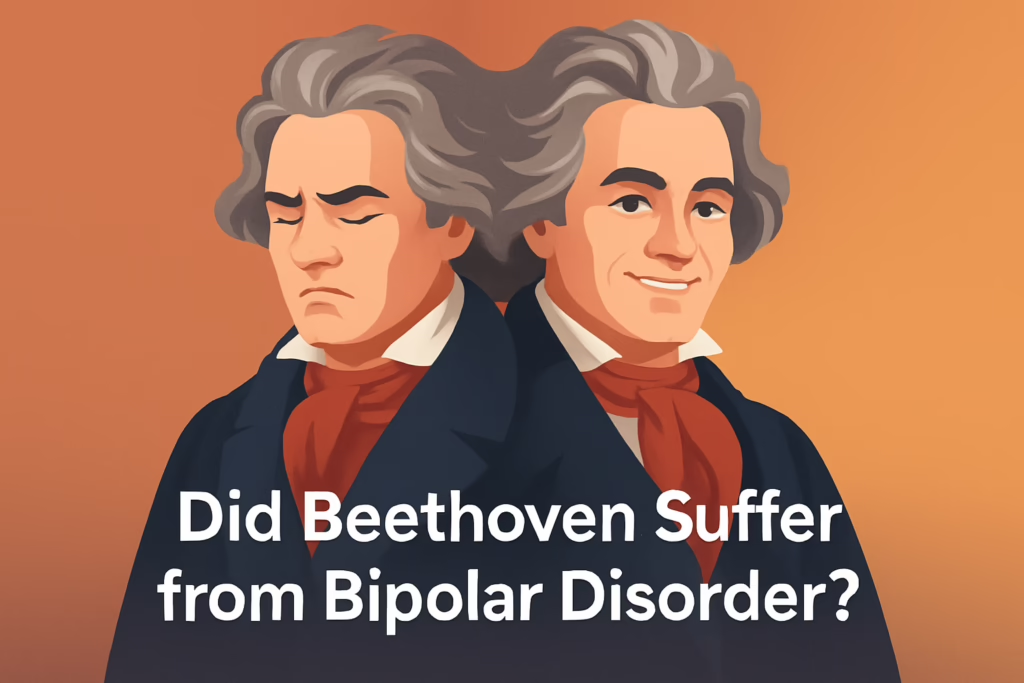
Did Beethoven Suffer from Bipolar Disorder?
Ludwig van Beethoven’s turbulent moods, explosive temper, bursts of productivity, and periods of withdrawal have led many modern readers to ask a compelling question: did Beethoven suffer from bipolar disorder? It is an important question, but it cannot be answered responsibly with a simple yes or no. Bipolar disorder is a modern psychiatric diagnosis defined by episodes of mania, hypomania, and depression, assessed through clinical criteria, longitudinal observation, and differential diagnosis. Beethoven lived from 1770 to 1827, long before psychiatry developed those standards, and the surviving evidence consists mainly of letters, conversation books, testimonies from friends, and biographical reconstruction.
In my own work reviewing historical medical claims, I have learned that retrospective diagnosis is always tempting because it turns messy human behavior into a neat label. With Beethoven, that temptation is especially strong. His life offers dramatic material: deafness, chronic illness, family conflict, financial strain, social isolation, drinking, intense creative drive, and emotional volatility. Those facts can look, at first glance, like a textbook case of mood disorder. Yet the same facts can also be explained by grief, pain, personality, stress, or physical disease. Any serious article about Beethoven and bipolar disorder must therefore separate observation from interpretation.
This matters for two reasons. First, readers deserve an accurate answer rather than a sensational one. Second, the way we discuss Beethoven shapes wider conversations about mental health, genius, and suffering. If we casually pathologize every eccentric artist, we distort both history and psychiatry. If we dismiss the possibility of mental illness entirely, we overlook genuine signs of distress and flatten a complex life. The best approach is careful, evidence-based, and open about uncertainty. That is the standard used here as this miscellaneous hub page gathers the main questions, facts, and debates surrounding Beethoven’s mental state.
What bipolar disorder means, and why diagnosing Beethoven is difficult
Bipolar disorder is not a synonym for moodiness, intensity, or artistic temperament. In current clinical practice, bipolar I disorder requires at least one manic episode, typically involving elevated or irritable mood, decreased need for sleep, inflated self-esteem or grandiosity, increased goal-directed activity, pressured speech, racing thoughts, distractibility, and behavior severe enough to impair functioning or require hospitalization. Bipolar II disorder involves hypomania plus major depression. Cyclothymia describes chronic fluctuations that never fully meet those thresholds. These distinctions matter because many popular claims about Beethoven use the term bipolar loosely, without asking whether historical evidence supports mania or hypomania as psychiatrists define them.
Diagnosing a historical figure is difficult for several concrete reasons. We lack direct examination, standardized interviews, laboratory testing, and the person’s own symptom history framed in modern terms. Sources are fragmented and biased. Friends may exaggerate. Enemies may moralize. Later biographers often reshape evidence to fit a dramatic narrative. Translation adds another layer of uncertainty, especially when nineteenth-century expressions of melancholy, agitation, or “nervous” suffering are mapped onto modern categories. Even sleep patterns, sexual behavior, and spending habits, which can be diagnostically relevant, are incompletely documented in Beethoven’s case.
A responsible historical assessment uses differential diagnosis. That means asking what else could explain the same behavior. Chronic pain can produce irritability and despair. Alcohol misuse can mimic mood instability. Gastrointestinal illness, liver disease, and inflammatory conditions can affect energy and cognition. Deafness can intensify social suspicion and isolation. Traumatic family experiences can shape temperament without constituting bipolar disorder. In practice, the question is not whether Beethoven had intense emotions. He clearly did. The question is whether the surviving record demonstrates recurrent mood episodes that fit a bipolar pattern better than competing explanations. Most scholars and clinicians who address the subject conclude that the evidence remains suggestive at best, not diagnostic.
The evidence people cite when arguing Beethoven had bipolar disorder
Those who argue for a bipolar interpretation usually point to four clusters of evidence: severe mood swings, alternating productivity and collapse, interpersonal volatility, and language from letters that sounds depressive or agitated. Beethoven could be warm and affectionate, then suspicious and abrasive. He sometimes worked with relentless concentration, producing astonishing volumes of music under pressure. At other times he complained of misery, fatigue, loneliness, and inability to function. His famous Heiligenstadt Testament of 1802 contains profound despair, social withdrawal, and references to suicidal thoughts, although it also expresses determination to continue living for his art.
There are also reports of irritability, impulsive quarrels, and periods when Beethoven seemed unusually driven or consumed by work. Some writers interpret his confidence, stubbornness, and disregard for convention as signs of hypomania. Others note that several creative figures have been discussed in relation to mood disorders, making the Beethoven hypothesis feel plausible by association. But plausibility is not proof. High productivity alone does not equal mania. Many composers work intensely because commissions, deadlines, and inspiration converge. Likewise, anger toward patrons, publishers, or relatives may reflect difficult circumstances rather than episodic psychiatric illness.
The strongest evidence for bipolar disorder would be repeated, clearly documented episodes of mania or hypomania: markedly decreased need for sleep, sustained euphoria or abnormal irritability, pressured speech, risky activity, flight of ideas, and functional change recognizable across settings. That level of documentation does not exist for Beethoven. The historical record supports suffering, emotional intensity, and instability under stress. It does not securely establish the signature manic episodes needed for a confident diagnosis.
Alternative explanations: deafness, illness, alcohol, trauma, and personality
When I evaluate historical mental health claims, this is usually the decisive section: what alternative explanations fit the evidence more completely? In Beethoven’s case, several do. Progressive hearing loss was not a minor inconvenience; it was socially devastating for a musician whose profession depended on listening, performance, conversation, and reputation. Deafness can produce humiliation, anger, avoidance, and profound grief. Beethoven’s letters repeatedly show how painful this was. Social withdrawal, irritability, and despair in that context are understandable without invoking bipolar disorder.
Physical illness also mattered. Beethoven suffered chronic gastrointestinal complaints, recurrent abdominal pain, diarrhea, inflammatory episodes, and later severe liver disease. Modern analyses of hair and remains have fueled discussion about lead exposure and other medical issues, though not all findings are settled. Chronic pain and systemic illness often cause sleep disruption, low mood, poor concentration, and emotional lability. Add alcohol use, which several biographers discuss cautiously, and the picture becomes even more complicated. Alcohol can worsen depression, increase irritability, disturb sleep, and amplify conflict.
Family history and early environment are relevant too. Beethoven grew up with an alcoholic father and heavy pressure as a child musician. Such conditions can shape lifelong patterns of vigilance, mistrust, perfectionism, and emotional explosiveness. Personality features may explain a great deal of his behavior: rigidity, intense sensitivity to criticism, independence, and difficulty maintaining harmonious relationships. None of these exclude a mood disorder, but together they make a single diagnostic label far less certain.
| Observed trait or event | Bipolar interpretation | Alternative explanation |
|---|---|---|
| Periods of high output | Possible hypomanic drive | Deadlines, discipline, commissions, creative focus |
| Irritability and quarrels | Manic or mixed-state irritability | Deafness stress, pain, alcohol, difficult temperament |
| Withdrawal and despair | Depressive episode | Hearing loss grief, illness, loneliness, financial strain |
| Sleep disturbance | Mood episode symptom | Pain, digestive illness, anxiety, alcohol effects |
| Grand self-belief | Grandiosity | Real stature, artistic confidence, social defensiveness |
What major scholars and medical commentators generally conclude
Across Beethoven biography, musicology, and medical humanities, the most defensible conclusion is cautious agnosticism. Serious scholars do not deny that Beethoven experienced psychological suffering. They do deny that the historical record allows a definitive diagnosis of bipolar disorder. Standard biographies by authors such as Maynard Solomon and Jan Swafford portray a man of extraordinary intensity under crushing personal and physical burdens, but they do not establish a clear manic-depressive course in the modern clinical sense. Medical essays that revisit Beethoven’s health often focus more on deafness, gastrointestinal disease, liver pathology, and autopsy findings than on any secure psychiatric classification.
Psychiatric historians generally warn against retrospective certainty. The farther back one goes before the advent of modern diagnostic systems, the more speculative the exercise becomes. Beethoven is a classic example. There are enough emotional extremes to invite diagnosis, yet not enough structured symptom evidence to justify confidence. That balance is important for readers searching this topic. If another article claims “Beethoven definitely had bipolar disorder,” it is overstating the case. If it claims “there is no evidence of any mental distress,” it is ignoring the documentary record. The strongest middle position is that bipolar disorder is possible but unproven, while depression, situational despair, and emotional dysregulation are clearly documented themes.
How this question fits the wider “Beethoven and the Mind” hub
This miscellaneous hub exists because the bipolar question sits at the intersection of several broader themes. One is depression: Beethoven’s letters, especially around the Heiligenstadt crisis, are central evidence in debates about suicidal ideation and despair. Another is deafness and identity, since sensory loss profoundly shaped his inner life. A third is creativity and mental illness, a topic often distorted by romantic myths. Readers interested in whether Beethoven had bipolar disorder should also examine articles on Beethoven’s medical history, alcohol use, personality, family trauma, sleep, and the psychological effects of chronic pain.
The larger lesson is practical. Historical figures can illuminate mental health, but only if we use them carefully. Beethoven’s life shows how suffering can be documented without being simplified, how genius can coexist with dysfunction without being caused by it, and how a modern diagnosis should never be assigned just because someone was brilliant, difficult, or emotionally intense. If you are exploring Beethoven and the mind, use this page as your starting point, then follow the connected articles to build a fuller picture grounded in evidence rather than myth.
So, did Beethoven suffer from bipolar disorder? The most accurate answer is that no one knows for certain, and the available evidence does not support a definitive diagnosis. What it does support is a portrait of a man under immense strain: progressively deaf, often ill, emotionally volatile, socially wounded, and yet capable of sustained discipline and artistic greatness. That conclusion is less dramatic than a modern label, but it is more faithful to the record. Continue through the rest of this subtopic to explore the related questions that make Beethoven’s inner world so enduringly fascinating.
Frequently Asked Questions
Can Beethoven be accurately diagnosed with bipolar disorder today?
No historical figure can be diagnosed with complete certainty using modern psychiatric standards, and Beethoven is no exception. Bipolar disorder is a specific clinical diagnosis that depends on clearly documented patterns of mania, hypomania, and depression over time, along with careful evaluation of alternative explanations. In Beethoven’s case, scholars are working from letters, secondhand observations, biographical accounts, and reports colored by the social attitudes of his era. Those sources can be rich and suggestive, but they are not the same as direct clinical interviews, psychiatric examinations, or standardized longitudinal records. As a result, it is more responsible to say that some aspects of Beethoven’s behavior have prompted modern speculation about bipolar disorder than to claim that he definitively had it.
Part of the challenge is that many traits often cited in these discussions are not unique to bipolar disorder. Intense emotion, irritability, periods of withdrawal, and uneven productivity can appear in many different contexts, including chronic illness, severe stress, grief, substance use, neurological problems, personality traits, or reactions to difficult life circumstances. Beethoven lived with progressive hearing loss, chronic physical suffering, social isolation, financial and family strain, and immense artistic pressure. Any serious historical assessment has to account for those factors before attaching a modern psychiatric label. That is why most careful historians and clinicians frame the question as an interesting possibility rather than a settled diagnosis.
What aspects of Beethoven’s life lead people to suspect bipolar disorder?
The speculation usually comes from the dramatic contrasts in Beethoven’s mood, behavior, and working life. He is often described as volatile, impulsive, fiercely energetic, intensely driven, and prone to angry outbursts. At other times, he appeared withdrawn, despairing, suspicious, and emotionally overwhelmed. To modern readers familiar with bipolar disorder, those shifts can resemble cycles between elevated and depressed states. His periods of extraordinary creative output are also sometimes interpreted as possible signs of hypomania or mania, especially when paired with stories of forceful temperament, reduced social restraint, and restless intensity.
Even so, those features do not automatically point to bipolar disorder. Great bursts of artistic productivity do not equal mania, and a strong temper does not by itself indicate a mood disorder. Beethoven’s life was marked by extraordinary adversity: worsening deafness, chronic medical complaints, unstable relationships, legal conflicts, loneliness, and the emotional burden of his ambitions. Someone living under those pressures might naturally show emotional extremes without meeting the threshold for bipolar disorder. The modern temptation is to look backward and connect familiar diagnostic ideas to famous personalities, but the evidence must be handled carefully. Similarities can be intriguing, yet they remain suggestive rather than conclusive.
Did Beethoven experience symptoms that sound like mania or hypomania?
Some descriptions of Beethoven do sound superficially compatible with mania or hypomania. Accounts portray him at times as highly energized, unusually productive, irritable, forceful, and difficult to manage socially. He could be domineering in conversation, quick to anger, and intensely focused on his work. Modern readers may see these traits and wonder whether they reflect episodes of elevated mood, increased goal-directed activity, decreased need for sleep, impulsivity, or grandiosity, all of which can appear in bipolar-spectrum conditions.
However, the historical record does not provide the kind of precise, clinically reliable symptom pattern required to make that determination. For a diagnosis of mania or hypomania, clinicians look for a cluster of symptoms occurring together over a defined period, causing specific kinds of change in functioning, and not better explained by medical conditions or other causes. In Beethoven’s case, evidence for classic manic symptoms such as sustained euphoric elevation, clearly reduced need for sleep, racing thoughts documented in a clinical sense, or severe impairment from mania is incomplete and often anecdotal. His intensity may reflect temperament, stress, artistic immersion, frustration, physical illness, or social conflict just as plausibly as a bipolar-spectrum condition. So while some reports invite comparison to hypomania or mania, they do not establish it in a clinically rigorous way.
Could Beethoven’s depressive periods have had other explanations besides bipolar disorder?
Absolutely. Beethoven’s depressive-looking periods may have stemmed from many sources, and this is one of the strongest reasons historians and clinicians hesitate to assign a bipolar diagnosis. He endured progressive hearing loss that deeply threatened his identity as a composer and performer. He also struggled with chronic pain and other physical ailments, experienced disappointments in love and friendship, and faced major stress involving family responsibility and legal disputes. Any of these factors could contribute to despair, withdrawal, irritability, hopelessness, and emotional volatility. The famous Heiligenstadt Testament, for example, reflects profound anguish connected to his deafness and isolation, which can be understood in human and situational terms without requiring bipolar disorder.
It is also important to remember that depression can occur on its own, apart from bipolar disorder. Major depressive disorder, adjustment reactions, trauma-related responses, medical illness, substance effects, and neurological conditions can all produce symptoms that overlap with depression. In historical cases, these distinctions are especially difficult because the available evidence is fragmented and often filtered through biographers with their own interpretations. Beethoven may well have experienced episodes of serious low mood, but whether those episodes were part of bipolar disorder, unipolar depression, a response to illness and loss, or some combination of factors remains unknown. Responsible scholarship keeps those possibilities open rather than collapsing them into a single modern diagnosis.
Why do historians and mental health experts urge caution when discussing Beethoven’s mental health?
They urge caution because retrospective diagnosis can easily oversimplify a real human life. Beethoven was not a clinical case study; he was a complex person living in a very different historical, cultural, and medical context. The language people used in his time to describe mood, behavior, suffering, and temperament was not the language of modern psychiatry. Behaviors that seem diagnostically meaningful today may have been recorded selectively, exaggerated for dramatic effect, or misunderstood by observers. In addition, biographies of famous artists often amplify extremes because stories of genius and torment are compelling. That can create a distorted picture in which every conflict or mood swing looks pathological.
Experts also caution against using diagnosis as a shortcut for explaining creativity. It may be tempting to link Beethoven’s genius to a presumed disorder, but doing so can romanticize mental illness and flatten the many social, intellectual, and personal forces that shaped his work. A more accurate approach is to say that Beethoven showed emotional turbulence and behavioral intensity that have inspired modern psychiatric speculation, including speculation about bipolar disorder, but the evidence is insufficient for certainty. That approach respects both the seriousness of psychiatric diagnosis and the complexity of historical interpretation. It also encourages readers to think carefully about the difference between noticing patterns and proving a diagnosis.