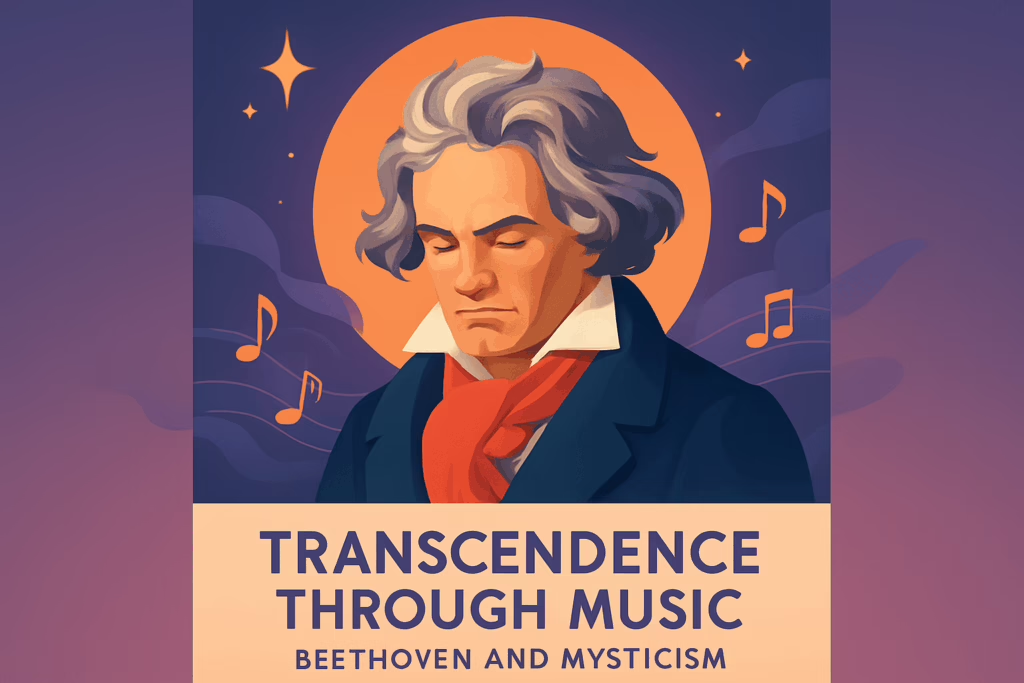
Transcendence Through Music: Beethoven and Mysticism
Introduction to the Intersection of Music and Mysticism
Music holds an unparalleled ability to transcend the ordinary and connect us to deeper, more profound experiences. Among the numerous composers who have harnessed this power, Ludwig van Beethoven stands out as a luminary figure. His musical compositions provide listeners with an opportunity to tap into a mystical realm, elevating their human experience and opening doors to transcendence. But what is transcendence, and how does it relate to music and mysticism?
Transcendence refers to the ability to rise above the normal state of consciousness, revealing a higher state of being or understanding. This concept is often intertwined with mysticism, which is the pursuit of direct communion with the divine or ultimate reality. These themes are not new, existing in various religious and philosophical doctrines throughout history. However, what makes Beethoven’s work particularly significant is the way his compositions serve as a bridge to this realm of higher consciousness, offering not just auditory pleasure but also a profound spiritual experience.
Understanding this connection between Beethoven and mysticism matters because it allows us to experience music as more than just sound. It becomes a vessel through which listeners can access an elevated state of awareness, promoting inner peace and self-discovery in an increasingly chaotic world. In this article, we’ll delve deeper into how Beethoven achieved this transcendental quality in his music and why it continues to resonate with audiences today.
Beethoven’s Musical Techniques and Their Mystical Effects
Beethoven’s mastery of harmony, melody, and rhythm forms the core of his ability to invoke mystical experiences. By pushing the boundaries of musical conventions, he crafted pieces that resonate on both a conscious and subconscious level, encouraging listeners to engage deeply with the music.
For instance, his use of dynamics and tempo variations creates emotional peaks and valleys, mirroring the spiritual journey of enlightenment. This is particularly evident in his Ninth Symphony, where the climactic choral finale embodies a sense of celestial unity and joy. The blending of instruments and voices, alongside abrupt crescendos and decrescendos, evokes the ebb and flow of mystical experiences, leading the listener to a sense of oneness with the cosmos.
- Harmony: Creates emotional depth and complexity.
- Melody: Expresses the narrative of mystical journeys.
- Rhythm: Drives the listener through waves of emotional transformation.
- Dynamic changes: Reflect the dramatic shifts associated with spiritual awakening.
In doing so, Beethoven’s compositions become more than just music; they transform into sonic landscapes that guide the listener through an exploration of their inner self, ultimately aiming for spiritual transcendence.
The Influence of Beethoven’s Personal Beliefs and Experiences
Beethoven’s life was marked by numerous challenges, both personal and professional. These experiences profoundly influenced his creative output and provided a lens through which mystical themes were infused into his music. Despite his profound deafness later in life, Beethoven continued to compose, defying the odds and channeling what many interpret as divine inspiration.
His letters and writings reveal a belief in the power of music to express the inexpressible, a conviction that aligns closely with mystical thought. This is evident in works such as “Missa Solemnis,” where Beethoven’s exploration of the divine shines through in the form of grand, awe-inspiring musical arrangements. Throughout his work, there exists a duality of struggle and redemption, mirroring the trials of earthly existence and the ultimate goal of spiritual transcendence.
To illustrate, consider the famous “Ode to Joy” theme in his Ninth Symphony. Rooted in themes of human brotherhood and divine love, it represents a climactic resolution to a lifetime of struggle, echoing the mystical journey from turmoil to enlightenment.
The Role of Music in Facilitating Mystical Experiences
Music’s role as a vehicle for mystical experiences can be traced across cultures and history, with Beethoven’s compositions standing as prime examples within the Western classical tradition. Music’s unique ability to communicate without words makes it particularly suited to this purpose, offering listeners a direct connection to the ineffable.
One way Beethoven achieved this was through the integration of traditional musical forms with innovative, boundary-defying techniques. This approach not only challenged the conventional listening experience but also invited audiences to delve deeper into their consciousness. Pieces like the “Moonlight Sonata” exhibit a haunting beauty that shifts the listener’s focus inward, encouraging a meditative state conducive to mysticism.
The deliberate use of silence and space within his works also plays a crucial role. These moments allow for introspection and reflection, akin to an invitation for the listener to pause and engage with the music on a spiritual level. This deliberate pacing fosters a contemplative atmosphere, essential for experiencing a sense of transcendence.
Real-World Applications: Beethoven’s Music as a Tool for Modern Mindfulness Practices
In today’s world, where stress and digital distractions abound, Beethoven’s music offers a sanctuary for mindful escape and spiritual rejuvenation. By engaging with his compositions, individuals can cultivate mindfulness, a practice inherently aligned with mystical experiences.
Mindfulness, the practice of bringing one’s attention to the present moment, can be significantly enhanced through Beethoven’s works. The immersive quality of his music provides a focal point that encourages listeners to be present, making it a powerful tool in meditation and mental health practices.
Therapists and meditation instructors have incorporated Beethoven’s symphonies and sonatas into their programs, recognizing the calming and centering effects they provide. This application in therapeutic contexts bridges the gap between music and healing, showcasing its potential to facilitate not only personal growth but also physical and emotional well-being.
| Work | Mindfulness Application |
|---|---|
| Moonlight Sonata | Calming background for meditation sessions |
| Ninth Symphony | Inspiration for group mindfulness activities |
| Missa Solemnis | Deep-focus sessions for contemplation |
Listening to Beethoven with intention can transcend mere auditory pleasure, transforming the experience into an exploration of the self, revealing the profound interconnectedness of life.
Conclusion: Embracing Transcendence Through Beethoven’s Music
Beethoven’s music stands as a testament to the power of art in facilitating mystical experiences and personal transcendence. By exploring the blend of intricate musical techniques and personal beliefs, we uncover how his compositions serve as pathways to higher consciousness and self-discovery.
The enrichment gained through engaging with Beethoven’s music extends beyond the realms of traditional classical appreciation, offering solace and spiritual growth in today’s fast-paced world. It provides a timeless medium to explore the vast depths of our inner landscapes, fostering a sense of unity and peace within ourselves.
We invite you to explore Beethoven’s remarkable body of work with fresh eyes and open hearts. Allow his music to guide you on a journey toward greater mindfulness and spiritual fulfillment. Discover the beauty and transcendence that lie within, and see how it can transform not only your understanding of music but also your life.
Consider integrating Beethoven’s compositions into your daily routine, perhaps as the backdrop for meditative practices or moments of reflection. Witness firsthand how this legendary composer continues to impact lives through his sublime auditory artistry.
Frequently Asked Questions
1. What is the concept of transcendence in music, and how does it relate to Beethoven’s compositions?
Transcendence in music refers to the experience of moving beyond the ordinary realms of perception and being transported to a higher state of consciousness or awareness. Music has a unique ability to evoke emotions, memories, and sensations that can elevate us, creating a sense of connection with something greater than ourselves. This can manifest as a spiritual awakening, a profound emotional response, or simply a deep appreciation for the beauty and complexity of the musical composition.
Beethoven’s music is particularly known for its transcendent qualities. His compositions often push the boundaries of traditional music, challenging the listener to engage with it on an emotional and intellectual level. Particularly, his later works, such as the Ninth Symphony and his late string quartets, are acclaimed for their depth, complexity, and their ability to evoke feelings of wonder, joy, and introspection. For many, engaging with Beethoven’s music can feel like a meditative experience, where the boundaries of the self and the universe blur, allowing for a mystical encounter.
2. How did Beethoven’s personal life and experiences influence the mystical elements found in his music?
Beethoven’s personal life was marked by numerous hardships, including progressive hearing loss, personal isolation, and struggles with his mental and physical health. These challenges forced him to look inward and often transcended into his music. His growing deafness isolated him from the world, yet also led him to experience music in a unique and profoundly internal way.
His later works, which many people consider deeply spiritual and mystical, reflect his inner turmoil and resilient spirit. The Opus 111 Piano Sonata, for example, is often cited as a musical reflection of Beethoven’s transcendence over his personal afflictions. It’s as if, through his music, he was searching for solace and enlightenment beyond his immediate physical experience. This search for something higher and universally meaningful, imprinted within his work, invites listeners to join him on a mystical journey.
3. How does Beethoven’s approach to music composition differ from other composers with respect to mysticism?
While many composers create music that is beautiful and emotionally compelling, Beethoven’s approach often involved a deep philosophical and introspective process that sought to explore and express universal truths. His dedication to creating music that went beyond entertainment to touch on profound emotional and spiritual themes sets him apart.
Beethoven was known for his innovation and willingness to break the rules, which allowed him to express his ideas more freely. His use of dissonance, unexpected key changes, and extended musical forms weren’t just for artistic novelty; they served as vehicles for emotional and spiritual exploration. For instance, the use of the “Ode to Joy,” in the final movement of his Ninth Symphony, brings forth not just a musical resolution but a universal call for brotherhood and unity, elevating the listener’s experience to one of collective hope and transcendence.
4. Can you provide examples of specific Beethoven compositions that embody mystical or transcendent qualities?
Absolutely! Several of Beethoven’s compositions are renowned for their mystical and transcendental qualities. One prime example is Symphony No. 9 in D minor, Op. 125, particularly its choral finale, “Ode to Joy.” This piece isn’t just a triumph of human spirit and unity through its lyrics and exquisite musical orchestration but also symbolizes transcendence through universal brotherhood.
Moreover, his Missa Solemnis, Op. 123, is another profound example where Beethoven delves deeply into spiritual themes. The reverent and contemplative nature of this mass challenges listeners to reflect on their spirituality. Similarly, the late String Quartets, Op. 130 and Op. 132, are often cited for their introspective and reflective qualities, with parts that can evoke a powerful sense of stillness and contemplation in the listener, mirroring a sense of inner peace and transcendence.
5. How do listeners typically experience transcendence when engaging with Beethoven’s music? Are there any specific techniques or settings that enhance this experience?
Listeners typically experience transcendence through an immersive engagement with Beethoven’s music, which invites deep emotional and contemplative responses. The experience can be incredibly personal and varies from individual to individual. For some, it might involve a feeling of time stopping or blurring, a profound emotional reaction, or a meditative state that opens them up to reflection on universal themes of life, existence, and connection.
Creating an environment that is conducive to a transcendent experience can involve both mental and physical preparation. To heighten the experience, listeners might choose a setting free from distractions, perhaps dimming the lights or finding a quiet space. Some find listening with high-quality headphones or in a space with excellent acoustics can vastly enhance the depth and clarity of the music, allowing subtleties to emerge and facilitating a fuller range of emotional responses. Intentionally focusing on the music and being present with each note, rhythm, and change can also foster a greater connection, opening the doors to an experience that transcends the ordinary.