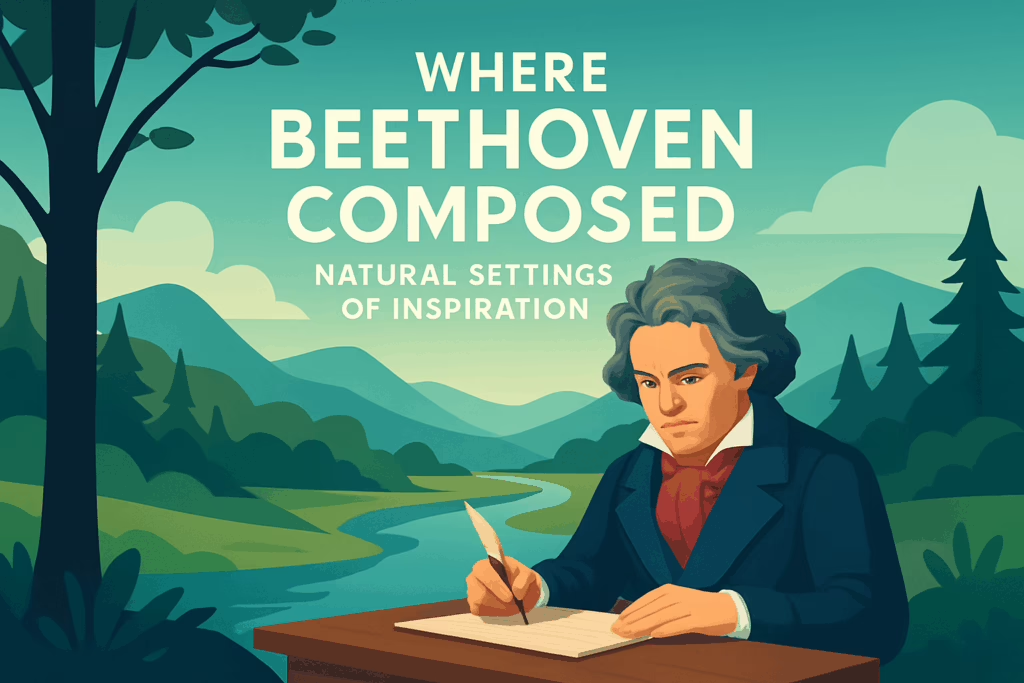
Where Beethoven Composed: Natural Settings of Inspiration
Introduction to Beethoven’s Natural Inspirations
Ludwig van Beethoven stands as one of the most prolific and influential composers in the annals of classical music. Born in 1770, his compositions transcended the music of his time and inspired countless composers who came after him. While Beethoven’s name evokes images of grand symphonies and piano sonatas, less commonly known are the specific environments where he drew his creative inspiration. Natural settings strongly influenced his music, often shaping the character and emotion he projected onto the page.
Understanding these natural inspirations is of immense importance. Recognizing where Beethoven found his muse helps us appreciate the deeply intertwined relationship between nature and human creativity. It sheds light on the composer’s process, revealing a humbling truth: that even geniuses like Beethoven leaned on the world around them for insights and motivation. As we dig into the places that inspired such timeless pieces, aspiring musicians and artists can draw valuable lessons about finding their own creative havens.
Beethoven’s deep connection to nature is evident in works like the “Pastoral Symphony,” which directly portrays the countryside’s tranquility. This attachment wasn’t merely a passing fondness; it was a recurring theme throughout his life. Exploring the natural settings that stirred Beethoven’s imagination is both a celebration of his genius and a reminder of nature’s power to fuel artistic innovation.
Beethoven’s Favorite Haunts: The Austrian Countryside
The lush landscapes of the Austrian countryside were more than just a backdrop for Beethoven; they were vital sources of inspiration. During the early 1800s, Beethoven made frequent trips out of Vienna to the tranquil surroundings of the countryside. His renowned “Symphony No. 6 in F major,” famously known as the “Pastoral Symphony,” is a testament to these natural retreats. Unlike his typically bold and fiery symphonies, the “Pastoral” exudes peace and reflects a deep appreciation for nature.
Beethoven often found himself in Heiligenstadt, a village just north of Vienna, where he penned the poignant “Heiligenstadt Testament.” This letter, written to his brothers, reveals Beethoven’s inner turmoil over his increasing deafness and serves as a testament to the solace he found in nature during his struggles. The village’s tranquility provided not only relief but also the creative space fueling his prolific output during those periods.
Walking through Heiligenstadt’s serene pathways and wooded areas allowed Beethoven to escape the cacophony of city life and the dissonance of his rising fame. This connection to the natural world was critical to his ability to channel personal struggles into beautiful cathartic works, turning pain into artistry.
The Role of Vienna Woods in Beethoven’s Compositions
The Vienna Woods, a sprawling forest surrounding Austria’s capital city, also served as a vital pocket of inspiration for Beethoven. This sylvan retreat was a frequent escape for the composer, where he would go for daily walks and let his thoughts flow naturally into melodies. The Vienna Woods provided an environment rich in stimuli, from the rustling of leaves to the singing of birds, creating a symphonic backdrop that Beethoven translated into his compositions.
A prime example of this influence can be seen in his work on the “Pastoral Symphony,” where different movements depict scenes such as a babbling brook, a thunderstorm, and a shepherd’s song. Beethoven himself remarked on the joy he felt in nature, claiming its sounds and ambiance as a vital resource for his creativity. The synergy between nature and music was never more apparent than in his activities there.
The daily regimen of strolling through the Vienna Woods exemplified Beethoven’s belief in the therapeutic and inspirational qualities of natural settings. This practice highlights the pivotal role the environment played, not only in Beethoven’s creative process but also in his mental health and well-being.
Beethoven’s Retreats: Mödling and Baden
Beyond the woods and fields, Beethoven also found inspiration in specific retreats, notably in the towns of Mödling and Baden. These locations, just a short distance from Vienna, served as seasonal respites for the composer. Mödling, known for its picturesque landscapes and wineries, was particularly favored by Beethoven in the later years of his life. It was in Mödling’s serene atmosphere that he worked on parts of his monumental “Missa Solemnis” and “Ninth Symphony.”
Baden, with its soothing thermal spas and scenic vistas, offered Beethoven both relaxation and a creative catalyst. The rhythmic flow of the town’s thermal waters echoed the rhythms that found their way into many of his late compositions. Beethoven’s time in Baden coincided with the creation of some of his most innovative string quartets, works that redefined the genre and highlighted his evolution as a composer.
- Mödling: Influenced works like “Missa Solemnis” and “Ninth Symphony.”
- Baden: Inspired late string quartets and experimental pieces.
The periods Beethoven spent in Mödling and Baden demonstrate his conscious choice to immerse himself in environments conducive to creativity, producing masterpieces that resonate to this day.
Influence of Seasonal Changes on Beethoven’s Work
Beyond specific locations, the changing seasons also played a significant role in Beethoven’s work. Each season brought with it a unique set of sensory experiences that Beethoven translated into his music. The rebirth of spring, the full bloom of summer, the dramatic colors of autumn, and the starkness of winter all found their way into the emotional landscapes of his compositions.
An eloquent example of seasonal influence is found in the “Pastoral Symphony.” Each movement captures the essence of different times and moods, from a cheerful awakening of nature to the ominous gathering of storm clouds. The interplay of these natural elements in the symphony demonstrates Beethoven’s acute awareness and appreciation of nature’s cycles.
Beethoven’s profound connection to the seasons is further evidenced in his “Spring Sonata” for violin and piano, where the bright and lively rhythms mimic the invigorating energy of springtime. These works illustrate how seasonal changes informed his music, showcasing a creative dialogue between Beethoven and the natural world that surrounded him.
Incorporating Nature’s Sounds into Beethoven’s Music
An intriguing aspect of Beethoven’s artistry lies in his ability to weave nature’s sounds directly into his compositions. The “Pastoral Symphony” serves again as an exemplar, where specific movements mimic the natural sounds he encountered during his countryside walks. Notably, the symphony’s second movement, “Scene by the Brook,” features imitations of bird calls including the nightingale, quail, and cuckoo, almost as if Beethoven captured a snapshot of his auditory experience in musical form.
These rural accents were not mere background noises; they were integral to the musical narrative. Beethoven utilized these sounds to evoke emotions, create vivid imagery, and bring listeners closer to his own inspired experience. By doing so, Beethoven blurred the lines between composed music and environmental soundscape, challenging traditional notions of classical composition.
This integration of natural sounds underscored a larger philosophical idea rooted in Beethoven’s work: the interconnectedness of human emotion, artistic expression, and the external world. This philosophy still resonates powerfully with composers and musicians who seek to imbue their work with authenticity and depth derived from their surroundings.
Conclusion: Areas of Modern Relevance and Takeaways
Exploring Beethoven’s natural settings of inspiration provides insightful revelations about the creative process that transcend time. The immense influence of nature on his music underscores the profound connection between environment and artistic innovation. Beethoven’s reliance on his surroundings serves as a powerful reminder of the natural world’s role in nurturing creativity.
For the modern reader, especially aspiring artists and musicians, the key takeaway is the importance of finding and utilizing personal spaces of inspiration. Whether it’s a tranquil walk in the park, sitting by a window with a view, or even seeking refuge in a bustling city garden, nature’s ability to spark creativity remains undiminished.
By recognizing the value of these settings, we can cultivate our own sources of inspiration, much like Beethoven did amidst the rolling hills and woods of Austria. Embracing the lessons from Beethoven’s natural retreats encourages us to integrate our environments into our creative endeavors, resulting in more authentic and enriched expressions of art.
To continue this journey, consider visiting local natural sites or exploring new environments, allowing the world around you to rejuvenate and inspire your artistic spirit. Delving into Beethoven’s world not only deepens our appreciation for his work but also enriches our understanding of how nature can be a vital partner in our creative pursuits.
Word Count:
Frequently Asked Questions
1. What influence did nature have on Beethoven’s compositions?
Beethoven was profoundly inspired by the natural world, which he found a vast source of peace and creativity. His music often reflects his love for nature’s tranquility and grandeur, and one can hear elements of nature in his compositions. For instance, his Symphony No. 6, also known as the “Pastoral Symphony,” is a direct expression of his love for the countryside. It vividly evokes the sights and sounds of rural life, from the joyful awakening of nature to the tumult of a thunderstorm. Beethoven would often walk for hours in the woods, finding inspiration in the sounds of rustling leaves, birdsong, and the babbling of brooks, which transported him away from the pressures of city life and allowed his mind to wander freely. Nature was his refuge and muse, providing a calming backdrop that fueled his brilliant creative mind.
2. Can you give examples of specific locations where Beethoven found inspiration?
Yes, Beethoven often sought solace and inspiration in natural settings. One of his favored retreat locations was the countryside surrounding the town of Heiligenstadt, near Vienna. He would embark on long, reflective strolls amidst its scenic landscapes. This connection is so significant that he wrote the famous “Heiligenstadt Testament,” a letter expressing his despair over his growing deafness, amidst these very landscapes. Another notable location is the village of Mödling, south of Vienna. Here, Beethoven sought the peace required to compose and escape the bustling city life. The beautiful landscapes of Mödling offered vistas of the Alps and forests, which were vital to his creative process. These journeys into nature were not merely physical escapes but were deeply tied to his emotional and psychic well-being, allowing him to resonate with the surrounding beauty deeply.
3. Why did Beethoven prefer composing in natural settings instead of urban environments?
Beethoven often found urban environments to be overwhelming and distracting. Vienna, in particular, was bustling with activity, and for someone dealing increasingly with the frustrations of hearing loss, it could become an unsettling place. Nature offered him a calming alternative, where he could disconnect from the chaos and find the mental space needed for creativity. Beethoven’s sensory experience of nature was not limited by his deafness; instead, it allowed him to hone his other senses, appreciating the visual beauty and touch of the world around him. The simplicity and beauty of the natural environment provided a meditative backdrop for his compositions. In such settings, he could immerse himself in the sounds of nature, which he translated into musical compositions that touch upon deep human emotions and capture the essence of natural beauty.
4. Did Beethoven’s relationship with nature change throughout his life?
Beethoven’s relationship with nature matured and deepened over time, especially as his hearing loss progressed. In his earlier years, he enjoyed the vibrant social and musical scenes of Vienna. However, as his deafness became more pronounced, nature became not only a source of inspiration but also a place of solace and retreat. The open spaces and fresh air of the countryside were therapeutic, helping him cope with the isolation his deafness imposed. His deep appreciation for nature’s beauty and tranquility became more evident in his later compositions, such as the Ninth Symphony with its themes of universal brotherhood and joy, which reflect an idealized view of nature’s harmony. Though his body was increasingly confined by his physical ailments, his spirit found freedom and creativity in these natural surroundings, leading to some of his most profound works.
5. How can understanding Beethoven’s connection to nature enhance our appreciation of his music?
Understanding Beethoven’s connection to nature provides invaluable insight into his music’s emotional depth and thematic richness. Recognizing how the natural environment influenced his work allows listeners to hear his compositions in a new light, providing context to the vivid emotional landscapes he creates within them. Knowing that pieces such as the “Pastoral Symphony” carry the sounds and scenes of nature through his inspired auditory imagination encourages us to listen for the subtleties—like the mimicry of birdsong or the depiction of a thunderstorm—that reflect these inspirations. It additionally emphasizes the resilience and adaptability of Beethoven as an artist, who, even faced with adversity like deafness, transformed external natural stimuli into some of history’s most moving and eloquent musical expressions of the human experience. This understanding enhances our appreciation and emotional connection to his works, knowing they bear not only his skill but his soul, filled with nature’s whispers and cries.